24/7 Pest Control in the UAE

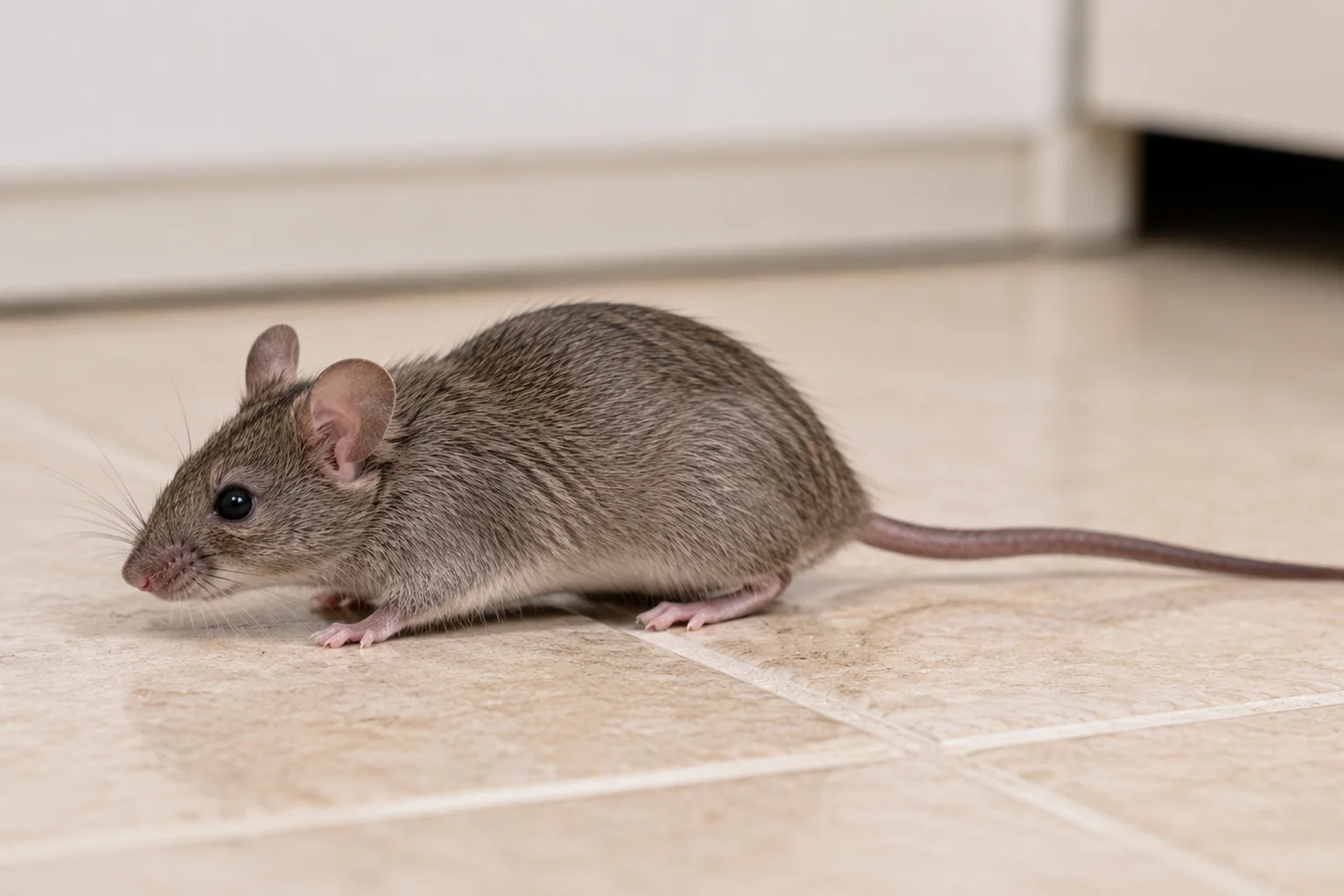
The House Mouse is small enough to enter through a gap of around 6mm — the width of a pencil — which makes Dubai apartments, villas, kitchens, and storerooms easy targets. Mice are prolific breeders, curious, and constantly gnawing, contaminating food surfaces with droppings and urine and damaging packaging, wiring, and insulation. Chewed electrical cables are a genuine fire hazard. Because they nest in wall voids, ceilings, and behind appliances, the few you see represent a fraction of the population. Snap-trap-and-hope rarely clears an established infestation, and poison used incorrectly creates odour and secondary risks.
Santera's Dubai Municipality-certified technicians control mice with a structured programme: inspection to find entry points and nests, strategic trapping and secured baiting, and — critically — proofing the gaps that let them in, so the problem doesn't return. For restaurants, supermarkets, and food businesses, we use tamper-resistant stations and documented monitoring aligned with HACCP and Dubai Municipality standards.
Get to know the physical signs and behavioral patterns associated with this species. Knowledge of these specific traits helps in maintaining a secure and pest-free environment.
Santera provides Pest control and prevention across Dubai, with primary service coverage in:

Santera gets rid of House Mice in Dubai with a Dubai Municipality-certified process: our technicians inspect to find the nests and entry points and entry points, apply targeted treatment that eliminates the problem at its source, and put prevention measures in place so it doesn't come back. For restaurants, hotels, and food businesses, all work follows HACCP protocols and Dubai Municipality standards.
You can try, but DIY rarely solves a House Mouse problem in Dubai for good. Shop-bought sprays and home remedies tend to deal with what you can see while missing the nests and the gaps that let them in, so the problem returns. Lasting control means targeting the source — which is where professional treatment makes the difference.
Because the source survives. House Mice breed extremely fast: a female can produce 5–10 litters a year, each of around 5–8 young, which themselves mature in about 6 weeks. In Dubai's warm indoor conditions breeding continues year-round, so a small problem becomes a large infestation within weeks if left untreated. That's exactly why surface sprays and one-off DIY fail — they hit what's visible while the source keeps producing more, so lasting control has to target the source, not just the symptoms.
Watch for House Mice themselves and the signs they leave. House Mice are small rodents, 7–9cm in body length with a tail of similar length, weighing around 15–20g. House Mice are mainly nocturnal and nest in concealed, warm spots — wall voids, ceilings, behind and under appliances, and in cluttered storage. They are agile climbers and constant gnawers, keeping their incisors worn down by chewing on packaging, wood, plastic, and cables. Catching it early, before numbers build, makes treatment far easier.
Mice can bite if handled, but the bigger dangers are disease — they contaminate food with droppings and urine — and fire risk from gnawed electrical wiring.
House Mice are omnivorous nibblers that prefer grains and seeds but eat almost anything available. They feed little and often, sampling many food sources in a night, which is why they contaminate far more food than they consume. In Dubai kitchens, pantries, and storerooms they exploit crumbs, grains, pet food, and unsealed packaging. Cut off these food, water, and shelter sources and you remove what draws them in — but an established population still needs targeted treatment to clear fully.