24/7 Pest Control in the UAE

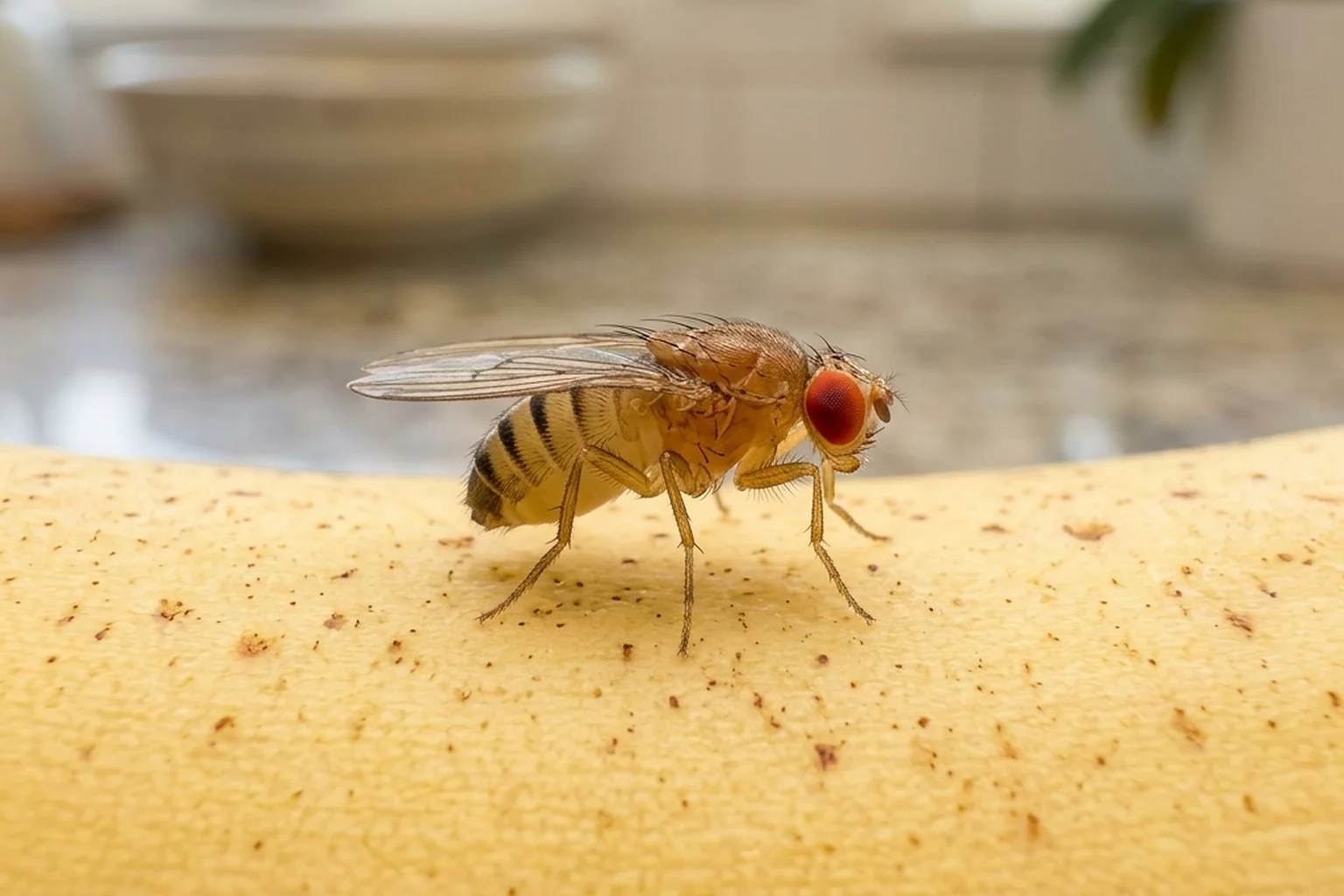
The Fruit Fly is tiny but maddeningly persistent, appearing in clouds around ripe fruit, fermenting liquids, bins, and drains in Dubai homes, bars, cafes, and restaurants. It's drawn to the sugars and yeasts of ripening, overripe, and fermenting material, and — crucially — it breeds in the thin organic film that builds up inside drains, on bottle necks, in recycling, and under equipment. This is why fruit fly problems seem to return no matter how much you clean the visible surfaces: the larvae are developing in residue you can't see. In F&B settings they're a recurring hygiene complaint and a Dubai Municipality concern.
Santera's Dubai Municipality-certified technicians eliminate Fruit Flies by tracing and treating the hidden breeding film — drains, voids, and equipment bases — with specialised drain treatments and sanitation, alongside trapping and targeted control. For bars, cafes, and kitchens, we build this into a documented fly-management programme aligned with HACCP and Dubai Municipality standards.
Get to know the physical signs and behavioral patterns associated with this species. Knowledge of these specific traits helps in maintaining a secure and pest-free environment.
Santera provides Pest control and prevention across Dubai, with primary service coverage in:

Santera gets rid of Fruit Flies in Dubai with a Dubai Municipality-certified process: our technicians inspect to find the breeding source and entry points, apply targeted treatment that eliminates the problem at its source, and put prevention measures in place so it doesn't come back. For restaurants, hotels, and food businesses, all work follows HACCP protocols and Dubai Municipality standards.
You can try, but DIY rarely solves a Fruit Fly problem in Dubai for good. Shop-bought sprays and home remedies tend to deal with what you can see while missing the breeding source in drains, waste, or decaying matter, so the problem returns. Lasting control means targeting the source — which is where professional treatment makes the difference.
Because the source survives. Fruit Flies have an exceptionally short life cycle — a female lays around 500 eggs, and development from egg to adult can take as little as a week or less in Dubai's warmth. This rapid breeding means a few flies become a swarm within days if a breeding source remains. That's exactly why surface sprays and one-off DIY fail — they hit what's visible while the source keeps producing more, so lasting control has to target the source, not just the symptoms.
Watch for Fruit Flies themselves and the signs they leave. Fruit Flies are very small, about 3–4mm, with a tan to brownish body and characteristically bright red eyes (in the common species). Fruit Flies are active by day, staying close to their food and breeding sources, and reproduce explosively wherever fermenting residue exists. They breed in the thin organic layer inside drains, under equipment, and on soiled containers, which is why infestations persist despite surface cleaning. Catching it early, before numbers build, makes treatment far easier.
Fruit Flies don't bite, but they can transfer bacteria from drains and rotting matter onto food and food-contact surfaces — a real hygiene risk in kitchens and bars.
Fruit Flies feed and breed on ripening, overripe, and fermenting fruit and vegetables, as well as the sugary, yeasty organic film inside drains, on bottles, and in recycling. In Dubai bars and kitchens, spilled drinks, fruit, and drain residue are prime sources. They are strongly attracted to alcohol and fermentation odours. Cut off these food, water, and shelter sources and you remove what draws them in — but an established population still needs targeted treatment to clear fully.