24/7 Pest Control in the UAE

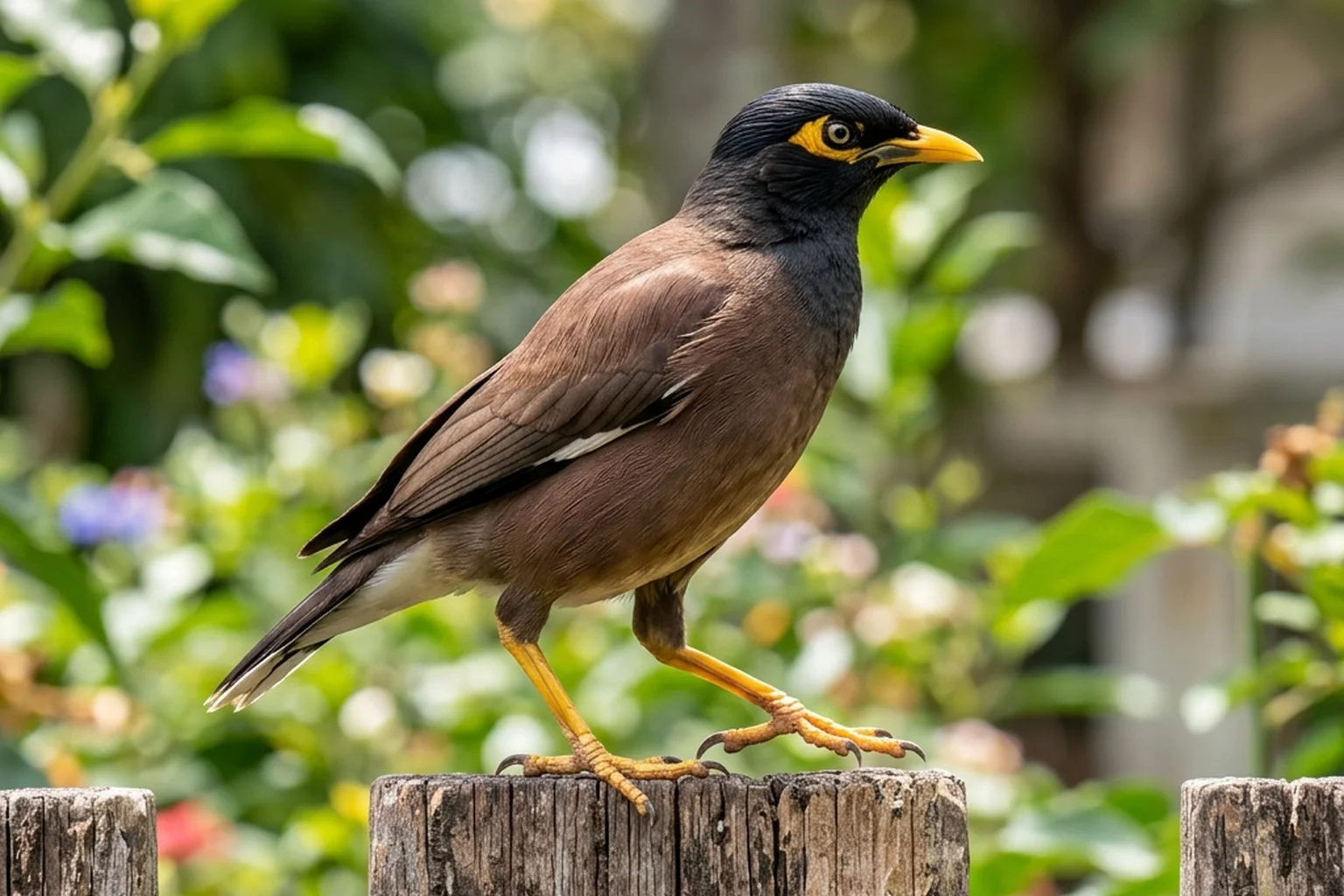
The Common Myna is one of the world's most invasive birds and a growing problem across Dubai. Bold and adaptable, it nests in roof voids, wall cavities, AC units, ducts, and ceiling spaces, packing them with bulky nests of twigs, paper, and debris that block ventilation and drainage and create fire and hygiene risks. Its droppings foul surfaces, and its nests harbour mites and parasites that can enter living spaces. Mynas are aggressive, displacing native birds and defending nesting sites stubbornly, and they breed readily in the urban environment. Their loud, persistent calls add to the nuisance. Casual deterrents rarely move an established pair.
Santera's Dubai Municipality-certified technicians manage Common Mynas through exclusion and proofing — sealing and screening roof voids, vents, AC units, and cavities after safe nest removal — plus cleaning and disinfection of fouled areas. For property managers and facilities, we design humane, effective bird-management programmes aligned with Dubai Municipality standards.
Get to know the physical signs and behavioral patterns associated with this species. Knowledge of these specific traits helps in maintaining a secure and pest-free environment.
Santera provides Pest control and prevention across Dubai, with primary service coverage in:

Santera gets rid of Common Mynas in Dubai with a Dubai Municipality-certified process: our technicians inspect to find the roosting and nesting sites and entry points, apply targeted treatment that eliminates the problem at its source, and put prevention measures in place so it doesn't come back.
You can try, but DIY rarely solves a Common Myna problem in Dubai for good. Shop-bought sprays and home remedies tend to deal with what you can see while missing the roosting and nesting sites birds keep returning to, so the problem returns. Lasting control means targeting the source — which is where professional treatment makes the difference.
Because the source survives. Common Mynas breed readily in Dubai, raising one or more broods a year of typically 4–6 eggs in cavity nests. Their willingness to use building structures for nesting, combined with strong site fidelity, means infestations recur unless cavities and entry points are physically sealed. That's exactly why surface sprays and one-off DIY fail — they hit what's visible while the source keeps producing more, so lasting control has to target the source, not just the symptoms.
Watch for Common Mynas themselves and the signs they leave. Common Mynas are medium-sized birds about 23–26cm long, with rich brown body plumage, a glossy black head and neck, and a bright yellow bill, legs, and bare skin patch behind the eye. Common Mynas are bold, aggressive, and territorial, nesting in cavities — roof voids, wall and ceiling spaces, AC units, and ducts — which they fill with bulky debris nests. They are active by day, live in pairs or groups, and defend nesting sites strongly. Catching it early, before numbers build, makes treatment far easier.
Mynas can be aggressive around nests, and their droppings and nest debris harbour mites and parasites that pose hygiene risks while blocking vents and drainage.
Common Mynas are omnivorous and highly opportunistic, eating insects, fruit, seeds, scraps, and food waste. In Dubai they exploit outdoor dining areas, bins, gardens, and discarded food. Their adaptable diet is a key reason for their success and abundance in the urban environment. Cut off these food, water, and shelter sources and you remove what draws them in — but an established population still needs targeted treatment to clear fully.