Wasps & Hornets
Wasp Nest Removal in Dubai: Why DIY Sprays Are Risky and What Professional Removal Involves
Muhammad Saif Ullah
September 21, 2026


You spot it while trimming the hedge, watering the potted palms, or hanging washing on the balcony: a papery lump tucked under the eaves, or a steady stream of hornets moving in and out of a gap behind the AC unit. The instinct in most Dubai households is to grab a can of insect spray from the cupboard and deal with it there and then. That instinct is exactly what sends people to the clinic every year. A wasp or hornet nest in a villa garden, on a balcony, or above an outdoor majlis is not a job for a supermarket spray can, and understanding why is the first step to handling it safely.
Unlike cooler regions, where winter thins out stinging insect populations, Dubai's warm climate lets wasp and hornet colonies keep growing for much of the year. Activity typically builds through spring as temperatures rise, peaks across the hot summer months, and stays noticeable into early autumn, when flowering shrubs and fruiting date palms draw in foragers. A nest that looks small in April can be a much larger, more established colony by August if nobody deals with it. The oriental hornet, the species most commonly reported in Dubai's villa gardens, follows this pattern closely and is the one that deserves the most caution.
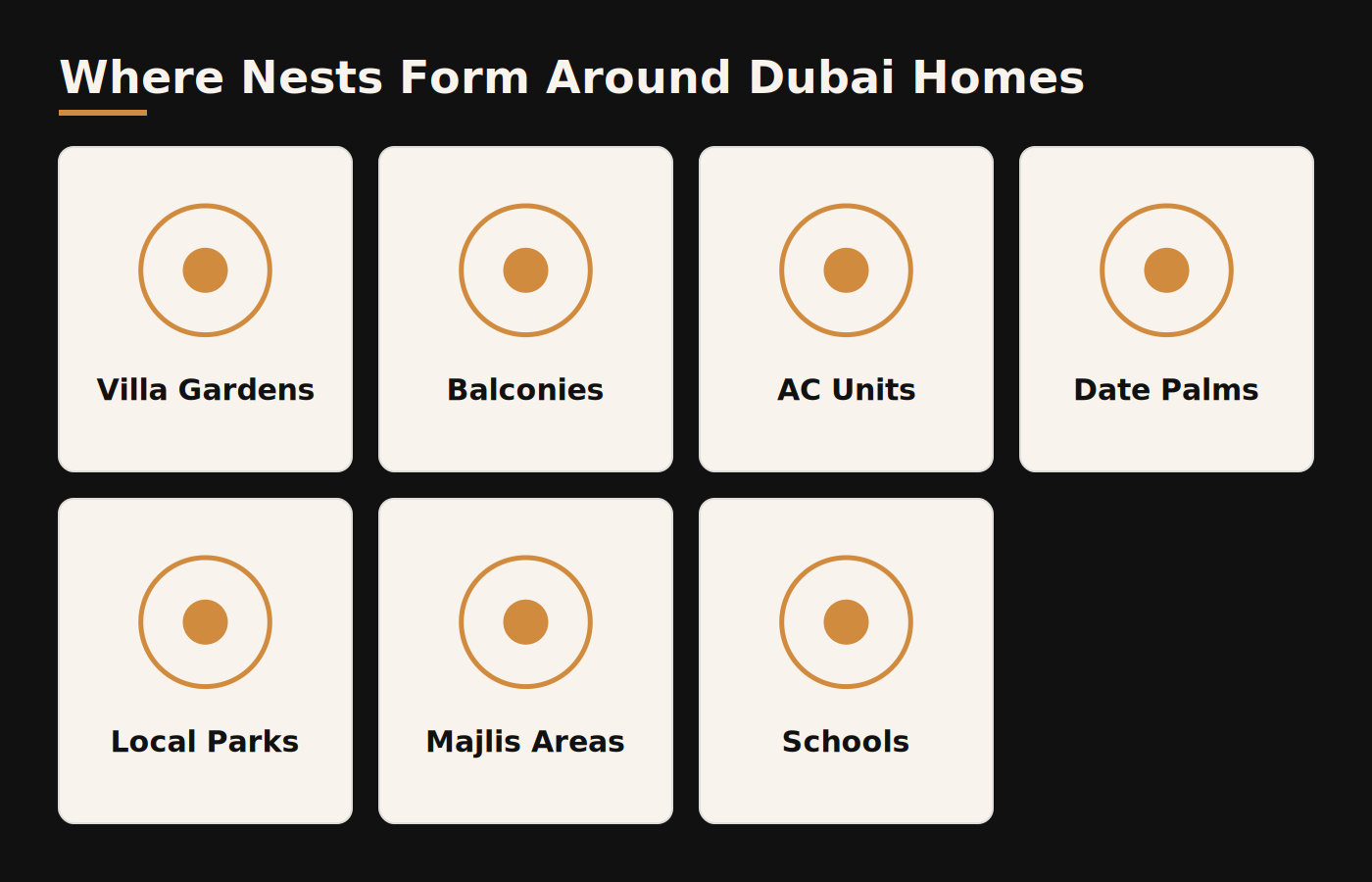
Wasps and hornets look for shelter, and Dubai properties offer plenty of it. The most common locations we are called out to include:
Because these spots are also where families spend their time outdoors, a nest rarely stays a hidden problem for long.
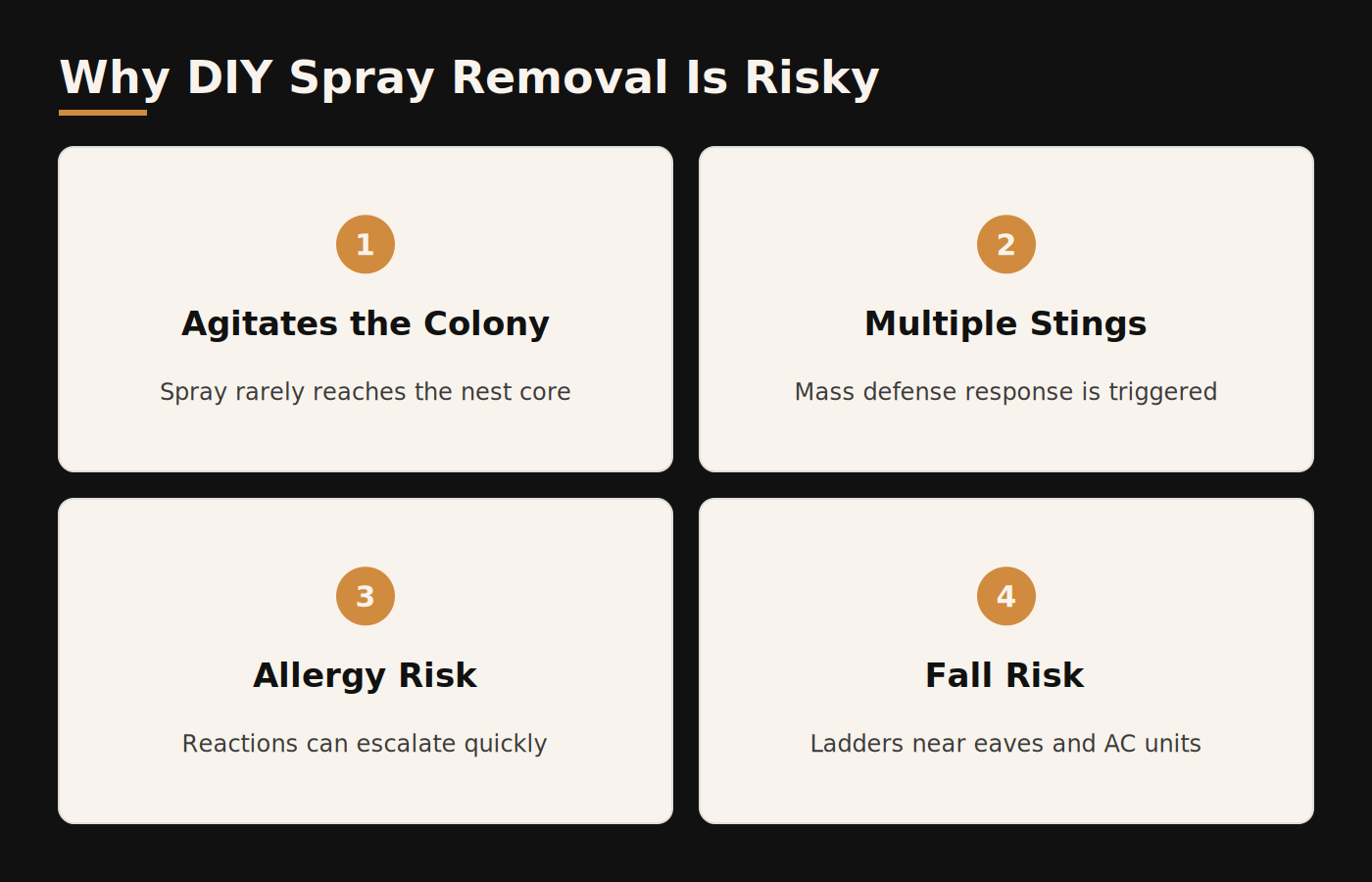
A can of insect spray from a supermarket shelf is built for a handful of insects on a wall, not for an established colony defending a nest. Spraying the entrance from a distance usually agitates the colony without reaching the queen or the bulk of the nest, which can provoke a mass defensive response involving dozens of wasps or hornets stinging at once. For anyone with a sting allergy, multiple stings in a short period is a medical emergency, and reactions can escalate quickly. Reaching nests under eaves, on balconies, or behind AC units also often means climbing a ladder or leaning over a railing, adding a fall risk to the sting risk. This is a genuine safety issue, not an exaggerated one, and it is the main reason DIY removal causes more harm than the nest itself would if simply left alone until a professional arrives.
Not every stinging insect nest in a Dubai garden carries the same level of risk. Paper wasps tend to build smaller, more exposed nests and are generally less aggressive unless the nest is directly disturbed. The oriental hornet is a different matter: it builds substantial nests in sheltered locations, defends them as a coordinated colony, and its sting is considerably more painful than a typical wasp sting. Because the two can be hard to tell apart from a distance, and because the correct approach differs depending on species, nest location, and colony size, an active nest of either type near a doorway, seating area, or play area is best assessed by a professional rather than guessed at from across the garden.
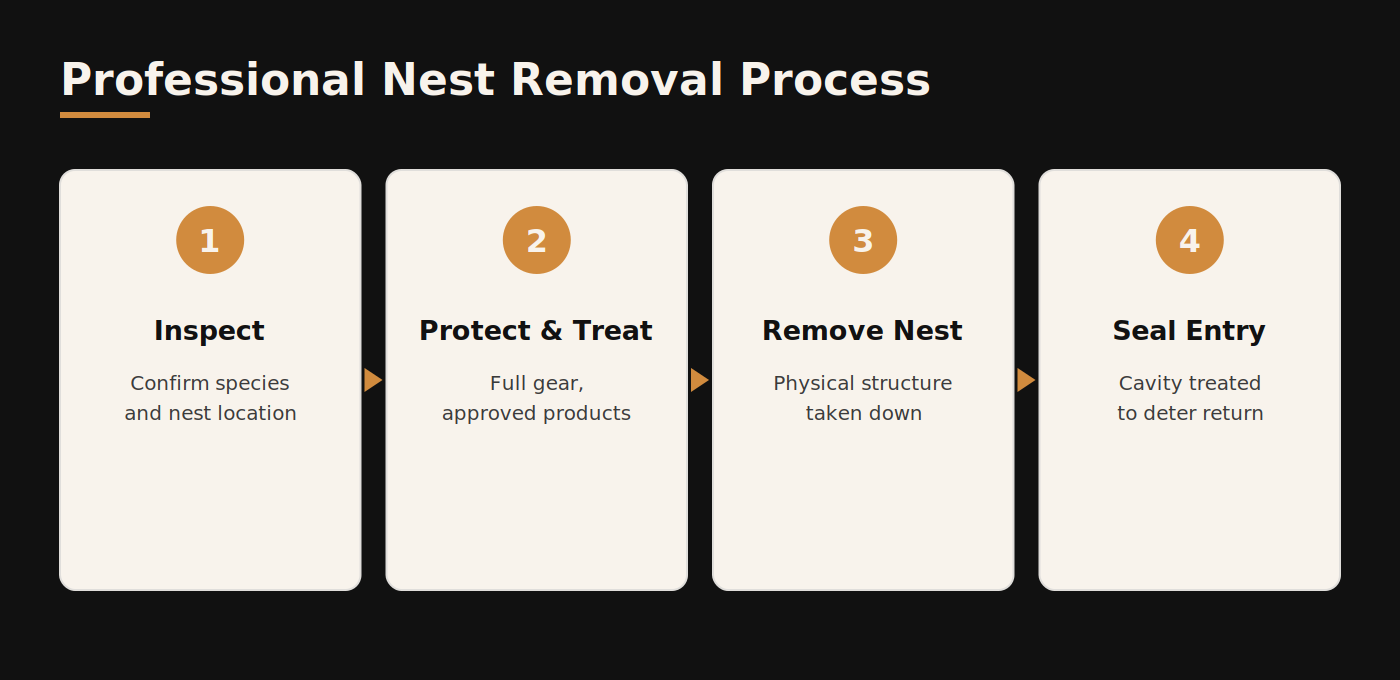
Santera's approach starts with a complimentary inspection to confirm the species, locate the nest precisely, and assess how active the colony is. Removal itself uses full protective equipment and Dubai Municipality-approved professional products, applied directly to the nest, usually timed for a part of the day when activity is lower. Once the colony is controlled, the physical nest structure is removed, and the entry point, whether a wall cavity, a gap behind an AC unit, or a hollow in a palm trunk, is sealed or treated to discourage re-nesting in the same spot. The whole process is backed by our 30-day warranty with follow-up support, so if the same nest location shows renewed activity within the warranty period, our team returns to address it.
For more on how wasps and hornets behave and why nests near Dubai homes need careful handling, see our Pest Library page on wasps and hornets.
Yes, an active oriental hornet nest near a lawn, play area, or outdoor majlis is a genuine safety concern, not a minor nuisance. A disturbed nest can trigger multiple hornets stinging in a short period, which is especially dangerous for children and anyone with a sting allergy. Keep the area off limits and arrange professional removal rather than letting anyone play nearby.
It usually does. Balcony nests sit at head height or above, close to doors and seating, so residents and visitors pass within stinging distance every day. Reaching a balcony nest to spray it also often means leaning over railings or using a ladder, which adds a fall risk on top of the sting risk.
Nests inside or behind AC condenser housings are common in Dubai because the units offer a sheltered, undisturbed cavity. Our technicians work with the unit powered down and use equipment suited to confined spaces, then remove the nest and treat the cavity so it is less attractive for re-nesting. Attempting this yourself risks both stings and damage to the unit.
The 30-day warranty covers follow-up treatment for continued activity of the same nest within the agreed scope and warranty period. It does not cover a new infestation starting elsewhere on the property, reintroduction from a neighboring unit, or untreated areas outside the original scope. Our team can advise on prevention for other vulnerable spots during the original visit.
Wasp and hornet nests around Dubai homes, whether in a villa garden, on a balcony, behind an AC unit, or above an outdoor majlis, are worth taking seriously rather than tackling with a spray can. Santera is Dubai Municipality certified, rated 4.9 stars on Google Reviews, and has completed 10,000+ treatments over 25+ years of team experience, with 24/7 availability and same-day service across Dubai. Book your complimentary inspection via WhatsApp and let our team handle the nest safely, backed by our 30-day warranty with follow-up support.