Wasps & Hornets
Wasp and Hornet Control for Dubai Warehouses and Industrial Facilities
Muhammad Saif Ullah
September 19, 2026


A forklift operator backing toward a loading bay door notices too late that a steady stream of hornets is moving in and out of the eave above the dock. In a warehouse or industrial facility, that is not a minor distraction. It is a safety incident waiting to happen in a space full of moving vehicles, stacked racking, and staff working with their hands full. Dubai's warehouse and logistics sector faces a wasp and hornet risk that looks very different from a villa garden or a hotel pool deck, and it needs a response built around how these facilities actually operate.
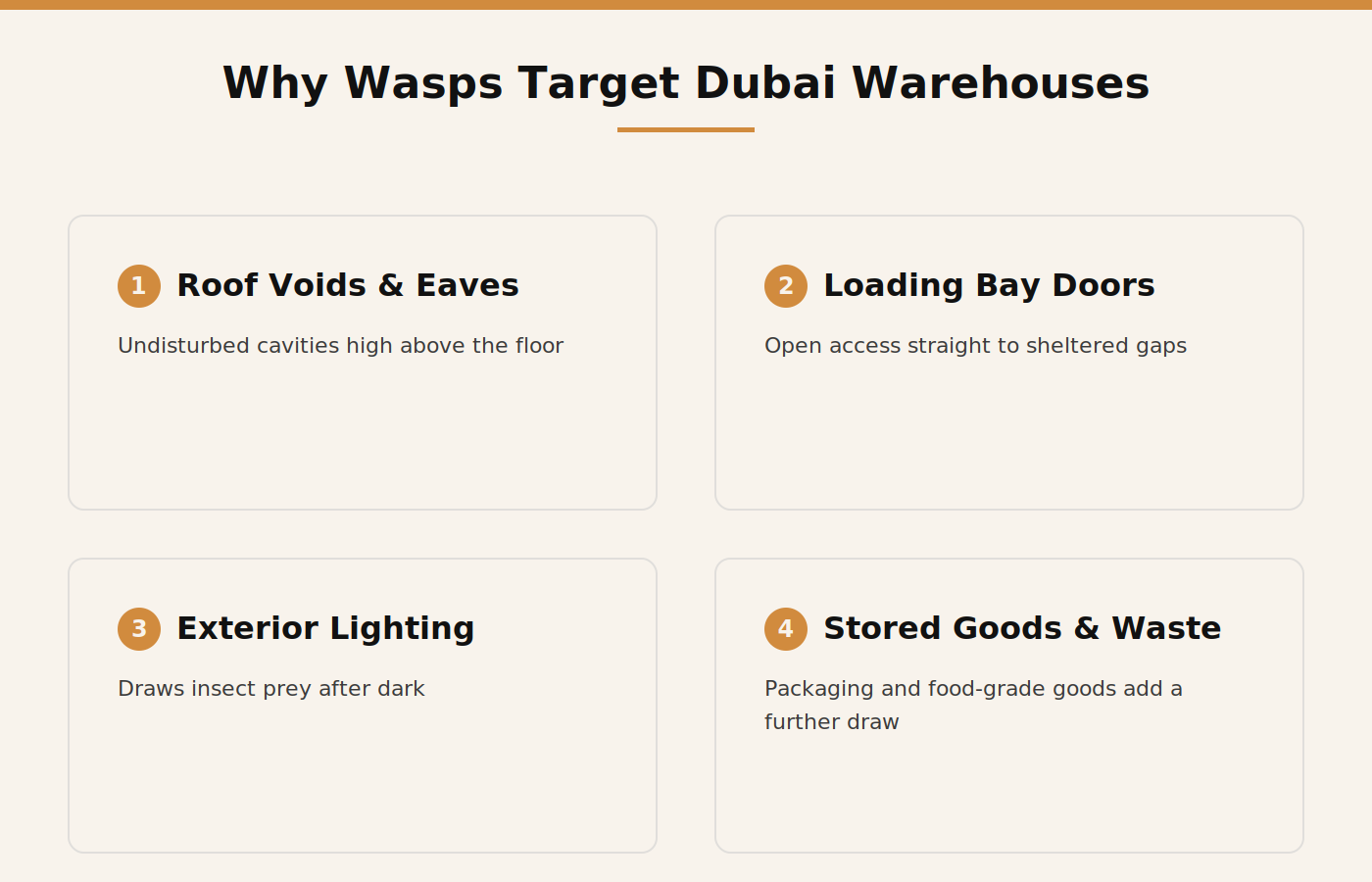
Large warehouse and industrial buildings offer exactly the conditions a foraging colony looks for: high roof voids and steel eaves that stay undisturbed for weeks at a time, open loading bay doors that give easy access to sheltered structural gaps, and exterior lighting that draws insect prey after dark. Where a facility also handles food-grade goods, packaging waste, or runs an on-site canteen, that adds a further attractant on top of the building structure itself. Because Dubai's industrial zones often place multiple warehouses close together with shared perimeter fencing and landscaping, activity at one unit can easily spread to a neighboring facility.
Wasps and hornets favor cavities that are high up, sheltered, and rarely inspected during routine housekeeping. In a warehouse setting, the most common sites include the underside of roof sheeting and steel eaves, voids behind loading bay canopies and dock shelters, gaps around exterior lighting fixtures and signage, external electrical and AC plant enclosures, and the tops of high steel racking near roller shutter doors. Because these spots sit well above eye level and outside normal foot traffic, a nest can grow for weeks before anyone on the floor notices the activity.
Warehouse and logistics staff are especially exposed because so much of the job happens with both hands occupied, operating a forklift, guiding a pallet through a bay door, or working at height on racking near a roof void. A sting at the wrong moment can cause a startled reaction around moving machinery, which turns a pest issue into a workplace safety incident. Staff with a sting allergy face an even greater risk if a reaction develops while they are working alone in a remote part of the facility. Repeated activity reported by several staff near the same bay or eave is usually a sign of an established nest rather than isolated encounters.
Beyond staff safety, an active nest near a loading bay can disrupt the flow of goods in and out of the facility if staff avoid the area or operations pause to deal with an incident. Nests built into racking voids or close to packaging and pallet storage raise a contamination concern for food-grade or export-sensitive goods, and a swarm reacting near stacked inventory adds a further risk of damage. For a facility running tight delivery schedules, even a short, unplanned closure of one bay has a knock-on effect across the day's operations.
Dubai's warm climate allows wasp and hornet colonies to keep growing for much of the year rather than dying back over a short winter. Activity typically builds through spring, peaks across the hottest months, and stays noticeable into early autumn, when exterior lighting around loading bays and yards draws in higher insect activity after dark. A nest that starts small in a roof void during spring can become a substantial colony by the time summer shift patterns and delivery volumes are at their busiest. Building a pre-season structural check into the facilities calendar keeps the timing on the operation's side rather than reacting to an incident on the floor.
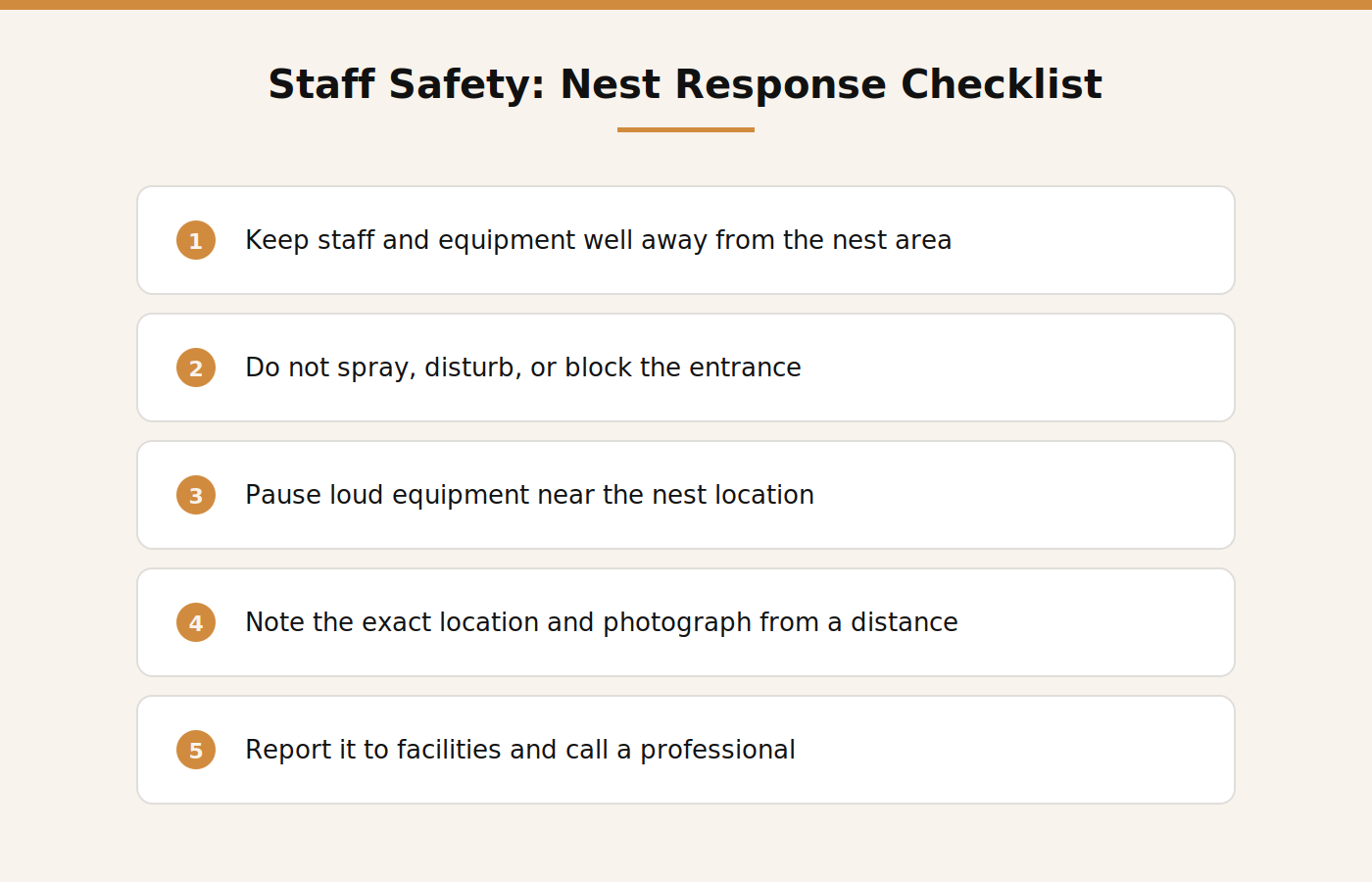
It can be tempting for a maintenance team to deal with a nest quickly using a can of spray and a ladder between shifts. Disturbing a nest this way rarely reaches the colony itself and instead provokes a coordinated defensive response, and a swarm reacting near a loading bay full of moving forklifts and staff puts far more people at risk than the person holding the can. Nests in roof voids or high steel eaves are also often out of safe reach without proper access equipment, which adds a fall risk on top of the sting risk. A rushed attempt can drive the colony deeper into structural cavities, turning one visible nest into a hidden problem that resurfaces later in a harder-to-reach spot.
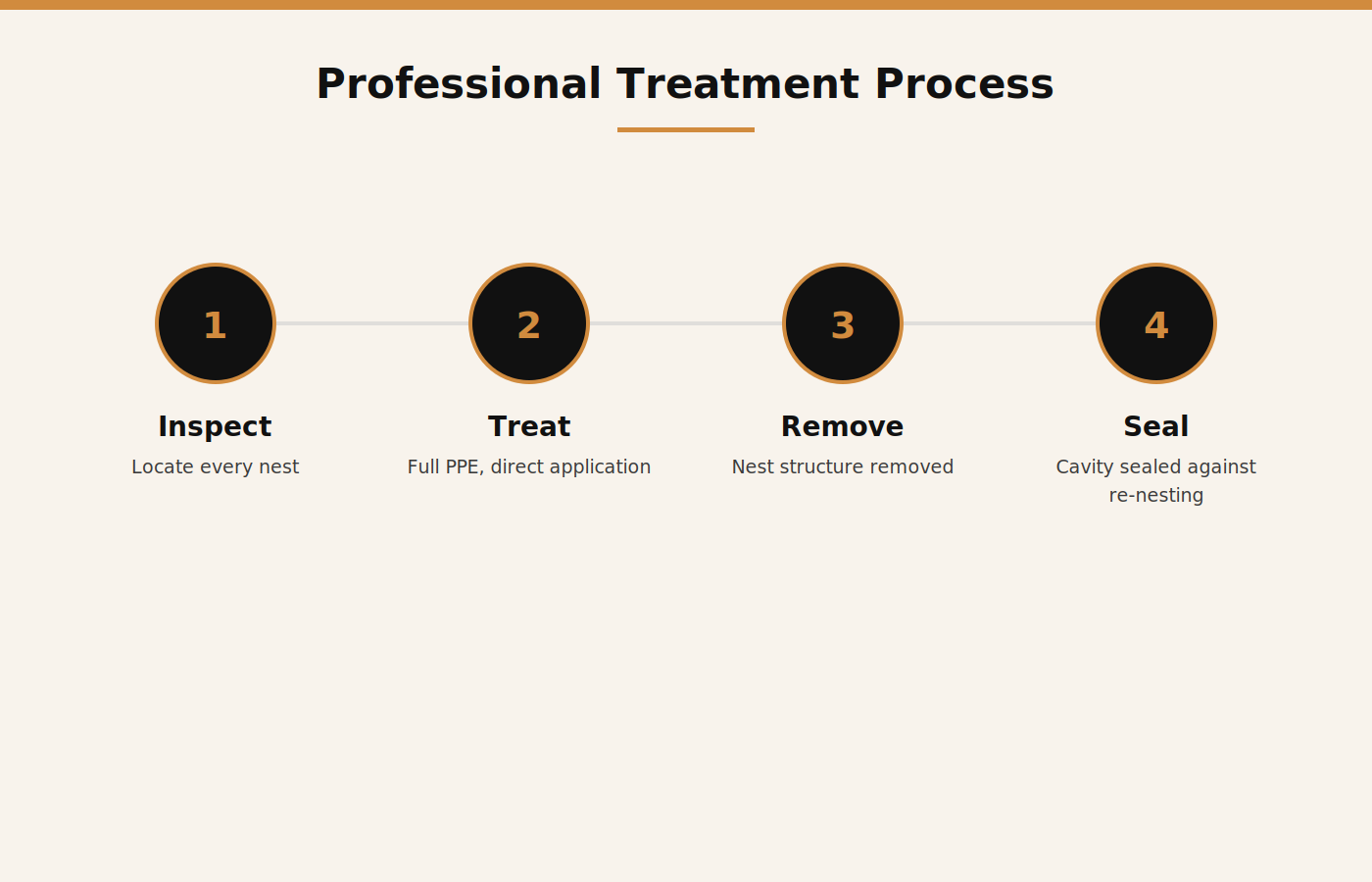
Santera's Dubai Municipality-certified technicians start with a complimentary inspection covering the full building envelope, roof voids, eaves, loading bays, racking, and exterior lighting areas, to locate every nest, including cavities a warehouse team would never spot from the floor. Removal is carried out with full protective equipment and the access tools needed for high eaves and roof structures, and treatment is scheduled around your operating hours so loading and dispatch continue with minimal disruption. After the colony is addressed and the nest removed, the technician checks nearby cavities that could attract re-nesting and advises your facilities team on sealing them, backed by our 30-day warranty with follow-up support.
A warehouse does not need to store food to attract wasps and hornets. High roof voids, steel eaves, open loading bay doors, and exterior lighting all offer the sheltered cavities and insect prey a colony looks for. If food-grade goods, packaging waste, or an on-site canteen are present, that adds a further draw, but the building structure alone is often enough.
This is not a task for warehouse staff. A nest in a roof void or high eave is often reached only with a ladder or scissor lift, and disturbing it triggers a coordinated defensive response from the colony at exactly the height where staff are working. Santera's technicians carry full protective equipment and the access tools needed to treat nests safely.
Most nest treatments are contained to the affected bay, eave, or roof void and can be scheduled around your operating hours, so the rest of the facility continues to run. Our team will confirm the safest short window with your operations or facilities manager before starting work.
Given how quickly a colony can establish in roof voids, eaves, or racking cavities during Dubai's warm season, a proactive check ahead of peak activity months catches nests while they are still small, before they become a safety incident near a loading bay or a goods storage risk.

If your warehouse or industrial facility has wasp or hornet activity near a loading bay, roof void, or exterior lighting area, do not wait for it to reach a staff member or a shipment. Learn more about wasp and hornet behaviour and treatment from Santera's pest library, or book a complimentary inspection via WhatsApp for a safe, same-day assessment of your facility.