Ticks
Tick Control for Dubai Veterinary Clinics and Pet Boarding Facilities: Protecting Staff, Pets and Waiting Areas
Muhammad Saif Ullah
September 15, 2026


A veterinary clinic or pet boarding facility in Dubai sees more animals pass through its doors in a single week than most households see in years, and every one is a potential entry point for ticks. A dog admitted for a routine check-up, a cat dropped off for a boarding stay, or an emergency case brought in after a walk in a landscaped community can all be carrying ticks without an obvious sign. Once inside, a tick does not need long to move from a carrier or exam table into a waiting room, a kennel run, or a staff uniform. Tick control for Dubai veterinary clinics and pet boarding facilities has to account for this constant movement of animals, not just treat a single room after a single incident.
Unlike a private villa garden, a clinic or boarding facility is a shared space that dozens of different animals and owners pass through every day. Each admission is effectively a new introduction point, and the facility has no control over where that pet has been before arriving. Add overnight boarding and shared kennel blocks, and the risk compounds: a tick that drops off one boarded dog on its first night can still be active in that kennel when the next guest arrives. This turnover is what separates clinic and boarding-facility tick control from a typical residential job.
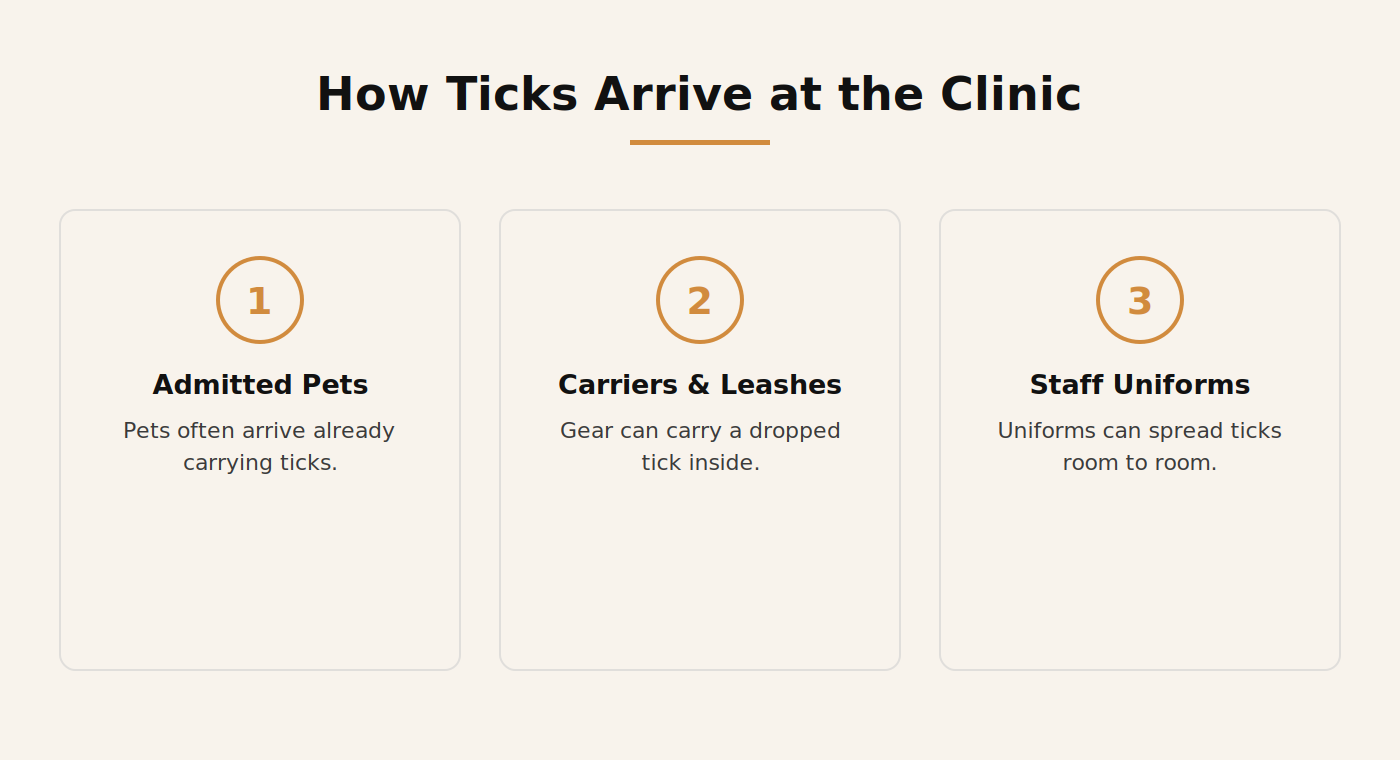
Ticks travel almost exclusively on a host. A pet that has spent time outdoors before its appointment can arrive at reception already carrying an attached or unattached tick. The Brown Dog Tick, most associated with indoor infestations in Dubai, is especially well suited to this kind of introduction because it can complete its entire life cycle indoors once established. Staff clothing, carriers, leashes, and transport blankets can also carry a tick that has already dropped off its original host, giving it a second chance to find a new one inside the building.
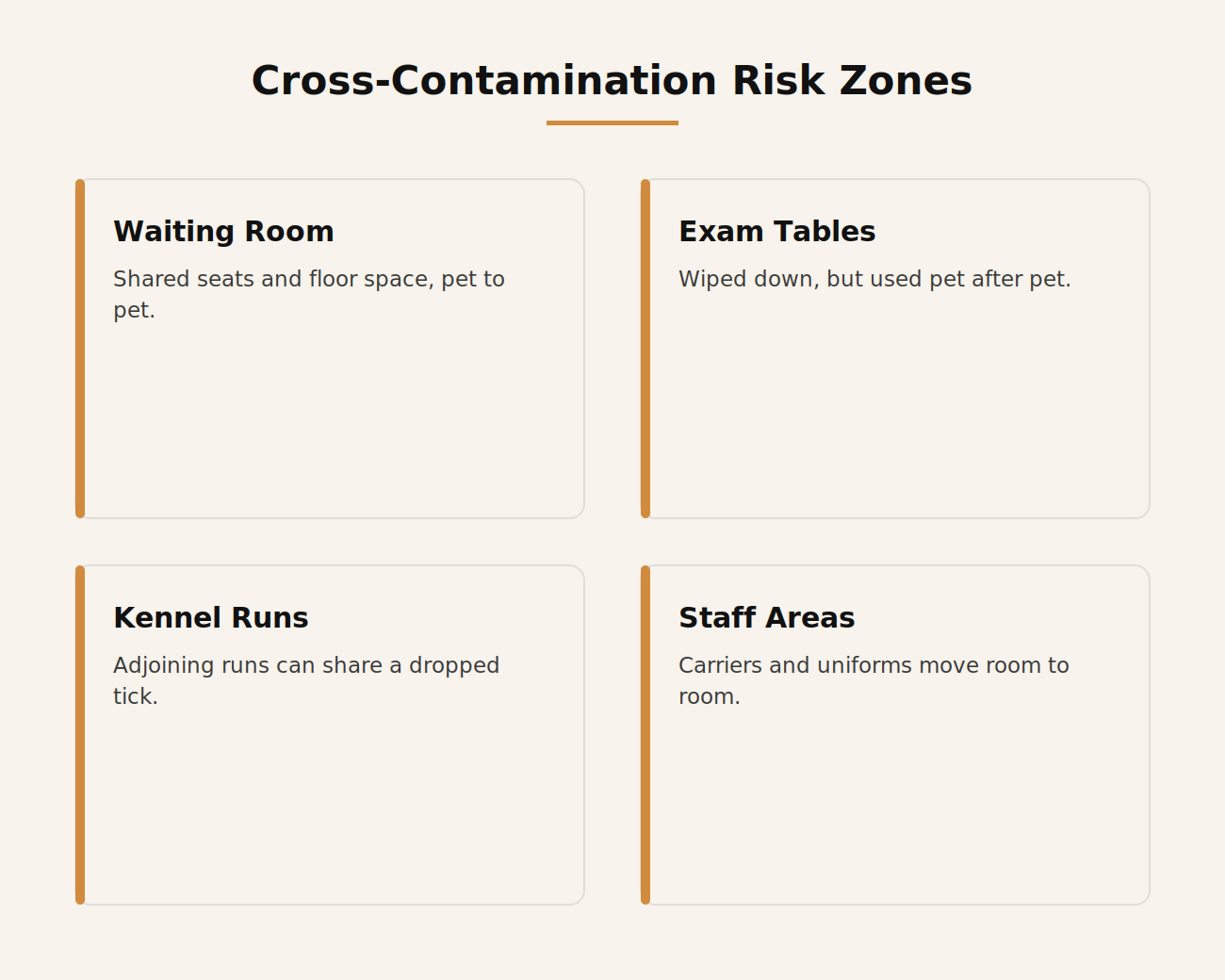
Once inside, the layout of a typical clinic or boarding facility gives a tick several ways to spread. Waiting rooms seat multiple owners and pets in the same chairs and floor space within a single hour. Exam tables are used for one animal after another with only a wipe-down between visits. Kennel blocks and boarding runs often share drainage or adjoining walls, and a tick that drops off in one run can move along a skirting board into the next. This cross-contamination risk is why environmental tick control has to be a facility-wide project, not a spot-treatment of wherever the last positive case was found.
Dubai's warm, humid stretches of the year create favorable conditions for tick activity even indoors, where air conditioning and enclosed kennel areas can hold a stable microclimate the Brown Dog Tick tolerates well. Because this species can breed through all its life stages without going back outdoors, a facility with climate-controlled kennels and steady foot traffic can sustain a low-level tick population long after the pet that introduced it has gone home. Facilities that treat ticks as only a seasonal, outdoor problem often miss this indoor persistence entirely.
Strong day-to-day hygiene protocols reduce how far a tick can travel before professional treatment begins. Practical measures include flagging pets with visible ticks on arrival, cleaning exam tables and carriers between patients, keeping kennel runs free of clutter where ticks can hide, and training staff to recognize a tick on skin, bedding, or uniforms. These steps do not replace professional environmental treatment, but they slow the spread between admissions and make any later inspection more effective.
A spray used on a single kennel or a wipe-down after one sighting only addresses the spot that was seen, not the harbourage ticks use in cracks, skirting, and elevated crevices throughout a building. Because a facility has continuous new admissions, a one-off DIY response is almost always outpaced by the next arrival. Effective control needs a program that treats the environment across the whole facility, coordinates with each pet's veterinary care, and follows up on a schedule, rather than reacting room by room after every reported sighting.
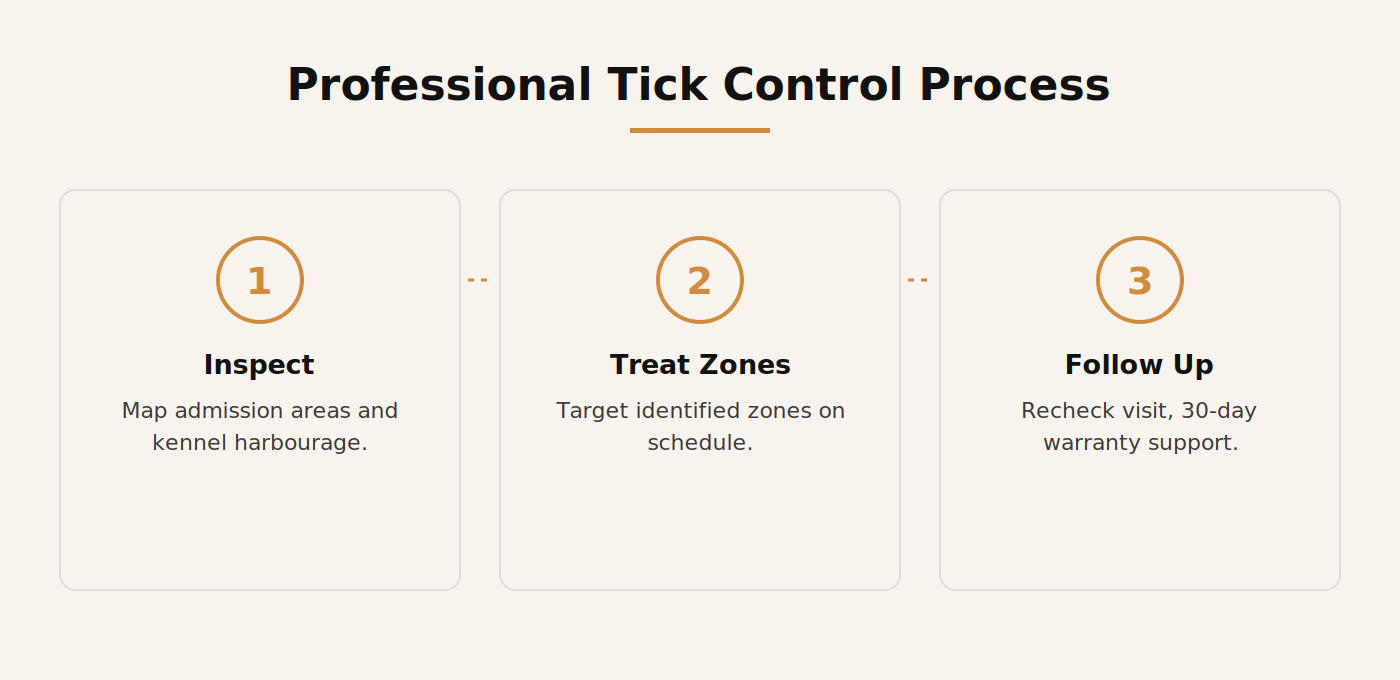
An effective program starts with an inspection covering reception, waiting areas, exam rooms, kennel blocks, and staff-only spaces where carriers are stored, mapping cracks and elevated harbourage the way the Brown Dog Tick actually uses them. Treatment then targets those zones using Dubai Municipality-approved professional products applied by technicians trained for occupied clinical and boarding environments, scheduled around admission hours so animal care continues with minimal disruption. A follow-up visit checks whether activity has dropped across the treated zones, with a 30-day warranty covering follow-up support within the agreed scope.
For a clinic or boarding facility, a visible tick problem affects more than one animal. Staff who handle pets all day face direct exposure, boarded pets from unrelated households can be exposed to each other's parasites, and clients notice when a waiting room or kennel does not look and feel clean. A documented, facility-wide tick control program protects everyone using the space every day and gives owners a straightforward answer when a client asks how the practice manages the risk, backed by a provider with 25+ years of team experience, a 4.9 star Google Reviews rating, and 10,000+ completed treatments across Dubai properties.
For more detail on how ticks behave, spread indoors, and are identified on pets and in property environments, see Santera's tick pest library page.
Yes. A tick can drop off in a waiting area, a carrier, or on staff clothing while still unfed, then attach to the next pet or person who uses that same space. This is why waiting rooms and reception need to be part of a facility's tick control plan, not just the exam rooms and kennels.
Most clinics and boarding facilities benefit from a scheduled inspection on a monthly basis, with an extra check after any known tick-positive admission or a spike in boarded animals during peak travel season. Facilities with on-site kennels or overnight boarding should inspect more often than a clinic seeing only short appointments.
Professional treatment for an occupied veterinary or boarding environment is scheduled around admission hours and animal movement, using Dubai Municipality-approved professional products applied by trained technicians. Treated zones are typically kept clear for a short window while treatment settles, and the facility's team is briefed on timing in advance.
No. Environmental tick control inside a facility addresses the building, kennels, and shared spaces, while prevention on an individual pet is a separate conversation between the owner and their veterinarian. A facility's environmental program and each pet's own prevention routine work together.
If your veterinary clinic or pet boarding facility in Dubai is managing tick admissions or wants a documented environmental program in place before it becomes a problem, Santera's team is Dubai Municipality certified (License 1595993) and works directly with clinical and boarding facility managers across the city. Book your complimentary inspection via WhatsApp, same-day service available across Dubai, and get a facility-wide plan that covers waiting rooms, exam rooms and kennels together.