Ticks
Tick Control for Dubai Community Parks, Gardens and Shared Outdoor Facilities
Muhammad Saif Ullah
September 15, 2026


In many Dubai community developments, the villa or apartment garden is only part of the picture. The real shared risk sits in the communal park, the landscaped garden beds along a walking path, the shared lawn outside a cluster of townhouses, and the dog-walking area that every pet owner in the community passes through. When ticks establish themselves in these shared outdoor facilities, they do not stay contained to one household. Effective tick control for Dubai community parks starts with treating the whole shared space as a single system, not a series of individual gardens.
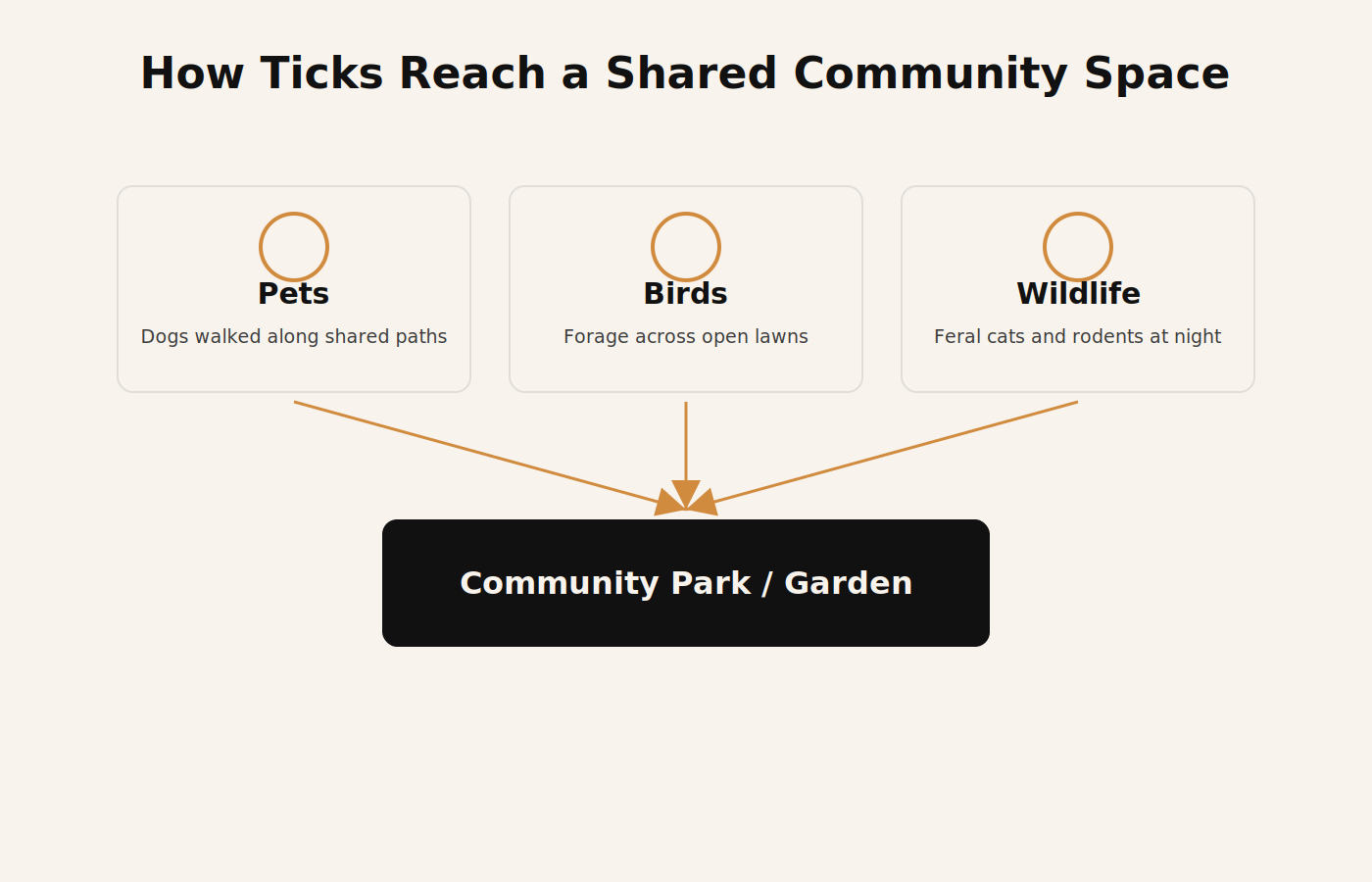
Community parks and communal gardens in Dubai combine several conditions ticks rely on: irrigated lawns, dense ornamental planting, shaded garden edges, and a steady flow of hosts. Feral cats and rodents move through landscaped beds after dark, birds forage across open lawns, and resident dogs are walked along the same paths every day. Each of these hosts can carry ticks into the shared space and drop them along the way, so a single introduction point can seed activity across an entire community's green infrastructure rather than one private yard.
Ticks do not travel far on their own. They wait in vegetation and attach to a passing host, whether that is a resident's dog on its morning walk, a bird foraging near a sprinkler line, or a feral cat crossing a communal garden overnight. Once attached, that host can carry the tick into a completely different part of the community, from a shaded playground border to the lawn outside a neighboring building. In a facility used by dozens or hundreds of households, this host movement is exactly what turns a localized tick presence into a community-wide concern.
Tick activity in Dubai's shared outdoor spaces tends to rise noticeably after rainfall and during periods of higher humidity, when irrigated lawns, mulched beds, and dense hedging hold moisture longer. Community landscaping teams that water on a fixed schedule can unintentionally maintain the humid microclimate ticks prefer along garden edges and shaded walking paths. Facilities managers who track these seasonal shifts, and schedule inspections to follow them, are able to catch rising activity in a shared park before residents start reporting bites from their pets or children.
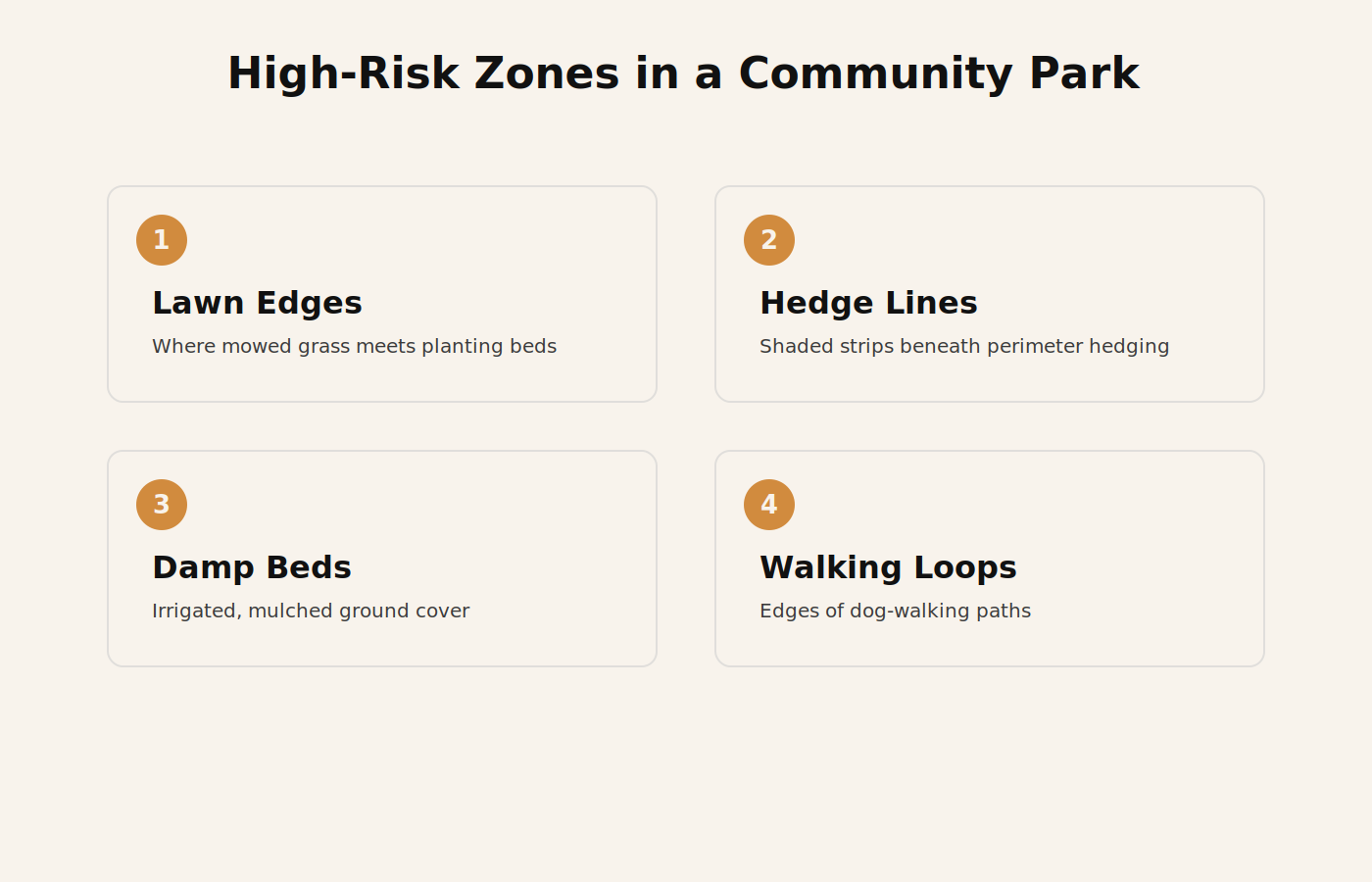
Not every part of a shared facility carries equal risk. Ticks concentrate along the transition zones: the border where a lawn meets a planting bed, the shaded strip beneath perimeter hedging, the edges of a dog-walking loop, and any area where irrigation keeps ground cover consistently damp. Open, mowed, sun-exposed lawn in the middle of a community park is generally lower risk than these edges. Mapping a community's high-risk zones is the first step in any shared-facility inspection, since it tells the treatment team exactly where to focus rather than blanket-spraying the entire amenity area.
A single-villa tick treatment is designed around one garden, one perimeter, and one household's pets. A community park, communal lawn, or shared dog-walking area is a different scale of problem entirely: multiple host populations, larger and more varied vegetation, shared irrigation, and dozens of families moving through the same space every day. Treating a shared facility the way a single garden is treated usually misses the connected vegetation corridors and communal wildlife pathways that let ticks recolonize the area within weeks. Shared outdoor facilities need a perimeter and vegetation-focused program scaled to the whole amenity, not a repeated villa treatment.
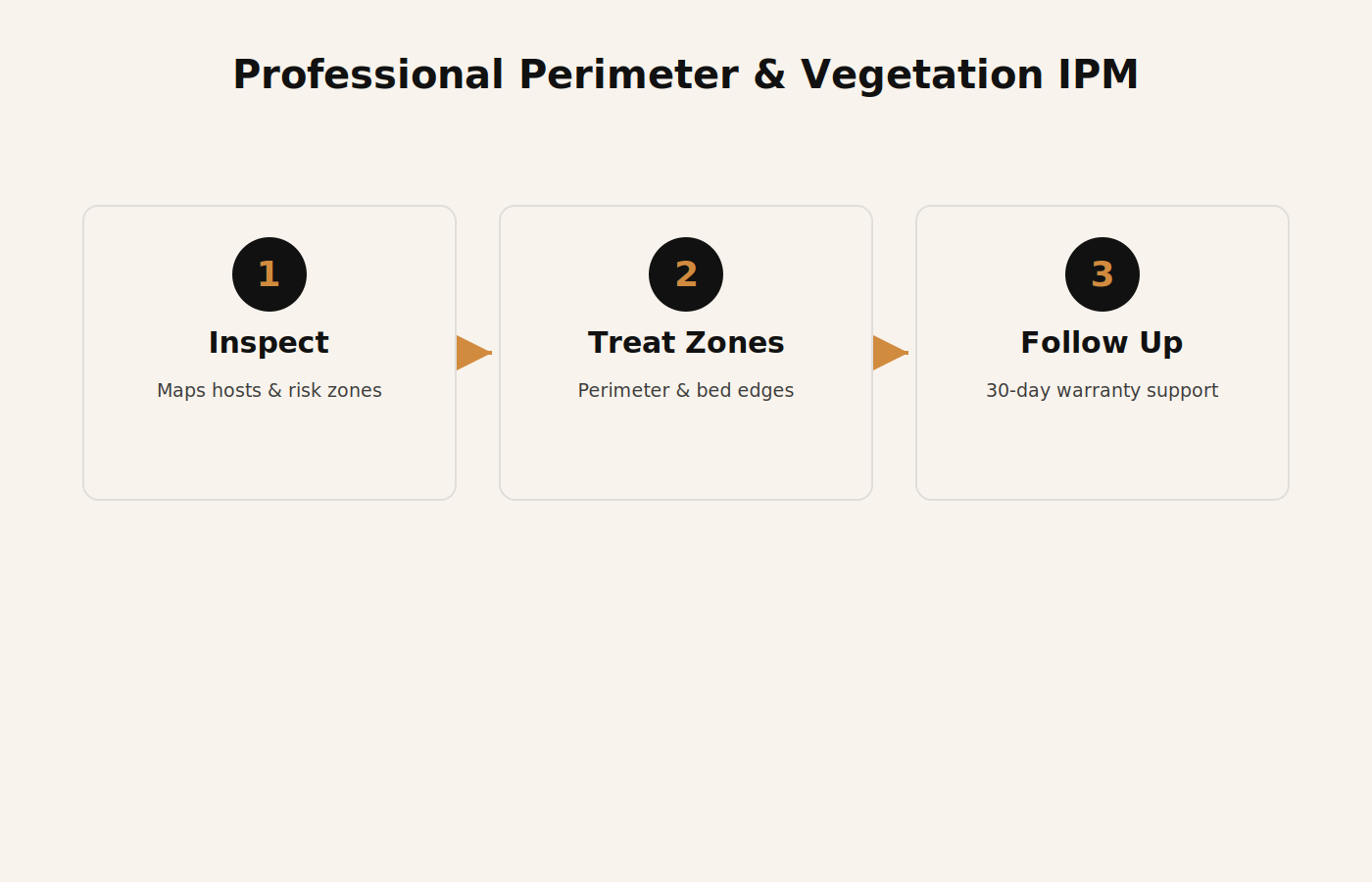
An effective program for a Dubai community's shared green space starts with an inspection that maps host activity, high-risk vegetation, and the boundaries between the amenity area and surrounding private gardens. Treatment then focuses on perimeter zones, hedging, garden bed edges, and other vegetation corridors identified during the inspection, using Dubai Municipality-approved professional products applied by technicians trained for shared public and semi-public spaces. A structured follow-up visit checks whether activity has dropped in the treated zones and whether any new host pathways have opened up, with a 30-day warranty covering follow-up support within the agreed scope.
When a facilities management company or owners' association in Dubai is evaluating tick control for a shared park or communal garden, it is worth asking for a documented inspection covering the whole amenity area, a treatment plan that names the specific high-risk zones rather than a generic "spray the park" scope, a schedule that accounts for Dubai's rainfall and humidity patterns, and a warranty with defined follow-up support. A provider with 25+ years of team experience, a 4.9 star Google Reviews rating, and 10,000+ completed treatments across Dubai properties is generally better placed to manage a shared-facility program than a residential-only service.
For residents, the practical concern is simple: children playing on communal lawns and pets walked along shared paths should not be picking up ticks from the community's own landscaping. Because a shared facility is used by every household in the development, protecting it benefits the whole community at once, rather than shifting the risk from one garden to the next. Community management teams that treat the shared park, communal garden, and dog-walking areas as one connected system give every resident family the same level of protection.
For more detail on how ticks behave, spread, and are identified in Dubai properties, see Santera's tick pest library page.
Most Dubai community developments benefit from a scheduled inspection every one to two months, with additional checks after heavy rain or a sustained rise in humidity. Communities with dog-walking areas, dense landscaping, or reported pet tick cases should move to a more frequent inspection cycle during the warmer, humid months.
Yes. Because shared parks, communal lawns, and dog-walking paths are used by residents from across the development, a tick population established in one landscaped bed or lawn edge can be carried on pets, clothing, or shoes into multiple homes. This is why treatment needs to cover the whole shared facility rather than one villa's private garden.
Professional treatment programs for shared community spaces in Dubai are planned around the times residents, children, and pets actually use the area, using Dubai Municipality-approved professional products applied by trained technicians. Access to freshly treated zones is typically restricted for a short window while the treatment settles, and the community management team is briefed on timing in advance.
Responsibility usually sits with the facilities management company, owners' association, or community management team that maintains the shared landscaping, rather than any single resident. Because the risk is community-wide, coordinating one professional inspection and treatment program for the whole shared facility is more effective than individual residents treating their own gardens separately.
If your community's shared park, communal garden, or dog-walking area is showing signs of tick activity, Santera's team is Dubai Municipality certified and works directly with facilities management companies and owners' associations across the city. Book your complimentary inspection via WhatsApp, same-day service available across Dubai, and get a documented plan for the whole shared facility, not just one garden.