Termites
Termite Prevention for Dubai Warehouses and Industrial Facilities: Protecting Pallets, Racking and Stored Goods
Muhammad Saif Ullah
September 15, 2026


A single pallet of infested timber packaging can put an entire Dubai warehouse aisle at risk before anyone notices. For facility managers running distribution centres, cold stores, and industrial units across Dubai, termites are not a cosmetic nuisance. They are a threat to racking integrity, stored inventory, and safety compliance, and the warm, humid conditions that define a Dubai summer make this risk a year-round concern rather than a seasonal one.
Dubai's climate, high humidity for much of the year combined with high ambient temperatures, gives subterranean termite colonies conditions to remain active for longer stretches than in temperate markets. Warehouses and industrial units add a second layer of risk on top of climate: a constant flow of wooden pallets, crates, and packaging moving in and out through loading docks. Every incoming shipment is a potential entry vector, and large open floor plans make early activity easy to miss until it has spread along racking runs or into structural timber.
The financial exposure in a warehouse setting is different from a villa or office. Termite activity that starts in a stack of wooden pallets can move into timber shelving inserts, dunnage, and packaging materials pressed against steel racking. Left unchecked, this can compromise the load-bearing timber elements within a racking system, damage stored goods housed in cardboard or paper-based packaging, and force a costly inventory audit or write-off. For facilities holding high-value stock, the disruption of a full aisle shutdown for inspection and treatment is itself a business cost worth avoiding through early prevention.
Loading docks are the single most common entry point in industrial buildings. Gaps around dock levellers, unsealed expansion joints, and timber door frames all give subterranean termites a route from the soil into the structure. Wooden pallets, crates, and packaging brought in from suppliers are the second major pathway, since infested timber can be introduced from outside the facility entirely. Older industrial units in Dubai's established logistics zones can also have aging structural woodwork or timber-framed mezzanine storage that was never part of a termite prevention plan when the building was constructed.
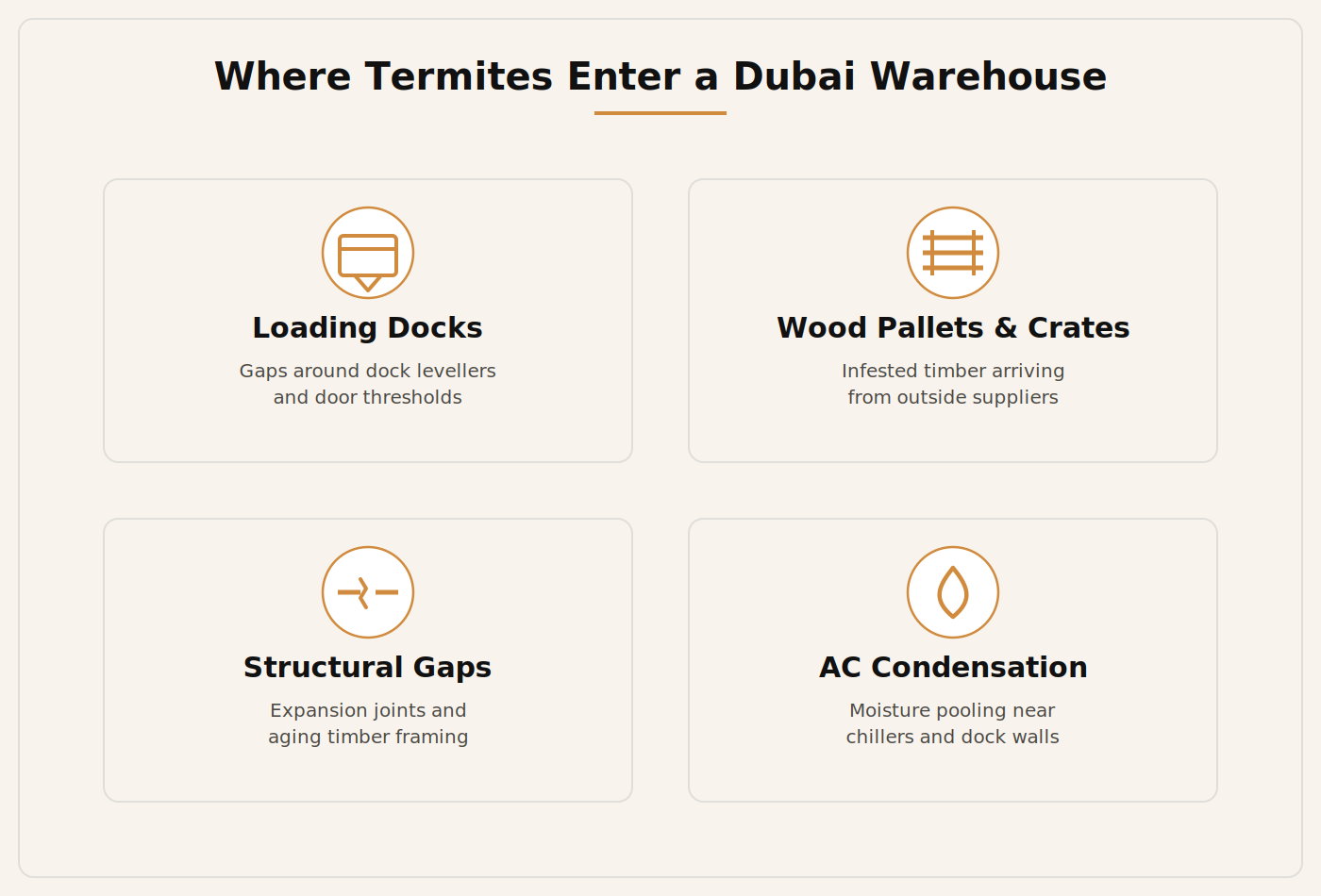
Large-format cooling systems, chillers, and rooftop AC units generate significant condensation, and in a warehouse this moisture often drains toward wall bases, floor joints, or storage areas rather than away from the building. Termites are drawn to consistent moisture, and a condensation leak near timber pallet stacks or structural framing can quietly sustain activity for months. Facility managers who track HVAC maintenance schedules alongside pest inspection schedules tend to catch this risk earlier, since a drainage or insulation fault is often the first visible clue.
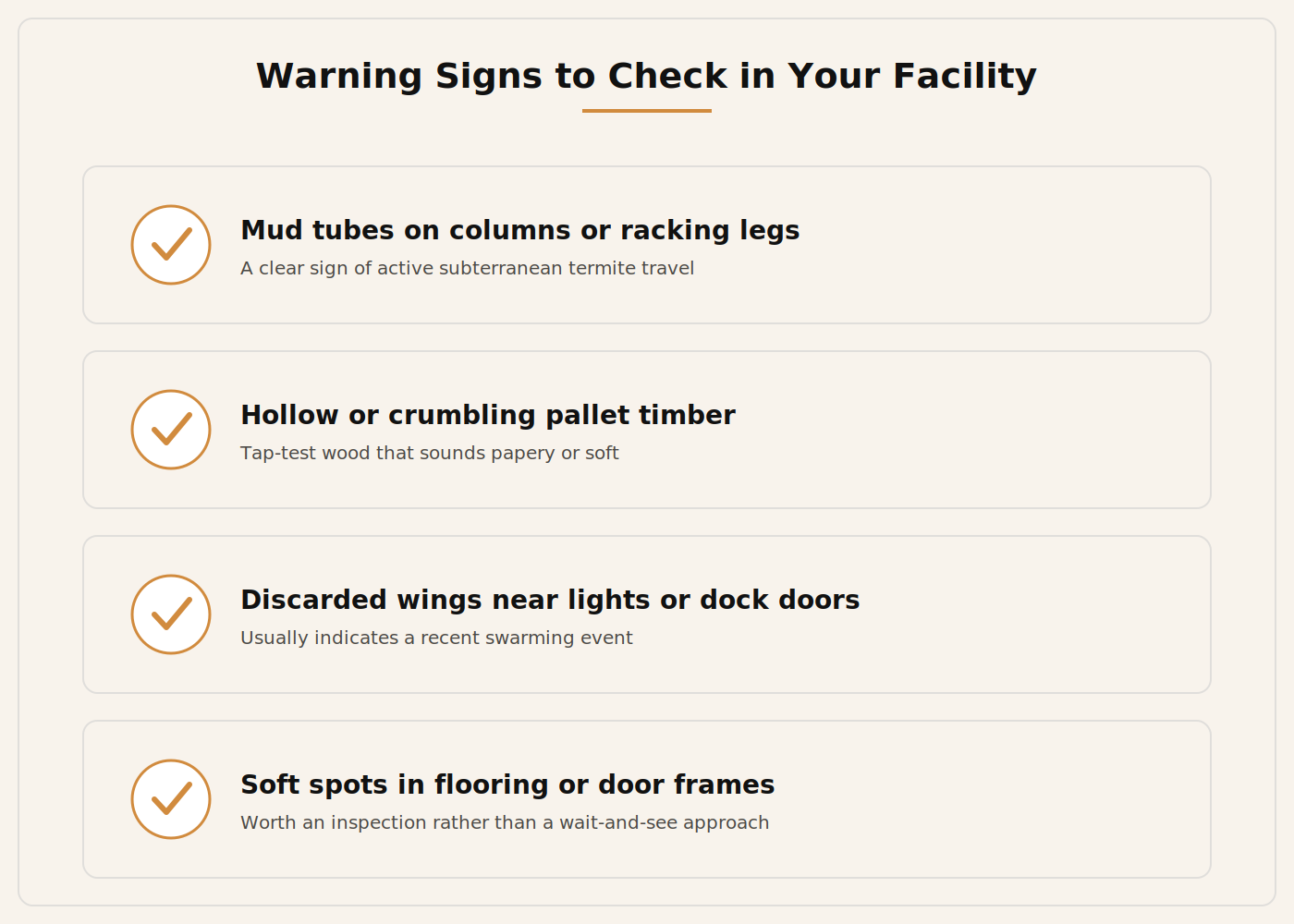
Mud tubes running up support columns, dock walls, or racking legs are one of the clearest indicators of subterranean termite activity. Hollow-sounding or crumbling timber in pallets, dunnage, or structural beams is another. Discarded wings near light fittings or loading bay doors can indicate a swarming event, which typically happens in warmer months. Any unexplained soft spots in wooden flooring, door frames, or mezzanine supports should prompt an inspection rather than a wait-and-see approach, particularly in facilities storing sensitive goods.
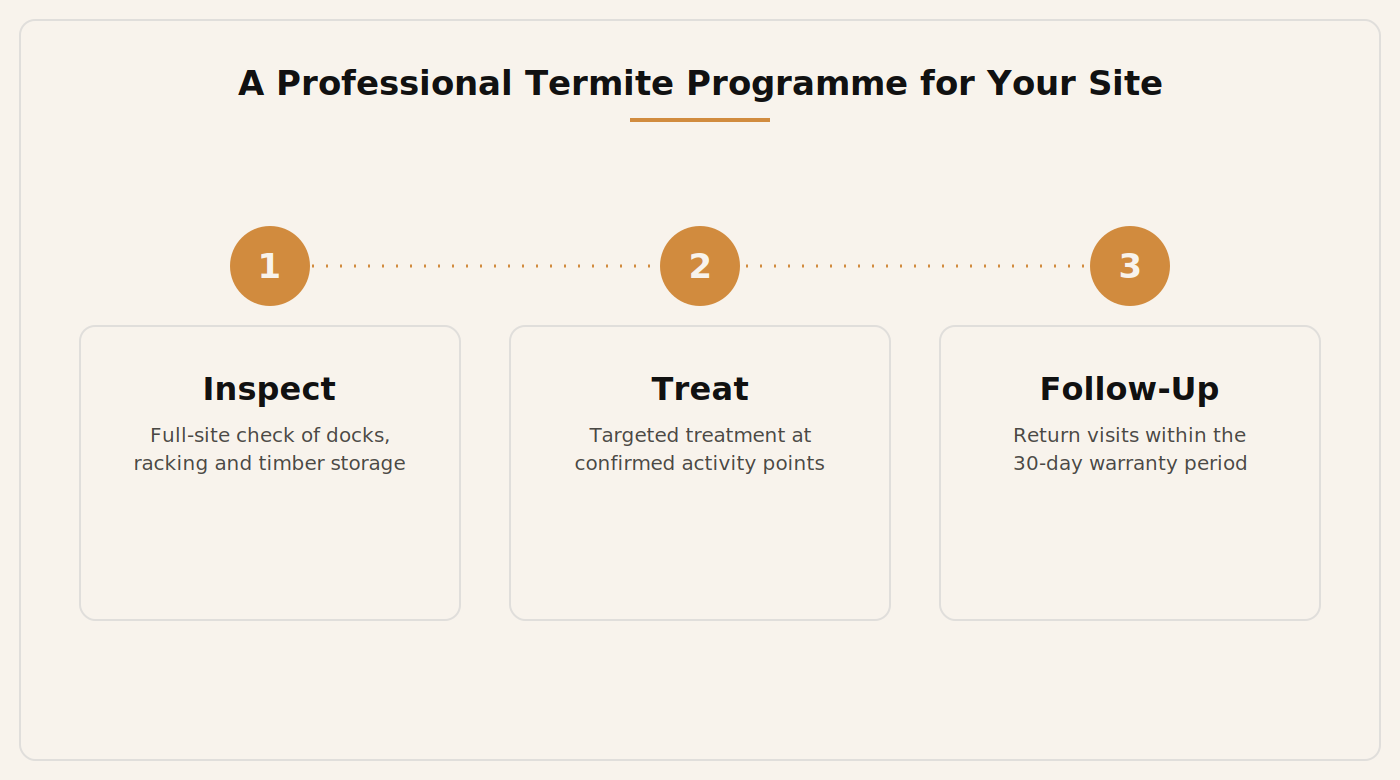
An effective programme for a warehouse or industrial facility starts with a full-site inspection covering loading docks, racking bays, timber packaging storage, and any structural woodwork, not just the office or admin block. Treatment is then targeted at confirmed activity and identified entry points using Dubai Municipality-approved professional products, applied by a Dubai Municipality certified team. Because industrial sites keep moving stock in and out, follow-up visits within the warranty period matter more here than in a residential setting, confirming that treated zones remain clear as new pallets and packaging continue to arrive.
A villa's termite risk usually centres on garden timber, wooden decking, or skirting boards close to irrigated landscaping. A warehouse's risk profile is broader and higher-stakes: constant timber packaging turnover, large unbroken floor areas that hide early activity, structural racking with commercial value sitting behind it, and loading dock openings that are harder to fully seal than a villa's perimeter. This is why an industrial termite programme is scoped around goods flow and dock access, not just the building envelope, and why facility managers benefit from a provider with specific commercial and industrial experience rather than a residential-only service.
Santera has supported Dubai facility managers with pest programmes for more than 25 years of combined team experience, is Dubai Municipality certified, and holds a 4.9-star rating on Google Reviews across more than 10,000 completed treatments. Every termite treatment includes a 30-day warranty with follow-up support. For a closer look at how termite colonies behave and spread, see our Pest Library page on termites.
Most industrial and warehouse facilities in Dubai benefit from a scheduled inspection at least twice a year, with more frequent checks around loading docks and timber storage areas where new pallets and packaging arrive regularly.
Termites feed on cellulose, so steel racking itself is not a food source. However, timber shelving inserts, wooden dunnage, cardboard, and paper-based packaging stacked against or inside racking systems remain vulnerable and can carry activity close to stored goods.
Yes. Termites need moisture to survive, and condensation pooling near AC units, chillers, or poorly sealed loading dock thresholds can create the damp conditions that draw subterranean termites toward timber packaging and structural woodwork.
A typical programme includes a full facility inspection, treatment targeted at identified activity and entry points, and follow-up visits within the warranty period to confirm the treated areas remain clear.
If your Dubai warehouse or industrial facility handles wooden pallets, racking, or timber packaging, a proactive inspection is the most reliable way to protect stored goods before activity spreads. Book your complimentary inspection via WhatsApp, same-day service available across Dubai, and let our Dubai Municipality certified team assess your facility.