Termites
Termite Control in Al Barsha: Protecting Older Villas from Structural Damage
Muhammad Saif Ullah
September 13, 2026


Al Barsha's older villas, many built during the neighborhood's original development across Al Barsha 1, 2, 3 and South in the early 2000s, sit on some of Dubai's most established low-rise streets. Two decades of settled soil, mature palm and ficus landscaping, and deeply rooted irrigation networks have created gardens residents are proud of, and conditions unusually favorable for subterranean termites. These pests travel through soil moisture toward timber door frames, skirting boards, built-in wardrobes and structural elements hidden behind villa walls, often for months before an owner notices anything is wrong. In a community where villas sit close together with shared boundary walls and connecting garden beds, termite control in Al Barsha calls for an approach built around this specific layout, not a generic Dubai-wide treatment plan.
Villas in Al Barsha that are now 15 to 25 years old were built with timber door and window frames, skirting, and in some cases wooden pergolas or decking, that have had decades to age and absorb ground moisture. Expansion joints, foundation edges and utility penetrations settle over time, opening small gaps that give termites direct access to structural timber. A newer villa in a recently developed community has not had the same exposure. For an older Al Barsha property, aged construction combined with established gardens means the underlying risk is structural, not cosmetic.
Many Al Barsha villas have irrigation lines installed close to the exterior walls to keep mature palms, hedges and lawns healthy through Dubai's dry months. That same irrigation, run along the same path for years, keeps the soil beside the foundation consistently damp, exactly the environment subterranean termite colonies need to survive. Garden beds built flush against exterior walls, thick mulch, and roots from large trees near the slab edge add cellulose material and shelter right where a colony can reach the villa undetected. Owners who love a lush Al Barsha garden are, without realizing it, often maintaining the ideal termite corridor into their own home.
Because Al Barsha's older villa plots sit close together with shared or adjoining boundary walls and narrow side setbacks, a termite colony rarely respects property lines. Mud tubes can run along a shared wall from one garden bed to the next, and a colony established in one villa's landscaping can extend underground into a neighboring plot before either owner sees a sign above ground. This spread risk is one of the clearest differences between treating termites on a dense Al Barsha street and a standalone property elsewhere in Dubai, and it is why inspections here should account for what is happening next door, not just within one boundary wall.
Because termites work behind walls and below floors, most Al Barsha homeowners notice indirect signs rather than the insects themselves. Common warning signs include pencil-thin mud tubes running up exterior walls or foundation piers, skirting boards or door frames that sound hollow when tapped, discarded wings collecting near windowsills after a swarm, paint that blisters without any plumbing leak nearby, and wooden fixtures that give way under light pressure. In an older villa with mature landscaping close to the walls, these signs are worth checking seasonally, particularly along the garden-facing elevation where irrigation and planting are heaviest.

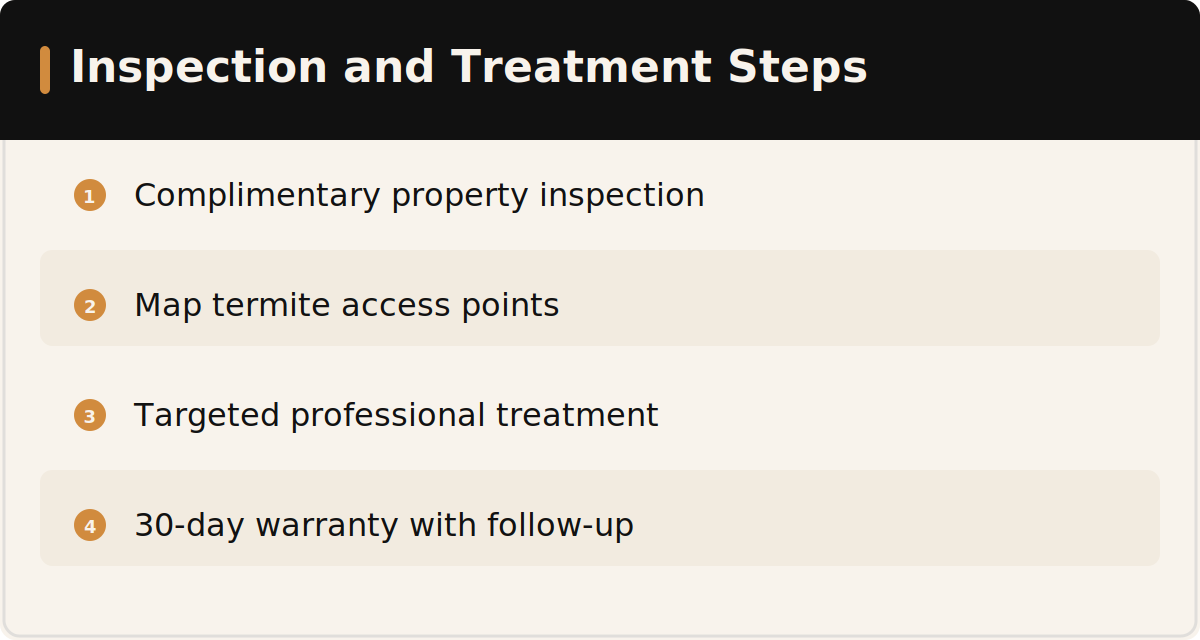
A proper termite inspection for an Al Barsha villa starts with a complimentary inspection covering the foundation perimeter, garden beds and irrigation lines against exterior walls, and accessible timber inside the property. Technicians look for mud tubes, moisture patterns, and access points where soil contacts structural timber, then map where the colony is likely entering rather than only treating visible activity. Treatment uses Dubai Municipality-approved professional products, applied to the identified access points and, where needed, along the foundation line to disrupt the colony's route into the structure. Every treatment includes a 30-day warranty with follow-up support, covering continued activity of the same pest within the agreed scope. It does not extend to a new infestation, reintroduction from a neighboring property, untreated areas outside scope, or structural and plumbing issues unrelated to pest activity. For more on termite biology, see our Pest Library page on termites.
Owners of older Al Barsha villas can reduce risk between inspections with habits suited to this area's mature gardens. Keep irrigation heads angled away from the foundation rather than running directly against it, and leave a small dry gap between garden beds and exterior walls instead of planting flush against the structure. Trim back roots and dense mulch from large trees near the slab edge, and check exposed wooden fixtures such as door frames, pergolas and skirting each season for soft spots or hollow sound. Villas over 15 years old, and any resale villa with mature landscaping in place, benefit from a periodic professional check even without visible signs, since the earliest activity is almost always hidden.

Book an inspection as soon as you notice mud tubes, discarded wings, or hollow-sounding timber, and do not wait for damage to spread before acting. It is also worth calling if a neighboring Al Barsha villa was recently treated for termites, since a disturbed colony can push activity toward an adjoining property. Renovations that involve removing old skirting, flooring or built-in joinery are another good trigger, as disturbed timber can reveal activity previously hidden behind finishes. If buying an older resale villa in Al Barsha, a pre-purchase inspection is a sensible step given the age and landscaping typical of the area.
Wood rot from moisture alone tends to look soft and crumbly throughout, while termite damage often leaves a thin outer layer of wood or paint intact over hollowed-out timber, along with mud tubes nearby. If unsure, a professional inspection can confirm the cause before you carry out repairs.
Yes. In Al Barsha's older streets, shared boundary walls and connected garden beds give subterranean termite colonies an underground path between adjoining properties, which is why inspections here look at the wider row of villas, not just one boundary wall.
Yes, the initial inspection is complimentary, with no obligation to proceed. Treatment timing depends on the extent of activity and access to the affected areas, and your technician will confirm a schedule once the inspection is complete.
We use Dubai Municipality-approved professional products, applied by trained technicians following approved guidelines for residential properties. Your technician will advise on any precautions for the treated areas during your visit.
The 30-day warranty with follow-up support covers the property for continued activity of the same pest within the original scope and warranty period. Ask your technician about documentation you can pass on if selling shortly after treatment.
If your Al Barsha villa has mature landscaping close to the foundation, older timber fixtures, or a neighboring property with recent termite activity, it is worth having a professional look before small signs become structural repairs. Santera is Dubai Municipality certified, rated 4.9 stars on Google Reviews, and has completed more than 10,000 treatments across Dubai with 24/7 availability and same-day service. Contact us via WhatsApp for a quotation tailored to your property and to book a complimentary inspection at wa.link/k5sow1.