Stored Product Pests
Stored Product Pest Control for Dubai Supermarkets and Grocery Retailers
Muhammad Saif Ullah
September 15, 2026


A single packet of weevil-infested flour on a supermarket shelf is more than a lost sale. For Dubai's supermarkets and grocery retailers, stored product pests are a stock, reputation, and compliance problem all at once, and one that starts long before anything is visible to a shopper walking down the dry goods aisle.
Weevils, flour beetles, and pantry moths are usually thought of as a home kitchen nuisance, but a supermarket or grocery store handles a far greater volume and variety of exactly the stock these pests target: flour, rice, spices, cereals, dried fruit, nuts, and pet food. With constant stock turnover, multiple suppliers, and shelving that is rarely emptied completely, a retail environment gives these pests more opportunities to establish and spread than a single household ever would.
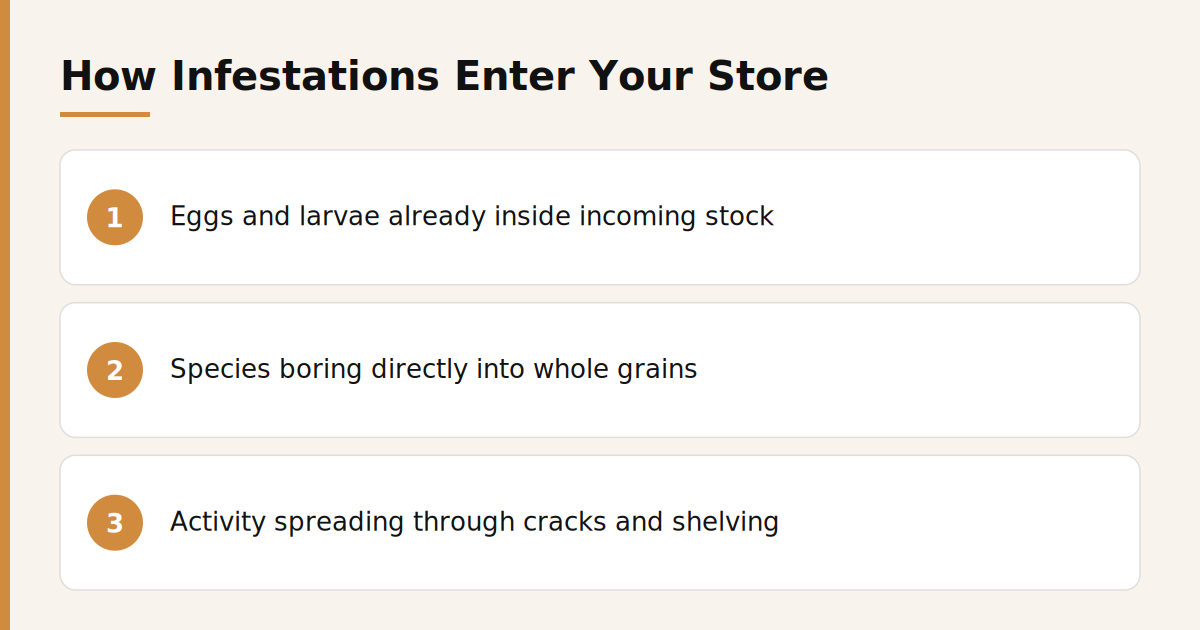
Most infestations do not start on your premises, they arrive with the stock. Eggs and larvae can already be present inside grain, flour, or dried goods before a pallet ever reaches your receiving dock, and some species bore directly into whole grains where they are impossible to spot on a quick visual check. Once inside, activity spreads through cracks, shelving, and machinery, moving from a single infested batch to surrounding stock over time.
Activity concentrates wherever dry goods sit undisturbed for any length of time. Common areas include bulk bins and dispensers, the back corners of dry goods shelving, pallet storage and back-of-store stockrooms, returned or damaged stock awaiting disposal, and gaps around shelving units and storage racking. Because front-of-store shelves are restocked constantly, activity often establishes first in slower-moving back-of-store storage before it reaches the shop floor.

For a retail business, the financial cost of discarding infested stock is often smaller than the reputational cost of a customer finding the problem first. A photo of weevils in a product, shared online or left as a review, does more lasting damage than the stock loss itself, and it undermines trust in every other product on your shelves, not just the one affected. Catching activity in back-of-store storage before it reaches the shop floor protects both the stock and the brand.
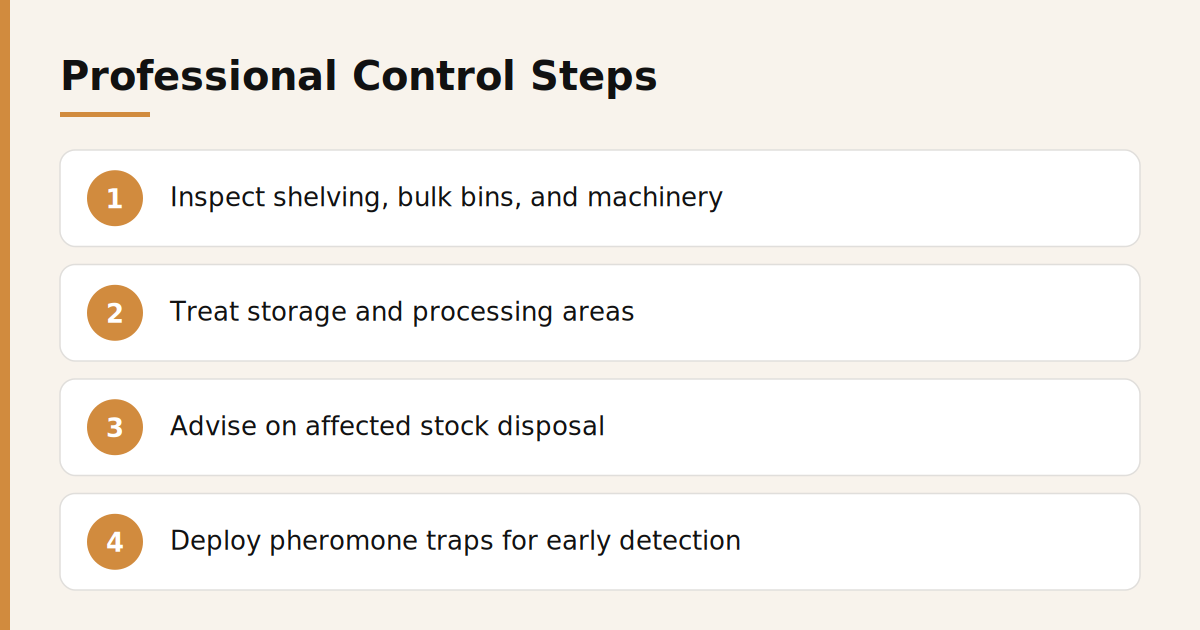
Santera's Dubai Municipality-certified technicians inspect shelving, bulk bins, storage machinery, and crevices to identify the species present and locate infested stock and harbourage. Treatment targets storage and processing areas along with the harbourage sustaining activity, and the technician advises on which affected stock should be disposed of. Pheromone traps and other monitoring are deployed to catch new activity early, which matters most in a retail setting where stock turns over constantly.
Inspecting incoming pallets at receiving, rather than assuming supplier stock is clean, catches problems before they reach your shelves. Strict first-in-first-out stock rotation reduces how long any single batch sits undisturbed, and keeping bulk bins and dispensers sealed and regularly cleaned removes an easy harbourage point. None of these steps replace professional monitoring, but they reduce how often new activity has the chance to establish.
Visible pest activity in dry goods storage is exactly the kind of finding that draws attention during a food safety inspection, and documented, HACCP-aligned pest control is part of demonstrating ongoing compliance rather than reacting after a problem is found. A regular monitoring programme aligned with your stock turnover gives you a paper trail as well as protection, which matters as much for an inspector's visit as it does for your shelves.
Cleanliness alone does not stop them, because most infestations arrive already inside incoming stock. Eggs and larvae can be present in flour, rice, spices, and dried goods before they ever reach your receiving dock, and a single infested pallet can seed activity across shelving and storage before anyone notices.
Remove the affected product immediately and check surrounding stock on the same shelf, since activity rarely stays contained to a single packet. Note the supplier and batch if possible, as this helps trace whether the infestation arrived with the stock or established locally. A professional inspection can then confirm the extent and source.
Yes. Visible pest activity in dry goods storage or on shelving is exactly the kind of finding that draws attention during a food safety inspection, and can affect the outcome. Documented, HACCP-aligned pest control with regular monitoring is part of demonstrating ongoing compliance, not just a reaction to a problem.
Given how easily new activity can arrive with incoming stock, a regular monitoring programme, typically using pheromone traps in dry goods storage and receiving areas, catches activity early rather than waiting for a customer or inspector to spot it first. Santera can align check frequency with your stock turnover and receiving schedule.

If your supermarket or grocery store has stored product pest activity in dry goods storage, bulk bins, or back-of-store shelving, do not wait for a customer or inspector to find it first. Learn more about stored product pest identification and treatment from Santera's pest library, or book a complimentary inspection via WhatsApp for a HACCP-aligned assessment of your storage and shelving.