Stored Product Pests
Stored Product Pest Control for Dubai Restaurants and Commercial Kitchens: Protecting Dry Storage and Pantries
Muhammad Saif Ullah
September 15, 2026


A busy Dubai restaurant kitchen runs on dry storage: sacks of rice, boxes of flour, tins of spice, cartons of cereal and bags of nuts, all staged for the next service. It is also one of the easiest places for a stored product pest problem to take hold unnoticed. Weevils, grain and flour moths, and small beetles do not need dirt or neglect to establish themselves. A single infested delivery, a torn seam on a flour bag, or a container left unsealed after a busy shift is enough. For back-of-house teams already juggling prep schedules and supplier deliveries, catching the problem early, before it shows up during a Dubai Municipality food safety inspection, is the real challenge.
Supermarket shelves and warehouse pallets hold large volumes of packaged goods moving in and out quickly. A restaurant pantry is different: smaller volumes of dry goods often sit for longer between deliveries, tucked into shelving, cupboards and under-counter storage that is harder to inspect daily. Add Dubai's warm, humid climate and the steady stream of supplier deliveries into a single back-of-house area, and a commercial kitchen's dry storage becomes its own distinct risk profile, one that needs its own approach rather than the retail-floor or logistics-yard playbook.
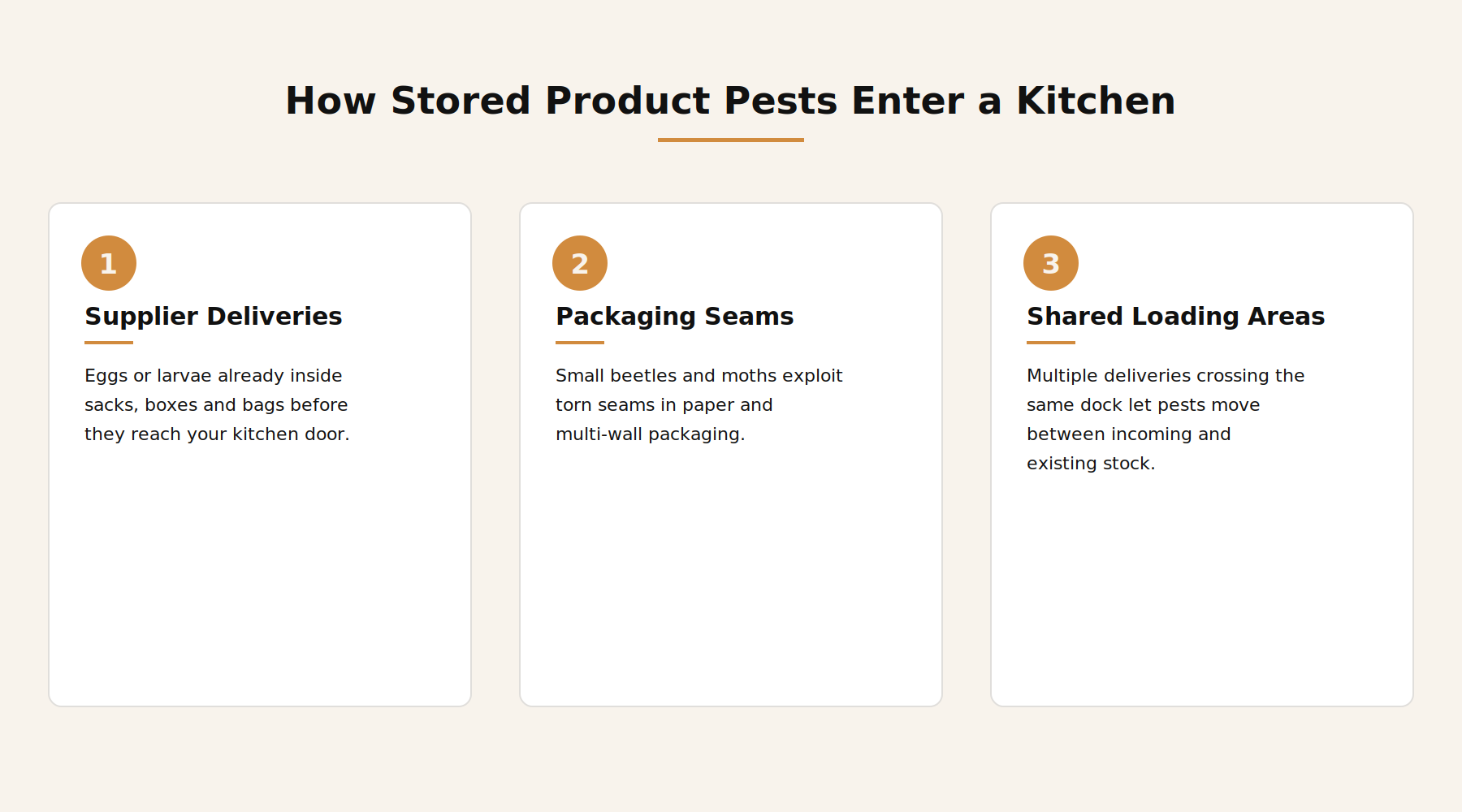
Almost every infestation traces back to one of a few entry points. Supplier deliveries are the most common: eggs or larvae already present inside sacks of flour, rice, spices or grains before the box ever reaches your loading door. Packaging seams and multi-wall paper bags are easy for small beetles and moths to exploit once stock is stacked in a dry storage room. Shared loading and receiving areas, used by multiple deliveries across a day, can also let pests move between incoming stock and existing inventory before anyone notices.
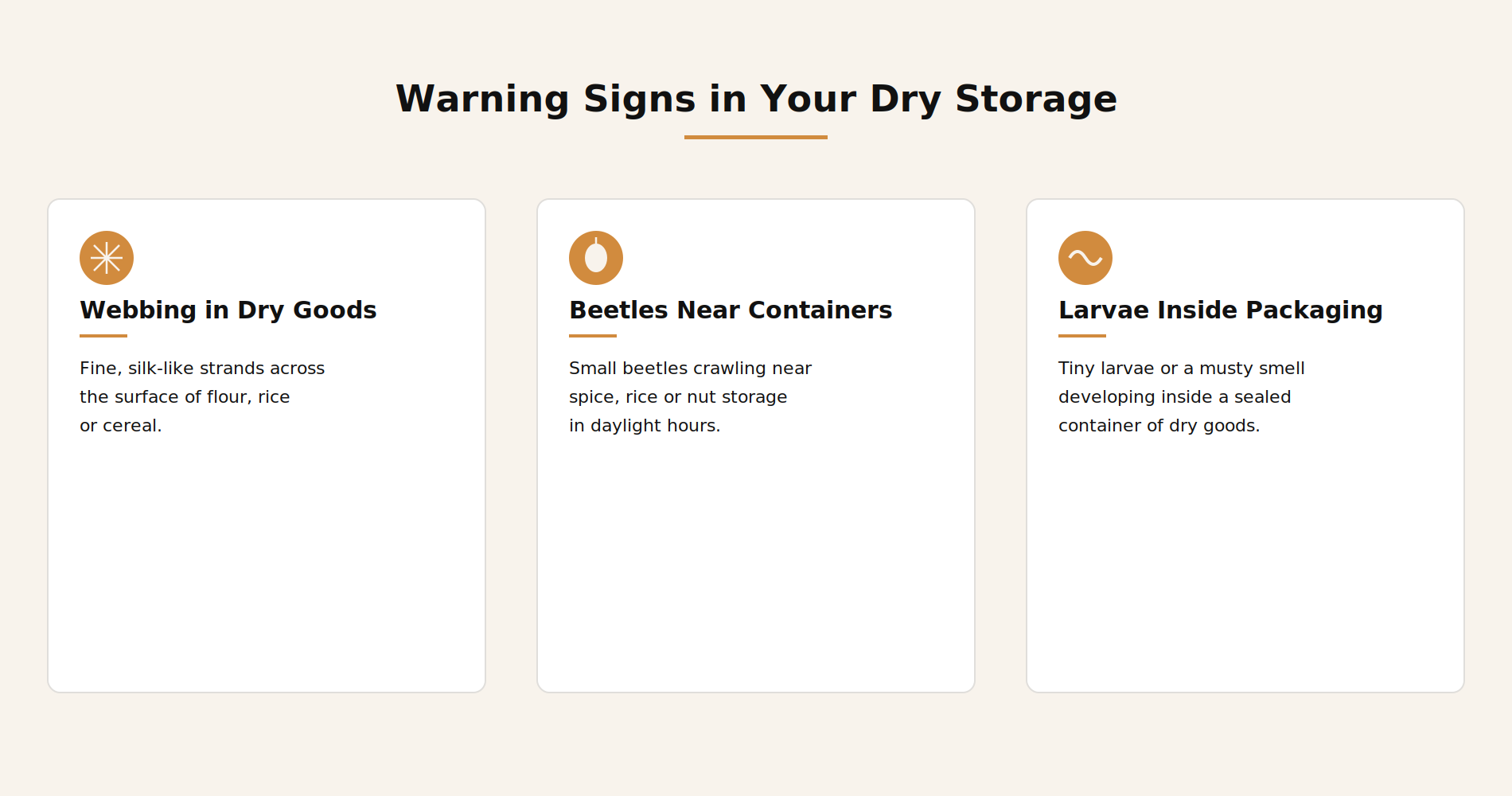
Early detection depends on staff knowing exactly what to look for during routine stock checks. Fine, silk-like webbing across the surface of flour, grains or cereal is one of the clearest signs of moth activity. Small beetles crawling near spice containers, rice sacks or nut storage, especially in daylight, point to an established population rather than a one-off stray insect. Tiny larvae inside unopened bags, or a musty, slightly sour smell developing in a sealed container, both suggest pests are already breeding inside the product rather than simply passing through the room.
Dubai's F&B and hospitality sector operates under close food safety oversight, and dry storage is a standard stop on any inspection route. Inspectors check for signs of pest activity in and around packaged dry goods, appropriate sealed storage, clear stock rotation, and evidence that a venue has a documented pest management approach rather than a reactive one. A restaurant that can show routine dry-storage checks, supplier-delivery inspection habits and a working relationship with a licensed pest control provider is in a far stronger position than one relying on periodic cleaning alone.
Because so many infestations begin before stock ever reaches the pantry shelf, the receiving dock deserves as much attention as the storage room itself. Inspecting sacks and boxes for tears, staining or insect activity before they are accepted, decanting dry goods into sealed containers soon after delivery, and keeping new stock separate from existing inventory until it has been checked all reduce the chance that a supplier issue becomes a kitchen-wide problem.
Good stock rotation is a pest control measure as much as a freshness one. First-in, first-out practices reduce the length of time any single batch sits undisturbed, which is exactly the condition stored product pests need to establish a breeding population. Moving dry goods into labelled, sealed, food-grade containers on receipt, rather than leaving them in original packaging, removes many of the seams and gaps pests use to move between products, and it makes any early activity far easier to spot during a quick visual check.
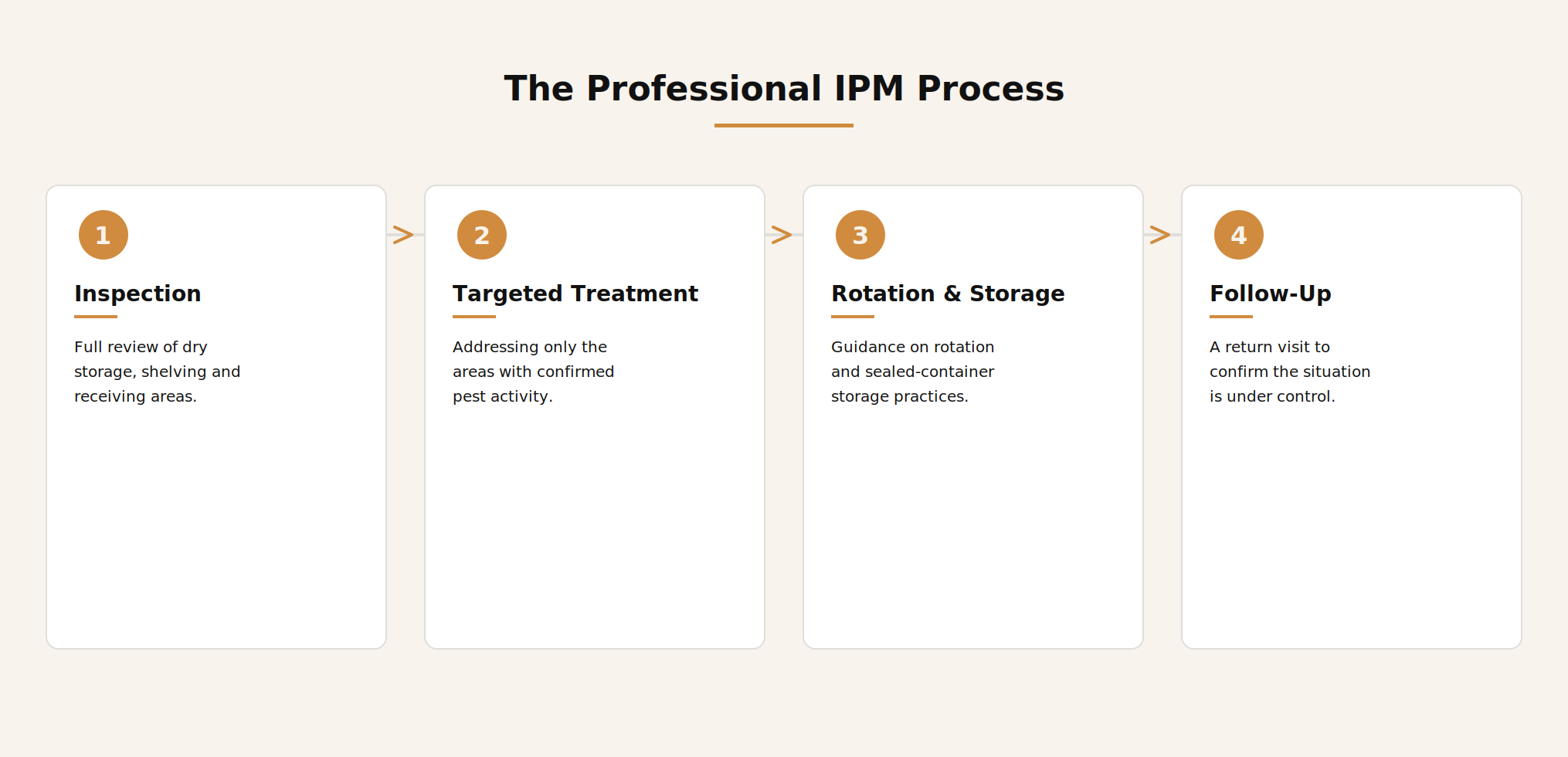
An effective program for restaurant back-of-house areas follows a clear sequence. It starts with a thorough inspection of the dry storage room, shelving, packaging and receiving area to identify current activity and entry points. Where activity is confirmed, targeted treatment addresses the specific areas involved rather than the whole kitchen. From there, practical recommendations around stock rotation and sealed-container storage help remove the conditions that allowed the problem to start. Follow-up visits confirm the situation is under control and catch anything that resurfaces early.
Santera is Dubai Municipality certified, rated 4.9 stars on Google Reviews, and has supported the emirate's hospitality and F&B sector with more than 10,000 successful treatments across 25+ years of combined team experience. Every commercial kitchen visit is backed by 24/7 same-day availability and a 30-day warranty with follow-up support, covering the treated areas against a return of the same activity (new infestations, reintroduction from an untreated source, or structural issues outside the scope of treatment are not covered). For more on how weevils, moths and beetles behave once they reach dry storage, see our Stored Product Pests library page.
Most infestations do not start from poor hygiene. Weevils, grain moths and beetles are frequently introduced already inside sealed sacks, boxes or multi-wall bags from a supplier, then hatch out once the packaging is opened and stock sits in dry storage.
Yes. Evidence of pest activity in dry-goods storage, including webbing, live insects or larvae in flour, rice, spices or cereal, is a common finding during food safety inspections and can affect a venue's compliance status.
Alongside daily visual checks by back-of-house staff, a periodic professional inspection, commonly quarterly, helps catch early-stage activity in packaging seams and storage voids before it spreads across the pantry.
Sealed, food-grade containers significantly reduce the risk by removing access to loose packaging seams and slowing the spread between products, and they are a core recommendation in an effective dry storage program, though they work best alongside rotation practices and regular inspection.
If your dry storage room is due for a closer look, whether ahead of an upcoming inspection or simply as routine due diligence, our team can walk through your pantry, receiving area and shelving with you. Book your complimentary inspection via WhatsApp - same-day service available across Dubai.