Silverfish
Silverfish Control for Dubai Offices, Archives and Corporate Libraries: Protecting Paper Records and Document Storage
Muhammad Saif Ullah
September 15, 2026


In a Dubai office tower, the paper trail that keeps a business compliant rarely gets a second look until something goes wrong. Records rooms, archive shelving and document libraries sit behind the main working floor, checked far less often than the desks and meeting rooms nearby. That is precisely where silverfish thrive, and where a slow-moving infestation can spend months feeding on files before anyone notices.
For law firms, government departments, free zone companies and corporate tenants across Dubai's business districts, this is not a cosmetic nuisance. Silverfish feed on the starch-based glues in book bindings, the sizing in printer and ledger paper, and the cellulose fibres of the documents themselves. In a city where humidity swings sharply between seasons and archive storage is often the last room to get proper climate attention, the conditions for an infestation are already in place in many buildings.
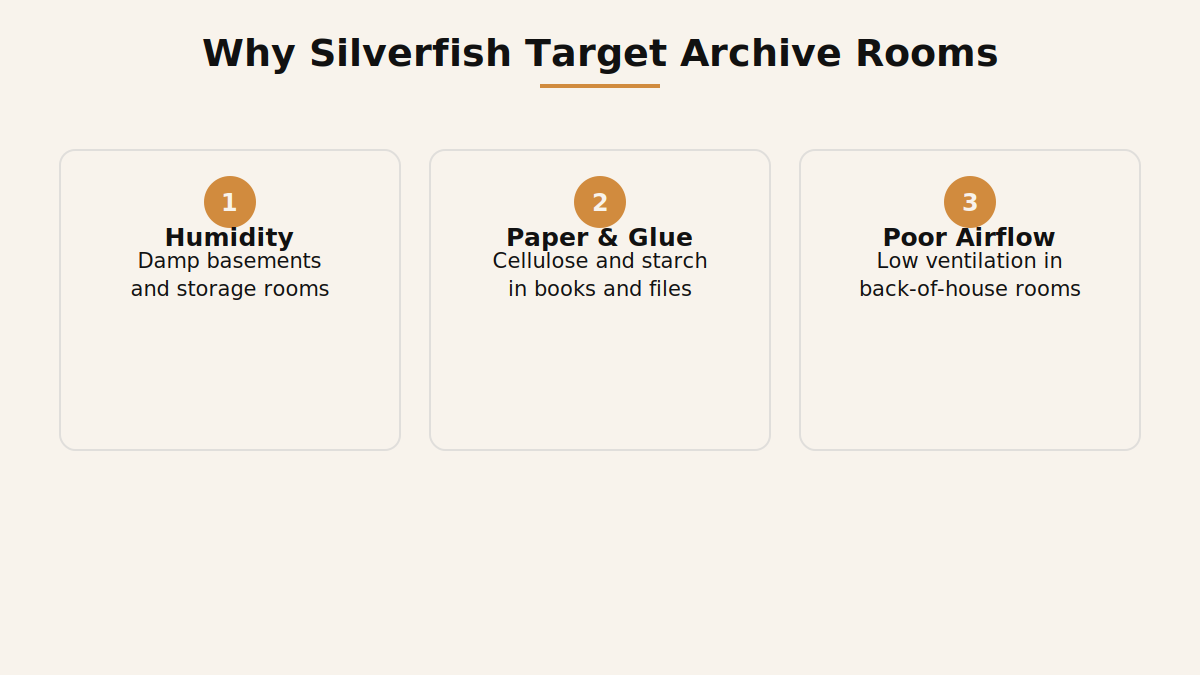
Dubai's combination of high ambient humidity for much of the year and heavily air-conditioned interiors creates a specific problem for document storage. Main office floors are usually well conditioned, but archive rooms, basement storage and records areas attached to older commercial buildings frequently run warmer and damper than the spaces around them. Silverfish need very little encouragement in those conditions. A records room with a slow-draining air handling unit, a damp party wall, or simply less airflow than the open-plan office next door can become a self-sustaining habitat long before any visible sign of a problem appears.
Some categories of Dubai commercial space see this problem more than others. Business Bay and DIFC-style towers with shared basement or ground-floor storage rooms are common hotspots, since a single humid unit can affect archive space used by several tenants. Free zone offices that lease compact document storage rooms as part of their unit often have minimal ventilation in those specific rooms. Government departments and legal practices that must retain original signed contracts, notarised paperwork or regulatory files for years carry the highest stakes, since the documents most likely to be damaged are often the ones a business can least afford to lose.
Silverfish are not indiscriminate feeders. They target starch and cellulose specifically, which means book bindings, glued ledger spines, the surface sizing on printer paper, and even the paste behind laminate labels on storage boxes are all at risk. Bound archive volumes and older lever-arch files with exposed glue are particularly vulnerable, as are cardboard storage boxes that silverfish use for both shelter and food. Damage tends to appear first at the edges and spine of a document, where feeding is easiest, before spreading across a page if the infestation is left unaddressed.
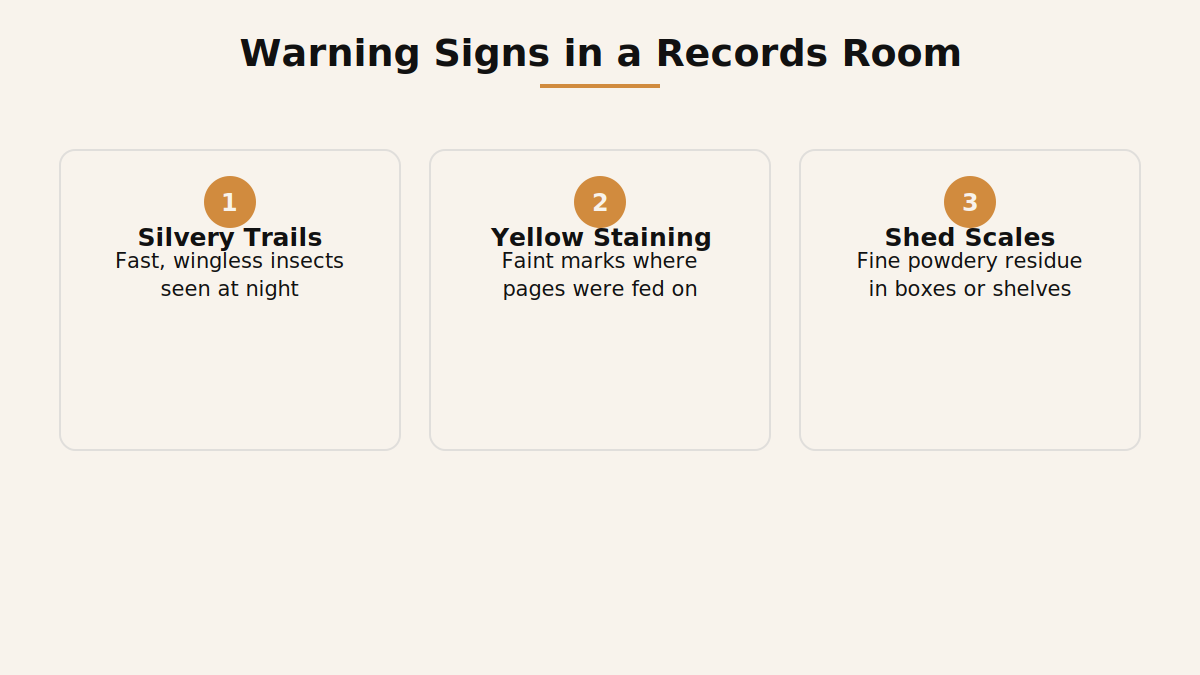
Because records rooms are visited infrequently, the early signs of silverfish activity are usually the only clue staff get before damage becomes serious. Look for narrow, irregular grazing marks along the edges of paper and book covers, a fine powdery residue of shed scales collecting in the corners of storage boxes or on shelving, and faint yellowish staining on document surfaces where feeding has occurred. Actual sightings of the insects, silvery, wingless and fast-moving, are more likely at night or when a storage box is disturbed for the first time in months. Any one of these signs on its own is worth a closer look at the surrounding shelving.
Standard janitorial cleaning is built around visible dust and surface tidiness, not the cracks behind shelving units, the gaps under skirting, or the voids where storage boxes meet the wall. Silverfish spend most of their time hidden in exactly those spaces, emerging briefly to feed before retreating again. An archive room can look perfectly clean while still supporting an active population, which is why general cleaning schedules alone tend to let an infestation continue undetected.
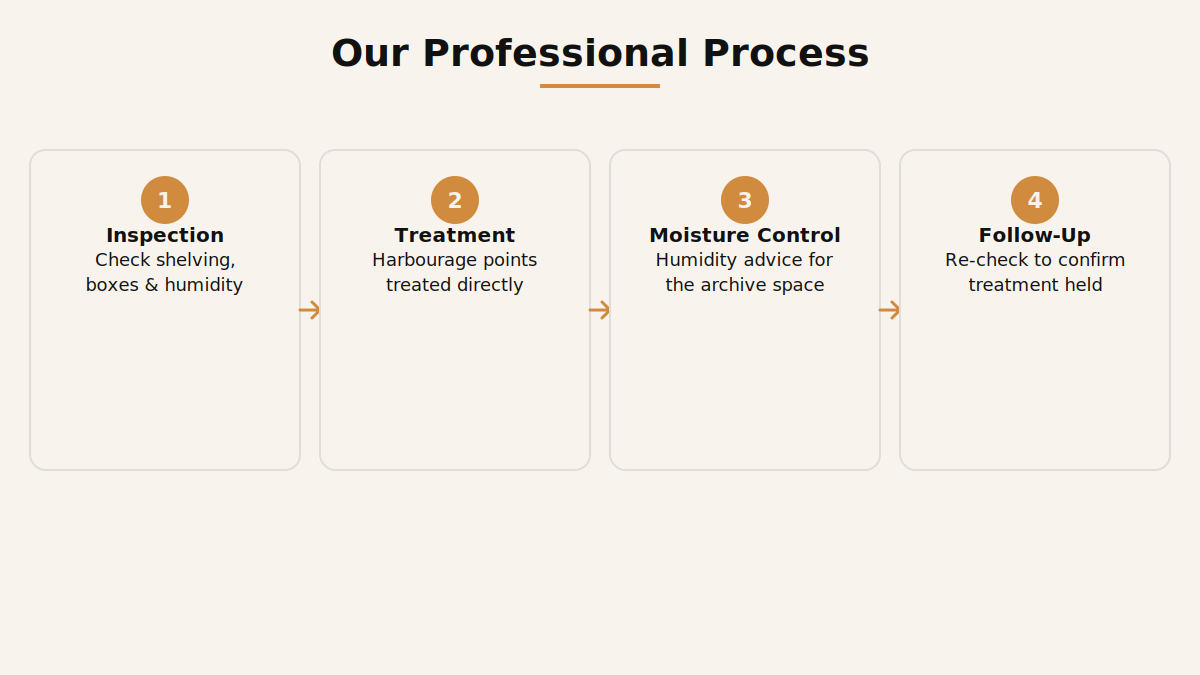
An effective response starts with a proper inspection of the archive or records room, checking shelving voids, storage box interiors, skirting and any areas with a history of dampness, alongside a review of humidity levels throughout the space. From there, treatment is targeted directly at confirmed harbourage points rather than applied broadly across the office, minimising disruption to staff and stored files alike. Practical recommendations on humidity and moisture control, such as dehumidification or improved airflow in the affected room, form a key part of the plan, since drying out the environment removes the underlying reason silverfish established there in the first place. A follow-up visit confirms the treatment has taken hold and gives an opportunity to check any newly identified problem areas. You can read more on silverfish behaviour and prevention on our Silverfish pest library page.
For businesses that must retain original signed contracts, regulatory filings or client records for years, silverfish damage is rarely just a cosmetic issue. A compromised page can raise real questions about the usability of an original document when it matters most, during an audit, a legal proceeding, or a routine compliance check. Treating records room protection as part of ongoing facilities management, rather than an afterthought once damage is spotted, is the more reliable way to safeguard the archive and the obligations tied to it. Santera is Dubai Municipality certified, rated 4.9 stars on Google Reviews, and has completed more than 10,000 treatments across the city with a team carrying 25+ years of combined experience.
A visual check every few months is a reasonable baseline for most Dubai offices, with a professional inspection at least once a year. Basement archives, government record rooms and any space with a known history of humidity should be checked more frequently, since silverfish activity typically builds for months before it becomes visually obvious on stored files.
Silverfish feed on the starch-based glues, sizing and cellulose in almost any paper product, so signed contracts, notarised documents, bound ledgers and archived case files are just as vulnerable as general office paperwork. For businesses that must retain original signed records for compliance or legal purposes, this makes early detection especially important.
Consistent climate control helps considerably, but many corporate archives and records rooms sit in basements, back-of-house storage or areas that receive less conditioning than the main office floor. Those pockets of higher humidity are exactly where silverfish tend to establish, so archive-specific moisture management matters as much as general office air conditioning.
Isolate any visibly damaged files for assessment, avoid disturbing shelving more than necessary, and arrange a professional inspection to confirm the extent of activity and the harbourage points involved. A targeted treatment plan combined with humidity and storage improvements gives the most reliable protection for the remaining archive, and Santera's 30-day warranty with follow-up support covers continued activity of the same pest within the agreed treatment scope.
If your office, archive room or document library shows any signs of silverfish activity, it is worth acting before more files are affected. Book your complimentary inspection via WhatsApp - same-day service available across Dubai.