Rodents
Rodent Control for Dubai Warehouses and Logistics Facilities: Protecting Stock, Cables and Food-Grade Storage
Muhammad Saif Ullah
September 13, 2026


A single rat moving through racking at 2am can cost a Dubai warehouse far more than the damage anyone sees the next morning. Between the loading dock traffic, palletised stock and warm, humid air that never really cools down, Dubai warehouses and logistics facilities offer rodents exactly what they are looking for: shelter, food residue and quiet corners that go unchecked for days. For operations handling food-grade goods, packaging or bulk inventory, a rodent problem is not just a hygiene issue, it is a stock, compliance and safety issue.
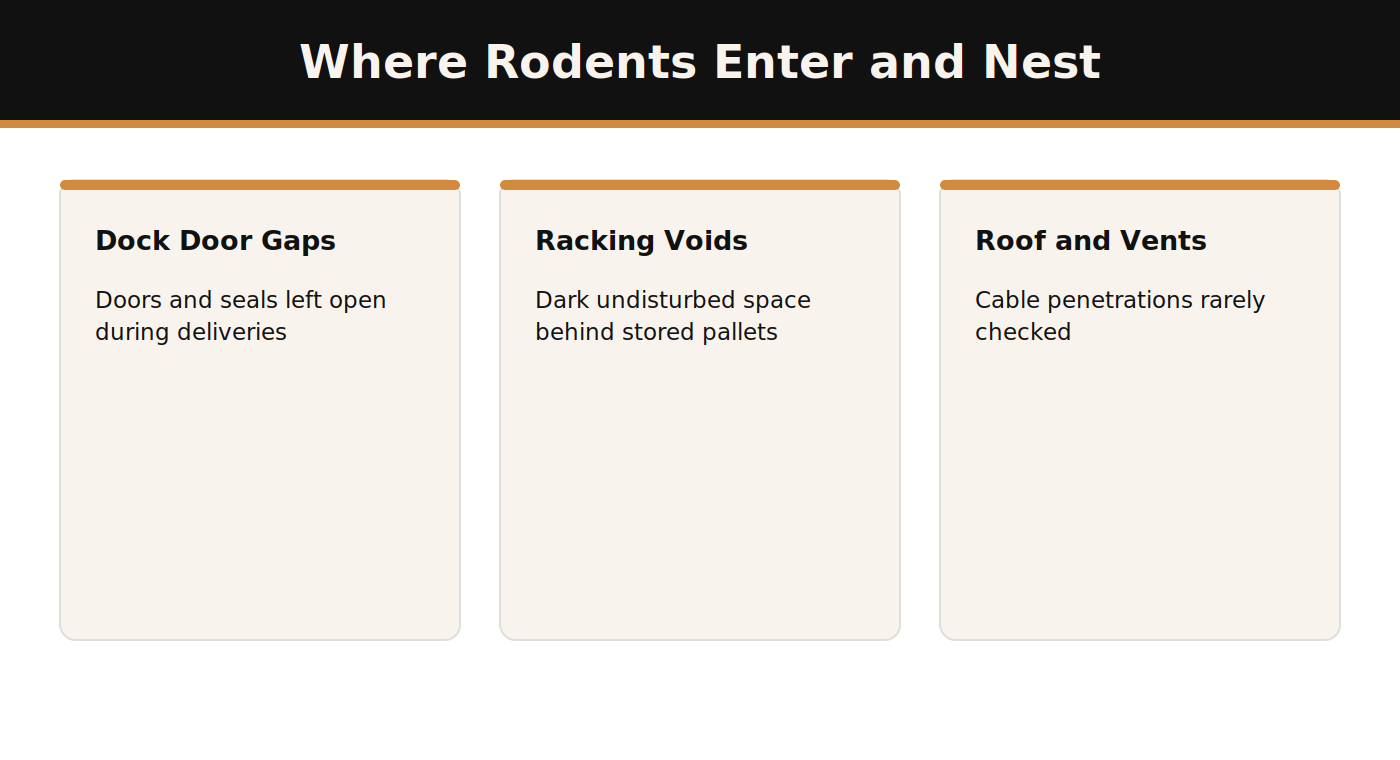
Warehouses and logistics facilities across Dubai share a few conditions that make them attractive to rodents. Loading docks stay open for long stretches during deliveries, giving rats and mice a direct route indoors. Palletised storage and high racking create dark, undisturbed voids that are rarely inspected at ground level. Spilled grain, packaging residue and returned goods provide a steady food source, and Dubai's climate means there is no seasonal die-off to interrupt breeding. Facilities near waste collection points or older industrial zones tend to see pressure build fastest.
Rodents gnaw continuously to keep their teeth short, and warehouse wiring, conveyor cabling and racking insulation are common casualties. Chewed cabling behind a control panel can trigger downtime or a fire risk that is expensive to trace. Contaminated stock, whether from droppings, urine or gnawed packaging, often has to be written off entirely, which hits margins directly on high-volume inventory. For any facility supplying food, beverage or retail clients, a documented rodent sighting can also affect a client audit or a Dubai Municipality inspection outcome.
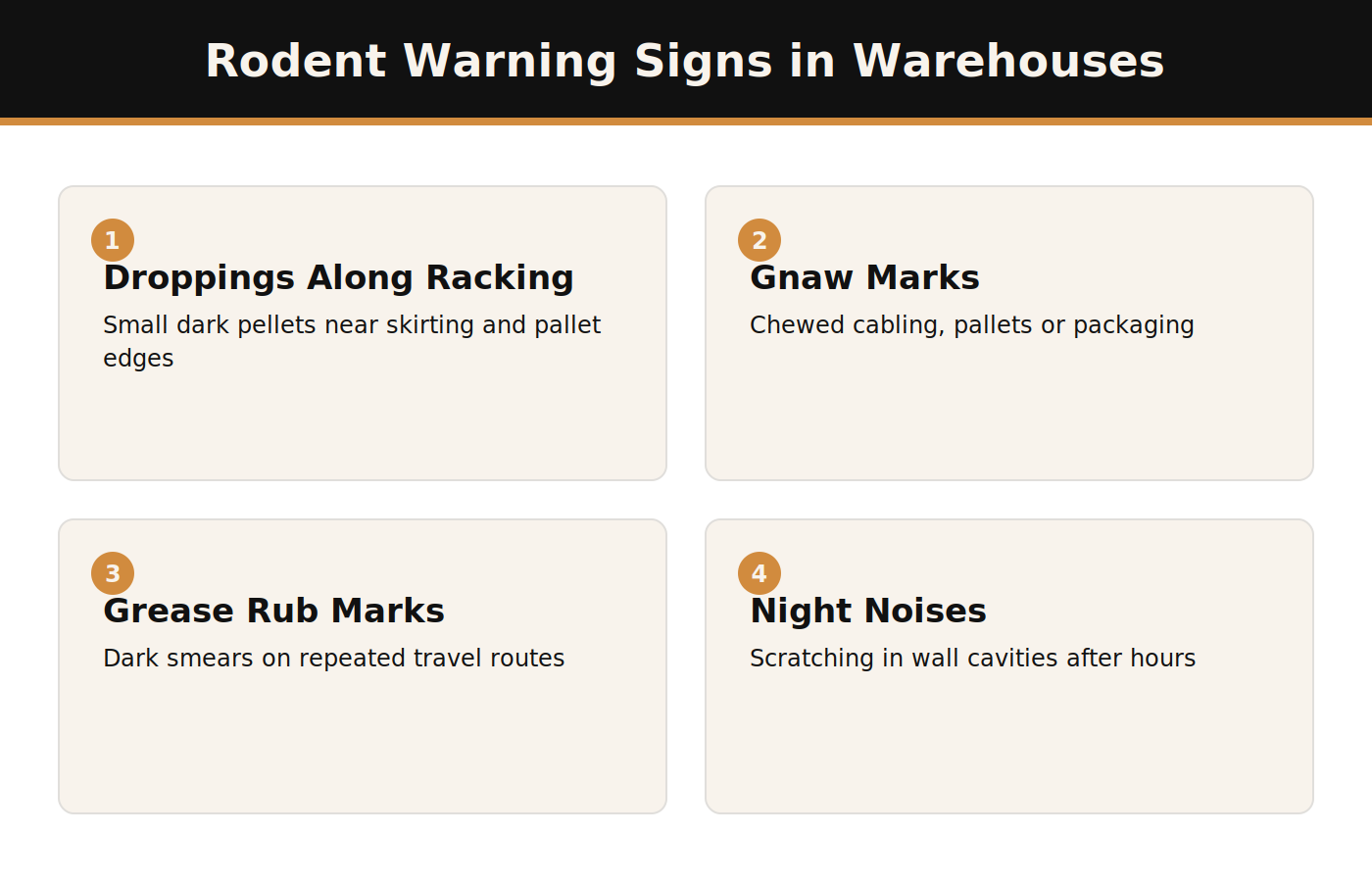
Rodent activity is usually well established by the time it becomes visible in daylight. Warehouse and facilities teams should watch for droppings along racking edges and skirting, gnaw marks on pallets, packaging or cabling, greasy rub marks where rodents repeatedly travel the same route, and unusual pet-like scratching sounds inside wall cavities or false ceilings after hours. A sudden increase in activity near waste bins or loading bays is often the first sign that an outdoor population is moving indoors.
Common entry points include gaps under loading dock doors, damaged door seals, utility and cable penetrations through external walls, and roof or ventilation openings that are rarely checked. Once inside, rodents favour void spaces behind racking, the underside of pallets stored long-term, insulation in false ceilings and any stock area that goes undisturbed for more than a few days. Mapping these routes and voids is the starting point for any facility-wide plan, since sealing entry points matters as much as treating existing activity.
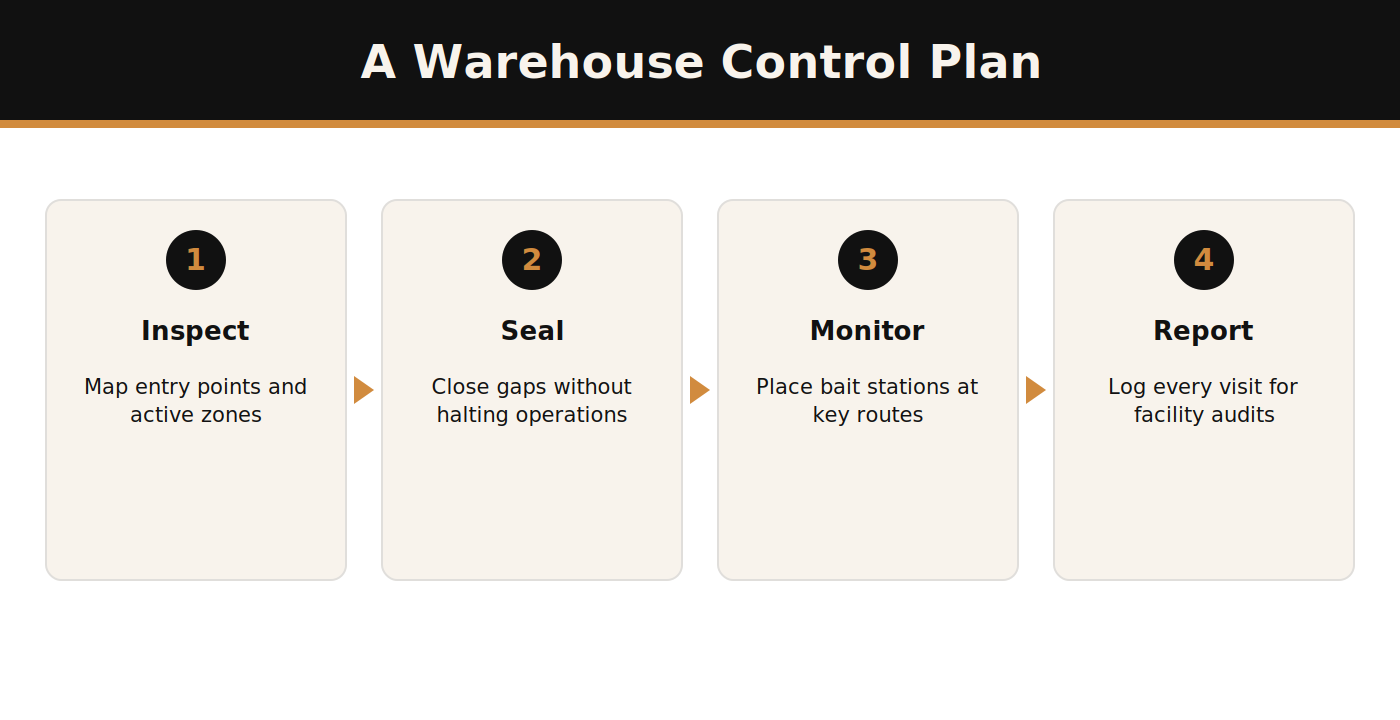
An effective plan for a Dubai warehouse combines exterior perimeter bait stations, interior monitoring at key racking and dock zones, and entry-point sealing that does not interrupt daily operations. Treatment scheduling is built around delivery and shift patterns so technicians can work loading docks, racking voids and waste areas without disrupting throughput. Every visit is logged, which supports both internal facility audits and any client or regulatory inspection that asks for pest control records.
Santera is a Dubai Municipality certified pest control provider with 25+ years of team experience and 10,000 plus successful treatments across Dubai, backed by a 4.9 star Google rating. Every warehouse and logistics engagement includes a documented service log, a 30-day warranty with follow-up support for continued activity of the same pest within the agreed scope, and 24/7 availability with same-day service across Dubai when facilities need a fast response. For pest identification and prevention basics, see the Santera Pest Library page on rodents.
In a Dubai climate where rodents breed year round, a small entry point can turn into an established nesting colony within a few weeks once food, water and shelter are all available inside a warehouse.
Yes. Rats and mice gnaw continuously to wear down their teeth, and warehouse cabling, conveyor wiring and racking insulation are common targets, which can lead to short circuits or fire risk.
Facilities storing food-grade goods or dry inventory should schedule monthly monitoring at minimum, with more frequent checks around loading docks and seasonal changes when rodents seek shelter indoors.
Bait stations help monitor and reduce activity, but lasting control also requires sealing entry points, correcting sanitation gaps and adjusting stock storage, which is why a facility-wide plan works better than bait alone.
Rodent activity in a warehouse rarely stays contained to one corner for long. Book a complimentary inspection with Santera's Dubai Municipality certified team via WhatsApp, and get a facility-wide plan built around your operating hours, not against them.