Rodents
Rodent Control for Dubai Restaurants and Commercial Kitchens: Protecting Food Safety and Reputation
Muhammad Saif Ullah
September 15, 2026


It usually starts small: a line cook finds a few dark droppings behind the dry-store shelving during evening prep, or a delivery driver mentions seeing a rat dart along the loading bay wall. For a Dubai restaurant or commercial kitchen, that moment carries two separate risks at once. The first is a Dubai Municipality food-safety inspector finding the same evidence and issuing a critical violation. The second, less talked about but just as damaging, is a customer photographing it and posting the picture where every future diner can see it before they decide to book a table. Both risks are manageable, but only with a documented, professional rodent control programme behind the kitchen, not an occasional bait box under the sink.
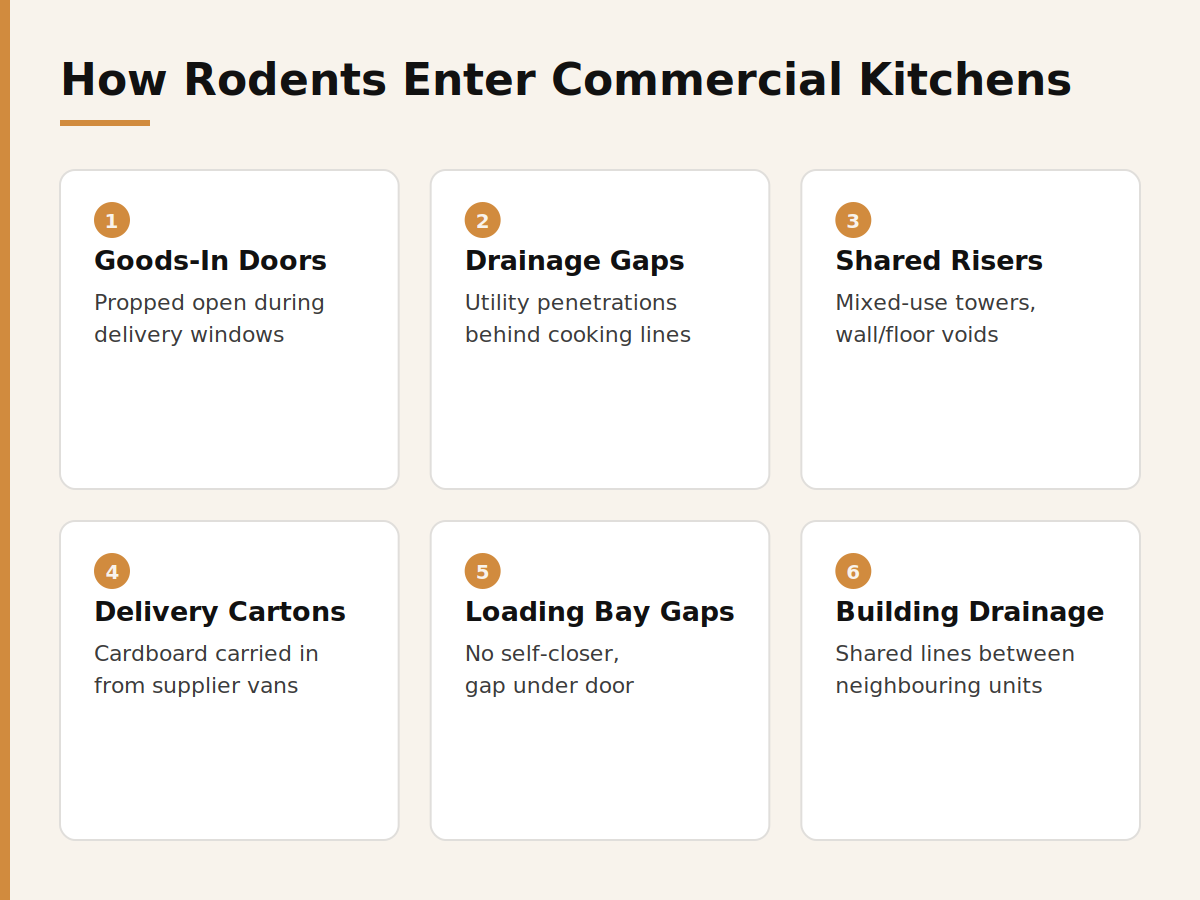
Commercial kitchens are more exposed than homes because they move large volumes of food, packaging, and waste through a small number of doors every day, and rats and mice follow that traffic. Goods-in doors propped open during a delivery window, gaps around drainage and utility penetrations behind cooking lines, shared risers in mixed-use towers, and cardboard packaging carried straight in from a supplier's van are the entry routes seen most often across Dubai's restaurants, cafes, and cloud kitchens. In older building stock, shared drainage between neighbouring units can let an infestation in one kitchen become a problem for the whole block.
Of every zone in a commercial kitchen, the goods-in corridor, dry store, and walk-in chiller area carry the most risk, since cardboard, food residue, and open doors overlap there for the longest stretches of the day. Storage shelving pushed against the wall, boxes stored on the floor rather than raised, and loading bay doors without self-closers all give rodents an easy route from outside straight to a food storage room. Proofing this area, raised storage, sealed penetrations, self-closing doors, and a clear perimeter zone, reduces risk more than almost any other single step.
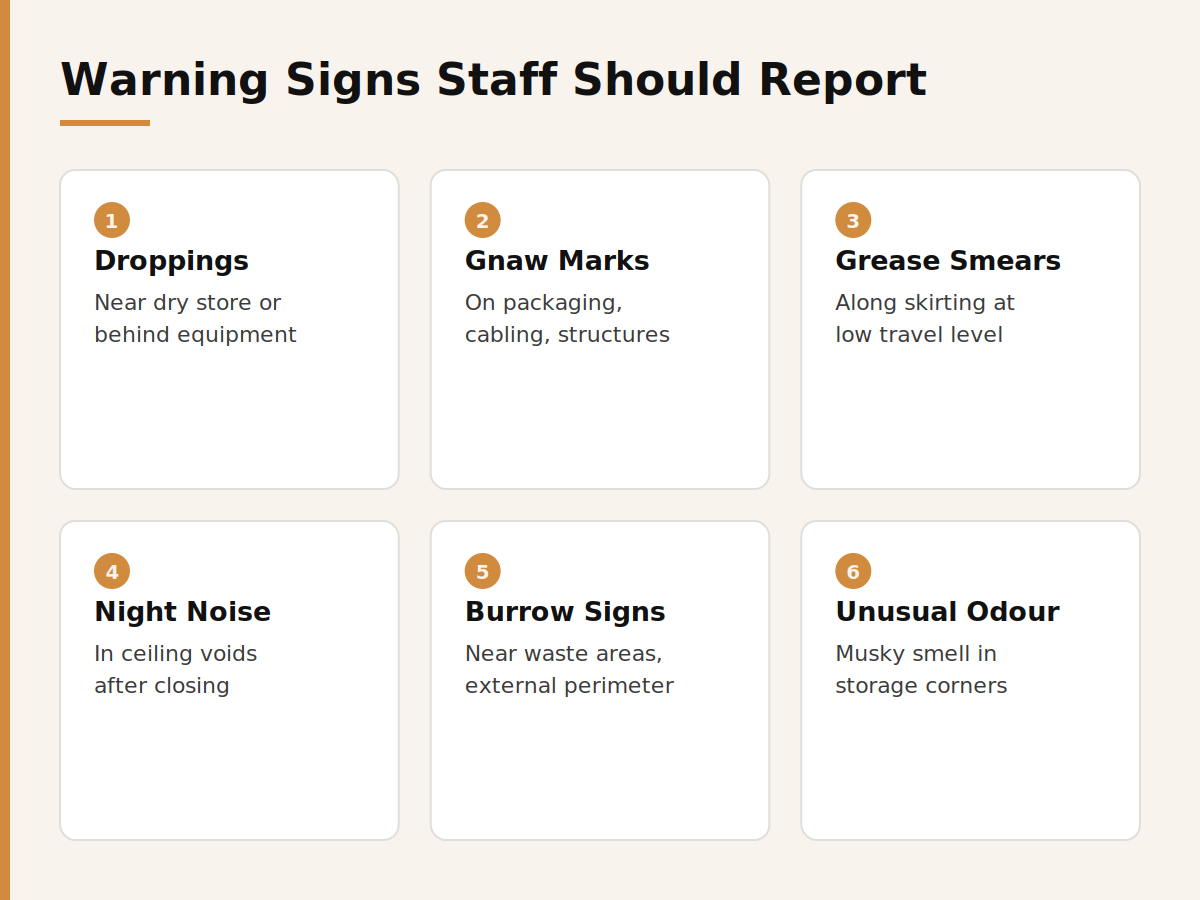
Kitchen and front-of-house staff are usually the first to notice activity, if they know what to look for. Droppings near the dry store or behind equipment, gnaw marks on packaging or cabling, greasy smear marks along skirting where rodents travel repeatedly, and unusual noise in a ceiling void after closing are the signs that matter most. A simple reporting protocol, so a sighting reaches management and the pest control provider the same day rather than being mentioned in passing days later, is one of the most effective and lowest-cost parts of any commercial programme, and it produces the kind of internal record an inspector expects to see.
A box of bait from a hardware store feels like a quick fix, but in a working kitchen it usually creates new problems. Stations placed without a proper survey often end up too close to food contact surfaces, which is itself a food-safety concern. Nobody checks or refills them on a fixed schedule, so coverage gaps appear where pressure is highest, and with no station map or service log to show, there is nothing to hand a Dubai Municipality inspector who asks for documentation. Rodent control in a commercial kitchen needs to be a managed programme, not a one-off purchase.
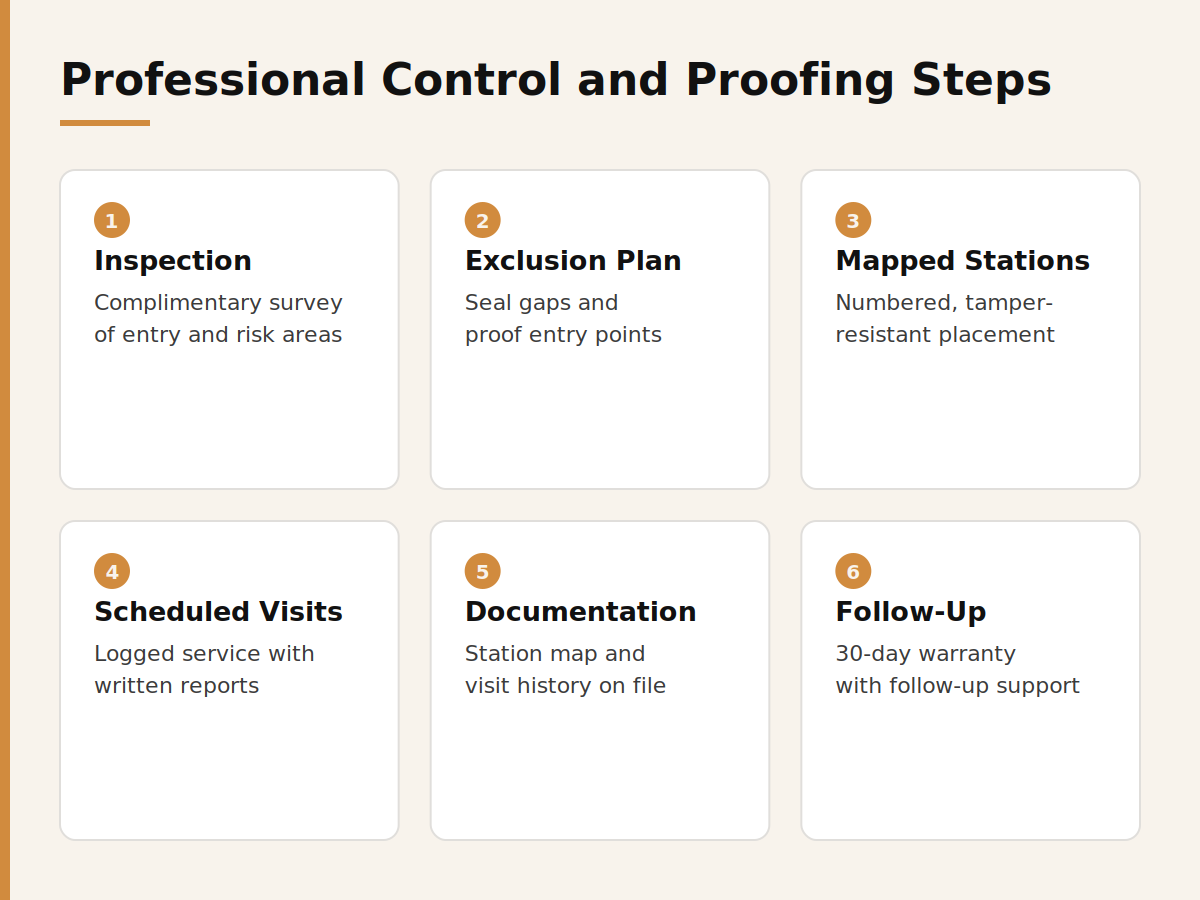
A proper programme starts with a complimentary inspection to identify entry points, current activity, and risk areas specific to the kitchen. From there, an exclusion plan seals the gaps rodents are using, and tamper-resistant, numbered stations using Dubai Municipality-approved professional products are placed along mapped travel routes, kept well away from food contact surfaces. Stations are then checked and serviced on a fixed schedule, with each visit logged: date, station status, any signs of activity, and corrective action taken. Every commercial programme from Santera includes a 30-day warranty with follow-up support, covering continued activity of the same pest within the agreed scope and period; it does not cover a new infestation, reintroduction from a neighbouring unit, areas outside the agreed scope, or structural and plumbing issues that sit outside pest control.
What a Dubai Municipality inspector wants to see is not just an absence of rodents on the day, but evidence of an ongoing, managed programme: a current contract with a Dubai Municipality certified provider, a station map, and visit logs showing consistent servicing. That paperwork, built up visit by visit, is what turns a rodent sighting from an automatic critical violation into a documented, already-managed issue, and consistent scheduling lowers the odds of a live sighting landing on the exact day an inspector walks through.
An inspection result is one audience. Google Reviews, Instagram, and food delivery apps are another, and in Dubai's competitive dining market they matter just as much. A single photo of a dropping on a shelf or a comment describing a rodent sighting can spread across review platforms far faster, and stay visible far longer, than any single inspection note. Prospective diners routinely check reviews before booking a table or placing a delivery order, and a pest-related review is one of the few that can undo months of good service in a few lines of text. A visible, documented rodent control programme is not just about passing an inspection, it protects the reputation that keeps tables booked.
Beyond active treatment, lasting protection comes from proofing and habit. Seal gaps around pipework and cabling, fit and maintain self-closing doors on loading bays and storage rooms, keep waste bins sealed and stored away from the building, and check drainage covers regularly, since Dubai's shared drainage networks are a common rodent route between units. Staff training and a clear reporting habit keep small signs from becoming a larger problem. For urgent cases, Santera offers 24/7 availability with same-day service across Dubai, backed by a Dubai Municipality certified team with 25+ years of combined experience and 10,000+ successful treatments completed.
For more detail on rodent biology, behaviour, and identification, see Santera's Rodent pest library page.
A live rodent sighting, fresh droppings, or gnaw marks found during a Dubai Municipality inspection are treated as a critical violation and can result in an immediate corrective action notice. Inspectors also check for a documented pest control programme, including a valid contract, service logs, and a station map, so having this paperwork in place matters as much as the treatment itself.
Yes. Diners in Dubai routinely check Google Reviews before booking, and a photo or comment describing a rodent sighting tends to be shared and remembered far longer than a single service visit. Unlike a private inspection note, a public review is visible to every future customer researching the restaurant.
Professional programmes use Dubai Municipality-approved professional products in tamper-resistant, numbered stations placed along mapped travel routes, serviced on a fixed schedule with written reports. Store-bought stations are placed without a proofing survey, are rarely logged, and can themselves become a food-safety concern if positioned near food contact surfaces.
Most active commercial kitchens are serviced monthly at minimum, with more frequent visits for premises with shared drainage, older building stock, or a recent history of activity. A technician will confirm the right interval for a specific kitchen during the complimentary inspection.
A rodent sighting does not have to become a failed inspection or a damaging review. Santera provides documented, Dubai Municipality certified rodent control for restaurants and commercial kitchens across Dubai, with 4.9 stars on Google Reviews and 24/7 availability for urgent call-outs. Message Santera on WhatsApp to book a complimentary inspection and get a tailored plan for your kitchen.