Rodents
Rodent Control for Dubai Hotels: Protecting Kitchens, Guest Floors and Back-of-House Areas
Muhammad Saif Ullah
September 13, 2026


A single rodent sighting in a Dubai hotel rarely stays a single-room problem for long. Kitchens run around the clock, deliveries move through the loading bay daily, and service risers connect back-of-house areas to guest floors throughout the property. For hotel engineering and facility teams, a rodent report is rarely just a maintenance ticket. It is a signal that deserves a property-wide response, not a spot check of the room where it was seen.
Hotels combine several conditions rodents exploit well. Kitchens and room service pantries offer a constant food source, while loading bays and delivery entrances provide sheltered, low-traffic access points at ground level. Service risers, cable routes and the void space above false ceilings run vertically through the entire property, connecting departments that otherwise have little to do with each other. Landscaped gardens and pool areas add further shelter and moisture, especially where irrigation keeps planting beds consistently damp.
Rodents typically enter through gaps around loading bay doors, utility penetrations near kitchen extraction systems, or garden and pool perimeter edges that are difficult to fully seal. Once inside, they travel through service risers and ceiling voids between floors, which is why activity can surface on a guest floor with no food source of its own. Linen stores and back-of-house corridors near the loading bay are another common travel route, particularly where deliveries are not promptly moved into storage.
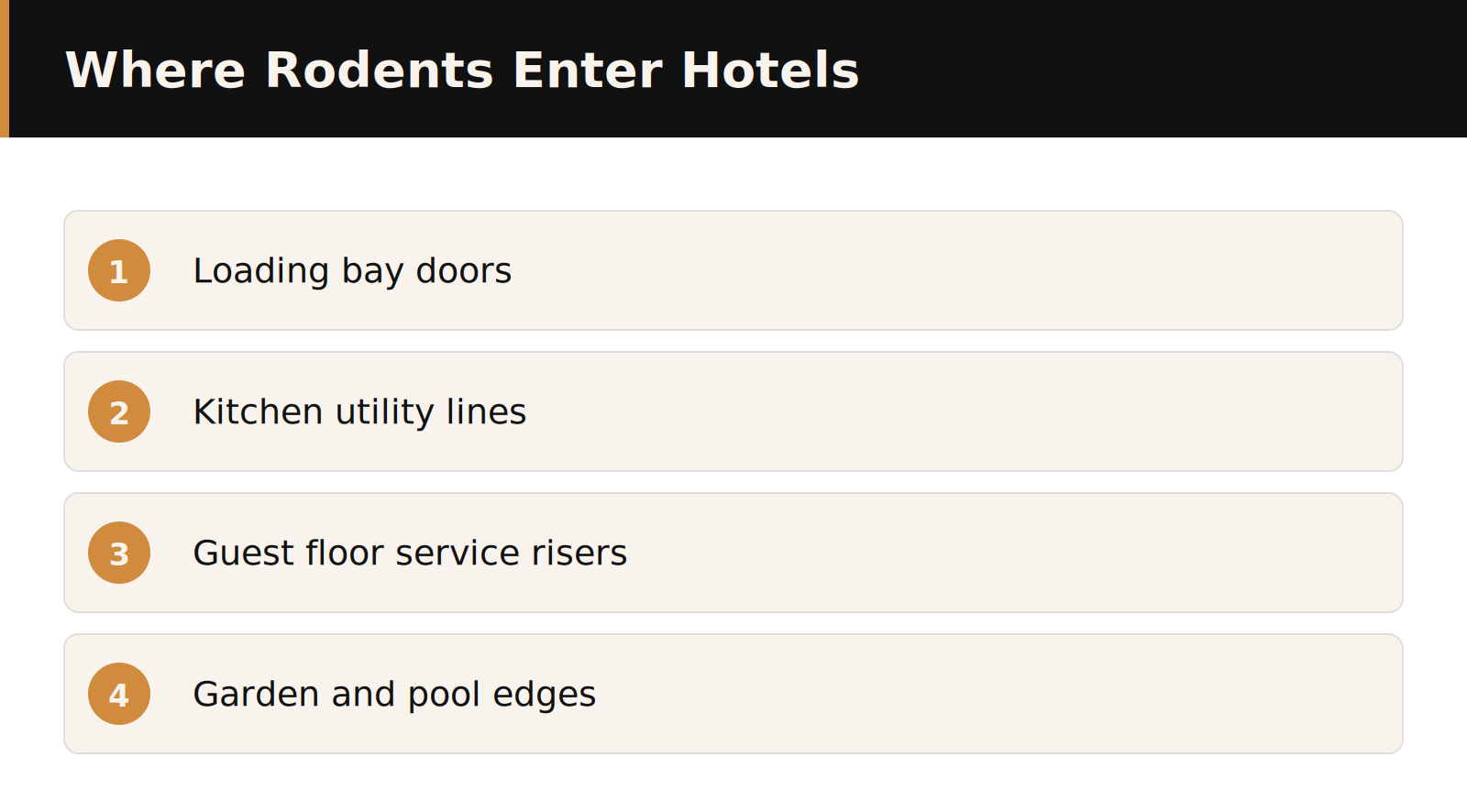
Because service risers and ceiling voids connect kitchens, storage areas and guest floors throughout a hotel, a rodent population that establishes itself near the loading bay is rarely limited to that area for long. A hotel that treats an isolated guest floor report as unrelated to a kitchen observation from the same week risks missing a population that has already spread across departments. Coordinating engineering, housekeeping and food and beverage teams on any sighting generally produces a faster, more complete response than each department acting alone.
The earliest signs are often small and easy for a busy team to dismiss: droppings inside pantry cupboards or linen stores, gnawed food packaging in kitchen or minibar storage, scratching or movement sounds in ceiling voids overnight, and damaged packaging or linen in storage areas. Housekeeping and engineering staff who log these signs and escalate immediately typically catch activity before it reaches guest-facing areas.
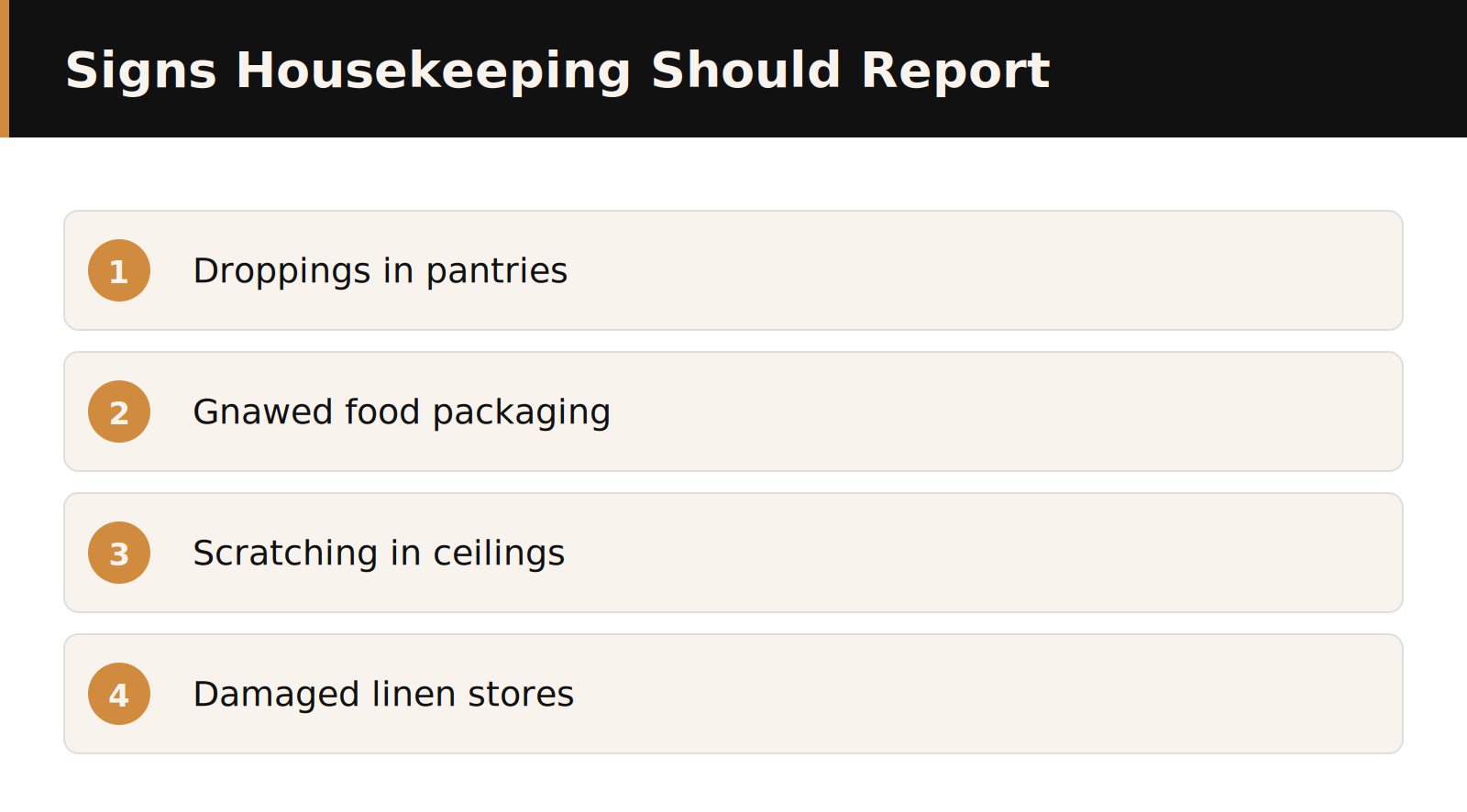
Unlike most commercial properties, hotels face an immediate reputation consequence if a guest encounters a rodent before staff do. A single review or social media post can affect bookings well beyond the incident itself, which is why most Dubai hotel management teams treat any report, however minor, as urgent rather than routine. Preventing that scenario means catching activity in back-of-house areas long before it has any chance of reaching a guest floor.
An effective hotel-wide programme starts with a full inspection covering kitchens and food stores, guest floor risers, the loading bay and garden or pool perimeters, not just the area where a report originated. A Dubai Municipality certified technician then focuses on excluding entry points and sealing gaps around utility penetrations and loading bay doors, alongside discreet monitoring stations placed in back-of-house corridors, kitchens and gardens. Because hotels operate continuously with guests present, this work is scheduled outside peak service hours, with clear reporting shared across engineering, housekeeping and management so any new activity is caught early.
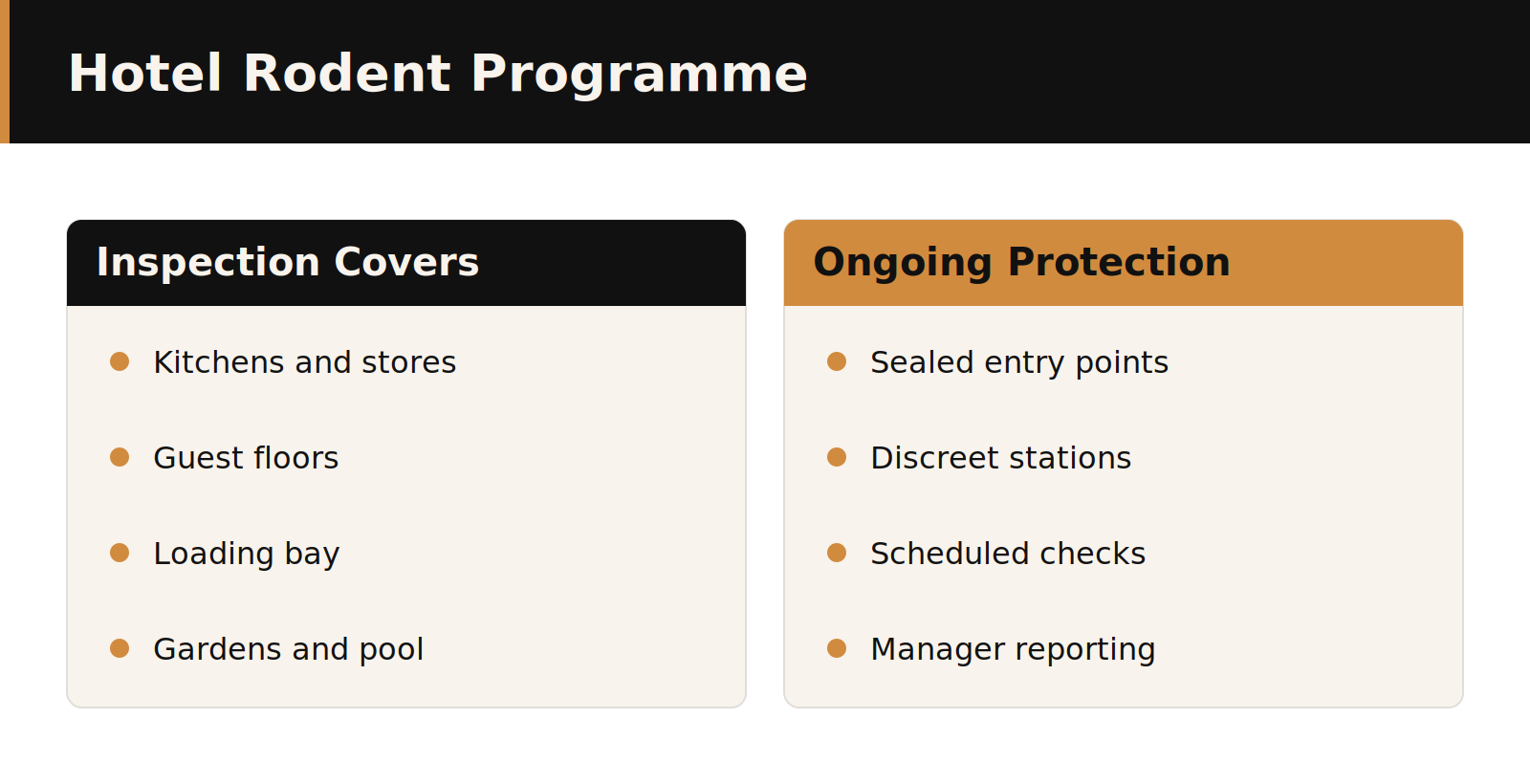
Hotels combine round-the-clock food service, constant deliveries through loading bays, and large service areas such as risers and false ceilings that connect kitchens to guest floors, giving rodents both a reliable food source and quiet routes to travel largely unnoticed by guests.
It can. Rodents move through shared service risers, ceiling voids and garden landscaping that connect many parts of a hotel, so one guest room report is often a sign of activity that has already reached other floors or back-of-house areas.
A single guest sighting can escalate quickly through reviews and social media, and because hotels depend heavily on reputation, management teams generally treat any rodent report as urgent regardless of how minor it initially appears.
Effective control usually needs coordination between engineering, housekeeping and food and beverage teams, since rodents move between kitchens, guest floors and gardens that fall under different departments.
Most Dubai hotels keep discreet monitoring stations in place year round across kitchens, loading bays, guest floor risers and gardens, with scheduled technician checks rather than reacting only after a guest or staff report.
A rodent report in a hotel rarely stays confined to one department for long. Santera is Dubai Municipality certified and works with hotel engineering and facility teams across the city to inspect, exclude and monitor properties from the loading bay to the guest floor. For more background, see our Pest Library page on rodents. To arrange a complimentary inspection for your property, reach out on WhatsApp.