Birds
Pigeon Control in Dubai: Managing Nesting, Droppings and Balcony Damage
Muhammad Saif Ullah
September 13, 2026


A cooing pair of pigeons on a balcony rail can look harmless for about a week, right up until droppings start building up under the AC unit and a nest appears in the corner. Across Dubai's high-rises, villa compounds and podium-level balconies, pigeons are one of the most common bird-related complaints residents raise, and one of the most misunderstood, since most attempts to shoo them away only clear the birds temporarily.
Pigeons look for a flat, sheltered surface close to a food and water source, and Dubai's residential towers offer exactly that: balcony ledges, AC condenser units and parapet walls provide shelter from wind and sun, while nearby waste areas, gardens and irrigation give a reliable supply of food and water. Once a pair successfully raises a brood in one spot, that location is marked as safe and gets reused repeatedly.
Higher floors are not immune either. Wind patterns around tall buildings often create sheltered pockets on upper balconies that pigeons find just as attractive as ground-level ledges, and residents on higher floors are sometimes surprised to find a nest has appeared without any obvious food source nearby, simply because the ledge itself offers shelter and a clear view for spotting predators.
Pigeons in Dubai's climate can breed several times a year rather than being limited to a single spring season, which means a nest cleared in one month can be replaced by a new brood only weeks later if the underlying site is not made unusable. A pair can raise a new set of chicks in as little as a month, so a property that only reacts after each new nest appears is often dealing with the same handful of sites on a repeating cycle rather than making real progress.
Beyond the mess, accumulated pigeon droppings are acidic and can damage paintwork, stone and metal fittings over time, and dried droppings can release airborne particles that pose a respiratory concern in enclosed balcony spaces. Nests also attract secondary pests, including feather mites and occasionally rodents drawn to nesting material and food debris.
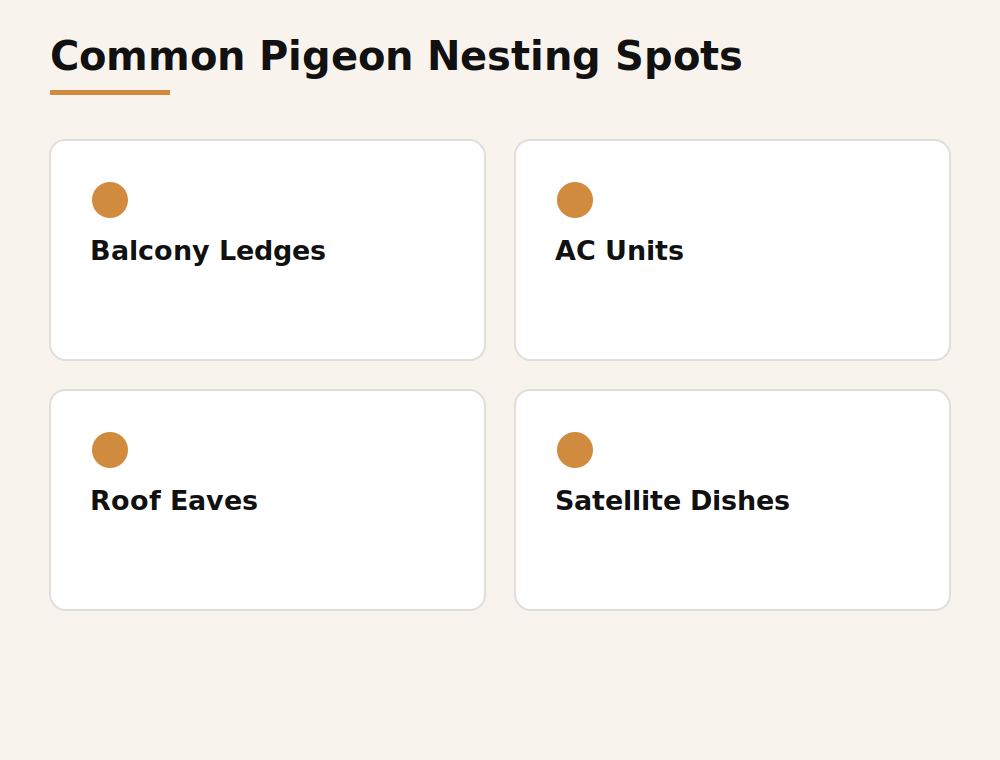
In apartment towers, the most common spots are balcony corners, AC unit tops, external ledges and utility risers. In villa communities, pigeons favor roof eaves, satellite dish mounts, garden pergolas and stables or storage sheds where feed is present. Identifying every active site matters, since clearing one balcony while an active nest remains on a neighboring ledge means the birds simply move a few metres and continue.
Reflective tape, plastic owls and occasional shooing may disrupt pigeons for a few days, but pigeons habituate quickly to deterrents that do not physically block the landing surface. Without a barrier method matched to the specific ledge or unit, most DIY attempts see pigeons return within one to two weeks.
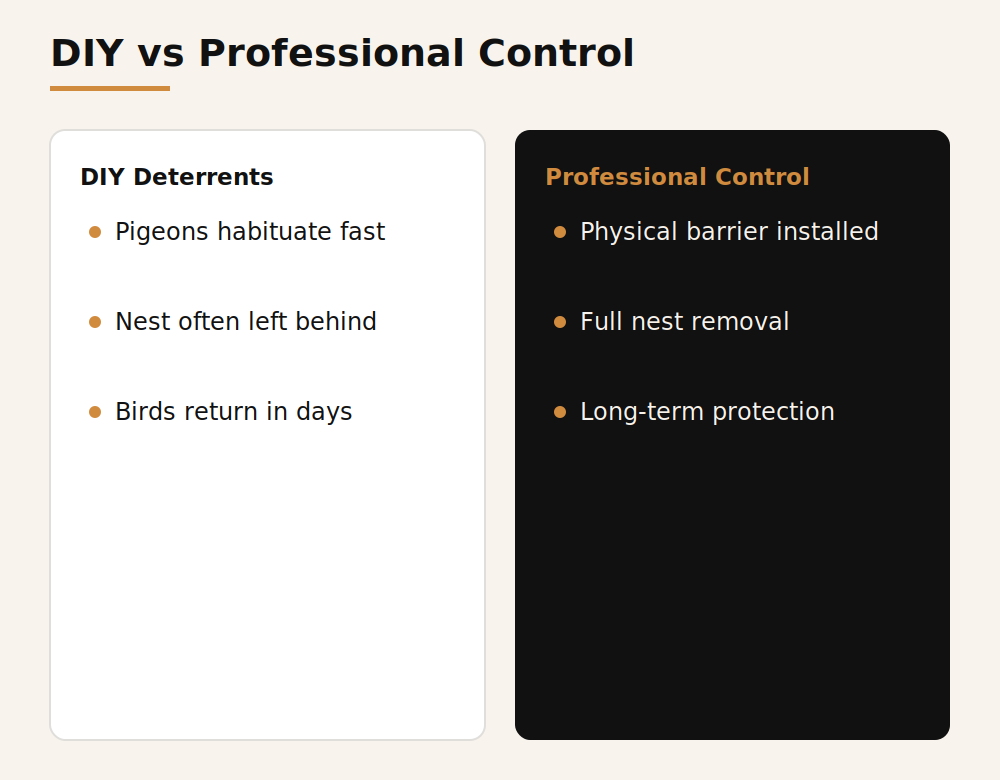
Santera's approach begins with identifying every active and previous nesting site on the property, safely removing nests and droppings, and then fitting a deterrent suited to the surface, such as discreet spikes on ledges, netting across larger open areas like plant rooms or balconies, or tensioned wire systems on parapets and AC units. The combination of full nest removal and a physical barrier is what prevents the birds from simply relocating a metre along the same balcony.
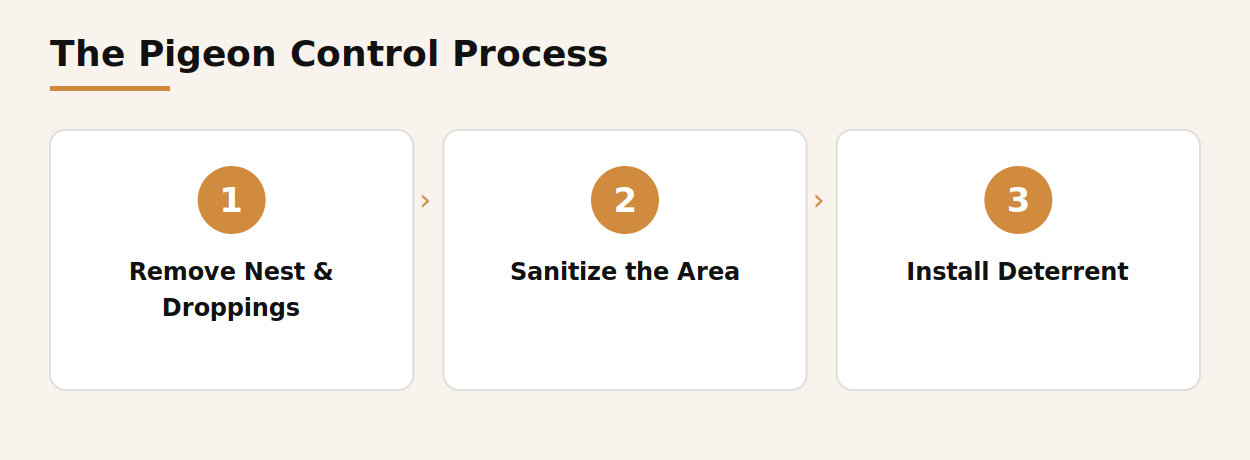
Dried droppings and old nesting material should be cleaned using appropriate protective equipment rather than swept up directly, given the fungal and mite risks involved. Our technicians handle removal and disposal as part of the treatment, so residents are not exposed to accumulated waste during the process. Surfaces are also sanitized after removal, since dried droppings can leave residue that continues to attract flies and other pests even once the nest itself is gone.
For building management teams, coordinating pigeon control across a whole facade or rooftop rather than unit by unit tends to produce longer-lasting results, since pigeons displaced from one balcony will otherwise simply resettle on a neighboring ledge that has not been treated.
If pigeons keep returning to the same balcony, roof or AC unit, tackling only the visible mess without addressing the nesting site rarely lasts. Read more on our Birds pest library page.
Pigeons are strongly loyal to a nesting site once they have used it successfully. Even after a nest is removed, the site itself (a ledge, AC unit or balcony corner) keeps attracting the same or new pairs unless it is physically blocked or made unappealing to land on.
Dried pigeon droppings can carry airborne fungal spores, and nests often carry mites and other pests. Removal without the right protective equipment and disposal process is not recommended, particularly for accumulations built up over months on a rooftop or balcony.
Professionally fitted spikes, netting and wire systems are designed to be discreet and are installed without damaging tiles, cladding or paintwork, using mounts suited to the surface.
Nest removal and cleaning is typically completed in a single visit, with deterrent installation (spikes, netting or wire) scheduled immediately after so the site is protected before pigeons attempt to return.
Book a complimentary inspection via WhatsApp and let a Dubai Municipality certified team clear the nest and fit the right deterrent for your balcony, roof or AC unit.