Ticks
Tick Control for Dubai Pet Hotels, Grooming Salons and Retail Pet Stores
Muhammad Saif Ullah
September 13, 2026


A tick does not need an invitation to enter your business. It arrives already attached to a client's dog, tucked into the fur of a cat waiting for a trim, or riding in on a delivery of live stock for the retail floor. For Dubai pet hotels, grooming salons, and pet retail stores, that single unnoticed passenger is the start of a problem that spreads far faster than most owners expect, and one that can quietly put staff, other animals, and the business's reputation at risk.
Unlike a private home, a commercial pet-facing business sees a constant rotation of new animals every day. Every boarding check-in, every grooming appointment, and every new batch of retail stock is a fresh opportunity for ticks to enter the premises. Dubai's warm indoor environments, especially in back-of-house storage, kennel runs, and grooming stations, give ticks the conditions they need to survive and multiply once they arrive.
Ticks almost always arrive on an animal rather than walking in on their own. A boarded dog that spent the weekend at a Dubai park, a cat brought in for grooming after time outdoors, or newly received retail animals can all carry ticks into your facility. Once inside, ticks feed briefly, then drop off into cracks, skirting boards, bedding, and even climb walls and furniture to lay eggs. That is how a single pet can leave behind a population that has nothing to do with the animal that brought it in.
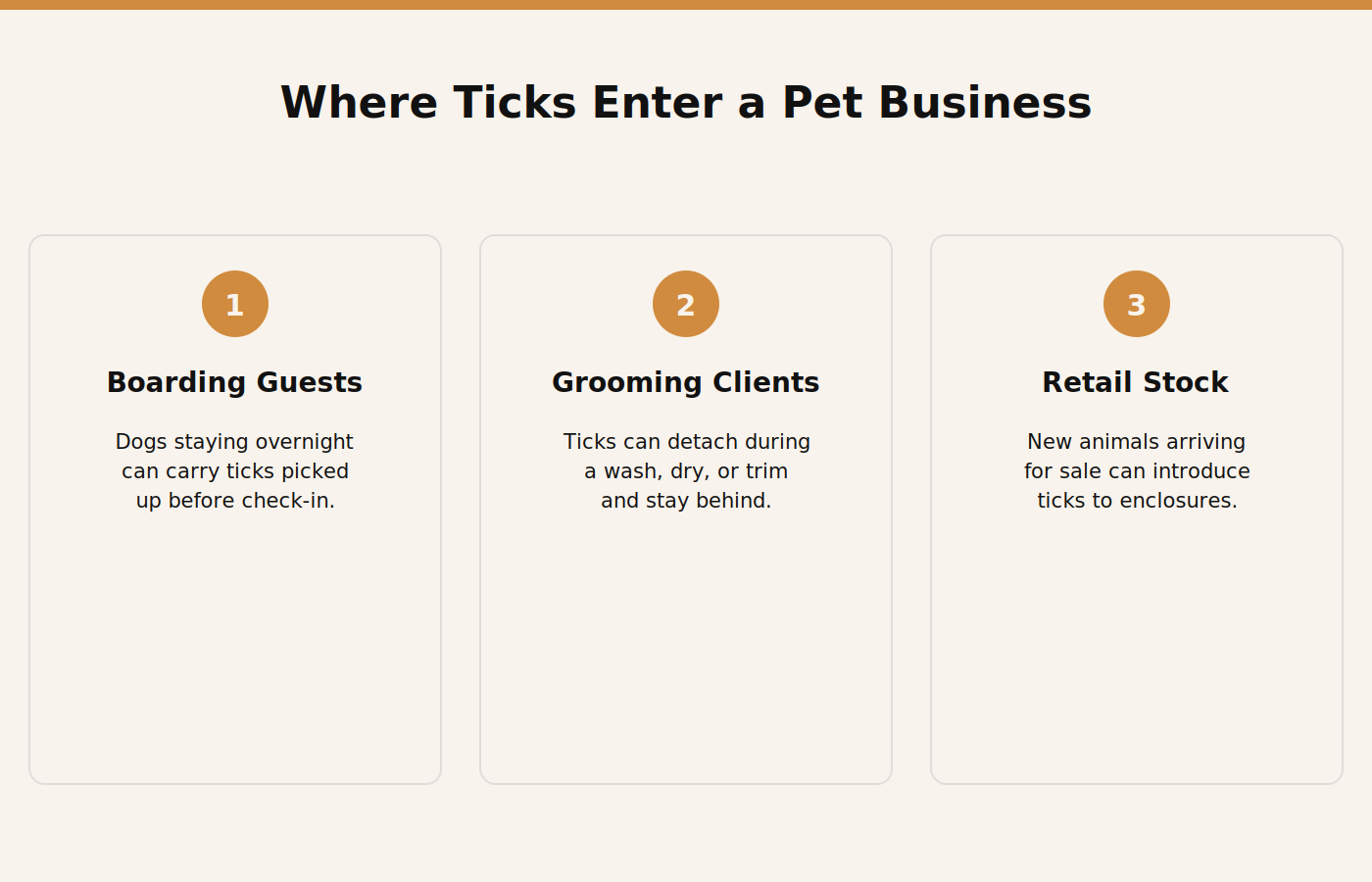
A private villa deals with the pets that live there. A Dubai pet hotel, salon, or store deals with dozens of different animals from different households every week, each with its own exposure history. That volume and turnover is exactly what makes commercial pet businesses more vulnerable than a typical home. One infested boarder can leave ticks behind for the next guest. One grooming table can pass ticks between unrelated clients. One retail cage can become a source rather than a single contained case.
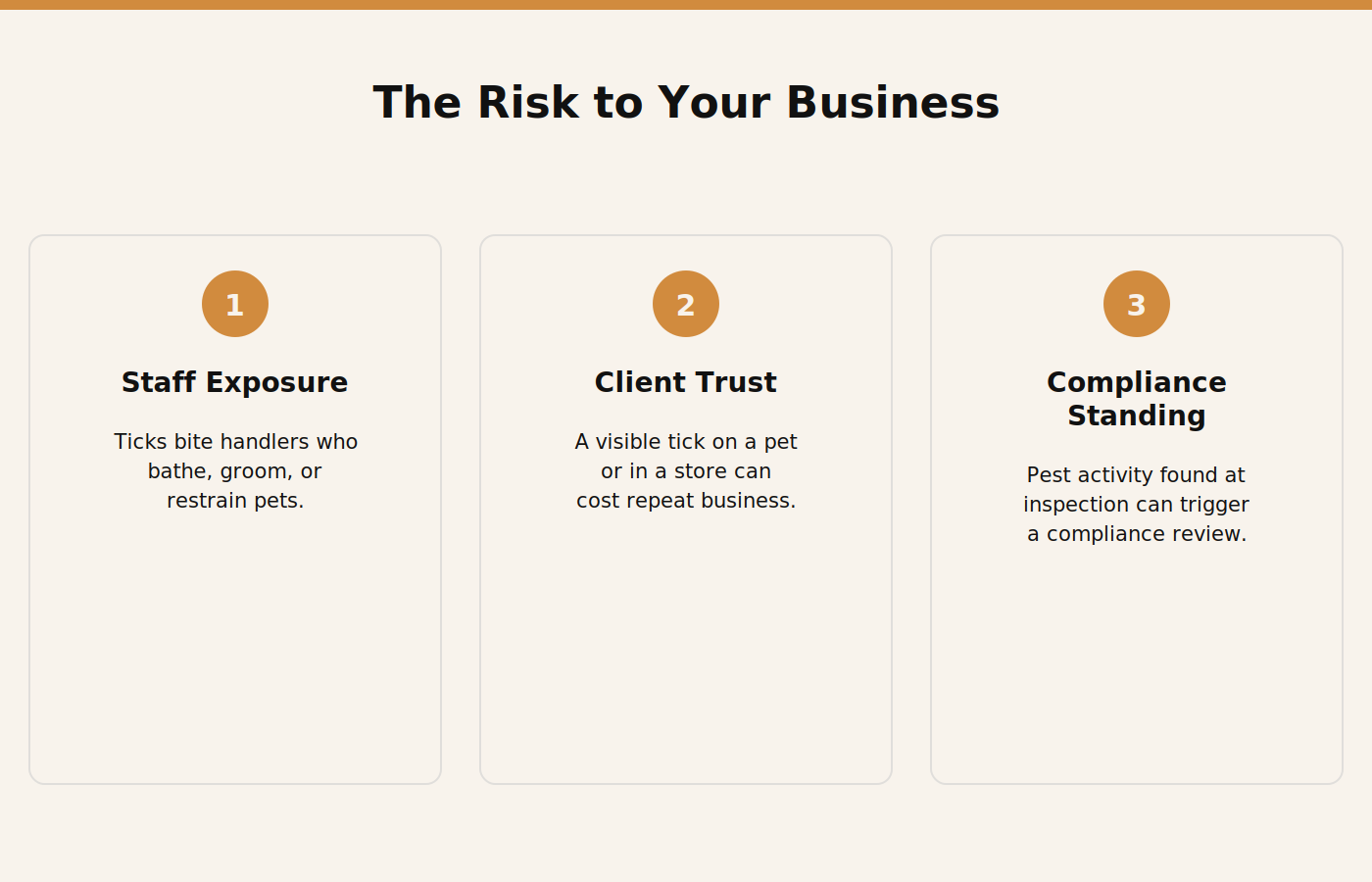
Ticks bite people as well as animals, which means staff handling, bathing, or restraining pets are directly exposed. For a commercial operation, a visible tick problem is also a reputation risk: a client who spots a tick on their dog after a stay, or a shopper who notices one in a retail enclosure, is unlikely to return, and word travels quickly in Dubai's pet owner community. There is also the standing of the business itself to consider, since pest activity discovered during a routine check can affect how a facility is viewed by the relevant authorities.
In a boarding or grooming environment, ticks do not stay confined to the animal they arrived on. Shared runs, communal play areas, grooming tables, and even staff clothing and equipment can carry ticks from one pet to the next over the course of a single day. This is why treating only the animal that appears affected rarely solves the underlying issue. The environment itself, not just the individual pet, needs to be addressed.
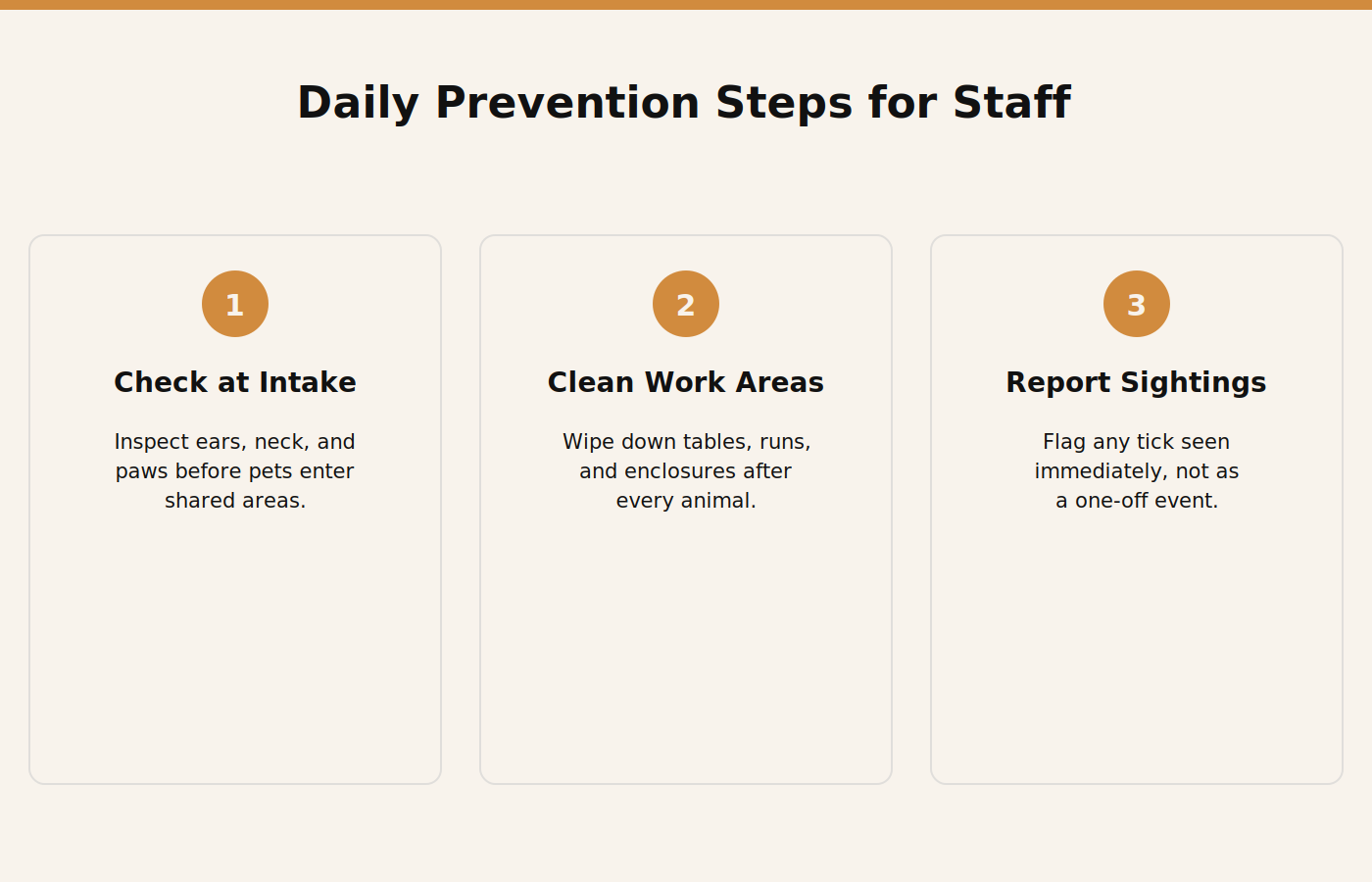
Daily habits make a meaningful difference between check-ins. Useful practices for Dubai pet businesses include:
Checking incoming pets at intake, particularly around the ears, neck, and paws, before they enter shared areas. Keeping grooming tables, bathing areas, and retail enclosures cleaned and inspected between uses. Laundering bedding and soft furnishings on a regular schedule rather than only when visibly soiled. Training staff to flag any tick sighting immediately rather than treating it as a one-off. Keeping storage and back-of-house areas free of clutter, since cracks and stacked boxes give ticks somewhere to hide between hosts.
Because ticks operate across multiple life stages and can hide in structural cracks as well as on animals, an effective response covers the whole environment, not just visible activity. Santera's Dubai Municipality-certified team inspects kennel runs, grooming stations, retail enclosures, and staff areas to confirm where ticks are active and where they may be breeding, then treats the environment across the relevant life stages. This is paired with practical guidance for staff on daily prevention, since ongoing commercial facilities need a maintainable routine, not a single visit.
Tick activity in a commercial setting is not always obvious at first. Warning signs worth watching for include staff or clients reporting bites after a visit, small dark specks found on bedding or in cracks near kennel runs, pets scratching or biting at their skin shortly after a stay, and ticks noticed on more than one animal from unrelated households in the same week. Any of these on their own is worth a closer look. More than one together is a strong reason to arrange an inspection.
A single infested dog can shed ticks into bedding, runs, and communal play areas within a day. Once ticks drop off to lay eggs in cracks and skirting, a facility can be dealing with an established population within a few weeks, well before staff notice a pattern.
Yes. Ticks do not need an overnight stay to detach. A tick can drop off during a wash, dry, or trim and settle into a grooming table, drain, or waiting area, ready to attach to the next pet or staff member who brushes past.
A visible tick problem during a routine inspection, or a customer complaint that reaches the authority, can prompt a compliance review of a pet hotel, salon, or retail store. Documented, ongoing pest control is the most reliable way to stay ahead of that risk.
Most Dubai boarding hotels, grooming salons, and retail stores benefit from a recurring inspection schedule rather than a one-time visit, since new pets arrive continuously. Santera's team can recommend a frequency based on your intake volume and layout.
If your Dubai pet hotel, grooming salon, or retail store is seeing signs of tick activity, or you simply want a proactive check before it becomes a client-facing problem, our Tick pest library page covers how ticks behave across their life cycle. Santera has supported Dubai businesses with 25+ years of team experience, a 4.9-star rating from local customers, and over 10,000 successful treatments, backed by a 30-day warranty with follow-up support. Book a complimentary inspection for your facility through WhatsApp at https://wa.link/k5sow1 and our Dubai Municipality-certified team will assess your premises and recommend a plan that fits your daily operations.