Spiders
Huntsman Spiders in Dubai Homes: Are They Dangerous and What to Do
Muhammad Saif Ullah
October 9, 2026


A large, flat, long-legged spider on a living room wall is an alarming sight, and it is a common one in Dubai villas. These spiders are known as huntsman spiders because they hunt their prey rather than catching it in a web. They can look intimidating because of their size and speed, but they are generally shy and would rather escape than confront a person. Understanding their habits makes it much easier to respond calmly.
Huntsman spiders like flat, sheltered spaces. Indoors, they commonly settle:
They tend to be most active at night, which is why many residents notice them when they switch on a light in the evening or move through a dark room.
Spiders follow food and shelter. Villas with gardens, outdoor lighting and landscaping attract insects, and insects attract the spiders that feed on them. When it gets very hot outside, a cooler indoor space also becomes appealing. Gaps around doors and windows, worn seals, and openings around AC pipes give them an easy way in, especially in older properties or homes that have had recent building work.
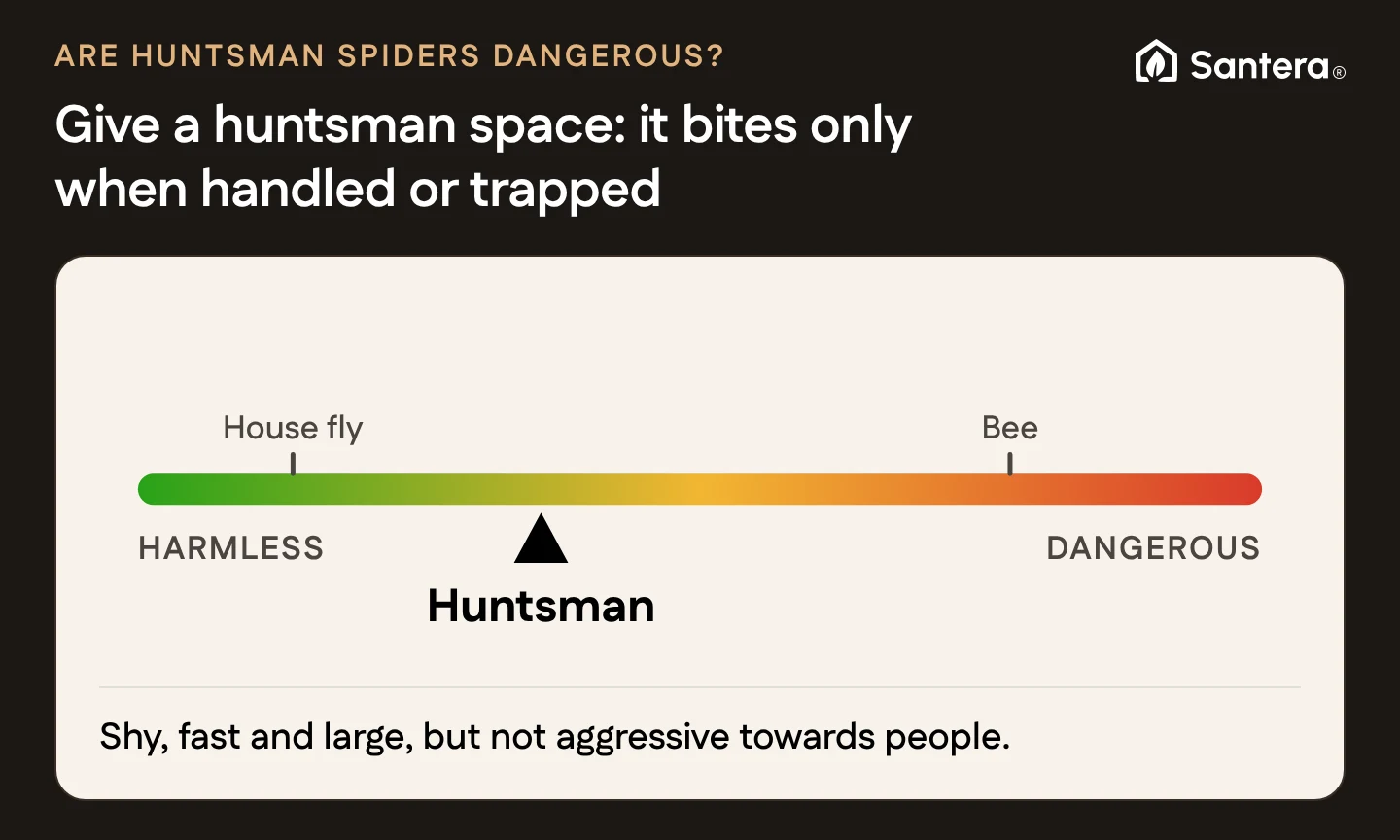
This is the question most residents want answered first. Huntsman spiders are large and quick, but they are not aggressive towards people. Bites are uncommon and generally happen when a spider is handled, pressed against skin or cornered. If a bite does occur, clean the area, keep an eye on it, and seek medical advice if you feel unwell or are concerned, especially for children, older adults or anyone with allergies. The more practical problem for most households is not danger but the distress of finding one in a bedroom or a child's room.
Not every large spider in Dubai is a huntsman. Huntsman spiders have a flattened body and long legs that spread out sideways, a bit like a crab. Camel spiders, which are not true spiders, and other desert species can also cause alarm. If you are not sure what you are looking at, take a photo from a distance and share it with a professional. Identification matters, because the right response depends on the species.
Swatting or grabbing a huntsman can provoke a defensive reaction and is the situation in which bites are most likely. Instead:
Since spiders follow insects, the best long-term step is to reduce what they hunt and close the ways in:
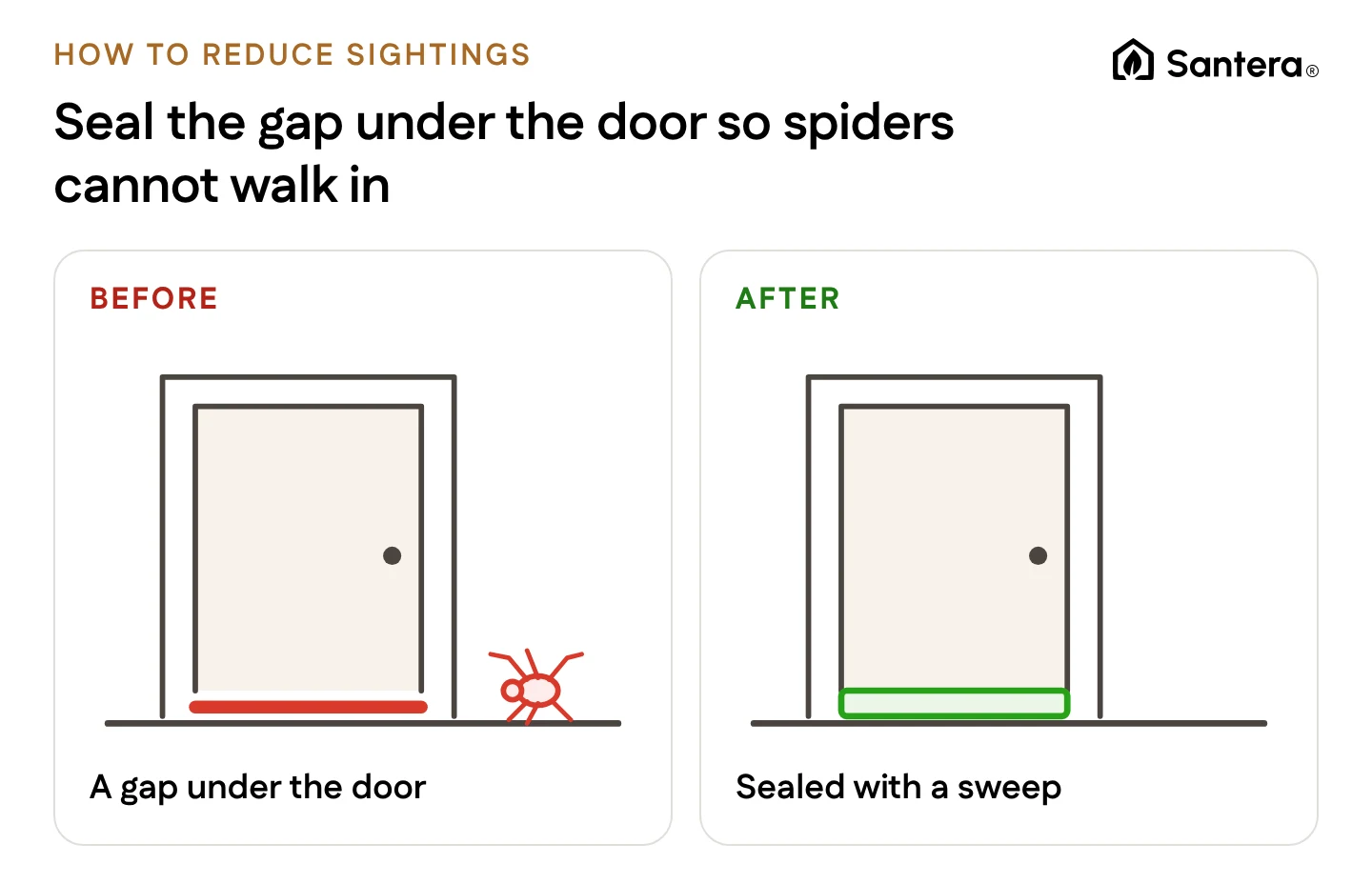
Repeated sightings usually mean there is a way in or a food supply that needs attention.
Santera, Dubai Municipality certified (License 1595993), inspects the property, identifies the species, finds how spiders are getting in and plans targeted treatment, with a 30-day warranty with follow-up support. For background on these pests, visit our spiders pest library page.
They are large and fast, but they are shy and prefer to run away. Bites are uncommon and usually happen when a spider is handled or trapped. If you are bitten, clean the area and seek medical advice if you feel unwell.
Huntsman spiders enter looking for shelter and for insects to hunt. Gaps around doors and windows, and an insect supply in the home, can draw them in.
There is no need to chase or swat it. Give it space, and if it must leave, a calm approach is better than a rushed one. A professional can deal with repeated sightings.
Seal entry gaps, reduce the insects they feed on, and keep storage areas tidy. A professional inspection can pinpoint how they are getting in.
Santera identifies the spider, finds the entry points and plans targeted treatment. Book your complimentary inspection via WhatsApp, with same-day service available across Dubai.
WhatsApp or call: +971 4 332 2623
Email: info@santera.ae
Book online: santera.ae