Fabric Pests
Fabric Pest Prevention for Dubai Gyms and Fitness Studios
Muhammad Saif Ullah
September 19, 2026


{
"@context": "https://schema.org",
"@graph": [
{
"@type": "LocalBusiness",
"name": "Santera Pro for Public Health Pests Control Services L.L.C.",
"telephone": "+971 4 332 2623",
"email": "info@santera.ae",
"address": {
"@type": "PostalAddress",
"streetAddress": "Store 104, Al Quoz 3",
"addressLocality": "Dubai",
"addressCountry": "AE"
}
},
{
"@type": "Article",
"headline": "Fabric Pest Prevention for Dubai Gyms and Fitness Studios",
"about": "Fabric pest control for gyms and fitness studios in Dubai",
"author": {
"@type": "Person",
"name": "Muhammad Saif Ullah"
},
"publisher": {
"@type": "Organization",
"name": "Santera Pro for Public Health Pests Control Services L.L.C."
},
"articleSection": "Fabric Pests"
},
{
"@type": "FAQPage",
"mainEntity": [
{
"@type": "Question",
"name": "Can carpet beetles damage yoga mats and upholstered gym equipment?",
"acceptedAnswer": {
"@type": "Answer",
"text": "Yes. Carpet beetle larvae feed on natural fibres found in yoga mat padding, upholstered bench covers, and foam trim, while clothes moth larvae target wool and felt components used in some equipment padding. Damage often appears as small holes, bare patches, or a fine, dust-like residue near seams and storage racks."
}
},
{
"@type": "Question",
"name": "How often should a Dubai fitness studio inspect for fabric pests?",
"acceptedAnswer": {
"@type": "Answer",
"text": "A monthly visual check of mat storage racks, upholstered equipment, and the laundry or towel storage area is a reasonable baseline for most Dubai studios, with a professional inspection scheduled if any staff or member reports itching, small holes, or shed larval skins."
}
},
{
"@type": "Question",
"name": "Are fabric pests in a gym a health risk to members?",
"acceptedAnswer": {
"@type": "Answer",
"text": "Carpet beetle hairs and shed skins can trigger skin irritation or itching in sensitive members, particularly on mats and towels in close skin contact. The bigger operational risk is usually reputational: damaged mats, moth-eaten upholstery, and member complaints reflect poorly on a fitness business."
}
},
{
"@type": "Question",
"name": "Can Santera treat a Dubai gym without disrupting class schedules?",
"acceptedAnswer": {
"@type": "Answer",
"text": "Santera's Dubai Municipality-certified technicians work with gym and studio operators to schedule inspections and treatment around class timetables, including early morning, late evening, or between-session slots, so member-facing operations are minimally affected."
}
}
]
}
]
}
Dubai's fitness studios and gyms run on fabric: stacks of yoga mats, upholstered benches and machine padding, and a constant cycle of member towels moving between the floor and the laundry room. That same fabric, combined with Dubai's warm, humid indoor conditions and heavy daily foot traffic, is exactly what carpet beetles and clothes moths look for. For a gym or studio operator, an unnoticed fabric pest problem does not just mean a damaged mat. It means member complaints about itching or musty smells, visibly worn equipment in a business built on a clean, premium feel, and a hygiene issue that is hard to explain away once someone posts about it online.
Carpet beetle larvae feed on keratin found in wool, felt, and other natural fibres, while clothes moth larvae prefer wool, silk, and blended fabrics left undisturbed for long stretches. Dubai gyms unintentionally provide both a food source and the right conditions: mat padding, foam and felt trim on strength equipment, and towels stored in warm, poorly ventilated back-of-house rooms. Add body oils, sweat, and skin cells that settle into mats and upholstery daily, and you have an ongoing food source that a weekly surface wipe-down does not remove.
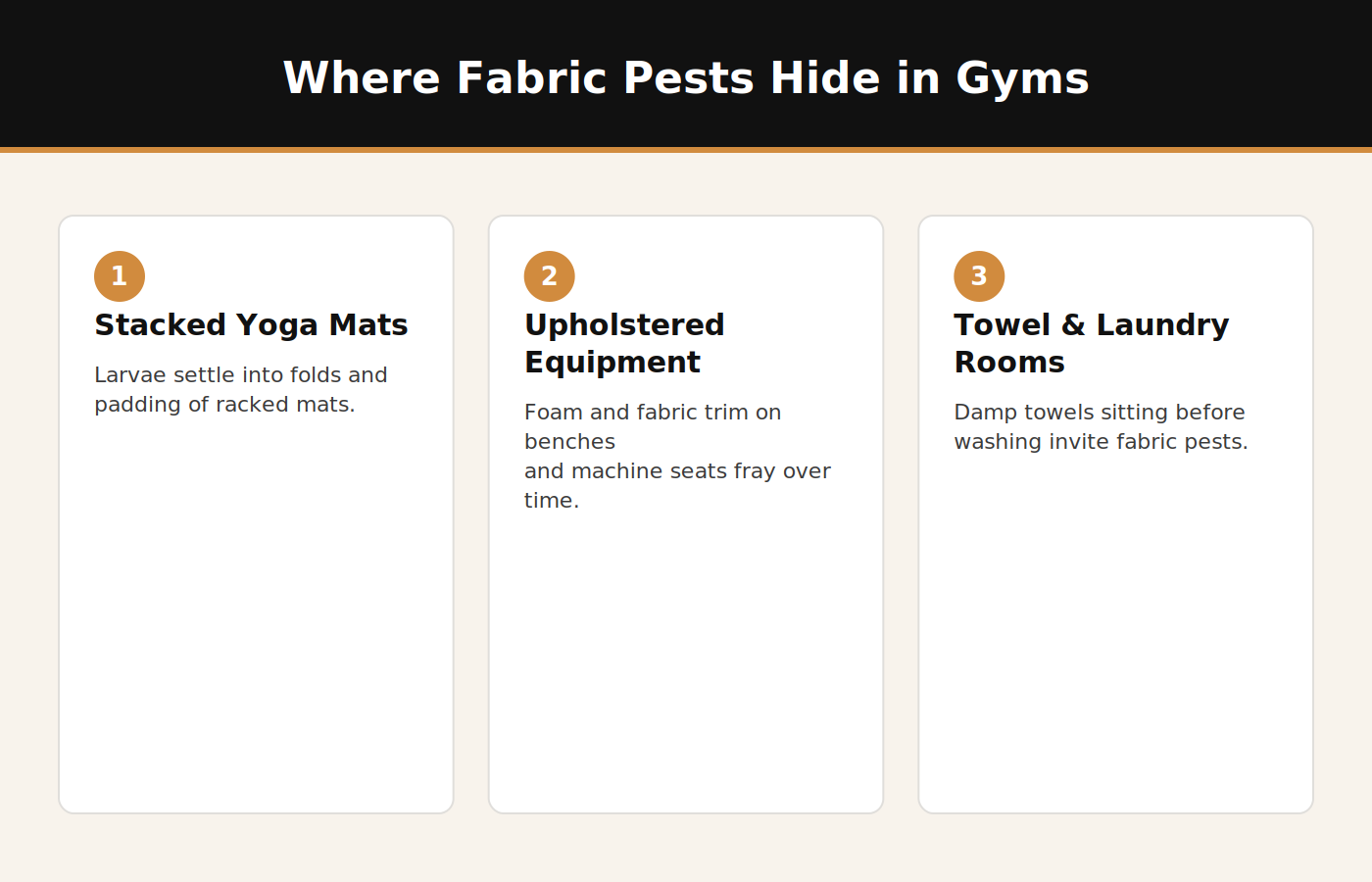
Fabric pests are drawn to dark, undisturbed spots rather than open floor space, which is why an infestation can build for weeks before anyone notices. In a typical Dubai gym or studio, the highest-risk areas include:
Stacked or rolled yoga mats stored upright in racks, where larvae can settle into the folds and padding. Upholstered benches, machine seats, and padded equipment corners, especially older units where foam and fabric have started to fray. Towel and laundry storage rooms, particularly if damp towels sit before washing. Carpeted studio flooring under permanent equipment that is rarely moved. Storage cupboards holding spare mats, props, and out-of-season equipment.
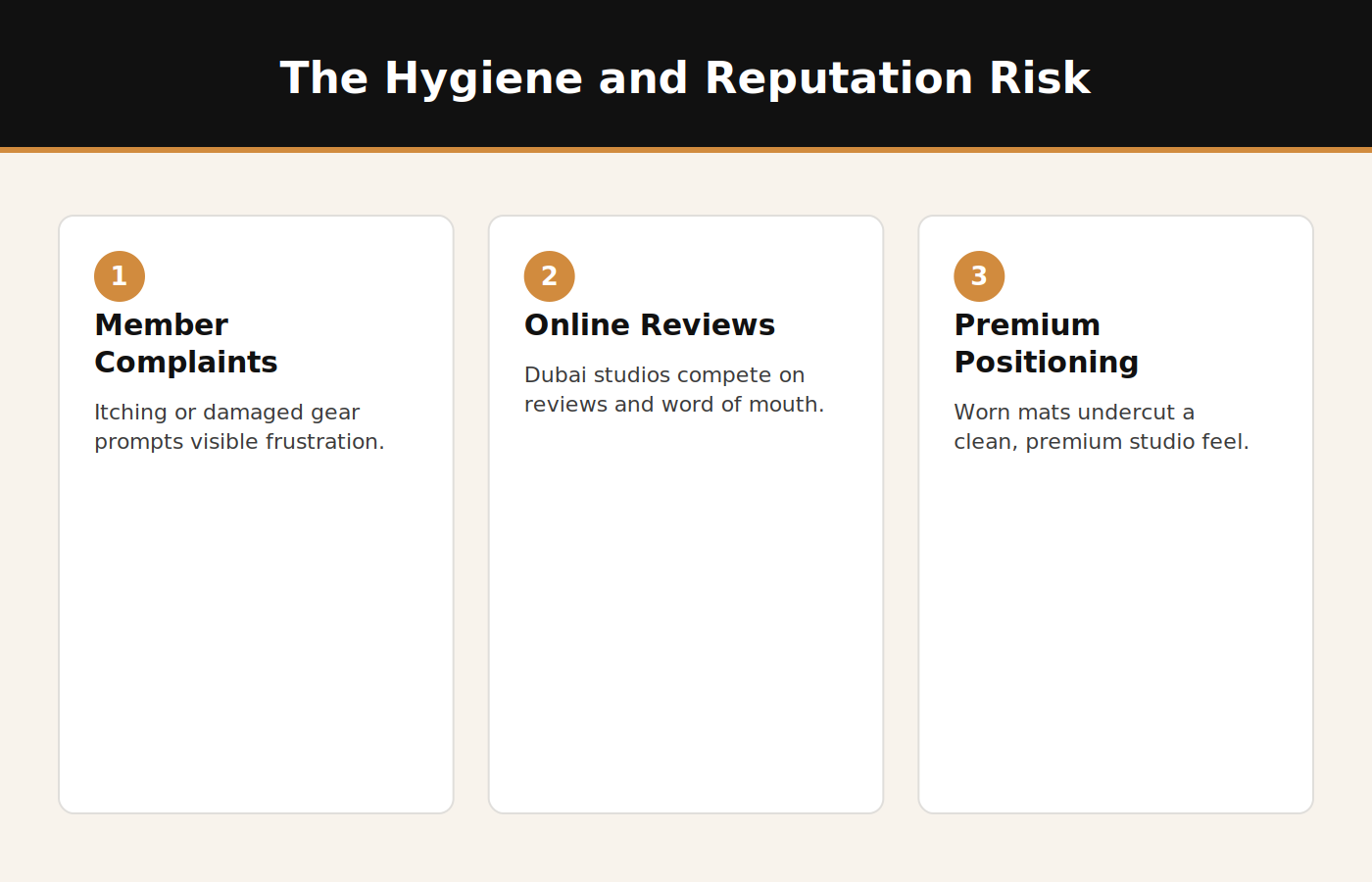
A pest problem in a Dubai gym rarely stays behind the scenes for long. Members notice small holes in mats, a musty smell near the towel station, or itching after a class, and in a market where fitness studios compete heavily on online reviews and word of mouth, that kind of feedback spreads fast. For boutique studios in particular, the physical condition of mats and upholstery is part of the premium experience members are paying for. A visibly damaged mat or a moth-eaten bench cover undercuts that positioning immediately, regardless of how good the instruction or equipment otherwise is.
Early identification keeps a fabric pest issue small and manageable. Staff and managers in Dubai facilities should watch for irregular holes or bare patches in mats, upholstery, or carpeted areas. Small, bristly larvae or shed larval skins near mat racks or storage shelves. A fine, sand-like debris (larval droppings) collecting in folds or seams. Adult carpet beetles, small and oval, near windows or lights. Member reports of itching or skin irritation after mat or towel contact. Any one of these on its own is worth a closer look, and more than one at the same time is a reason to schedule a proper inspection.
In many climates, fabric pest activity slows during colder months. Dubai does not offer that natural break. Indoor gym and studio environments stay warm year-round thanks to air conditioning set for comfort rather than pest control, and the steady mix of warmth and organic residue from sweat and skin cells keeps conditions favourable for carpet beetles and clothes moths in every season. Facilities that only think about fabric pests after a member complaint are almost always managing an infestation that has already had months to establish itself.
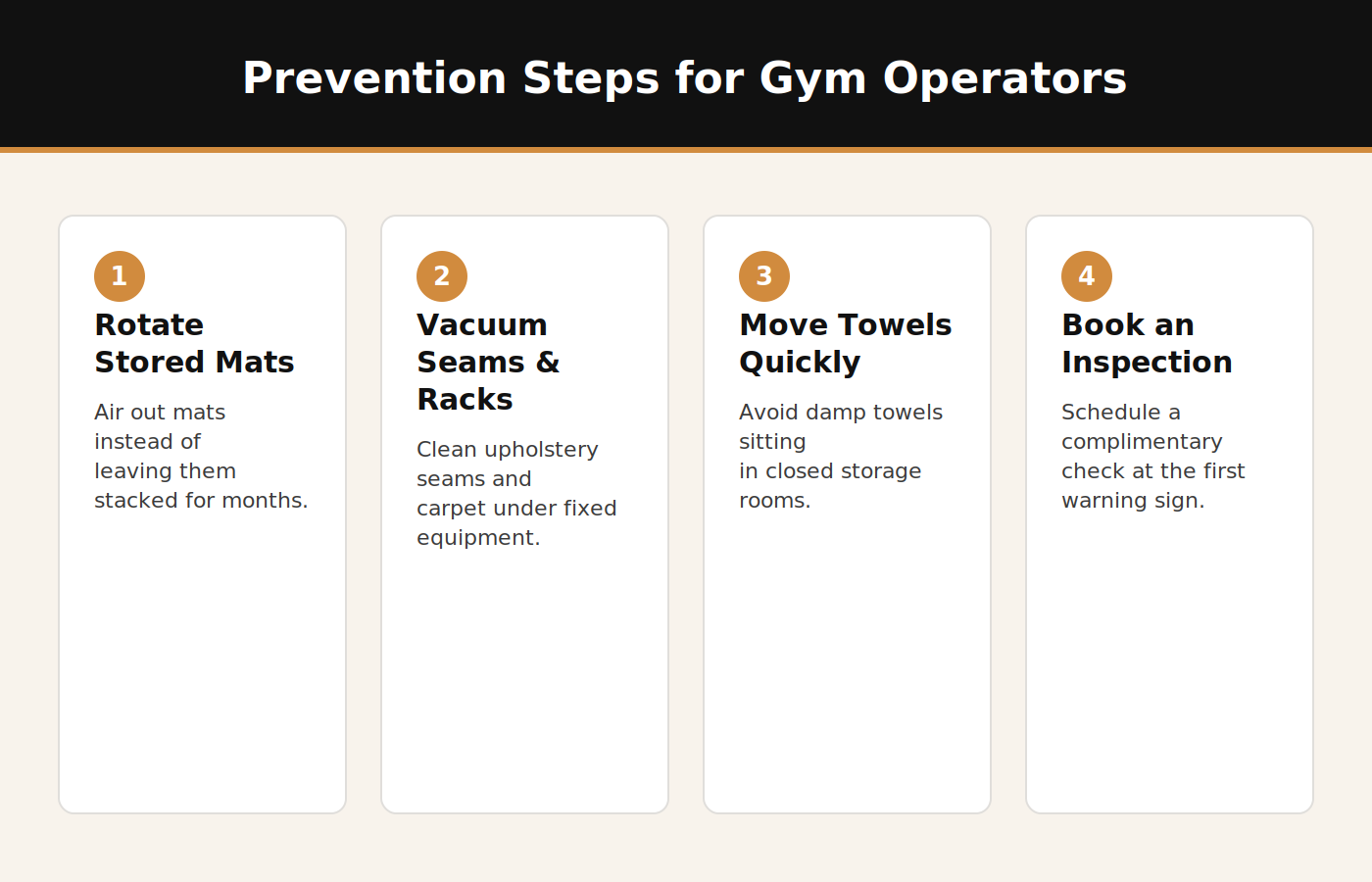
Consistent housekeeping and storage habits go a long way toward keeping fabric pests out of a Dubai fitness facility. Rotate and air out stored mats rather than leaving the same ones stacked in the dark for months. Vacuum mat racks, upholstery seams, and carpeted areas under fixed equipment on a regular schedule, not just visible floor space. Keep towels moving quickly from use to wash, and avoid letting damp towels sit in a closed storage room. Inspect older upholstered equipment for fraying or worn fabric, which is easier for larvae to enter. Schedule a complimentary inspection with a licensed provider at the first sign of holes, shed skins, or member complaints, rather than waiting for the problem to spread.
When prevention alone is not enough, Santera's Dubai Municipality-certified technicians inspect mat storage, upholstered equipment, carpeted areas, and towel or laundry rooms to identify the species involved and locate the larvae and harbourage driving the damage, rather than just treating the areas where adults are seen. Treatment targets those hidden feeding and breeding sites, and technicians advise gym and studio staff on storage, airflow, and cleaning routines that make the space less hospitable to fabric pests going forward. Every treatment includes a 30-day warranty with follow-up support, so if activity continues within that window, a follow-up visit is part of the service.
Santera has supported Dubai businesses with pest control for 25 years, holds a 4.9-star rating across more than 10,000 completed treatments, and operates under Dubai Municipality certification and license number 1595993. For fitness facilities specifically, that means treatment scheduling that respects class timetables and member-facing hours rather than disrupting the business it is meant to protect.
Yes. Carpet beetle larvae feed on natural fibres found in yoga mat padding, upholstered bench covers, and foam trim, while clothes moth larvae target wool and felt components used in some equipment padding. Damage often appears as small holes, bare patches, or a fine, dust-like residue near seams and storage racks.
A monthly visual check of mat storage racks, upholstered equipment, and the laundry or towel storage area is a reasonable baseline for most Dubai studios, with a professional inspection scheduled if any staff or member reports itching, small holes, or shed larval skins.
Carpet beetle hairs and shed skins can trigger skin irritation or itching in sensitive members, particularly on mats and towels in close skin contact. The bigger operational risk is usually reputational: damaged mats, moth-eaten upholstery, and member complaints reflect poorly on a fitness business.
Santera's Dubai Municipality-certified technicians work with gym and studio operators to schedule inspections and treatment around class timetables, including early morning, late evening, or between-session slots, so member-facing operations are minimally affected.
Fabric pests are easy for a busy Dubai gym or studio to miss until a member notices a damaged mat or an odd smell near the towel station, but by then the larvae have usually had weeks to settle into storage racks, upholstery, and laundry areas. If your facility is seeing any of the warning signs above, or you simply want a baseline check before it becomes a member-facing problem, read more on our Fabric Pests page or book a complimentary inspection with Santera's Dubai Municipality-certified team via WhatsApp at https://wa.link/k5sow1. Same-day service is available across Dubai, and every treatment includes a 30-day warranty with follow-up support.