Earwigs
Earwig Control for Dubai Community Gardens, Parks and Landscaping Retailers
Muhammad Saif Ullah
September 13, 2026


Earwigs are one of the most common nuisance pests found in Dubai's managed green spaces. In community gardens, shared parks, and the landscaped common areas of residential developments, the combination of regular irrigation, mulch beds, and dense ground cover creates ideal shelter for them. For community property managers, that means resident complaints about earwigs appearing near pathways, seating areas, and ground-floor units after watering. For landscaping retailers and plant nurseries, the concern is different but related: earwigs travelling in on plant stock, pots, and soil, and settling into a yard or display area where they can affect the condition of the inventory on offer.
This guide looks at why earwigs are so persistent in Dubai's irrigated landscaping, what that means for the people managing community green spaces and retail plant stock, and the practical steps that keep numbers under control.
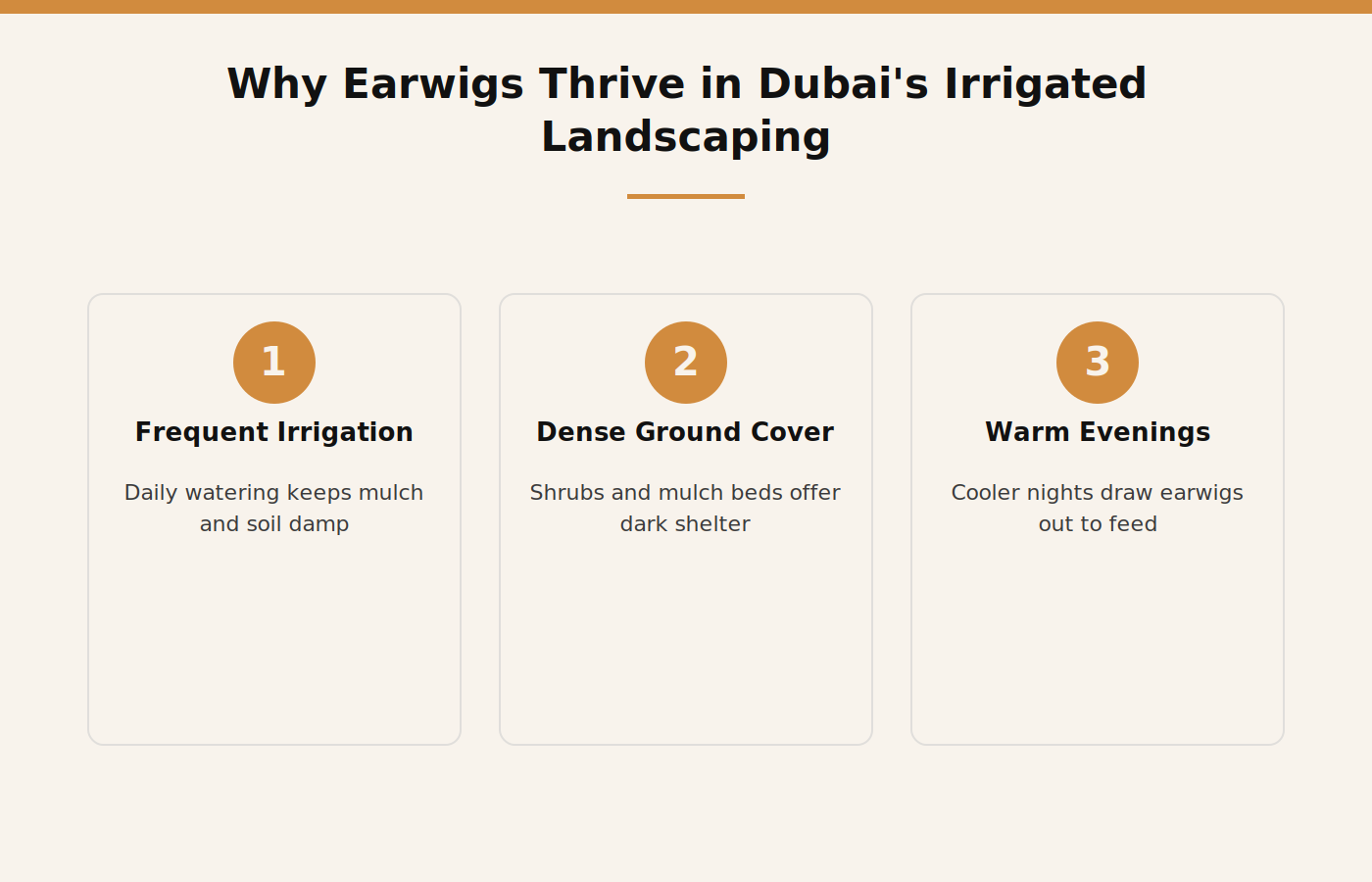
Earwigs need moisture and darkness to survive, and Dubai's climate makes irrigated landscaping one of the few reliable sources of both. Community gardens, boulevard planting, and shared park areas are typically watered on a fixed schedule to keep grass and shrubs alive through the heat, which leaves mulch beds, root zones, and the underside of ground cover consistently damp. Earwigs shelter in these damp pockets during the day and become active in the cooler evening hours, often in visible numbers right after irrigation cycles run.
Because this pattern repeats daily, earwig activity in Dubai's community landscaping tends to be ongoing rather than seasonal, which is why it belongs in routine grounds management rather than a one-time response.
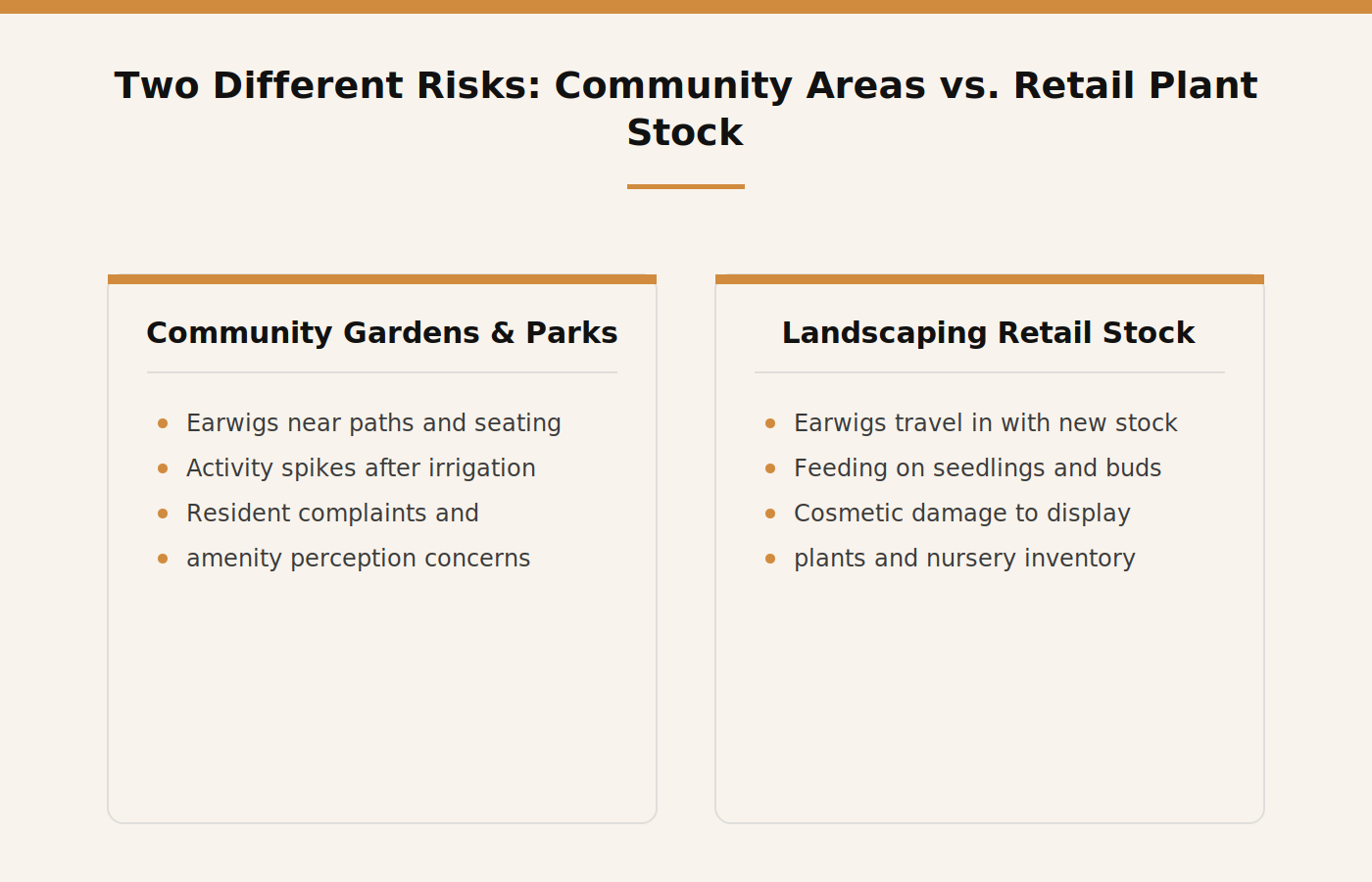
For residential communities and property management teams, earwigs are mostly a nuisance and perception issue rather than a structural one. Residents walking through shared gardens or sitting in common seating areas after irrigation can encounter earwigs on paths, planters, and outdoor furniture, which generates maintenance requests and complaints even though the pest itself is not aggressive. Left unmanaged, visible earwig activity in shared outdoor spaces can shape how residents perceive the overall upkeep of a community, which matters for property managers responsible for amenity standards.
Garden centres, plant nurseries, and landscaping retailers across Dubai face a more direct risk: earwigs sheltering in the soil, pots, and foliage of live stock. Because earwigs feed on soft new growth and can nibble seedlings, young shoots, and flower buds, a retailer with earwig activity in its stock can see cosmetic damage to the plants on display, which affects how that stock presents to customers. Stock also moves in and out constantly, arriving from growers and irrigation-heavy holding areas, which makes it easy for earwigs to be introduced without an obvious source on-site.
None of these signs point to a structural problem. They point to a moisture and harbourage pattern in the landscaping itself, which is where any effective response needs to start.
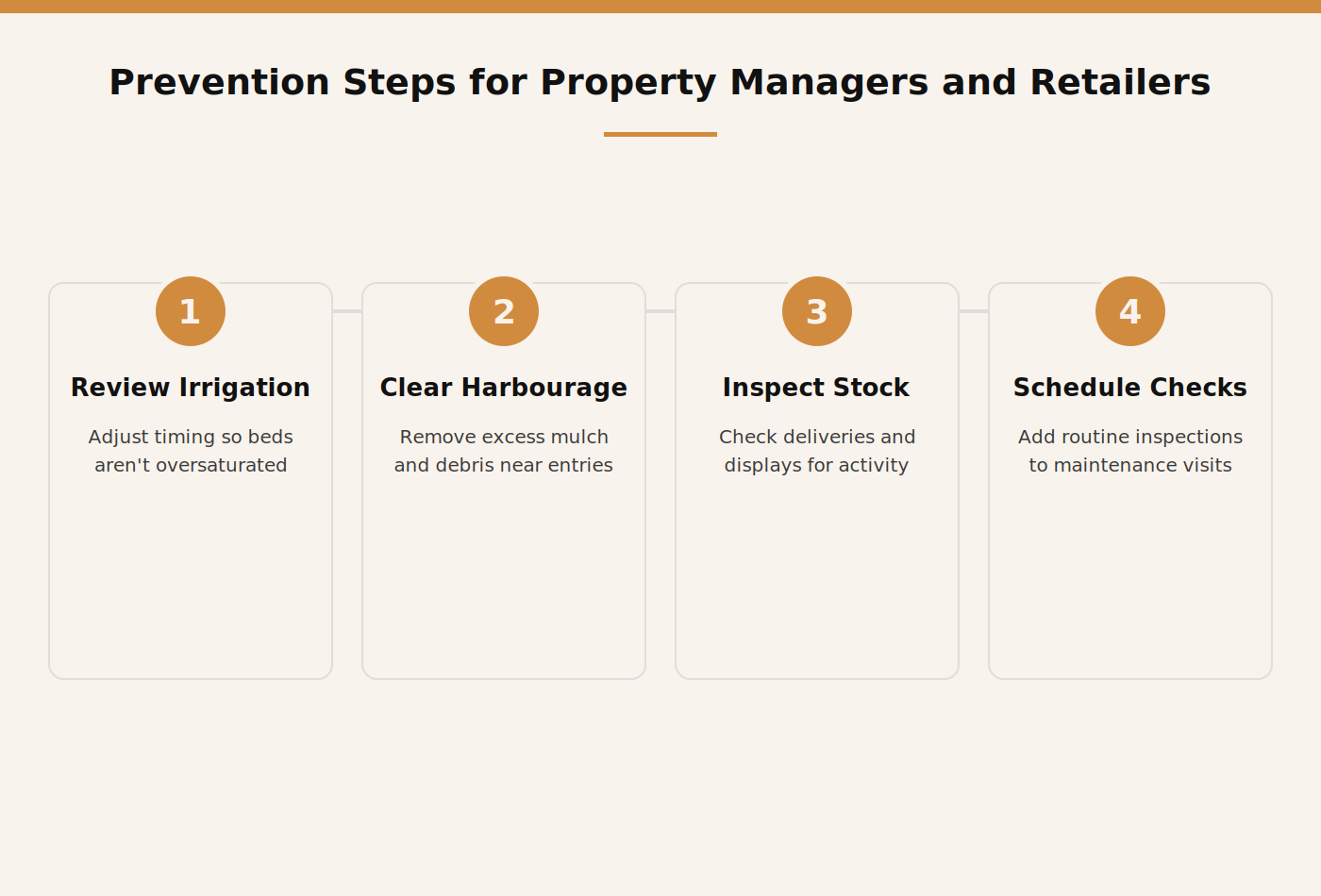
Community property managers in Dubai can reduce earwig activity in shared gardens and common areas by adjusting how landscaping is irrigated and maintained, rather than relying on treatment alone:
For retailers managing live plant stock, the priority is catching earwig activity before it reaches the display floor:
Santera's approach to earwig control in Dubai's community gardens, parks, and retail landscaping starts with an on-site assessment of where moisture and harbourage are concentrated across the property, whether that is a residential common area, a public park, or a nursery yard. From there, our Dubai Municipality-certified technicians treat the harbourage and entry points identified during the assessment and work with grounds or retail teams on the moisture and debris management changes that reduce the conditions drawing earwigs in. Every commercial treatment includes a 30-day warranty with follow-up support, so if activity continues within the agreed scope, we return to reassess and treat again.
This structured approach reflects the scale we work at: over 25 years of combined team experience, more than 10,000 treatments completed, and a 4.9-star average from customers across Dubai.
Earwigs are not dangerous to people and rarely cause serious harm to established landscaping. Their pincers can deliver a harmless pinch if handled, and in large numbers they can nibble on soft new growth, seedlings, and flower stock, which is more of a concern for landscaping retailers holding plant inventory than for mature community gardens.
Earwigs are drawn to damp, dark shelter. Dubai's community landscaping relies on frequent irrigation to keep gardens green in the heat, and that watering schedule creates exactly the moist mulch, soil, and ground cover earwigs prefer, which is why activity often spikes in the hours after common areas are watered.
Yes. Earwigs shelter in the soil, pots, and foliage of nursery stock, so incoming deliveries can carry them into a retail yard or garden centre without any visible sign at first. Regular stock checks at receiving and before display are the most reliable way to catch this early.
For community-managed gardens and parks in Dubai, a routine inspection alongside regular landscaping maintenance is generally enough, with a closer check during periods of heavier irrigation or after new planting. Retail plant nurseries benefit from inspecting stock on a shorter cycle given the constant turnover of new material.
Earwig activity in Dubai's irrigated community landscaping and retail plant stock is a manageable, ongoing part of grounds and inventory upkeep, not a sign of a bigger problem. If you manage a community's shared gardens or a landscaping retail site and want a clearer picture of where moisture and harbourage are concentrated on your property, our team can help. Read more on our Earwig pest library page, or book a complimentary inspection with Santera's Dubai Municipality-certified team via WhatsApp at https://wa.link/k5sow1.
