Bed Bug
Organic Pest Control in Dubai: What Pet-Safe and Chemical-Free Actually Means
Muhammad Saif Ullah
October 9, 2026


The terms organic, pet-safe and chemical-free are used loosely in pest control marketing, and sometimes inaccurately. This guide explains what they mean in a Dubai context, which treatments they refer to and how to ask the right questions when booking pest control for a home with pets, young children or anyone with sensitivities.
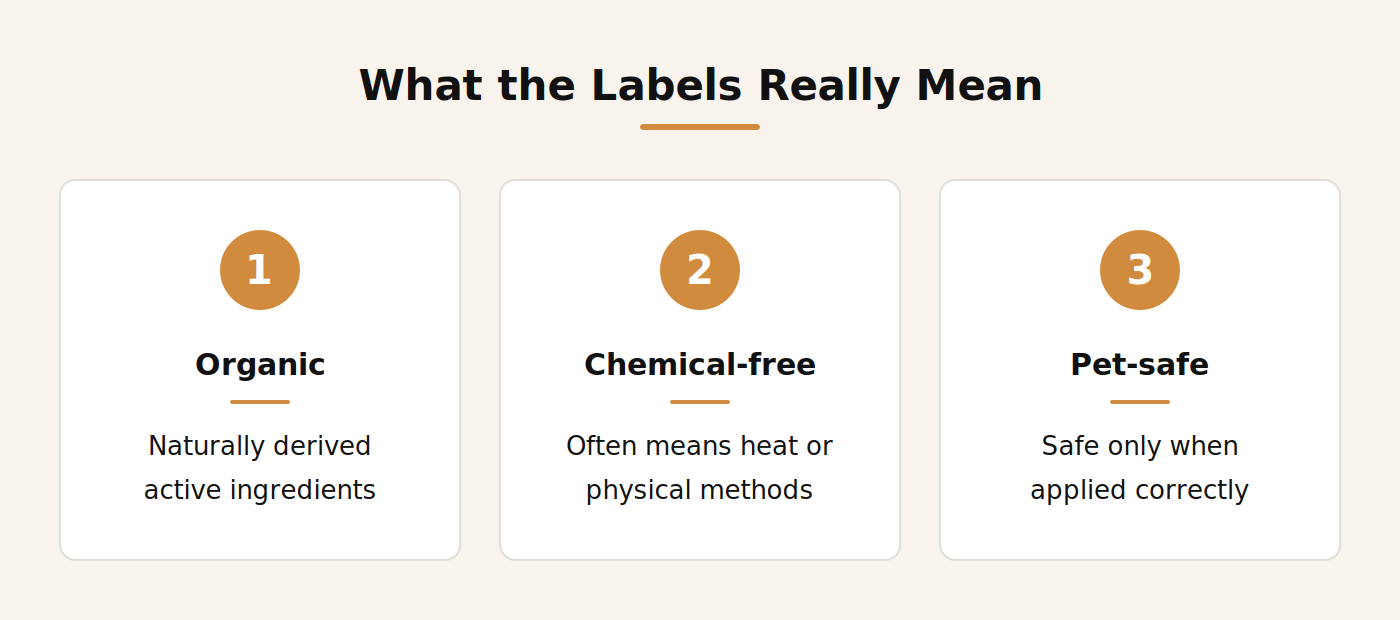
Strictly speaking, every substance is a chemical, including water. In pest control, chemical-free usually means that no synthetic residue is left on surfaces. Organic usually means a naturally derived rather than synthetically made active ingredient. Pet-safe is the least precise of the three, because no treatment is unconditionally safe for every animal in every situation. It means the treatment is suitable when it is applied as the label directs and the re-entry period is observed.
Some methods work without leaving a product on surfaces. Heat or steam treatment kills pests with temperature alone and is the best established non-chemical approach for bed bugs. Physical exclusion, such as sealing entry points, trapping and removing the places pests hide, applies no product at all. When a company describes a spray treatment as chemical-free, ask what is actually being applied, because spray treatments contain an active ingredient even if it is plant-derived.
Some professional treatments use naturally derived ingredients. Biological larvicides, for example, are used on water features and breeding sites for mosquitoes and are selective in how they work. Other options include mineral-based dusts for dry crawling-insect areas and plant-derived products for specific uses. These can be strong primary methods for certain pests, though other pests need a combined programme. The right choice depends on the pest, the property and the people and animals living in it.
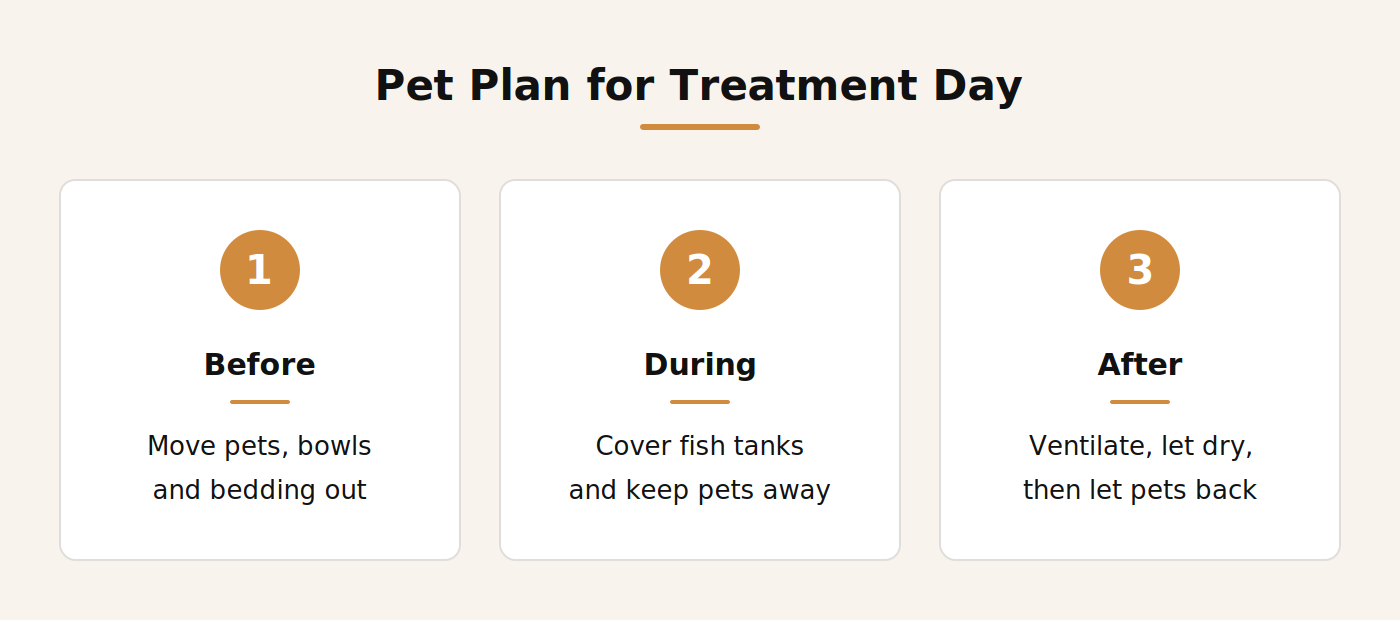
After a treatment, pets should stay out for the re-entry period given on the label, and treated surfaces should be dry before contact. Fish tanks and other aquatic setups should be covered and kept ventilated, because many treatments affect aquatic life at very low concentrations. Heat treatment has no re-entry restriction once the area cools. Bedding, food bowls and water bowls should be moved before work starts, and the technician should know about every pet in the home.
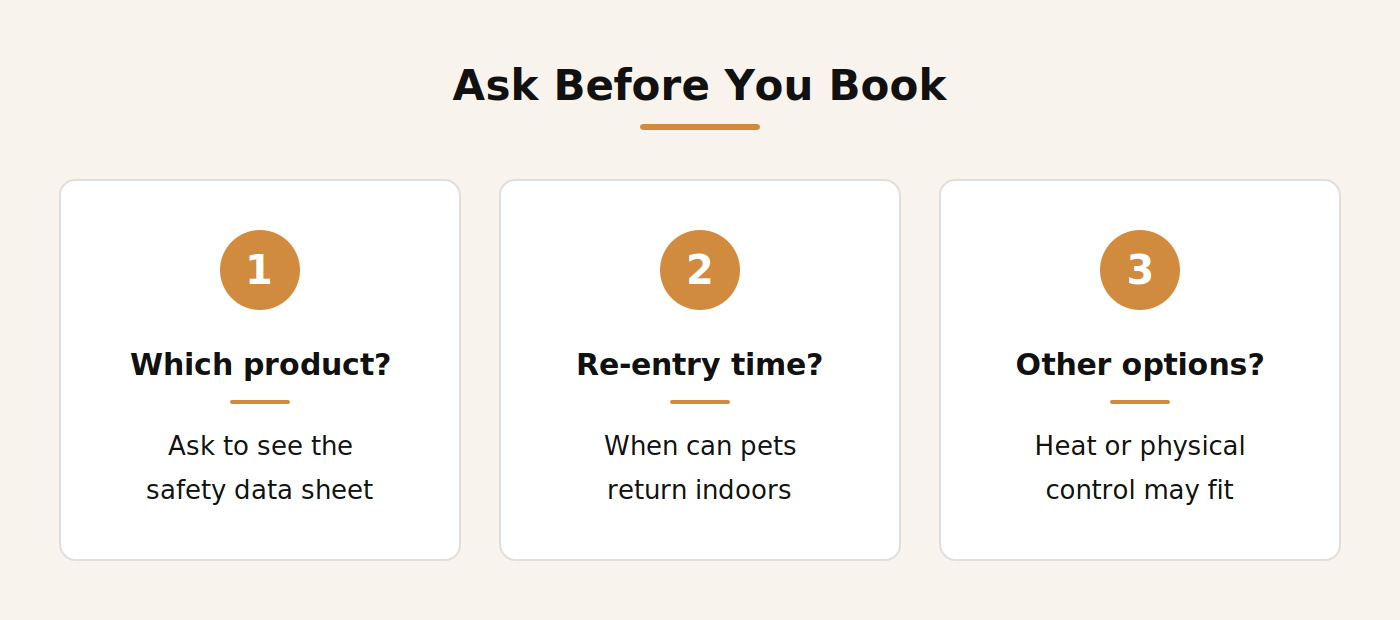
Rather than asking whether a treatment is pet-safe, which usually gets a reassuring but vague answer, ask for specifics. Which product will be used, and can you see its safety data sheet? What is the re-entry period for people and pets? Are fish tanks or aquatic environments at risk? Is a heat or physical option available for this pest? Which surfaces will be treated, and will they touch pet bedding, bowls or sleeping areas? A professional provider should answer all of these clearly. Vague reassurance is a warning sign.
Santera offers heat-based treatment for bed bugs, targeted larviciding for water features and breeding sites, physical exclusion for rodents and a range of crawling insects, and, where suitable, naturally derived options for clients who prefer to avoid synthetic products. For every pest we explain the available options and how they work before any treatment begins, so you can decide with accurate information. For background, see our Pest Library page on bed bugs.
For specific uses, such as heat for bed bugs or biological larvicides for mosquito breeding sites, naturally derived or physical methods are strong primary options. For other pests they may need more frequent application or work best as part of a combined programme.
Dubai Municipality licenses pest control operators, not individual treatment types. A licensed operator using naturally derived treatments is compliant, because the licence covers the operator's qualifications and operations.
Precise gel baiting placed deep in cracks and voids, rather than surface spraying, keeps product away from areas that pets and children reach. Combined with exclusion and hygiene measures it is a low-exposure approach that is still effective.
If you have pets, young children or a sensitivity to strong products, tell the technician before any work begins so the plan can be built around your household. Santera is Dubai Municipality certified (License 1595993). Book your complimentary inspection via WhatsApp, with same-day service available across Dubai.