Mosquitoes
Mosquito Control for Dubai Community Parks and Retail Outdoor Spaces: Protecting Visitors During Peak Season
Muhammad Saif Ullah
September 13, 2026


A community park or retail outdoor seating area in Dubai can look immaculate and still send visitors home with mosquito bites. The irrigation, ornamental water features and shaded landscaping that make these spaces pleasant are often the very things creating standing water mosquitoes need to breed. For community management and retail operations teams, mosquito complaints during peak evening hours are less about visible pests and more about breeding sites hidden in plain sight across the landscaping.
Shared outdoor spaces combine several conditions that favor mosquito breeding. Irrigation systems run on a schedule that keeps soil and planters consistently damp, ornamental water features often have limited circulation, and dense landscaping creates shaded, humid pockets that stay wet longer after each watering cycle. Dubai's warm climate means a mosquito life cycle from egg to biting adult can complete in under a week wherever standing water sits undisturbed, so a missed drain or a clogged fountain filter can turn into a visible problem within days.
Breeding sites are rarely dramatic. Irrigation lines and blocked drainage channels hold water long after a cycle ends, ornamental water features with low circulation offer calm surfaces for egg-laying, saucers under planters and drip trays collect runoff that is easy to miss, and shaded, damp landscaping beds retain moisture well after the surrounding areas have dried. None of these require heavy rain, just routine watering and normal drainage that is slightly less than perfect.
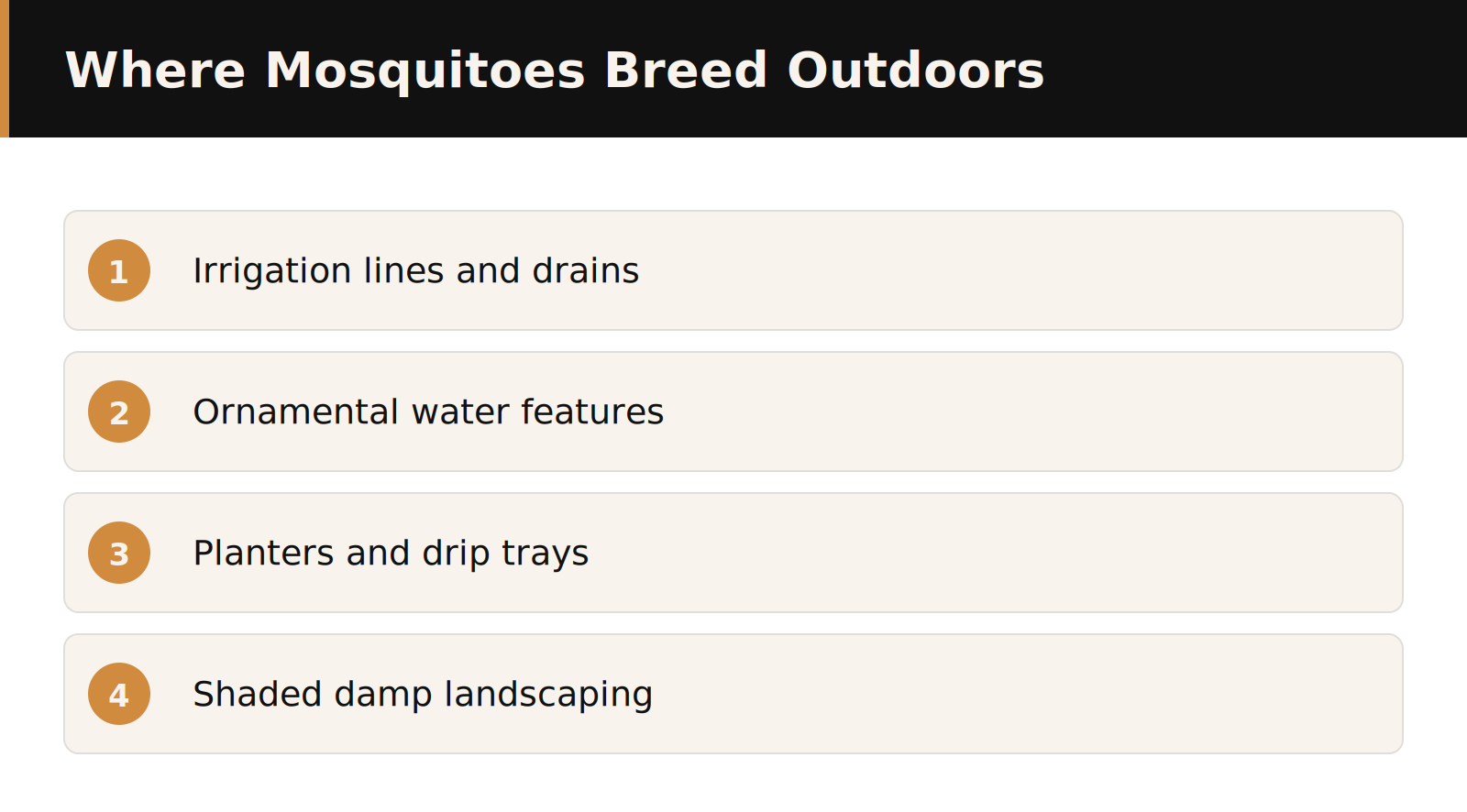
Treating only the benches, walkways and seating areas where visitors gather can reduce adult mosquitoes for a short window, but it does nothing about the breeding sites producing the next generation. Without addressing standing water in planters, drains and water features, adult populations typically recover within days, leaving property teams treating the same complaint on a loop. Lasting control depends on finding and disrupting the source, not just managing the symptoms visitors notice.
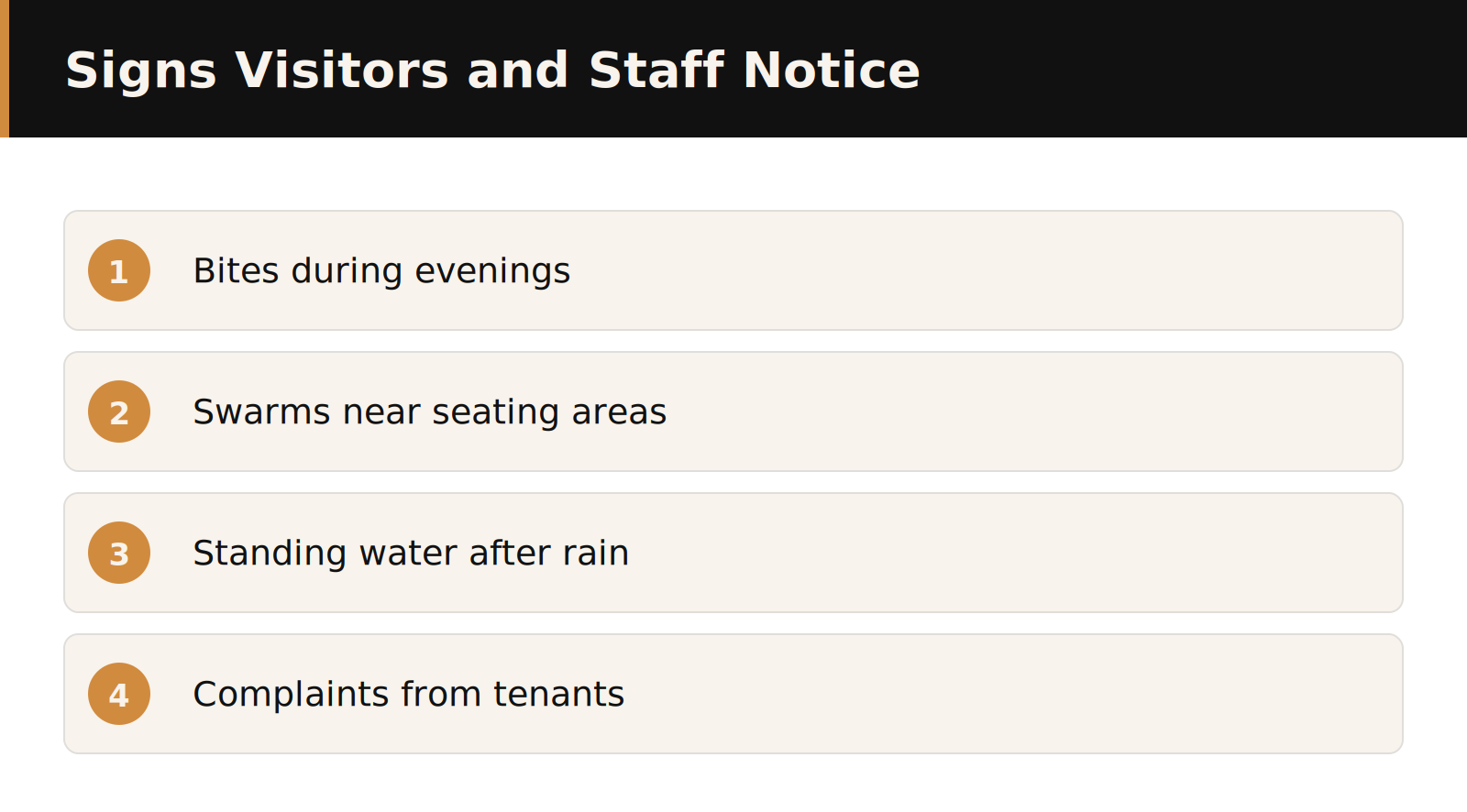
Property and facility teams usually hear about a problem before they see it directly: complaints of bites during evening hours, visible swarms near seating areas at dusk, standing water still present a day or more after rain, and repeated complaints from retail tenants or community residents about the same zones. Treating these reports as a signal to inspect nearby landscaping, rather than isolated nuisances, catches the source earlier.
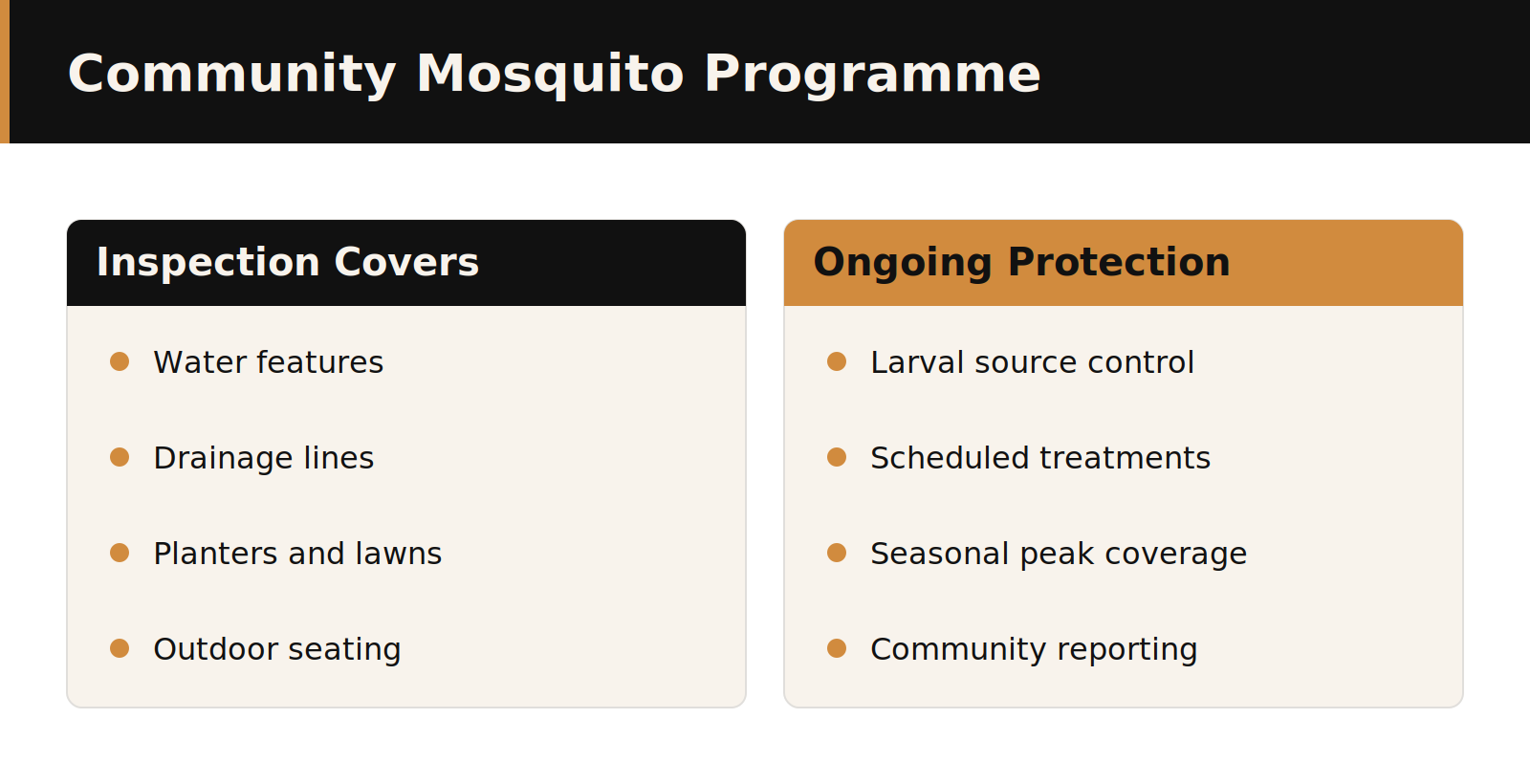
An effective programme for shared outdoor spaces starts with a full inspection of water features, drainage lines, planters and low-lying lawn areas, not just the seating zones where complaints originate. A Dubai Municipality certified technician then focuses on larval source control at standing water points, alongside scheduled treatments timed to the warmer, higher-risk months. Because these properties see peak mosquito activity in specific seasonal windows, visits are scheduled to cover that period consistently, with clear reporting shared with community or retail management so recurring problem areas are tracked over time rather than treated as one-off complaints.
Irrigation systems, ornamental water features and dense landscaping keep these spaces consistently green, but the same watering and shaded planting that residents and shoppers enjoy also creates the standing water and humidity mosquitoes need to breed.
The most common breeding points are easy to overlook: saucers under planters, blocked irrigation drains, ornamental fountains with low circulation, and low spots in lawns where water pools after irrigation cycles or rain.
Not on its own. Spraying seating and walkway areas can reduce adult mosquitoes temporarily, but if breeding sites in drains, planters and water features are not addressed, adult populations simply recover within days.
Even light rain can create temporary standing water in landscaping, drainage channels and low-lying paved areas, giving mosquitoes a fast breeding opportunity that shows up as a sharp increase in biting activity within days.
Most Dubai community and retail properties schedule inspections and larval source treatment on a recurring basis through the warmer months, with additional visits after heavy rain rather than waiting for visitor complaints to trigger action.
Mosquito complaints in a community or retail outdoor space almost always trace back to a breeding site hidden in the landscaping. Santera is Dubai Municipality certified and works with community management and retail operations teams across the city to inspect, treat and monitor shared outdoor areas through the peak season. For more background, see our Pest Library page on mosquitoes. To arrange a complimentary inspection for your property, reach out on WhatsApp.