Mosquitoes
Mosquito Control for Dubai Offices and Business Parks: Managing Landscaped Grounds
Muhammad Saif Ullah
September 15, 2026


Mosquitoes on a landscaped office campus are not just a comfort issue for employees stepping outside for a break, they are a sign that water is sitting somewhere on the property that should not be. Dubai's office and business park developments combine ornamental water features, irrigated planting, and large paved and basement areas, all of which can hold the small amounts of standing water mosquitoes need to breed, often in spots facilities teams rarely check.
This pattern shows up across Dubai's major business districts. Business Bay and DIFC towers often feature podium-level water features and shaded courtyards between towers, Dubai Internet City and Dubai Media City combine dense landscaping with underground parking, and lower-rise business parks in Al Quoz or Ras Al Khor pair loading areas with irrigated perimeter planting. Each layout creates its own combination of breeding sites, which is why a generic pest control approach rarely works as well as one built around the specific grounds.
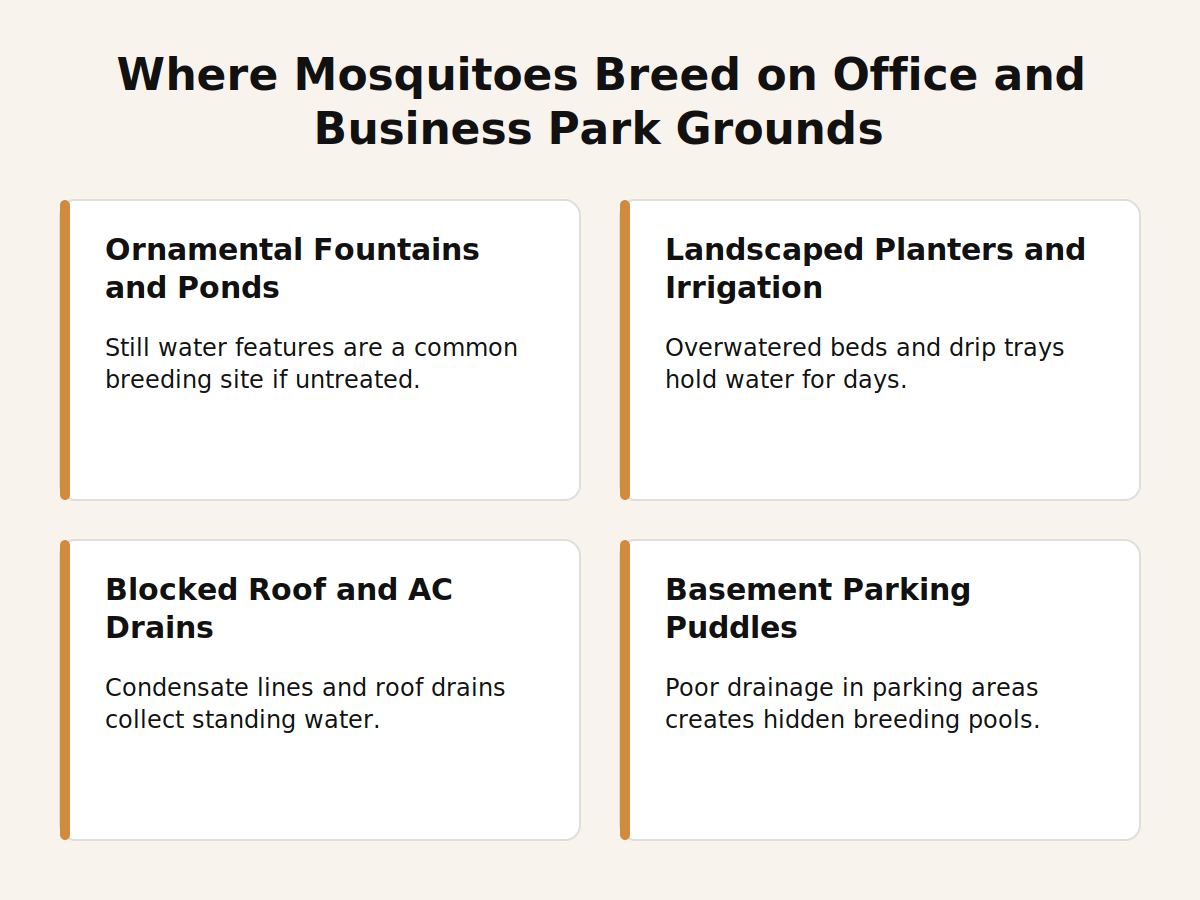
A modern business park is landscaped for appearance, with fountains, planted courtyards, and irrigation systems designed to keep greenery healthy through Dubai's heat. Every one of those features can double as a mosquito breeding site if water is allowed to sit for more than a few days, whether that is an ornamental pond, a saturated planter drip tray, or a puddle collecting in a basement parking ramp after cleaning or rain. Because these grounds are shared by multiple tenants, responsibility for spotting the problem can fall between facilities teams, landscapers, and building management.
Outdoor courtyards, shaded seating, and landscaped walkways are part of how modern office campuses attract tenants and keep staff comfortable during breaks and outdoor meetings. Mosquito activity at dawn and dusk, exactly when many people are arriving, leaving, or taking a walk outside, undermines that investment and can turn a well-designed outdoor space into one people avoid.
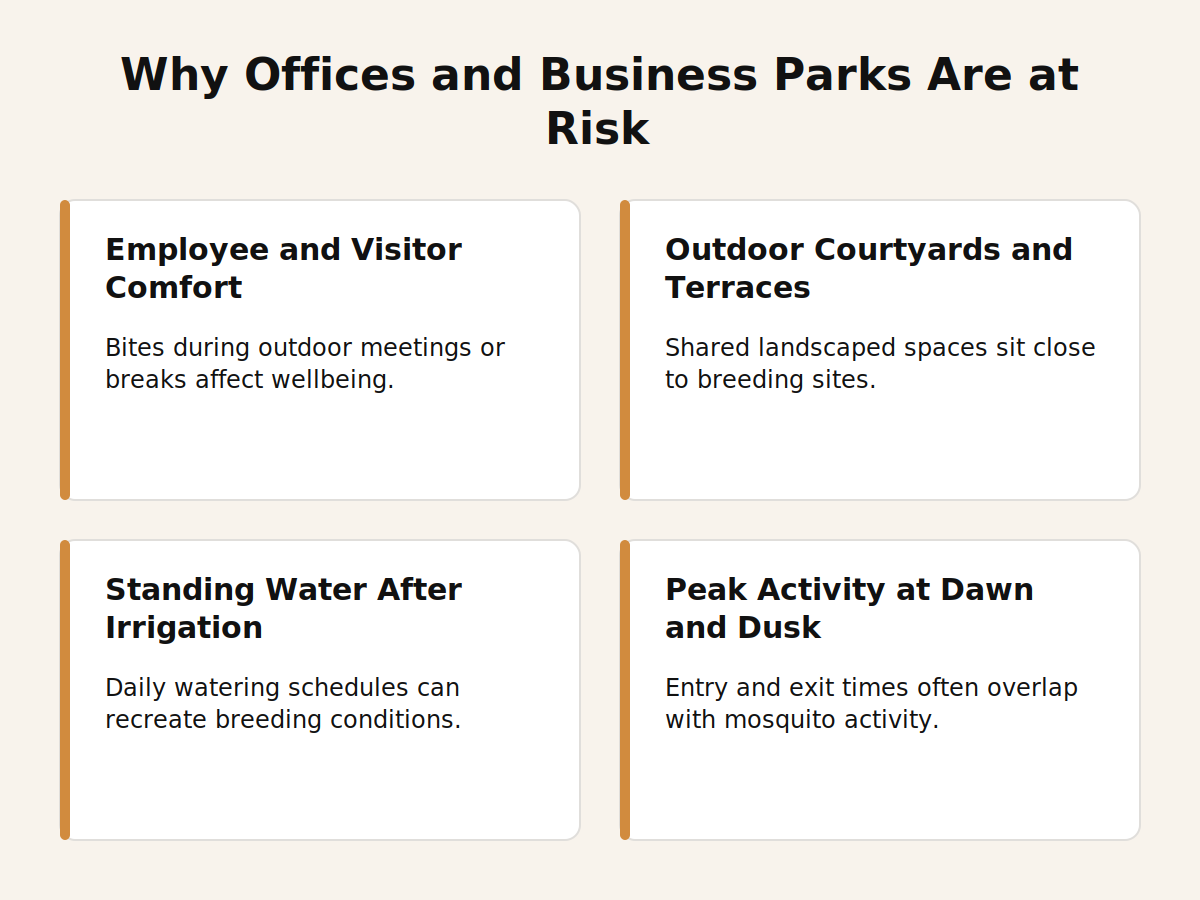
Daily watering keeps landscaping healthy in Dubai's climate, but the same schedule can recreate breeding conditions in planter drip trays and low-lying beds within a day or two of any treatment. Without coordinating irrigation timing and drainage checks with a pest control plan, a business park can end up refreshing its own mosquito breeding sites on a loop.
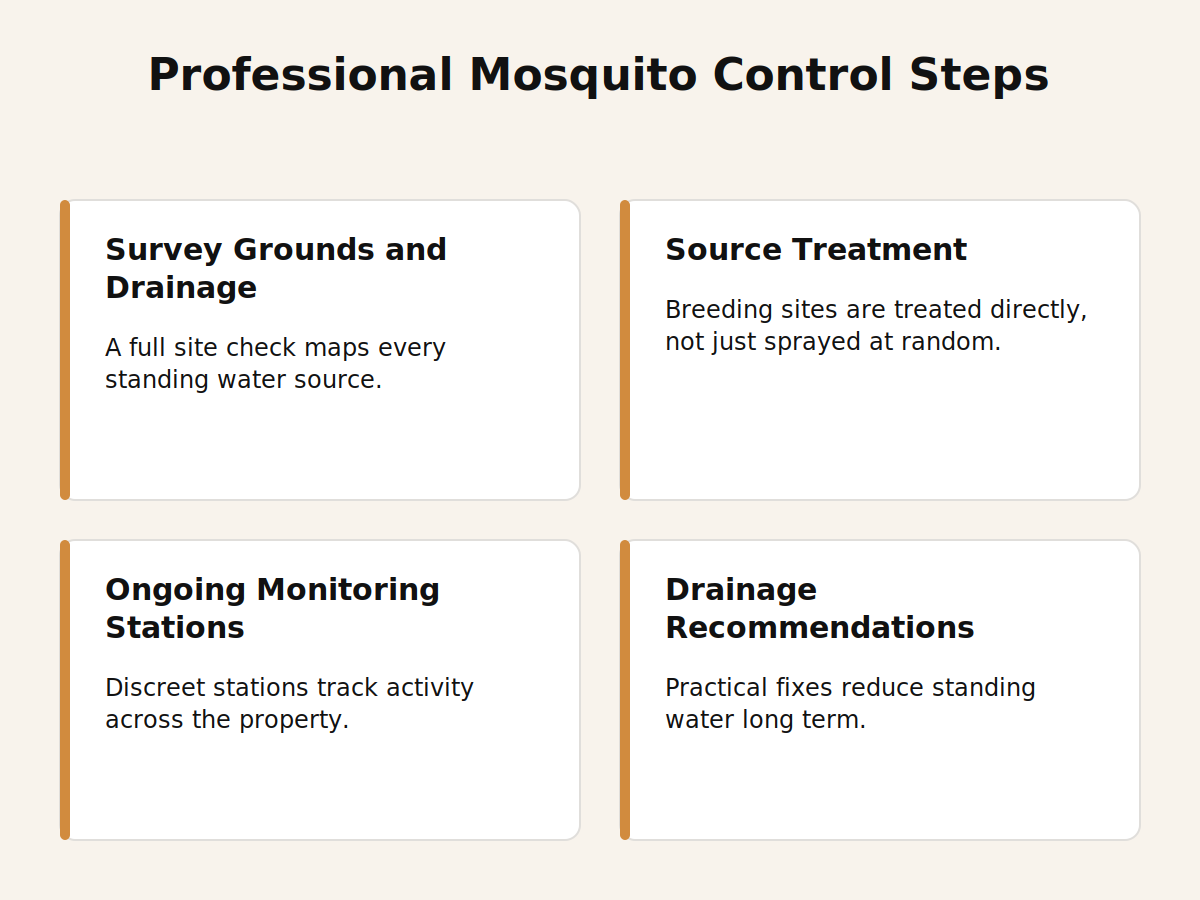
Santera's technicians carry out a full site survey of grounds, drainage, and water features to map every source of standing water, including the ones a facilities walk-through would likely miss, such as roof drains and condensate lines. Breeding sites are then treated directly at the source, discreet monitoring stations are placed to track activity across the property, and the team provides practical drainage and irrigation recommendations to reduce how often new sites form.
Because business park grounds are typically maintained by more than one team, the most effective approach shares findings across facilities management, landscaping contractors, and pest control rather than treating each as a separate responsibility. A shared map of known breeding sites, checked on a regular schedule, closes the gaps that let mosquitoes return between visits.
Office campuses that invest in courtyards, terraces, and outdoor meeting areas get the most value from them when mosquito activity is managed proactively rather than after tenants start complaining. A seasonal programme, timed around Dubai's warmer months, keeps landscaped grounds usable and comfortable for the people the space was designed for.
Dubai's mosquito activity typically peaks in the humid summer months and again after rare heavy rain, when temporary pools form quickly in low-lying courtyards and construction-adjacent business parks. Scheduling a proactive check ahead of these periods, rather than waiting for a complaint, is the difference between a contained visit and a property-wide issue.
Business park grounds often hold small, easy-to-miss water sources: drip trays under irrigated planters, blocked roof or AC condensate drains, and low spots in basement parking that collect runoff. None of these look like standing water at a glance, but each one is enough for mosquitoes to breed.
Good irrigation practice helps, but it will not remove breeding sites that are already established in drains, fountains, or hidden low points on the property. A professional survey identifies exactly where water is collecting so the landscaping team and pest control plan can work together.
Source treatment is targeted at specific breeding sites such as drains, fountains, and planters rather than blanket-sprayed across courtyards, so shared outdoor areas can generally stay in use. Santera will advise on any short access restrictions needed around a specific treatment point.
Because irrigation and drainage conditions can recreate breeding sites within days, most Dubai business parks benefit from a recurring seasonal programme rather than a single visit, with monitoring stations tracking activity between scheduled checks.

If your office building or business park has recurring mosquito activity around courtyards, fountains, or parking areas, do not wait for tenants to raise it first. Learn more about mosquito behaviour and control from Santera's pest library, or book a complimentary inspection via WhatsApp for a same-day assessment of your property.