Flies
Fly Control for Dubai Warehouses and Logistics Facilities: Waste, Loading Docks and Drainage
Muhammad Saif Ullah
September 13, 2026


A single fly problem at a Dubai warehouse rarely stays a single fly problem for long. Between loading dock traffic, waste consolidation points, and drainage systems that run through nearly every industrial unit in the city, warehouses and logistics facilities give flies exactly what they need to establish a breeding population fast, especially through the warmer months. For facility managers, that turns a minor nuisance into a real operational and compliance risk.
Warehouses and distribution centers across industrial areas like Al Quoz, Ras Al Khor, Jebel Ali, and Dubai Investment Park share a few conditions flies rely on: constant dock door activity that lets them in, organic waste from packaging and returns, standing water near wash bays or chillers, and warm, humid pockets around loading areas. Facilities handling food, beverage, or perishable goods carry extra risk, since spillage and product returns give flies a steady food source.
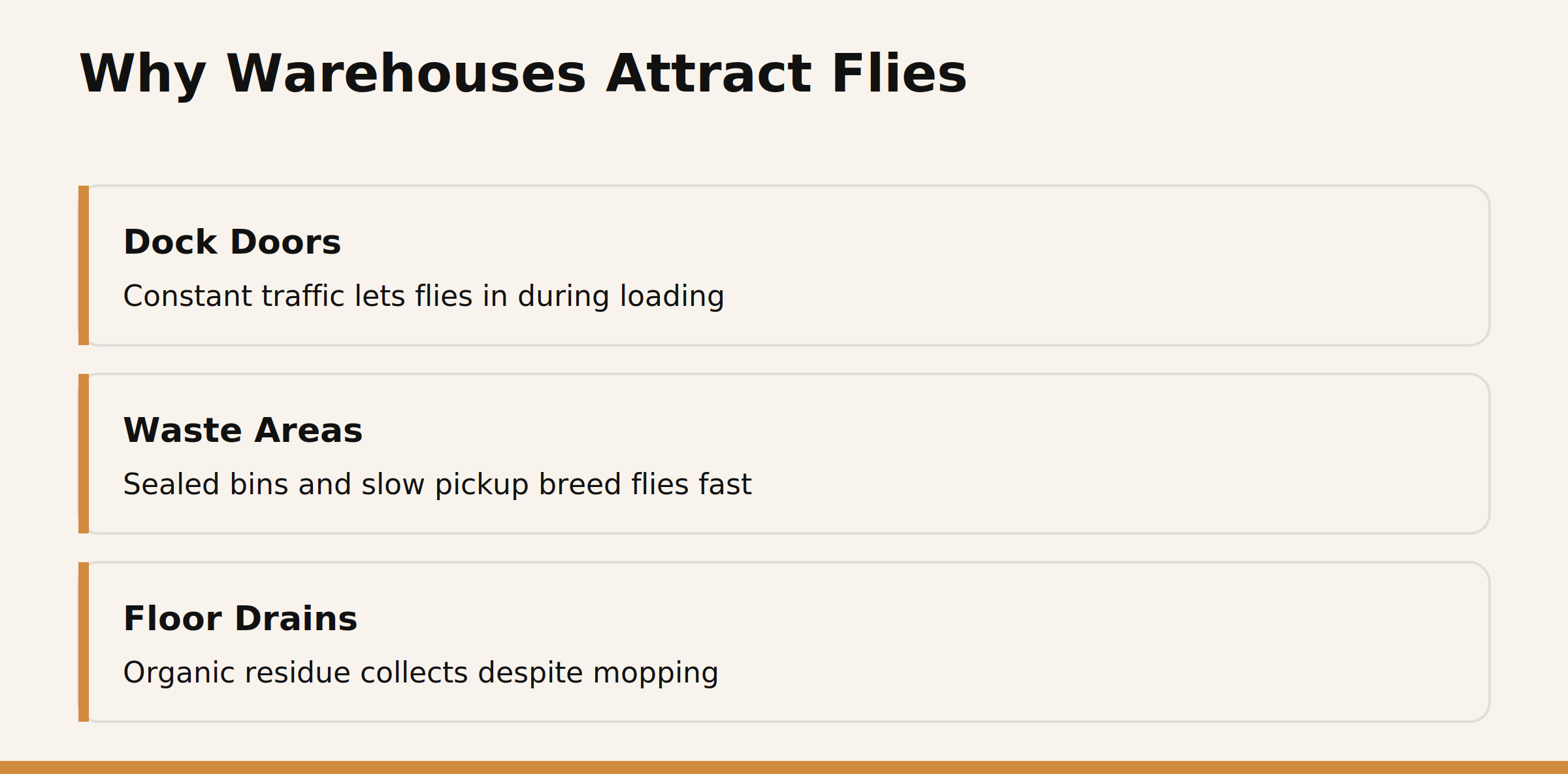
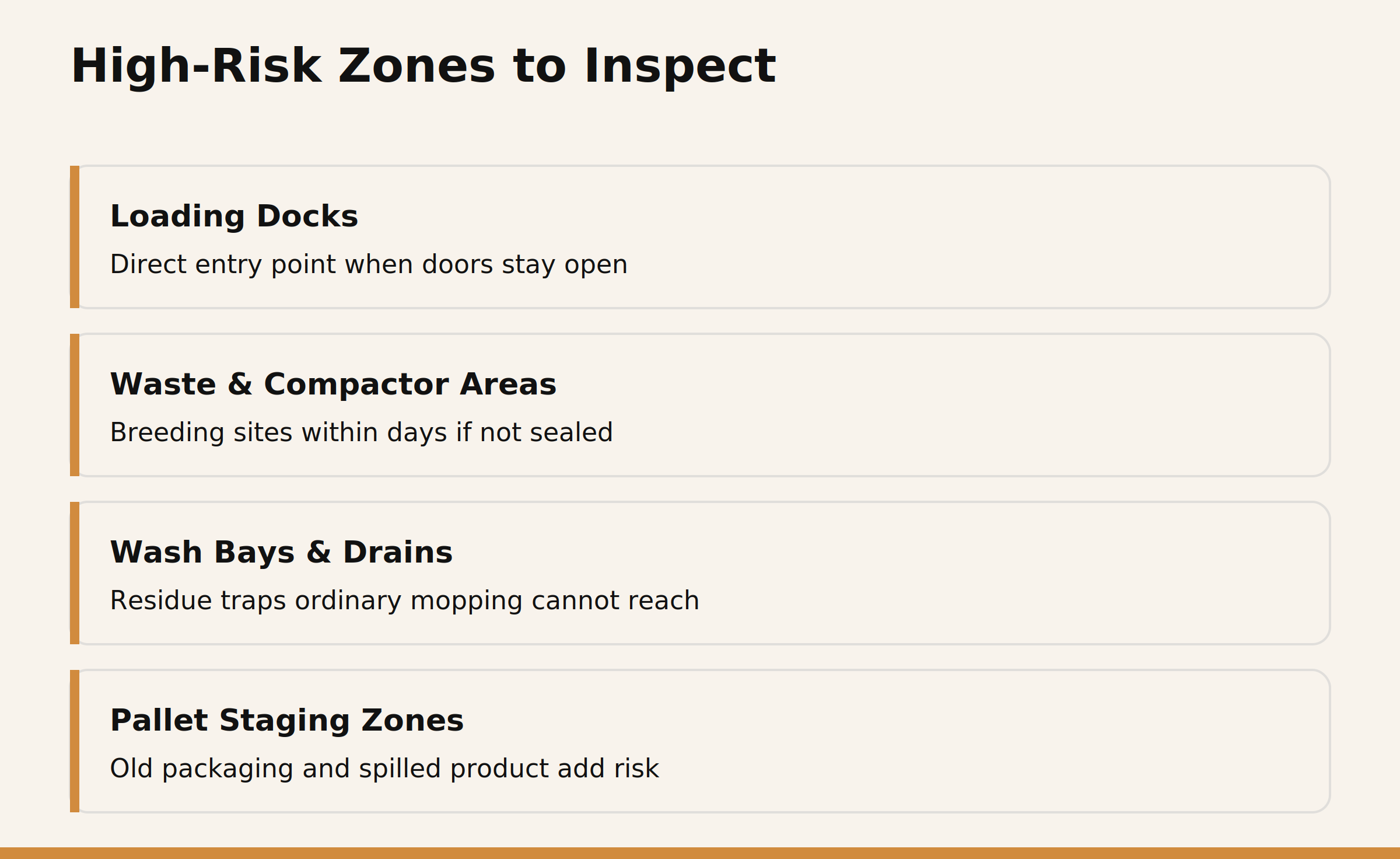
Most fly activity in a warehouse traces back to a small number of recurring zones. Dock doors left open during loading create a direct entry point. Waste consolidation and compactor areas, especially if bins are not sealed or collection is delayed, become breeding sites within days. Floor drains and wash-down areas hold organic residue that ordinary mopping does not remove. Pallet staging zones with old packaging or spilled product add another layer of risk. A facility can look clean at floor level and still have an active breeding source in any one of these zones.
In a commercial or residential setting, flies are mostly an irritation. In a warehouse or logistics facility, they are a liability. Flies move between waste, drains, and exposed goods, carrying bacteria onto surfaces, packaging, and product. For operators supplying F&B businesses, retailers, or facilities with client audit requirements, a visible fly problem can affect supplier standing and contract compliance, not just staff comfort.
House flies are the most visible, drawn to waste areas and dock entrances. Drain flies breed in the organic film inside floor drains and wash-bay traps, often going unnoticed until numbers build up. Fruit flies target exposed or decaying organic matter, common where returned or damaged stock sits before disposal. Each species points to a different source, which is why an accurate inspection matters more than a generic spray-down.
Persistent fly activity near a specific dock door or drain, small dark specks (fly waste) collecting on nearby surfaces, staff reporting flies inside chillers or near packaging lines, and repeated sightings despite regular cleaning are all signs the source has not actually been addressed. Facilities that treat these as one-off incidents rather than a pattern tend to see the problem return within weeks.
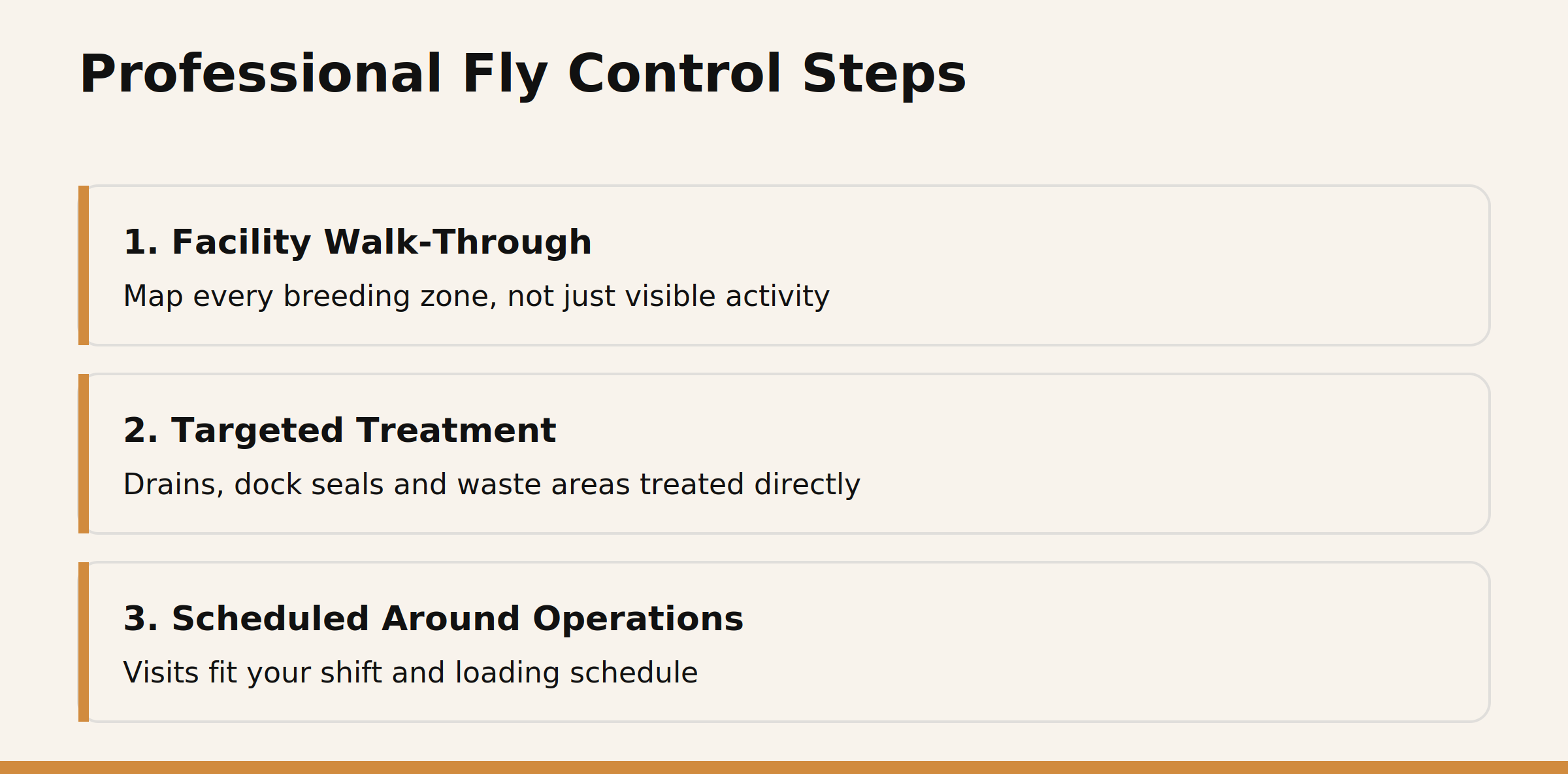
Santera's approach starts with a facility walk-through to identify every active and potential breeding zone, not just where flies are currently visible. Treatment then targets those specific points, drains, waste areas, dock seals, and staging zones, rather than relying on a general area treatment. Our team is Dubai Municipality certified, and every visit is scheduled around your operating hours to avoid disrupting loading or shift activity.
Between scheduled visits, a few operational habits make a measurable difference: keeping dock doors closed when not actively loading, sealing waste bins and increasing collection frequency in warmer months, cleaning floor drains on a fixed schedule rather than only when odor is noticed, and inspecting pallet staging areas for spilled or damaged product regularly. These steps reduce the conditions flies need without replacing professional treatment at the actual breeding points.
Cleaning removes visible debris, but flies breed in places most cleaning crews cannot reach: floor drains, drain traps under wash bays, gaps beneath pallet racking, and organic residue trapped in loading dock seals. Until those breeding points are treated directly, general cleaning alone will not stop the cycle.
Yes. Santera schedules inspections and treatment around shift patterns and loading schedules so dock doors, staging areas, and cold storage access are not disrupted during active operating hours.
Yes. Flies contaminate exposed packaging, food-grade goods, and open pallets, and can trigger rejected shipments or client audit failures in facilities handling F&B, FMCG, or pharmaceutical stock.
Most Dubai warehouses and distribution centers benefit from a recurring inspection schedule, with frequency set by facility size, waste volume, and proximity to loading docks or organic waste storage. A site walk-through will confirm the right interval.
If flies are turning up around your dock doors, waste area, or drains, it is worth having the source identified before it affects stored goods or client audits. Santera's Dubai Municipality certified team offers a complimentary inspection for warehouses and logistics facilities across Dubai. Learn more about fly biology and behavior on our Flies pest library page.