Flies
Fly Control for Dubai Restaurants and Cafes: Protecting Kitchens and Alfresco Dining
Muhammad Saif Ullah
September 15, 2026


A fly landing on a table or drifting near the pass is a small moment that can cost a Dubai restaurant or cafe far more than it seems. Beyond the immediate discomfort for a guest, fly activity signals a food safety issue to inspectors and a hygiene issue to anyone watching from a nearby table. Commercial kitchens, waste stores, and alfresco dining areas all create exactly the warm, organic conditions flies need to breed, which means the risk is built into the business rather than an occasional accident.
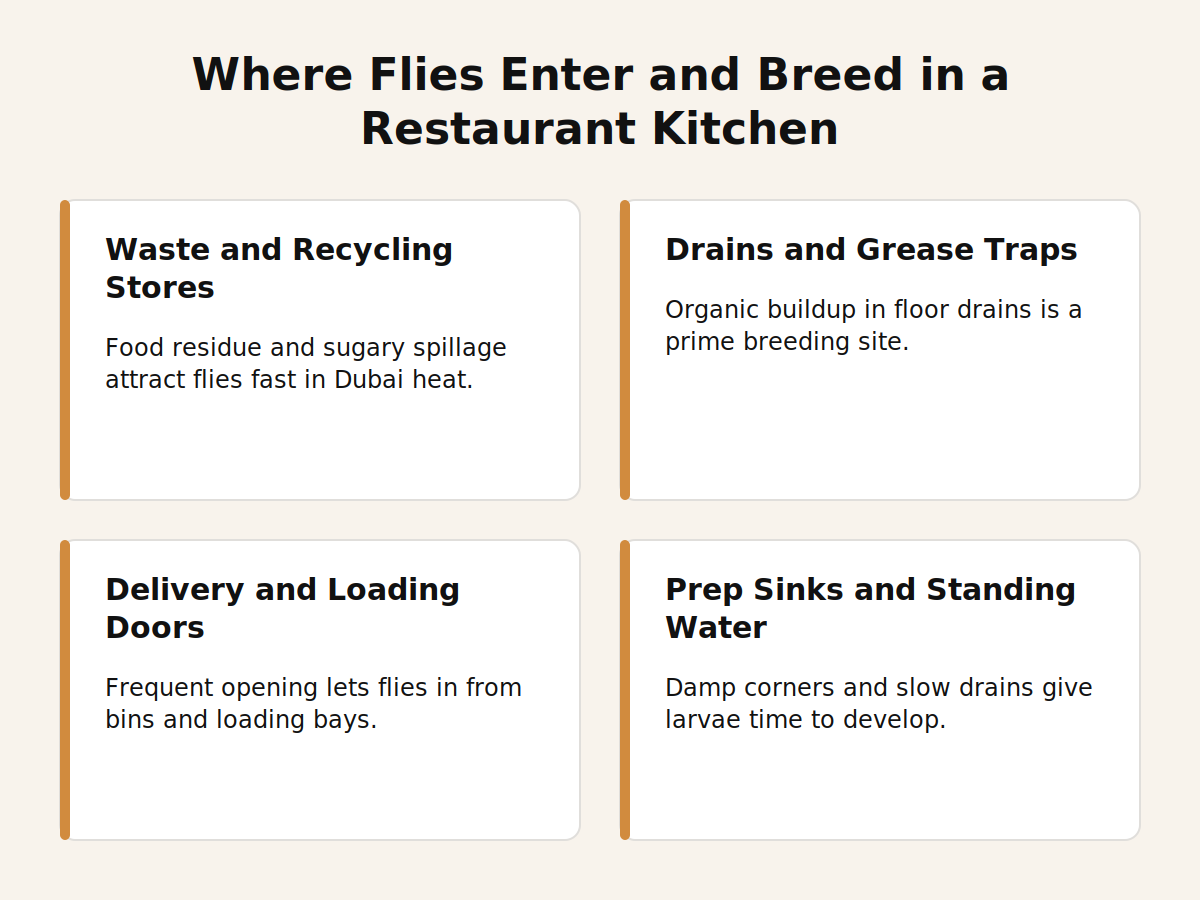
A working kitchen produces a steady supply of what flies need to thrive: food residue on surfaces and in bins, organic buildup in drains, and Dubai's warm climate that keeps breeding cycles short year-round. Add an alfresco terrace with sugary drinks, desserts, and grilled or fried food sitting out during service, and a single property can support fly activity from more than one source at once. For operators, this means the problem rarely comes from one obvious cause and is easy to underestimate until it is visible to guests.
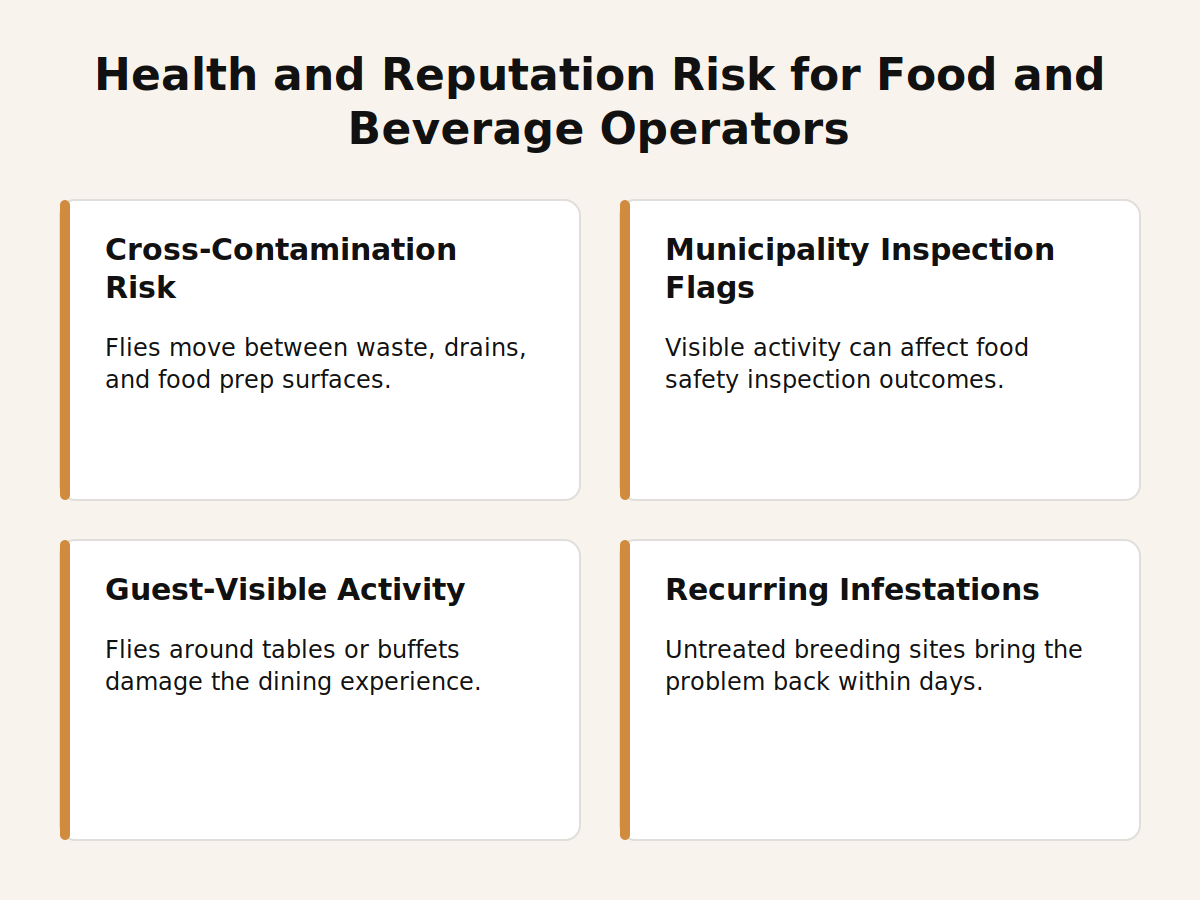
Flies move between waste, drains, and food contact surfaces, carrying bacteria that put food safety at risk long before anyone sees an insect. A Dubai Municipality inspection can flag visible activity or evidence of breeding sites, and a single bad review mentioning flies near the buffet or terrace can do more lasting damage than the inspection itself. For a food and beverage business, this is a commercial risk as much as a hygiene one.
An aerosol spray or a fly swatter deals with the flies that are visible in the moment, but it does nothing about the drain buildup, grease trap residue, or bin liner spillage producing new ones every day. In an active kitchen, spraying near food prep areas also raises its own hygiene and safety concerns. The result is a cycle where staff keep swatting the same problem without ever reaching its source.
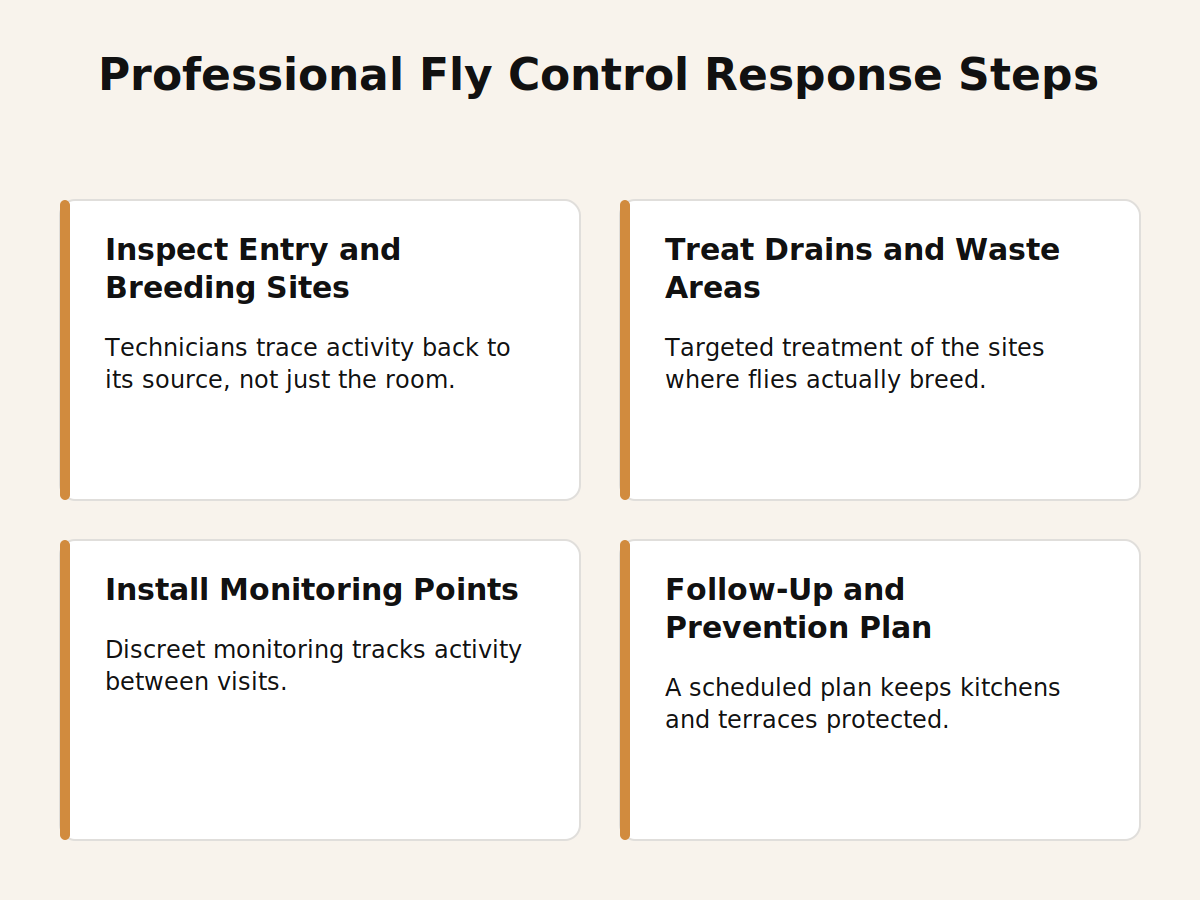
Santera's Dubai Municipality-certified technicians start by tracing activity back to its actual source, checking floor drains, grease traps, waste and recycling stores, and any standing water around prep sinks or outdoor seating. Treatment is targeted at these breeding sites rather than just the dining or kitchen space, and technicians schedule visits around service hours to avoid disrupting operations. Discreet monitoring points are then used to track activity between visits.
Between professional visits, keeping waste bins sealed and on a tight collection schedule, cleaning drains and grease traps regularly rather than only when they smell, and wiping down spillage around prep sinks and outdoor tables promptly all reduce the breeding sites available. Checking that loading doors are not left open longer than necessary during deliveries also limits how many flies get inside in the first place. None of this replaces treating an existing breeding site, but it slows how quickly new ones form.
For a restaurant or cafe, fly activity is rarely just a pest issue, it is a visible part of the guest experience and a factor in how an inspection or a review turns out. Addressing breeding sites before they become a visible problem keeps kitchens running smoothly and outdoor dining areas comfortable for guests, and it gives operators a documented control history to point to if a food safety inspection ever raises the question.
Occasional activity around a busy kitchen is common, but visible flies near prep surfaces, storage, or waste areas during an inspection can affect the outcome. Dubai Municipality inspectors look for evidence of an active pest management approach, not just an absence of flies on the day, which is why a documented control plan matters as much as the treatment itself.
Surface cleaning does not reach the organic buildup inside floor drains, grease traps, and the underside of waste bins, which is where flies actually breed. Until those specific sites are treated, a clean-looking kitchen can still be producing new flies every few days.
Yes. Kitchen activity usually traces back to drains, grease traps, and waste storage, while an alfresco terrace draws flies from nearby bins, spilled food and drink, and open service doors. Both need to be assessed separately, since treating the kitchen alone will not stop activity on the terrace.
Most food and beverage outlets in Dubai benefit from a recurring schedule rather than a one-off visit, since breeding sites like drains and waste areas refill quickly in a working kitchen. Santera can recommend a frequency based on your kitchen layout, waste volume, and whether you operate outdoor seating.

If your restaurant or cafe has ongoing fly activity around the kitchen, waste areas, or outdoor seating, do not wait for it to affect a guest's visit or an inspection. Learn more about fly behaviour and control from Santera's pest library, or book a complimentary inspection via WhatsApp for a same-day assessment of your property.