Fleas
Flea Control for Dubai Veterinary Clinics, Pet Daycare and Boarding Facilities
Muhammad Saif Ullah
September 13, 2026


A veterinary clinic, pet daycare, or boarding facility in Dubai sees more animals passing through in a week than most households see in years, and every one of them is a potential source of fleas. Unlike a private home, where a flea problem stays contained to one family's pets, a facility-wide infestation can affect every animal boarded, groomed, or treated on-site, along with the staff working around them.
Facilities that board, groom, or treat animals bring together a constant flow of pets from different households, each carrying its own exposure history. Carpeted reception areas, fabric-covered furniture, kennel bedding, and grooming stations all give flea eggs a place to settle once they drop off a host. Dubai's warm indoor climate, especially in air-conditioned spaces with soft furnishings, keeps conditions favorable for flea development year-round.
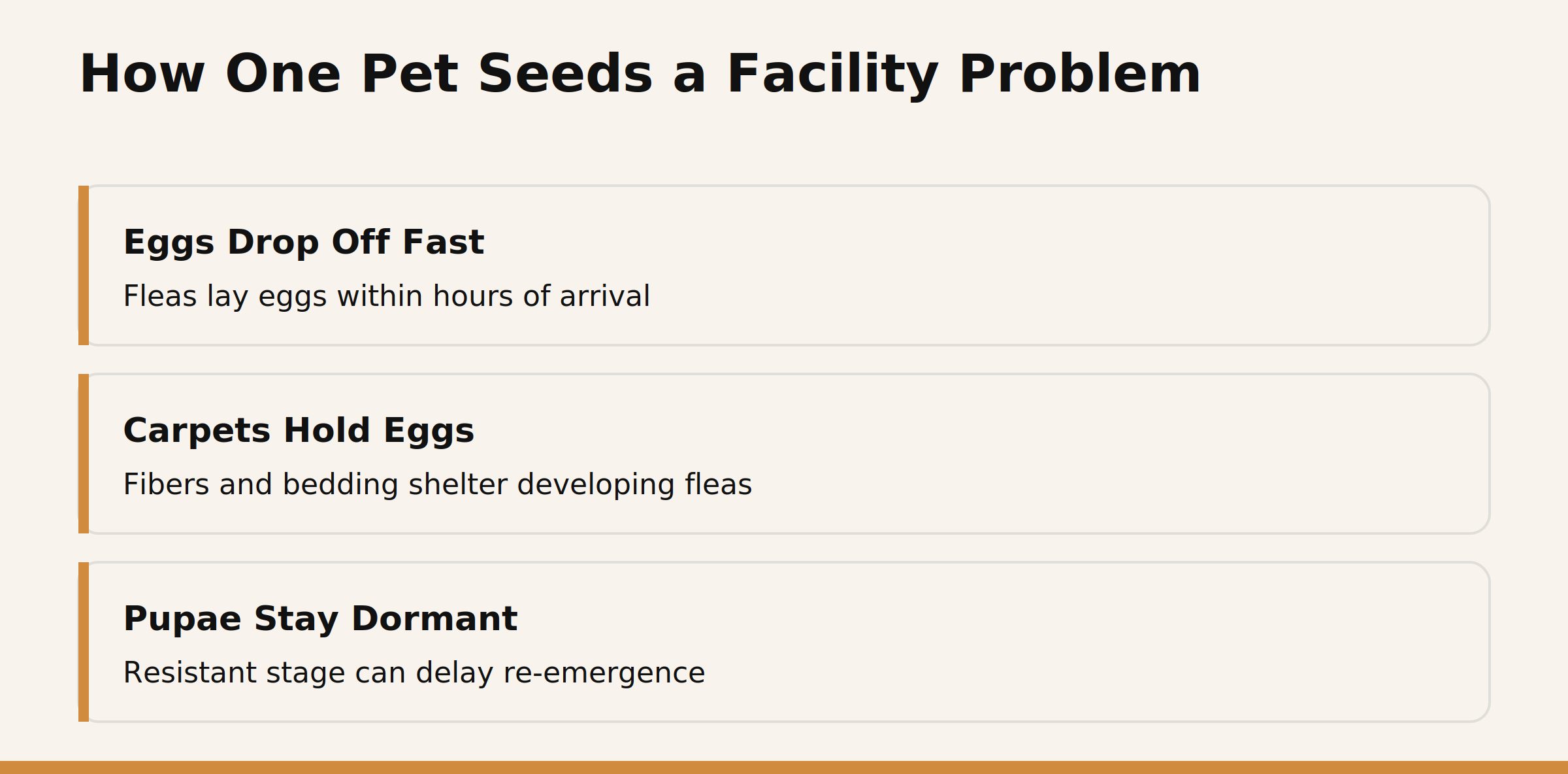
Fleas do not stay on their host. An adult flea lays eggs that fall off the animal as it moves through the facility, landing in carpets, bedding, and kennel flooring long before anyone notices a problem. By the time a second or third pet shows signs of fleas, the source is often no longer the first animal at all, it is the environment that animal passed through.
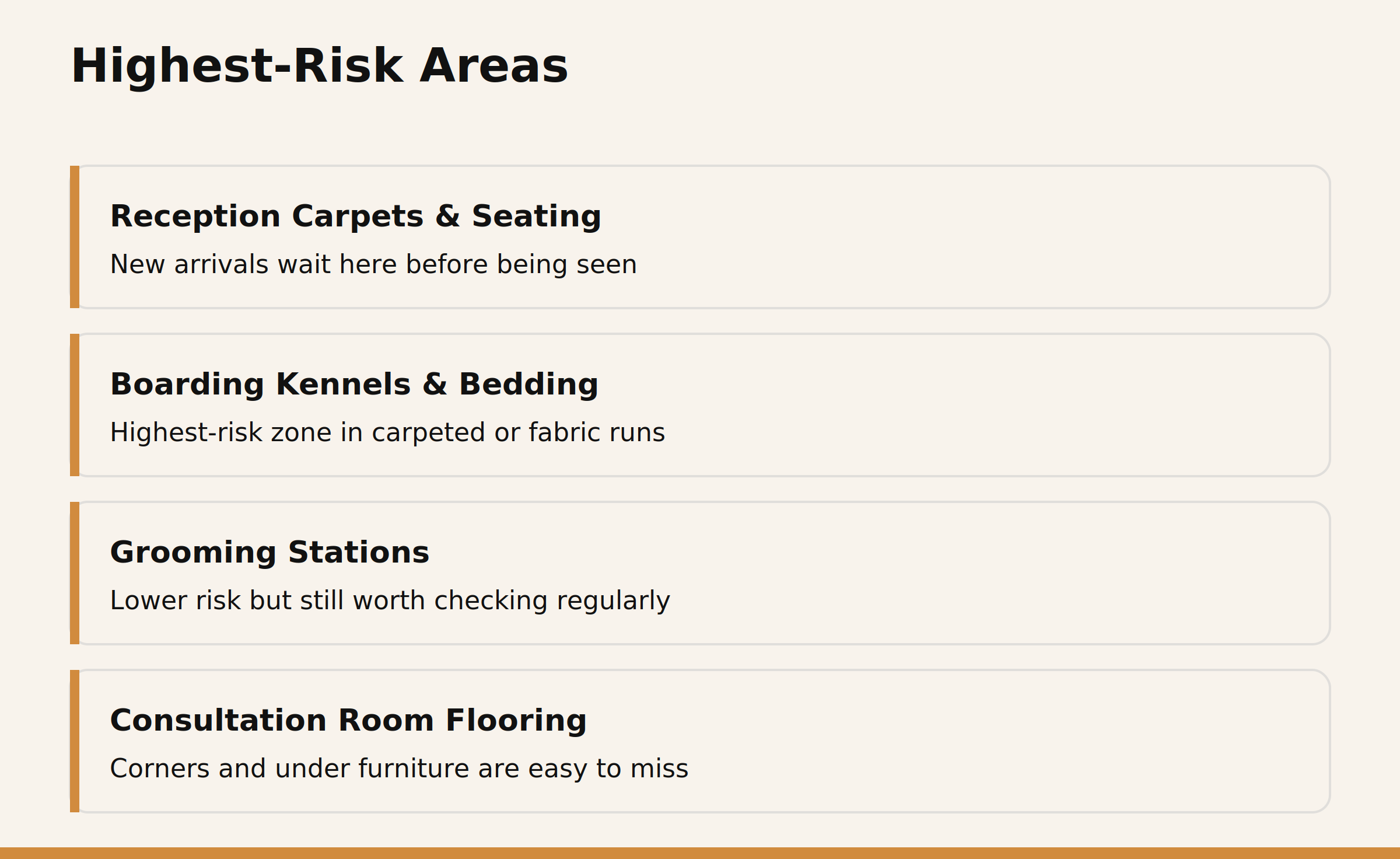
Reception carpets and waiting area furniture are common entry points, since new arrivals often sit or wait there before being seen. Boarding kennels and their bedding are the highest-risk zone, particularly in carpeted or fabric-lined runs where eggs can settle into fibers. Grooming stations and consultation room flooring are lower risk but still worth checking, especially in corners and under fixed furniture that are harder to vacuum thoroughly.
A flea problem traced back to a boarding facility or clinic is a reputational issue as much as a pest one. Pet owners who find fleas on their animal after a boarding stay or grooming visit are unlikely to return, and word travels quickly within Dubai's pet owner community. For multi-service facilities, a flea problem in one area, such as boarding, can raise concern about hygiene standards across the whole business.
Fleas develop through egg, larval, and pupal stages before becoming adults, and the pupal stage is particularly resistant, able to remain dormant in carpets or bedding until triggered by vibration or warmth. This is why a facility can appear flea-free immediately after treatment and then see new activity days or weeks later, as protected pupae complete their development on a delay.
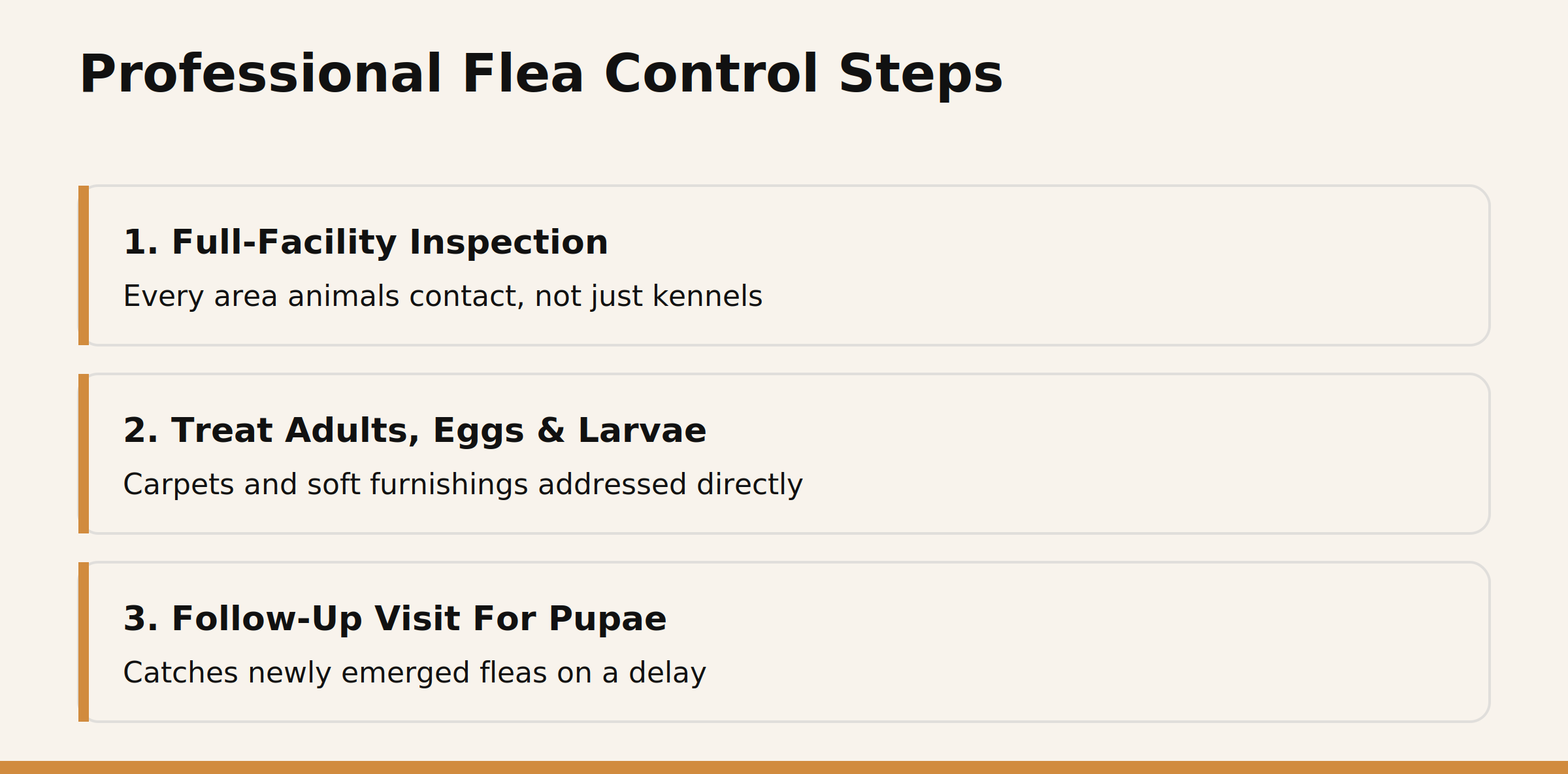
Santera's process starts with identifying every area animals have direct or indirect contact with, not just the kennels themselves, including reception carpets, grooming stations, and staff areas. Treatment addresses both the adult fleas present and the egg and larval stages in carpets and soft furnishings, with a follow-up visit built in to catch newly emerged fleas from the resistant pupal stage. Our Dubai Municipality certified team schedules visits around appointment bookings and boarding occupancy.
Vacuuming carpeted areas and kennel runs daily, with particular attention to edges and under furniture, removes eggs before they develop further. Washing kennel bedding on a regular rotation and briefly isolating new boarding arrivals from shared carpeted areas when practical both reduce the chances of a single pet seeding a wider problem. Staff should also be encouraged to flag any flea sighting immediately rather than waiting to see if it recurs.
In most cases, yes. Santera schedules treatment in stages around appointment bookings and boarding occupancy, treating kennel blocks or consultation rooms in rotation so the facility can keep operating.
A single infested pet can shed eggs into carpets, bedding, and kennel flooring within hours of arrival. Those eggs develop away from the pet itself, so by the time other animals show signs, the flea population is often already established in the surrounding environment, not just on that first animal.
Usually not on its own. Because flea eggs and pupae can survive in carpets and bedding through a single treatment cycle, most facilities need a follow-up visit to catch newly emerged fleas before they re-establish.
Fleas will bite people when animal hosts are not available, and an established infestation in carpets or soft furnishings can affect staff working in that space, not only the boarded pets.
If fleas are turning up in your reception area, boarding kennels, or grooming stations, it is worth having the facility checked before it affects boarded pets or your reputation with pet owners. Santera's Dubai Municipality certified team offers a complimentary inspection for veterinary clinics, pet daycare and boarding facilities across Dubai. Learn more about flea biology on our Fleas pest library page.