Fabric Pests
Fabric Pest Control for Dubai Offices and Commercial Buildings: Protecting Carpets, Upholstery and Meeting Room Furnishings
Muhammad Saif Ullah
September 15, 2026


Carpet beetles and clothes moths can work through boardroom carpets, reception upholstery, and meeting room curtains for months before anyone notices, and by the time thinning patches appear under a client's chair, the damage is already done. For office and commercial building operators in Dubai, fabric pest control is not a cosmetic detail, it is a facilities management issue that touches lease standards, tenant satisfaction, and the professional image a building presents to every visitor who walks through reception.

Dubai's warm, air-conditioned indoor climate keeps conditions favorable for carpet beetle and clothes moth larvae year-round, and a typical office building offers plenty of the natural fibers they feed on. Wool-blend carpets, upholstered reception furniture, and boardroom curtains provide a steady food source, while archive rooms, storage cupboards, and underused corner offices give larvae the undisturbed conditions they need to develop.
Dust and shed fibers that accumulate around HVAC vents and low-traffic corners add to the problem, since these pests thrive on organic debris as much as on fabric itself. Buildings with older carpeting, dense archive storage, or furnishings that are rarely moved during cleaning tend to see the most persistent activity.
The cost of a fabric pest problem rarely shows up as a single large expense, it accumulates through worn carpet patches in reception, damaged upholstery on boardroom chairs, and curtains that need early replacement. In a client-facing environment, visible wear in the spaces prospects and partners see first can undercut the professional image a business has invested in building.
There is also a landlord and lease dimension specific to Dubai's commercial real estate market. Facilities audits and lease renewals often assess the condition of shared furnishings and finishes, and unexplained fabric damage can raise questions during those reviews. Protecting the furnishings protects the tenancy.
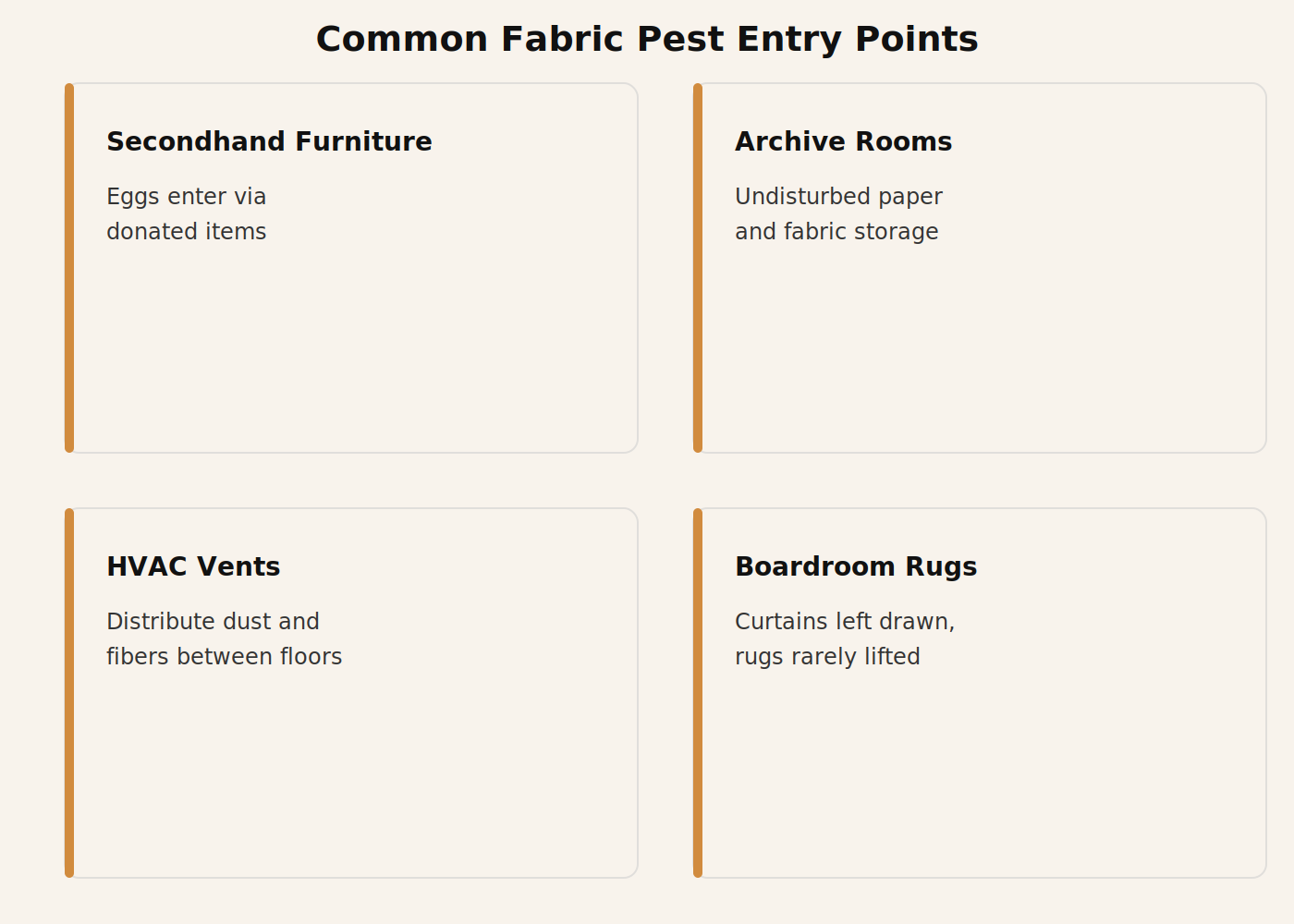
Fabric pests move into Dubai offices and commercial buildings through ordinary routes. Secondhand furniture, donated rugs, and items brought in from storage can carry eggs or larvae, while shared HVAC systems can distribute airborne fibers and dust between floors and units in the same building.
Once established, activity concentrates in a small number of hotspots: archive and storage rooms with undisturbed paper and fabric, the underside of boardroom rugs, upholstered reception seating, and meeting room curtains that are drawn and left in place for long periods. Because these pests avoid light and disturbance, low-traffic areas tend to show the most damage before anyone notices.
For background on carpet beetle and clothes moth behavior, see our full pest library guide to fabric pests.
In Dubai's competitive commercial real estate market, facilities teams are expected to maintain a client-ready standard across reception, boardrooms, and shared common areas. A documented, licensed pest management programme is part of demonstrating that standard during landlord inspections, lease renewals, and client site visits.
Facilities managers who can show a recurring, professionally managed programme are in a stronger position when questions arise about furnishing condition, compared with those relying on reactive cleaning after damage is already visible.
Regular vacuuming reduces surface debris and some larvae, but it rarely reaches eggs laid deep within carpet pile, tucked into upholstery seams, or hidden beneath rugs and curtains that are not regularly lifted. Spot cleaning treats a visible patch without addressing the source feeding continued activity elsewhere in the same space.
Retail fabric sprays can also damage delicate upholstery or trigger sensitivities among staff working nearby, without necessarily reaching the source of the infestation. What a commercial building needs is a targeted programme that identifies where larvae are actually developing, not just where the damage is visible.
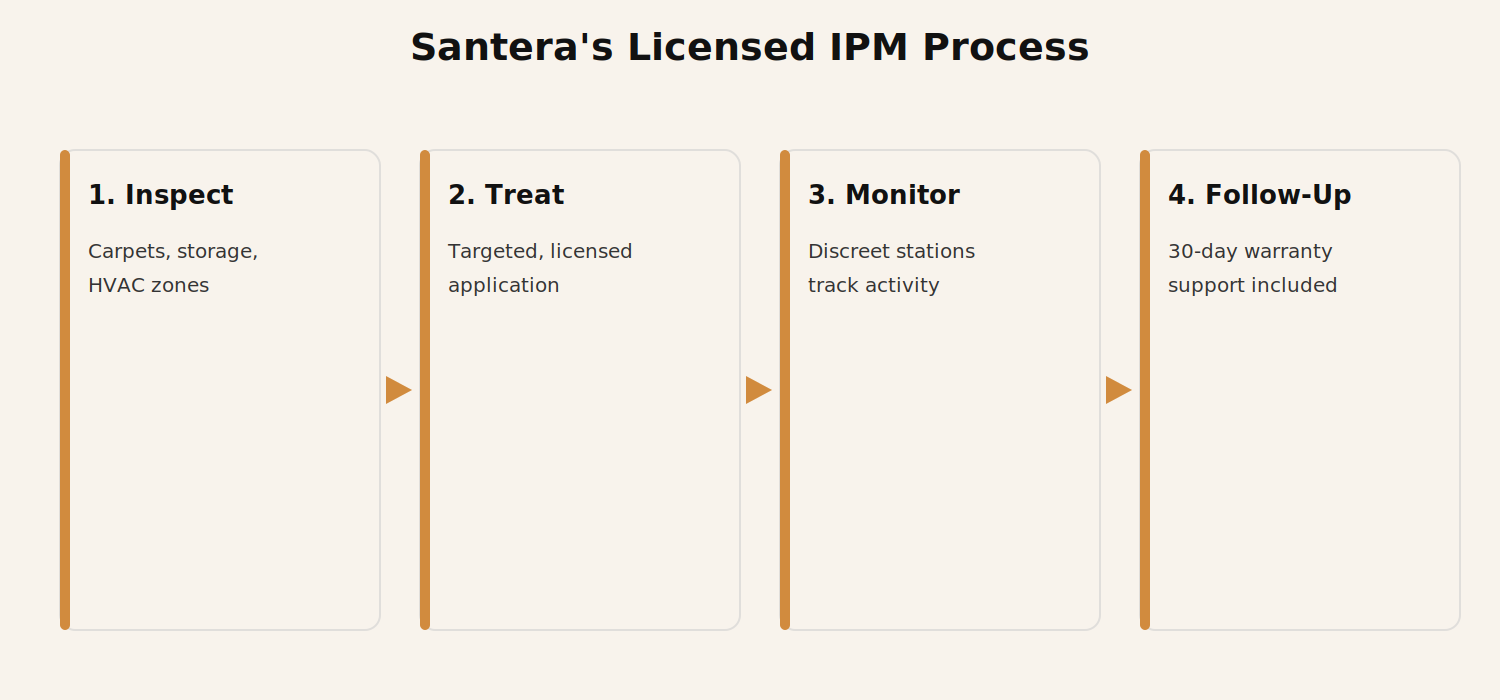
Santera's approach to commercial fabric pest control follows an integrated pest management (IPM) process built around inspection, treatment, and monitoring rather than a single visit. A technician begins with a detailed inspection of carpets, upholstered furniture, archive storage, and areas near HVAC vents to identify where larvae are actually developing.
Targeted treatment then follows using Dubai Municipality-approved professional products applied specifically to identified hotspots, avoiding unnecessary treatment of unaffected furnishings. Every visit includes a 30-day warranty with follow-up support for continued activity of the same pest within the agreed scope, and our team brings 25+ years of combined experience and a 4.9 star Google Reviews rating built on more than 10,000 treatments across Dubai.
Treatment alone rarely holds without supporting habits, because storage rooms refill and furnishings age regardless of a single service visit. A durable prevention plan pairs professional treatment with simple facilities habits: rotating and vacuuming under rugs and furniture on a fixed schedule, decluttering archive rooms so items do not sit undisturbed for years, maintaining HVAC filters, and inspecting secondhand furniture before it enters the building.
Buildings that combine a recurring professional programme with these habits consistently protect their furnishings better than those addressing damage only after it becomes visible to clients. A short briefing for cleaning and facilities staff on what to look for is often the difference between catching activity early and replacing a carpet.
Look for small bald or thinning patches in carpet pile, especially under furniture and along skirting boards, tiny shed larval skins near rugs and curtains, and small moths resting on walls near storage rooms rather than flying toward light. Damage tends to appear first in low-traffic areas that are rarely vacuumed or moved.
Yes. Damaged carpets and upholstery in reception areas, boardrooms, and client-facing spaces reflect directly on a building's professional standard, and facilities teams are typically expected to demonstrate a maintained, documented pest management programme as part of lease and building audits.
Regular vacuuming helps reduce surface larvae and debris but rarely reaches eggs laid deep in carpet pile, seams of upholstered furniture, or the underside of rugs and curtains. Spot cleaning treats the visible symptom without addressing the source, so activity often returns in the same areas within weeks.
Most offices and commercial buildings in Dubai benefit from a scheduled inspection and treatment programme rather than a single visit, since warm indoor conditions and undisturbed storage areas allow activity to re-establish. Your technician can recommend a frequency based on your building's layout and furnishing materials.
Protecting your building's professional image starts with protecting the carpets and furnishings clients see first. Santera is a Dubai Municipality certified pest control provider with 25+ years of team experience, a 4.9 star Google Reviews rating, and more than 10,000 treatments completed across Dubai, backed by a 30-day warranty on every commercial programme. Book your complimentary inspection via WhatsApp, same-day service available across Dubai, and let our team build a fabric pest control plan around your building's furnishings.