Earwigs
Earwig Control for Dubai Warehouses and Logistics Facilities: Loading Docks and Packaging Areas
Muhammad Saif Ullah
September 17, 2026


Earwigs are a familiar nuisance in Dubai's villa gardens, but they cause a different kind of problem inside a warehouse or logistics facility. Loading docks, packaging stores, and pallet storage areas offer exactly the damp, sheltered, undisturbed conditions earwigs need, and at warehouse scale, a manageable garden pest can turn into a recurring presence around stock, staff break areas, and audit-sensitive zones.
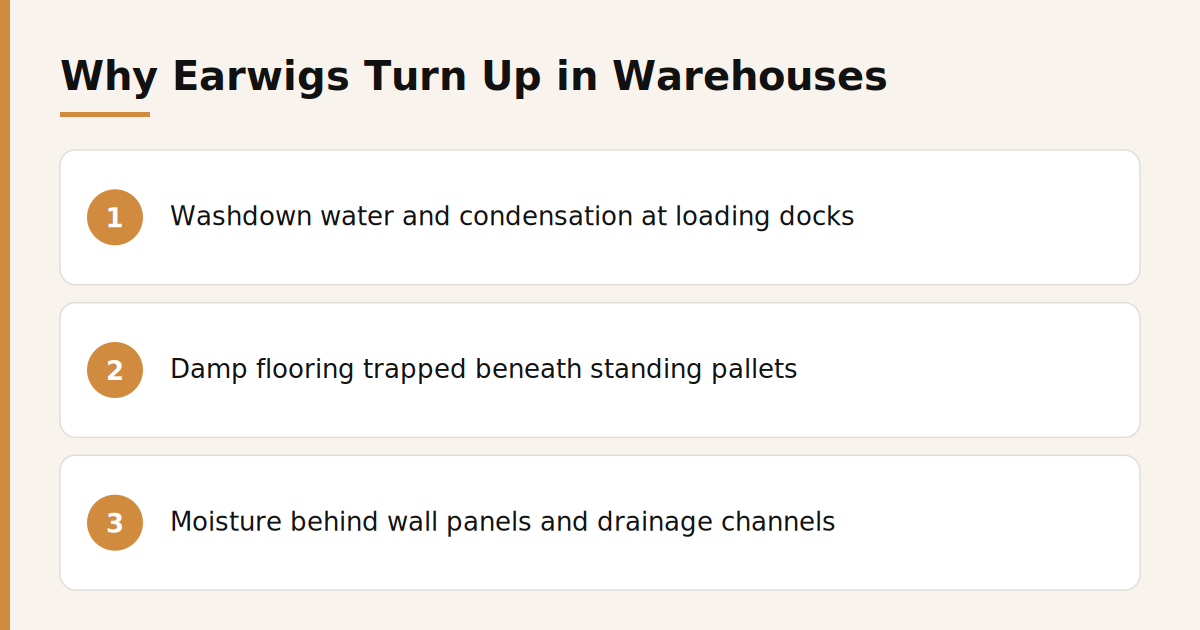
Earwigs are drawn to moisture and dark shelter above almost anything else, and a working warehouse generates both. Washdown water at loading docks, condensation around chilled or ambient storage, and dampness trapped under pallets or behind wall panels all create pockets of the exact conditions earwigs seek out. Dubai's warm climate means these damp micro-environments stay active year-round wherever water is present, unlike the more seasonal pattern seen in villa gardens after irrigation.
Earwigs are not dangerous and do not damage structures the way termites or stored product pests do, but for a distribution or logistics operation the cost shows up elsewhere. Numbers sheltering inside packaging, pallet wrap, or returns areas can raise contamination concerns during an internal hygiene check or a client audit, particularly for operations handling food-adjacent, pharmaceutical, or retail-ready goods. A visible earwig population near loading and packing areas also signals a damp, poorly managed environment, which is the kind of finding that draws attention during a compliance walk-through.
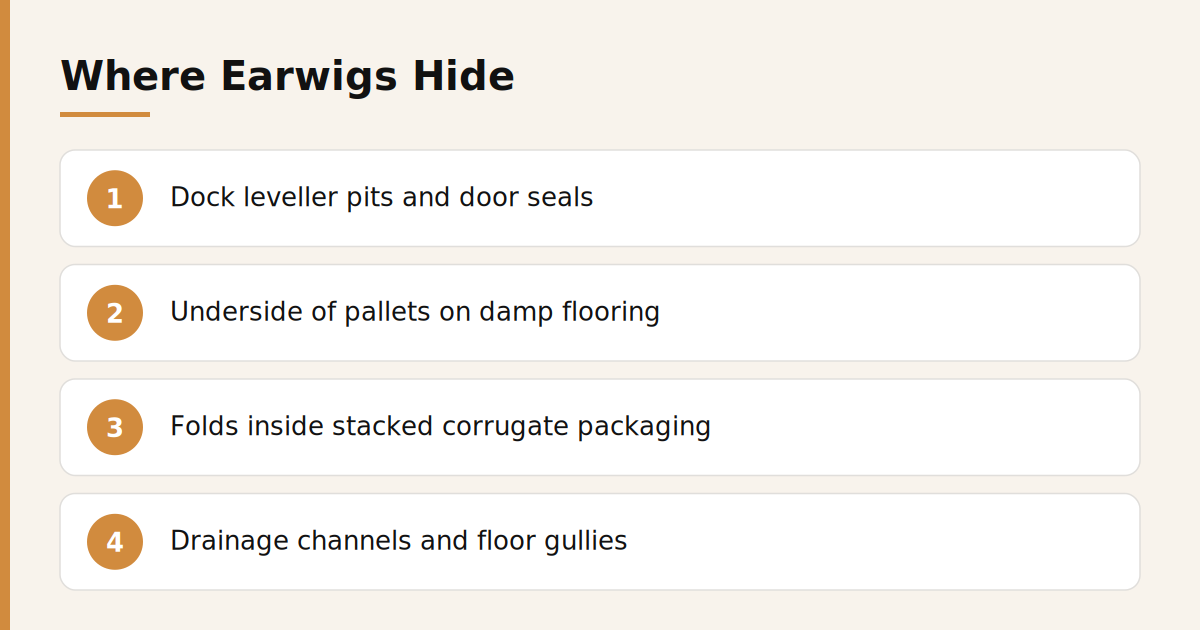
Earwigs shelter in tight, dark gaps close to a moisture source, and a warehouse offers plenty of them. Common sites include dock leveller pits and door seals, the underside of pallets left standing on damp flooring, folds and voids inside stacked corrugate packaging, drainage channels and floor gullies, and gaps around wall panels or roller shutter tracks. Because these areas are rarely inspected as part of daily operations, an earwig population can establish and grow for weeks before anyone notices.
A single villa garden has one perimeter and a handful of entry points. A warehouse or logistics facility has multiple dock doors, roller shutters, drainage runs, and often a much larger footprint of damp-prone areas, so earwigs can establish in several locations at once without any single point of entry being obvious. Continuous goods movement also means packaging and pallets carrying earwigs can shift between zones inside the building, spreading activity from a receiving dock to storage racking or a packing line.
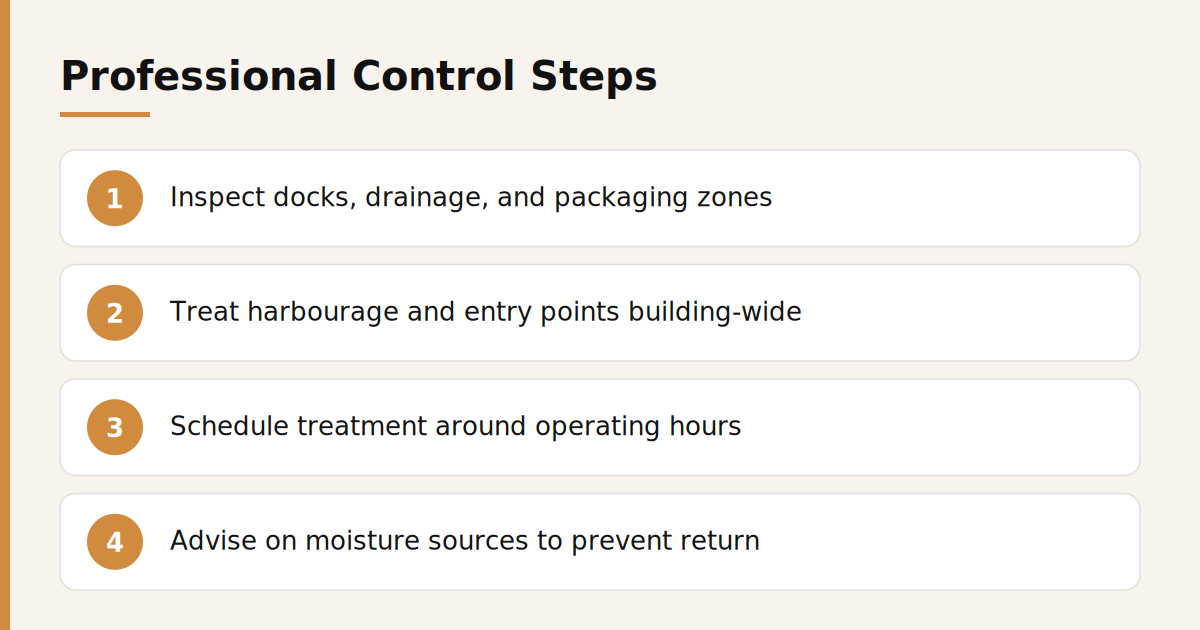
Santera's Dubai Municipality-certified technicians inspect dock areas, drainage, pallet storage, and packaging zones to confirm activity and locate the damp harbourage sustaining it. Treatment targets harbourage and entry points across the building's perimeter and internal damp zones, scheduled around your operating hours and shift patterns to minimise disruption to goods movement. The technician also advises on the moisture sources, standing water, and gaps that need addressing on the facilities side to stop the population re-establishing.
Keeping loading dock areas dry between washdowns, improving drainage so water does not pool near dock levellers or floor gullies, and rotating or elevating pallets off damp flooring all reduce the shelter earwigs rely on. Regularly clearing offcuts, damp cardboard, and packaging waste from corners rather than letting it accumulate removes another common harbourage. These steps will not clear an existing population on their own, but they make the environment far less attractive to new activity.
For a warehouse or logistics operation, pest activity near stock and packaging is a compliance issue as much as a comfort one. Addressing earwig activity before it shows up during a client audit or hygiene inspection protects both product integrity and the operation's standing with clients who require documented pest control. A proactive check of dock areas and damp zones is a small step against a much bigger disruption to certifications or client relationships.
No. Earwigs do not bite in any meaningful way, do not sting, and the old myth about them crawling into ears is false. At most a handled earwig gives a harmless pinch. The real cost in a warehouse setting is nuisance, contamination risk near packaging and stock, and what large numbers signal about damp, poorly managed areas.
Loading docks combine several conditions earwigs look for at once: washdown water and condensation that keeps the area damp, door seals and dock levellers with gaps to shelter in, and dim, sheltered corners that stay undisturbed between shifts. Night lighting near dock doors can also draw insect activity that supports a larger earwig population nearby.
Earwigs themselves rarely damage packaging materials directly, but large numbers sheltering inside corrugate stacks, pallet wrap folds, or returned packaging can trigger contamination concerns for food-adjacent or hygiene-sensitive stock, and can fail an internal or client audit even without physical product damage.
A warehouse has a far larger perimeter, multiple dock doors, continuous goods movement, and shift-based access, so treatment has to be scheduled around operations and cover entry points across the whole building rather than a single ground floor. Santera plans treatment timing and access points around your operating hours to minimise disruption.

If your warehouse or logistics facility has earwig activity around loading docks, packaging, or pallet storage, do not wait for it to surface during an audit. Learn more about earwig behaviour and treatment from Santera's pest library, or book a complimentary inspection via WhatsApp for a same-day assessment scheduled around your operating hours.