Cockroaches
Cockroach Control for Dubai Warehouses and Distribution Centers: Protecting Pallets, Loading Docks and Stored Inventory
Muhammad Saif Ullah
September 13, 2026


A cockroach sighting on a Dubai warehouse floor rarely means the problem started that day. Distribution centers move thousands of cardboard boxes and pallets through loading docks every week, and each shipment is a possible way in. By the time a stock handler spots one crossing the floor during a night shift, an egg case population is often already established somewhere in the racking, and the real question for facility managers becomes how far it has spread rather than whether it exists at all.
Warehouses combine several conditions cockroaches thrive on. Constant cardboard and packaging waste offers both food residue and shelter, while pallet racking creates thousands of dark, undisturbed voids that are rarely inspected. Dubai's heat pushes cockroaches toward any source of moisture, including condensation around cold storage units, leaking pipework, and break room sinks. Add a facility that runs shifts around the clock with long quiet stretches, and cockroaches have exactly the low-disturbance environment they need to establish a colony.
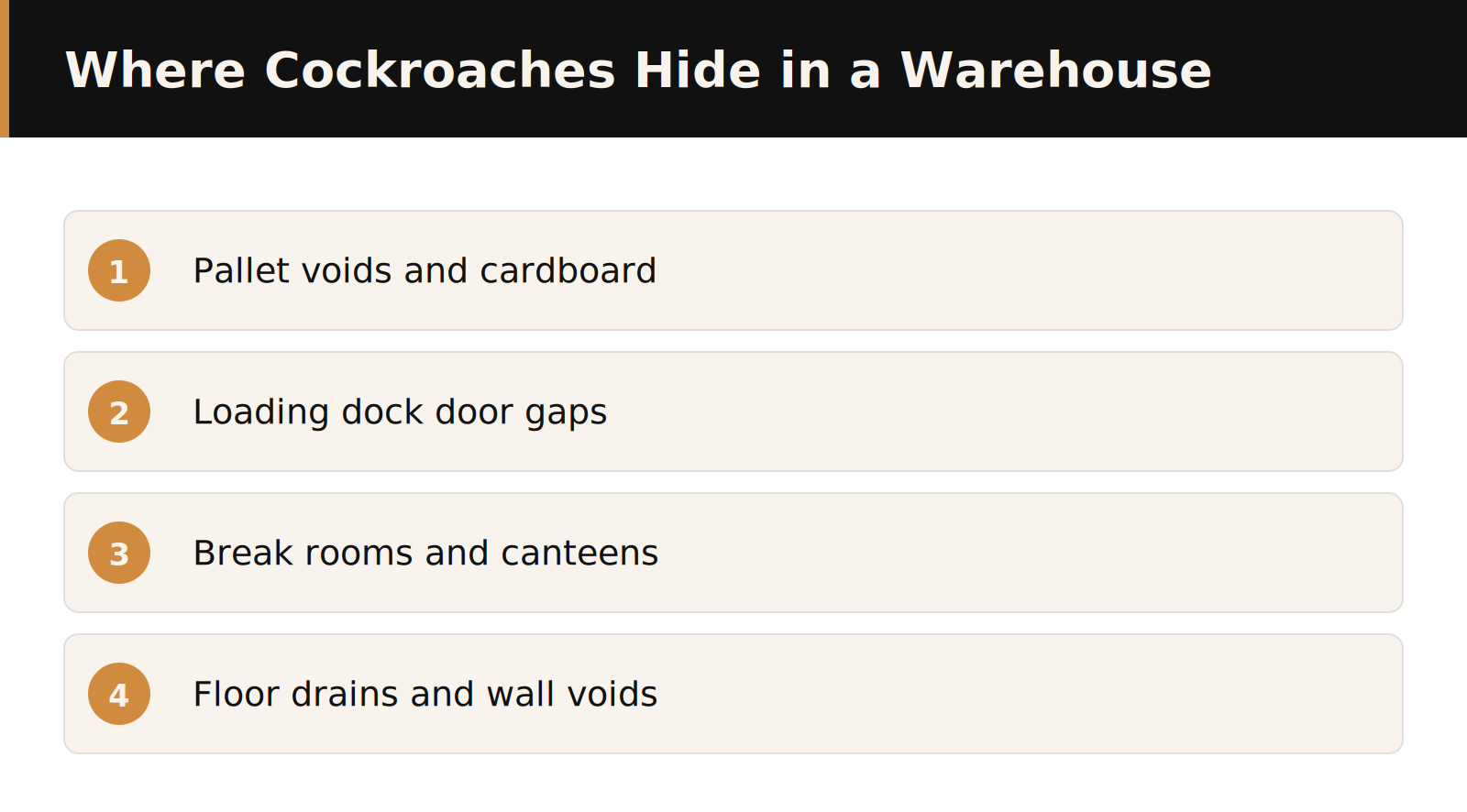
Activity concentrates in a few predictable zones: pallet voids and stacked cardboard near receiving, gaps around loading dock doors and dock levelers, break rooms and canteens where food waste accumulates, and floor drains or wall voids that stay damp. Returned or slow-moving stock left untouched for weeks is a particular risk, since it is rarely disturbed enough to reveal early activity.
Cockroaches and their egg cases travel inside cardboard, pallet wrap and returned packaging, which means activity rarely stays confined to where it was first noticed. A population that establishes itself near receiving can move with stock into long-term storage aisles, and from there into outbound shipments if nobody catches it early. Because warehouses are so large, a facility team that only checks the zone where a sighting occurred can easily miss a wider spread already underway in adjacent racking.
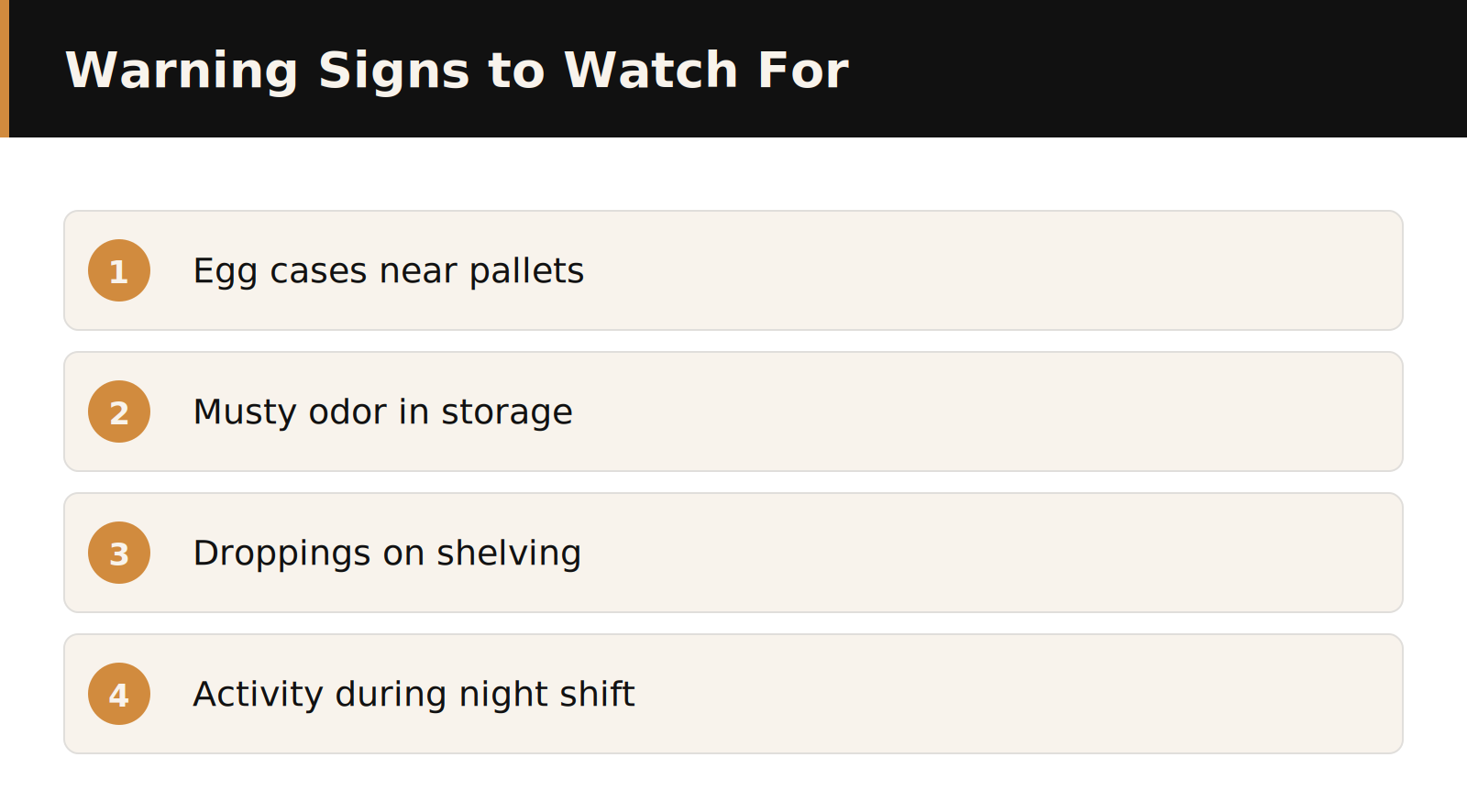
The earliest signs are easy to miss on a busy floor: small dark egg cases wedged near pallets or racking joints, a persistent musty odor in enclosed storage areas, droppings resembling coffee grounds on shelving or stock, and sightings concentrated during the quieter night shift. Reporting these signs immediately, rather than waiting to confirm a bigger problem, is what keeps a warehouse-wide response from becoming necessary.
For warehouses handling food, retail or pharmaceutical goods, cockroach activity is not just an operational nuisance. It is a compliance risk that surfaces at exactly the wrong moment, during a client audit or a stock inspection, and can affect contracts that depend on hygiene standards. Beyond compliance, egg cases and droppings found inside stock can mean write-offs on inventory that was otherwise saleable, making early detection a financial issue as much as a hygiene one.
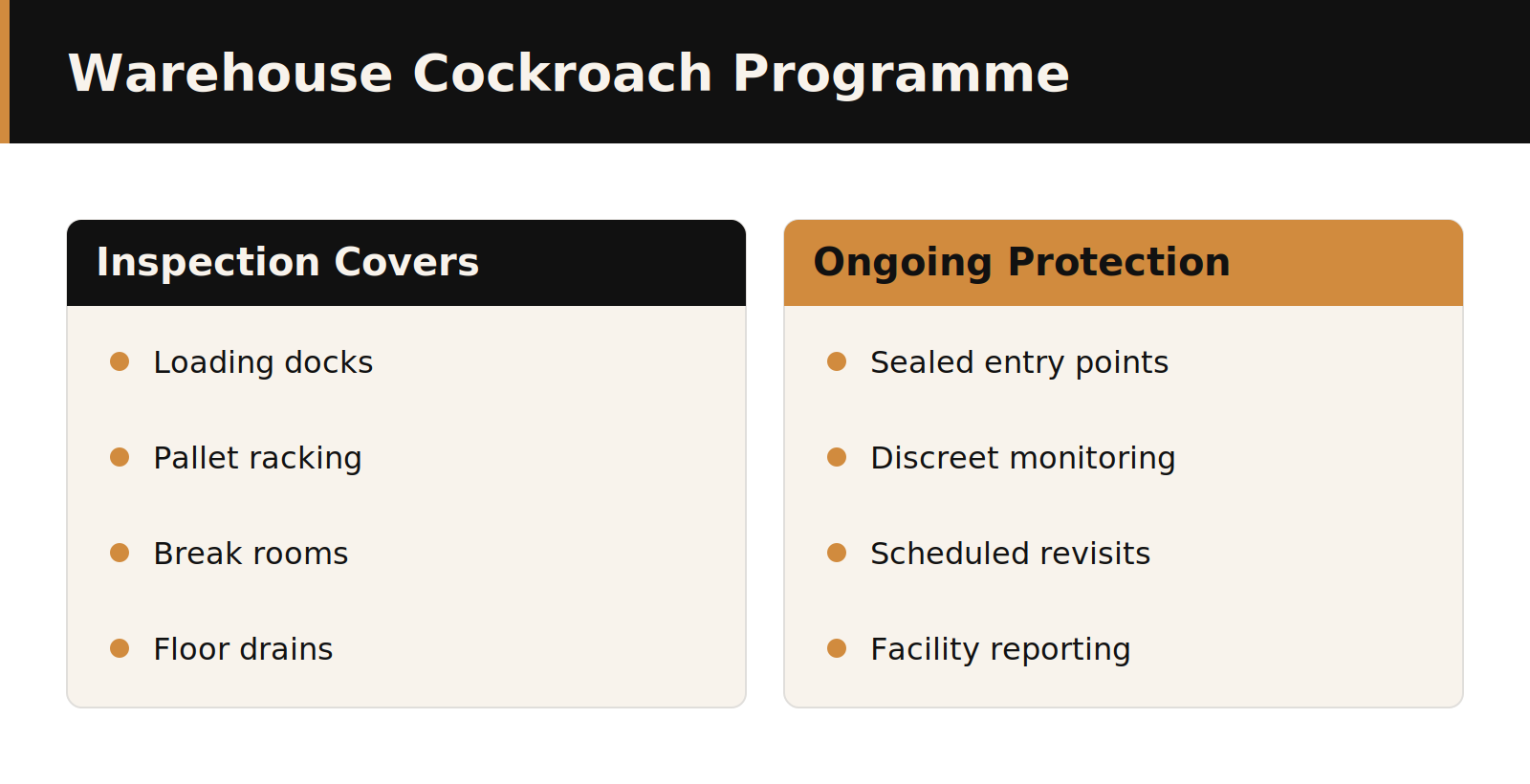
An effective commercial programme starts with a full inspection of receiving areas, pallet racking, break rooms and floor drains rather than only the zone where activity was reported. A Dubai Municipality certified technician then focuses on excluding entry points at loading dock doors and utility penetrations, alongside discreet monitoring stations placed across storage zones and break rooms. Because distribution centers operate continuously, work is scheduled around shift patterns so operations are not disrupted, with clear reporting shared with facility management so any new activity is caught early.
Cockroaches do not need a kitchen to survive. Cardboard, packaging glue, spilled goods and even condensation on cold storage pipework provide enough food and moisture, and a large warehouse offers thousands of undisturbed pallet voids and racking gaps to shelter in.
Yes. Cockroaches and their egg cases travel readily inside cardboard boxes, pallet wrap and returned packaging, so activity can move between storage zones or even leave the site inside outbound shipments if it is not controlled at the source.
Yes. Distribution centers handling food, retail or pharmaceutical goods are routinely audited, and evidence of cockroach activity such as droppings or egg cases near stock can affect audit outcomes and client confidence, regardless of how contained the activity actually is.
Cockroaches are most active in darkness and quiet, so a warehouse running a lean night shift often has the first and clearest sightings, while daytime activity levels can look deceptively low even with an established population present.
Most Dubai distribution centers keep discreet monitoring stations active year round near loading docks, pallet racking and break rooms, with scheduled technician visits rather than reacting only after stock handlers report a sighting.
Cockroaches in a warehouse rarely stay contained to the aisle where they were first seen. Santera is Dubai Municipality certified and works with facility and warehouse operations teams across the city to inspect, exclude and monitor distribution centers from the loading dock to long-term storage. For more background, see our Pest Library page on cockroaches. To arrange a complimentary inspection for your facility, reach out on WhatsApp.