Cockroaches
Cockroach Control for Dubai Schools and Nurseries: Protecting Cafeterias, Classrooms and Health Compliance
Muhammad Saif Ullah
September 19, 2026


Cockroaches are one of the most consistent pest complaints Dubai facility managers face, and few properties carry higher stakes than schools and nurseries. A cafeteria that fails a Dubai Municipality food safety inspection over roach activity does not just risk a fine. It risks parent trust, media attention, and a scramble to reassure an entire school community overnight. Nurseries carry an even sharper version of the same risk: young children spend hours on floor mats, in nap rooms, and around snack stations where a single sighting can trigger anxious messages through every parent group chat by lunchtime. Warm, humid conditions for much of the year make Dubai one of the more persistent cockroach environments in the region, and a building that feeds and shelters hundreds of children every day gives them exactly the food, water, and warmth they need to thrive.
Schools and nurseries combine several conditions cockroaches favour. Cafeterias and snack pantries hold food waste on a predictable daily schedule. Classrooms, storage cupboards, and after-school care rooms are often locked overnight, giving pests uninterrupted access. Older campus buildings can have ageing plumbing and expansion joints that create hidden voids behind walls and under flooring. Nurseries add another layer: nap mats, soft toys, and snack cupboards at floor level create warm, low-traffic hiding spots that are easy to miss during a routine clean. Add Dubai's warm, humid climate, which keeps cockroach activity high year round rather than seasonal, and even a well-run campus can develop an infestation between school terms if inspection is not part of the routine.
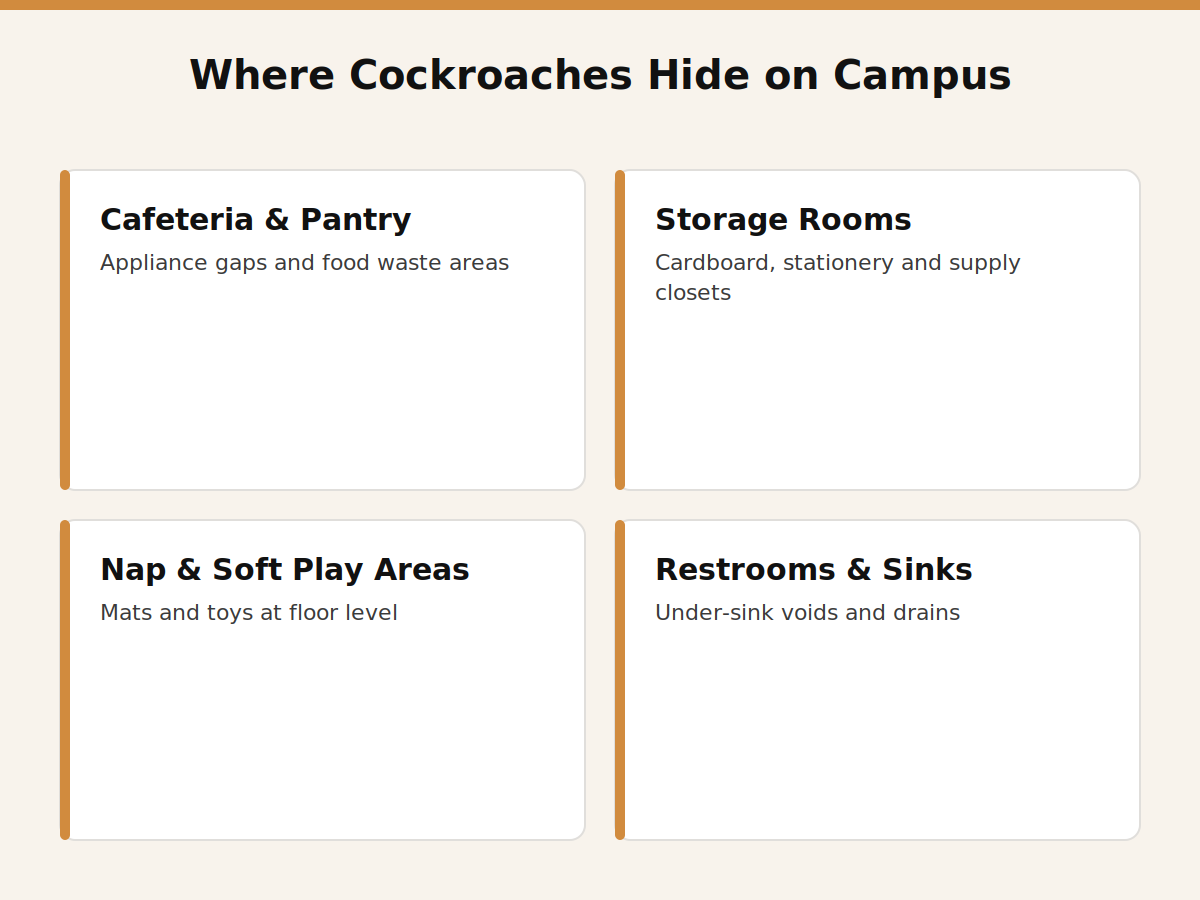
Cockroaches concentrate wherever food, moisture, and shelter overlap. In a typical Dubai school or nursery, that means behind cafeteria and pantry appliances, inside vending machine housings, under sinks in staff rooms and toilets, and along skirting boards in ground-floor classrooms near external doors. Storage rooms holding stationery, art supplies, and cardboard boxes are a common overlooked hotspot, since cardboard offers both shelter and a food source in the form of glue and starch. In nurseries, check behind low storage units, inside soft-play equipment, and around nap mat storage, where crumbs and spilled milk accumulate out of daily sightlines. Facility teams that only inspect visible, high-traffic areas often miss these secondary zones entirely, which is why professional inspection covers voids and storage as thoroughly as kitchens.
Cockroach activity in a school setting is not just an aesthetic problem. Cockroach droppings, shed skins, and saliva are recognised asthma and allergy triggers, and young children in nurseries and primary classrooms are more sensitive to indoor allergens than adults. A cafeteria or pantry with active cockroach presence also raises real food contamination concerns, since cockroaches move freely between waste areas and food storage. For schools, there is a duty of care dimension on top of the commercial one. Parents expect a campus that protects their child's health as a baseline, not an extra. A visible pest issue, even a minor one, tends to travel fast through parent communication channels and can outlast the actual problem in reputation terms.
Dubai schools and nurseries operate under health and safety oversight that treats food handling areas with the same scrutiny as commercial kitchens. A cockroach sighting during a scheduled or surprise inspection can affect a cafeteria's compliance standing and trigger a corrective action timeline that facility management has to close out quickly. Nurseries licensed for early childhood care face similar scrutiny around hygiene standards in food preparation and nap areas. Waiting for an inspection to surface a pest issue puts the school in a reactive position. A documented, ongoing pest control programme gives facility managers evidence of due diligence before an inspector ever asks for it, which materially changes the tone of that conversation.
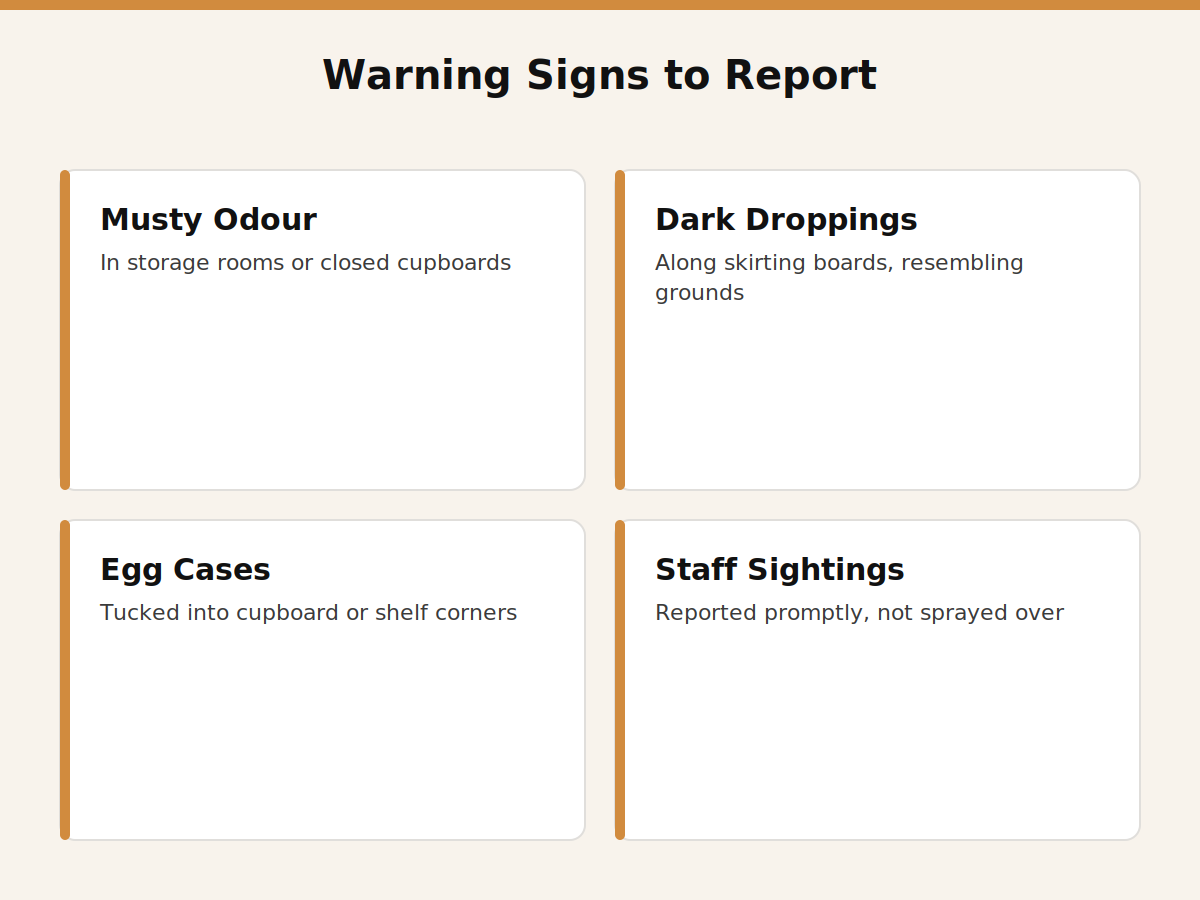
Cockroach infestations rarely announce themselves with a sighting in an open, well-lit classroom. Early signs are more subtle: a faint musty odour in a storage room, small dark droppings resembling coffee grounds along skirting boards, or discarded egg cases tucked into cupboard corners. Kitchen and cafeteria staff often notice activity first, since they are in food storage and prep areas daily, but they do not always report it up the chain unless there is a clear process for doing so. Facility managers should treat any of these signs as a prompt for a professional inspection rather than a quick in-house spray, since visible sprays can scatter a colony deeper into wall voids without addressing the source.
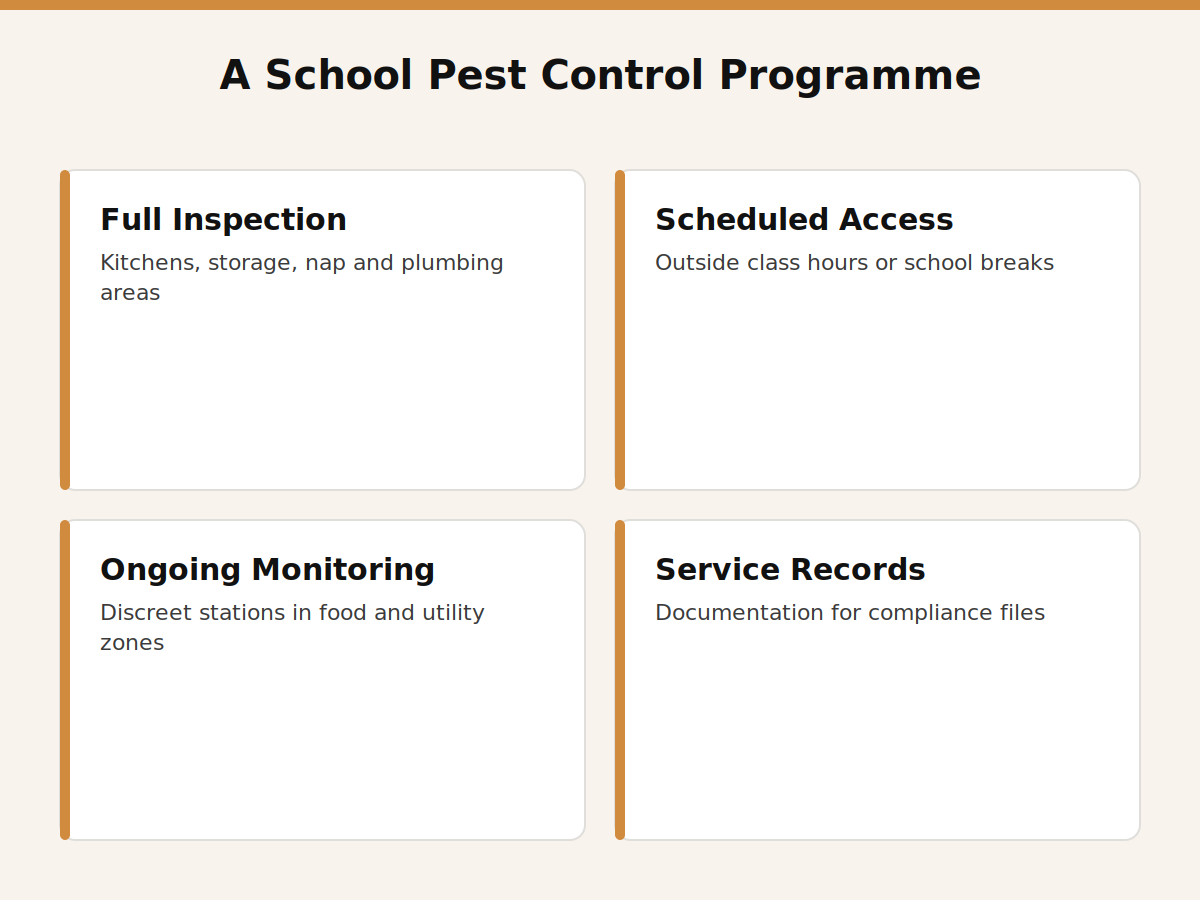
A pest control programme built for a school or nursery differs from a standard commercial contract because access windows are limited and children's safety has to come first. Treatment is typically scheduled outside school hours or during holiday periods, with Dubai Municipality-approved professional products applied by trained technicians in a way that keeps classrooms and cafeterias safe to reoccupy on the normal timetable. A proper programme includes a full building inspection covering kitchens, storage rooms, plumbing chases, and nap or rest areas, not just a spot treatment where a sighting was reported. Ongoing monitoring, such as discreet monitoring stations in food storage and utility areas, gives facility managers early warning between full inspections, and a written service record supports any health inspection conversation.
When selecting a pest control provider for a school or nursery in Dubai, facility managers should confirm the company is Dubai Municipality certified and ask specifically how they handle scheduling around class hours, food storage protocols, and communication with school leadership after every visit. A provider experienced with education and childcare properties should be able to explain their approach to nap room and soft-play area treatment without disrupting daily routines, and should provide clear documentation for your compliance files. Santera is Dubai Municipality certified, with 25+ years of team experience across commercial and childcare properties in Dubai, and structures every school visit around minimal disruption to students and staff.
Read more in our Pest Library guide to cockroaches.
Treatment is typically scheduled outside operating hours or during school breaks specifically so that classrooms, nap rooms, and cafeterias are clear before and during treatment. Our technicians plan access around your school calendar and confirm safe reoccupation timing before booking.
A documented, ongoing pest control programme is generally viewed favourably during inspections, since it shows an active preventive process rather than a one-off reaction to a complaint. We provide service records that facility managers can keep on file for compliance purposes.
Most education and childcare properties in Dubai benefit from a recurring inspection and monitoring schedule rather than a single annual visit, since kitchens and storage areas are in daily use year round. Your facility manager can agree a frequency that matches your campus size and food service operations.
Note the location and time, avoid spraying over-the-counter products that can scatter the colony, and report it to facility management so a professional inspection can be scheduled. Early reporting makes treatment faster and less disruptive.
Cockroach activity in a school or nursery moves quickly from a minor sighting to a compliance and reputation issue if it is left unaddressed. Santera is Dubai Municipality certified and works with education and childcare properties across Dubai to build inspection and treatment programmes around class schedules, not against them. Book a complimentary inspection via WhatsApp to review your campus's risk areas.