Cockroaches
Cockroach Control for Dubai Restaurants and Commercial Kitchens: Protecting Food Safety and Reputation
Muhammad Saif Ullah
September 15, 2026


A single cockroach sighting in a Dubai restaurant can undo years of reputation building in the time it takes a diner to open a camera app. For commercial kitchen operators, cockroach control is not a cosmetic concern, it is a food safety and business continuity issue that touches health inspections, online reviews, and the trust of every customer who walks through the door.
Dubai's climate works against restaurants year-round. Warm ambient temperatures combined with the heat, moisture, and food residue generated inside a working kitchen create an environment cockroaches are drawn to regardless of season. Grease traps, warm equipment voids behind ovens and fryers, and condensation around walk-in chillers all provide the warmth and humidity German and American cockroaches need to establish a colony.
Add constant food handling, cardboard delivery boxes moving through the back door daily, and dry storage shelving that is rarely disturbed, and a commercial kitchen becomes one of the most forgiving habitats a cockroach can find in Dubai. Restaurants and commercial kitchens typically see far more sustained pressure than residential units, simply because of the volume of food, water, and warmth on site every single day.
The financial impact of a cockroach problem rarely comes from the pest itself, it comes from what happens after someone notices. A photo or video shared on social media or attached to a Google review can circulate faster than any marketing a restaurant runs, and it is far harder to undo. Guests associate a single sighting with the entire kitchen, even when the rest of the operation is spotless.
There is also a regulatory dimension specific to Dubai. Food safety inspections carried out across the emirate treat pest activity as a serious compliance issue, and a documented infestation can affect a venue's standing during a health inspection. For restaurant groups and commercial kitchen operators, protecting the brand and protecting the license are the same task.
Cockroaches move into a Dubai restaurant through remarkably ordinary routes. Delivery boxes, especially cardboard, are one of the most common ways egg cases are introduced from outside. Gaps around pipework where it passes through walls, poorly sealed expansion joints, and shared risers with neighboring units in the same building all offer a path in.
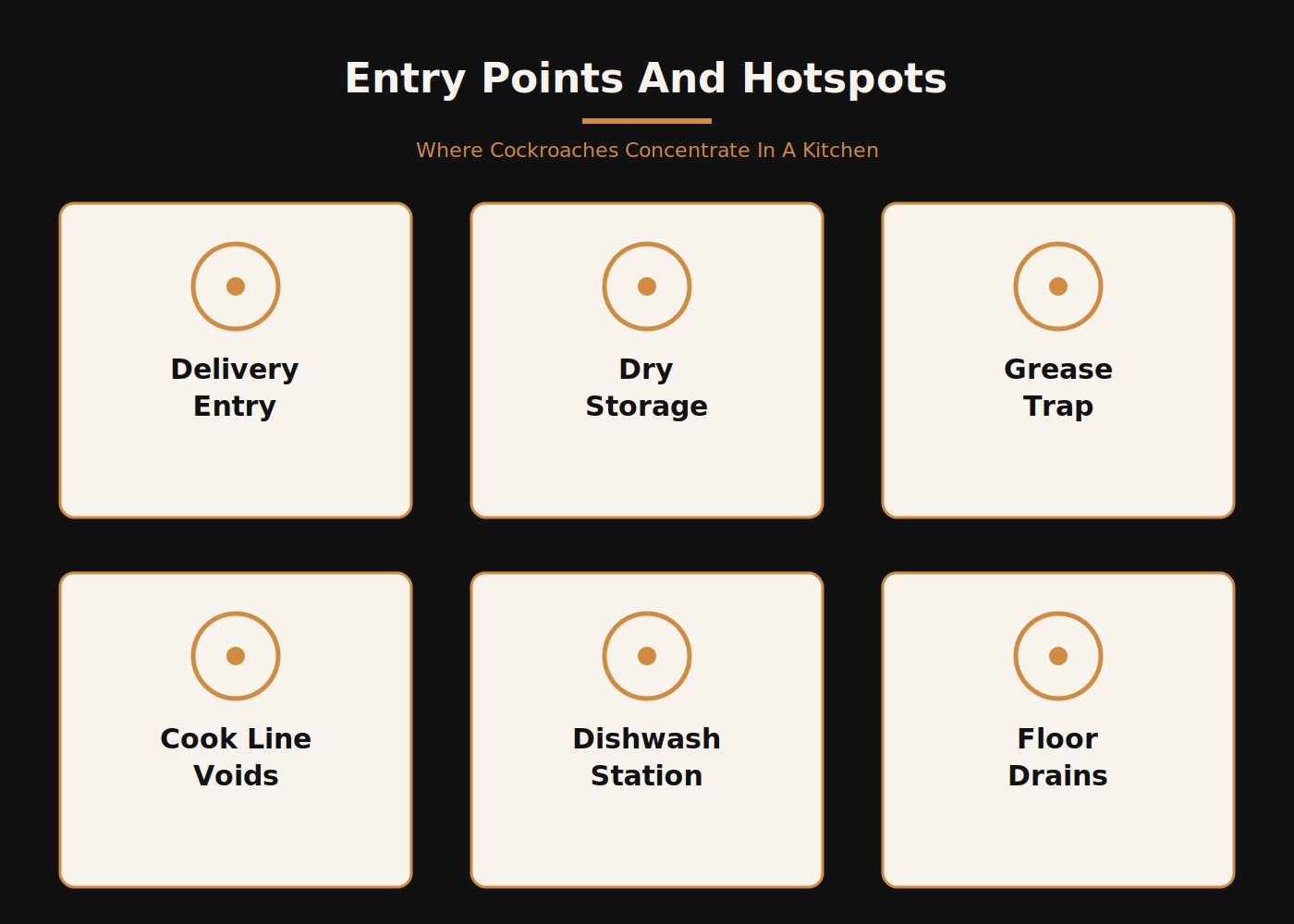
Once inside, activity concentrates around a small number of hotspots: grease traps and floor drains, the underside and rear of cooking line equipment, dry storage areas with undisturbed stock, and the void spaces beneath dishwashing stations. Because cockroaches are nocturnal, most of this activity happens overnight after the kitchen closes, which is exactly why a problem can grow for weeks before day staff notice anything unusual.
For background on the species involved and their behavior, see our full pest library guide to cockroaches.
Dubai Municipality's food safety framework expects commercial kitchens to demonstrate active pest management, not just a reaction after something is spotted. Inspectors look for evidence of a structured programme: sealed entry points, clean grease traps, organized dry storage, and records showing a licensed provider has been engaged on a recurring basis.
Operators who can produce that documentation during a routine or surprise inspection are in a materially stronger position than those relying on ad hoc treatment after a complaint. A Dubai Municipality certified pest control partner should be able to provide the reporting a food safety audit expects, alongside the physical treatment itself.
Retail insecticide sprays only affect the roaches they directly contact, and a cockroach colony spends most of its time out of sight inside equipment voids, wall cavities, and drain lines that a spray can never reach. Worse, spraying near food preparation surfaces or open storage in an active commercial kitchen creates its own food safety risk.
Cockroaches are also fast to develop behavioral avoidance of areas where they have previously encountered a spray, which can scatter a colony into new parts of the kitchen rather than eliminating it. What a working restaurant needs is a targeted programme that addresses the harborage itself, applied by technicians who understand commercial kitchen operations and food safety requirements together.
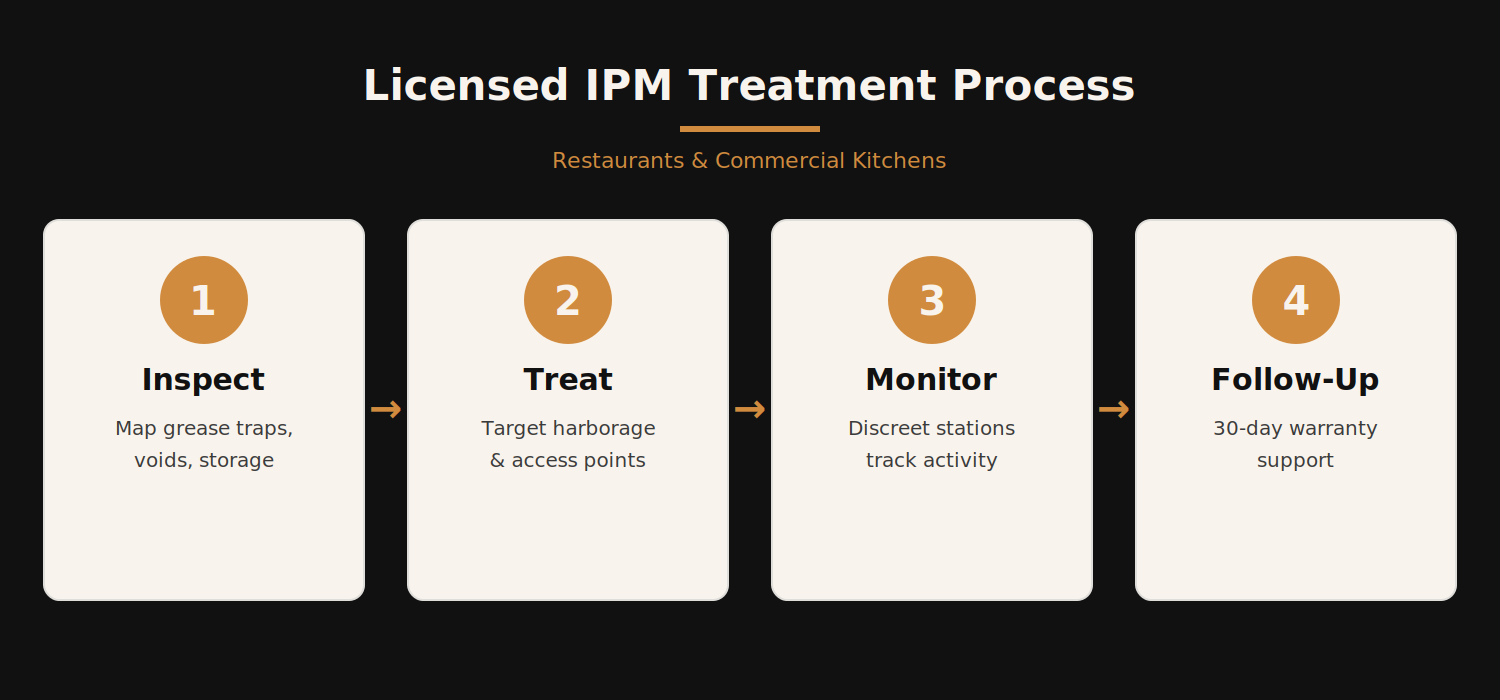
Santera's approach to commercial cockroach control follows an integrated pest management (IPM) process built around inspection, treatment, and monitoring rather than a single visit. A technician begins with a detailed inspection of grease traps, drainage, dry storage, and equipment voids, often timed to catch nocturnal activity, to map exactly where a colony is established.
Targeted treatment then follows using Dubai Municipality-approved professional products applied specifically to identified harborage and access points, with discreet monitoring stations placed to track activity between visits. Every visit includes a 30-day warranty with follow-up support for continued activity of the same pest within the agreed scope, and our team brings 25+ years of combined experience and a 4.9 star Google Reviews rating built on more than 10,000 treatments across Dubai.
Treatment alone is not enough in a live commercial kitchen, because new food, new deliveries, and new staff arrive every day. A durable prevention plan pairs professional treatment with simple sanitation practices your team can maintain: closing dry storage containers, rotating stock so nothing sits undisturbed for months, keeping grease traps on a regular cleaning schedule, and inspecting delivery boxes before they reach the back of house.
Restaurants that combine a recurring professional programme with these daily habits consistently see fewer sightings and stronger results at health inspections than those that treat pest control as a one-time fix. A short staff briefing on what to look for and who to call is often the difference between catching a problem early and discovering it in a customer review.
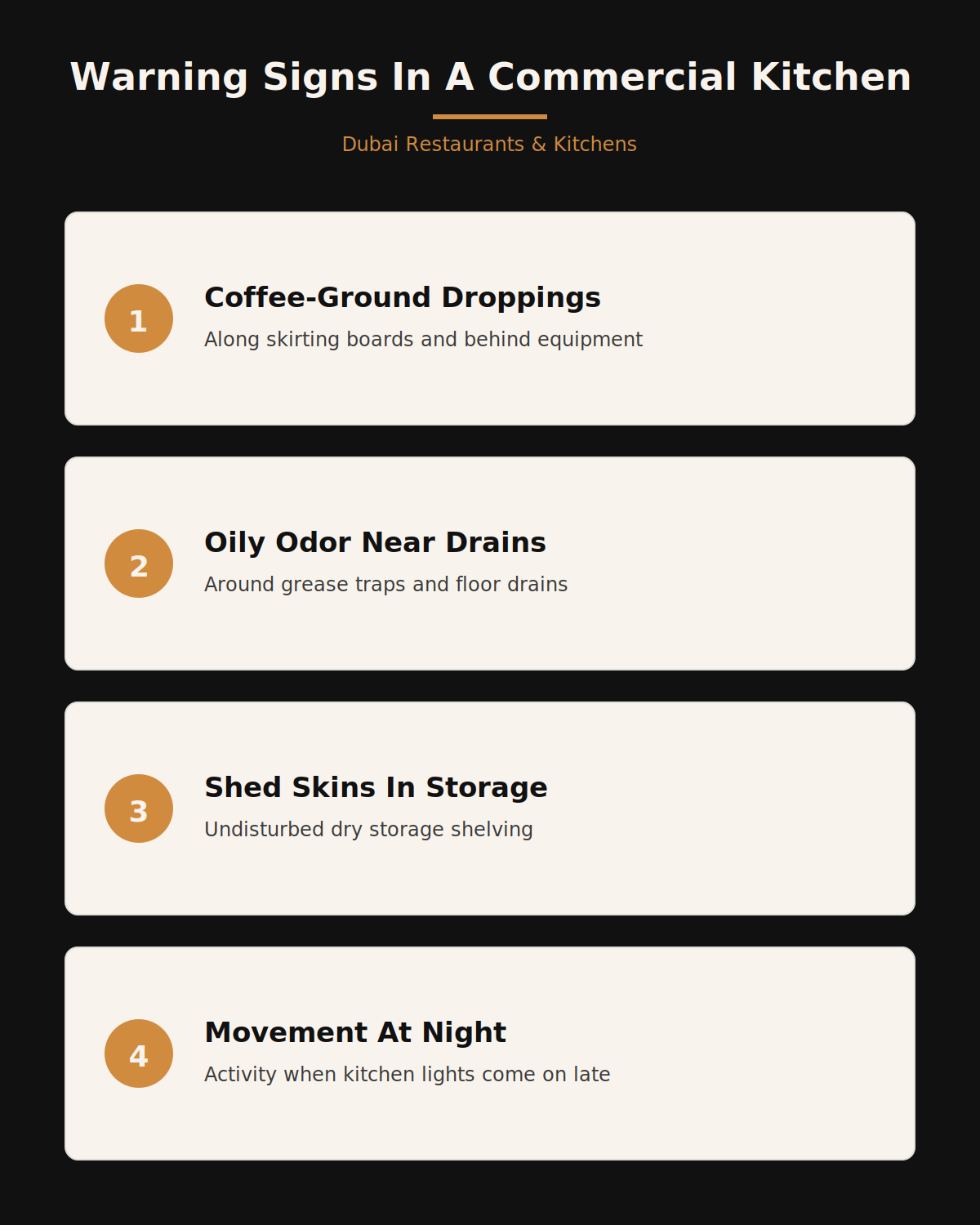
Look for droppings resembling coffee grounds along skirting boards and behind equipment, an oily odor near grease traps and drains, shed skins in dry storage, and movement when lights come on at night. By the time a diner spots one in the front of house, the colony behind the scenes is usually well established.
Yes. Dubai Municipality food safety inspections treat pest activity as a critical non-conformance, and an unresolved cockroach issue can affect a venue's food safety grading and licensing standing. Documented, licensed pest control is part of demonstrating ongoing compliance.
Retail sprays only kill roaches they touch directly and do little to reach a colony sheltering inside equipment voids, wall gaps, and drainage lines. In a working kitchen they also risk contaminating food-contact surfaces. A licensed integrated pest management (IPM) programme targets the harborage itself, not just visible activity.
Most restaurants and commercial kitchens in Dubai benefit from a scheduled programme of recurring visits and monitoring rather than a single one-off treatment, since heat, humidity, and constant food handling create ongoing pressure. Your technician can recommend a frequency based on your kitchen's layout and audit history.
Protecting your restaurant's reputation starts with protecting the kitchen behind it. Santera is a Dubai Municipality certified pest control provider with 25+ years of team experience, a 4.9 star Google Reviews rating, and more than 10,000 treatments completed across Dubai, backed by a 30-day warranty on every commercial programme. Book your complimentary inspection via WhatsApp, same-day service available across Dubai, and let our team build a cockroach control plan around your kitchen's real operating hours.