Centipedes & Millipedes
Centipedes and Millipedes After Rain: What Dubai Garden Villa Owners Should Know
Muhammad Saif Ullah
September 13, 2026


After a spell of rain moves through Arabian Ranches, it is rarely the water itself that residents call Santera about. It is what shows up two or three days later: centipedes darting across the garage floor at night, or millipedes curled up by the dozen along the pool deck and garden path in the morning. For villa owners with mature landscaping, thick mulch beds or irrigation systems that keep running after the rain has stopped, this is one of the most predictable, and most misunderstood, pest patterns in the community.
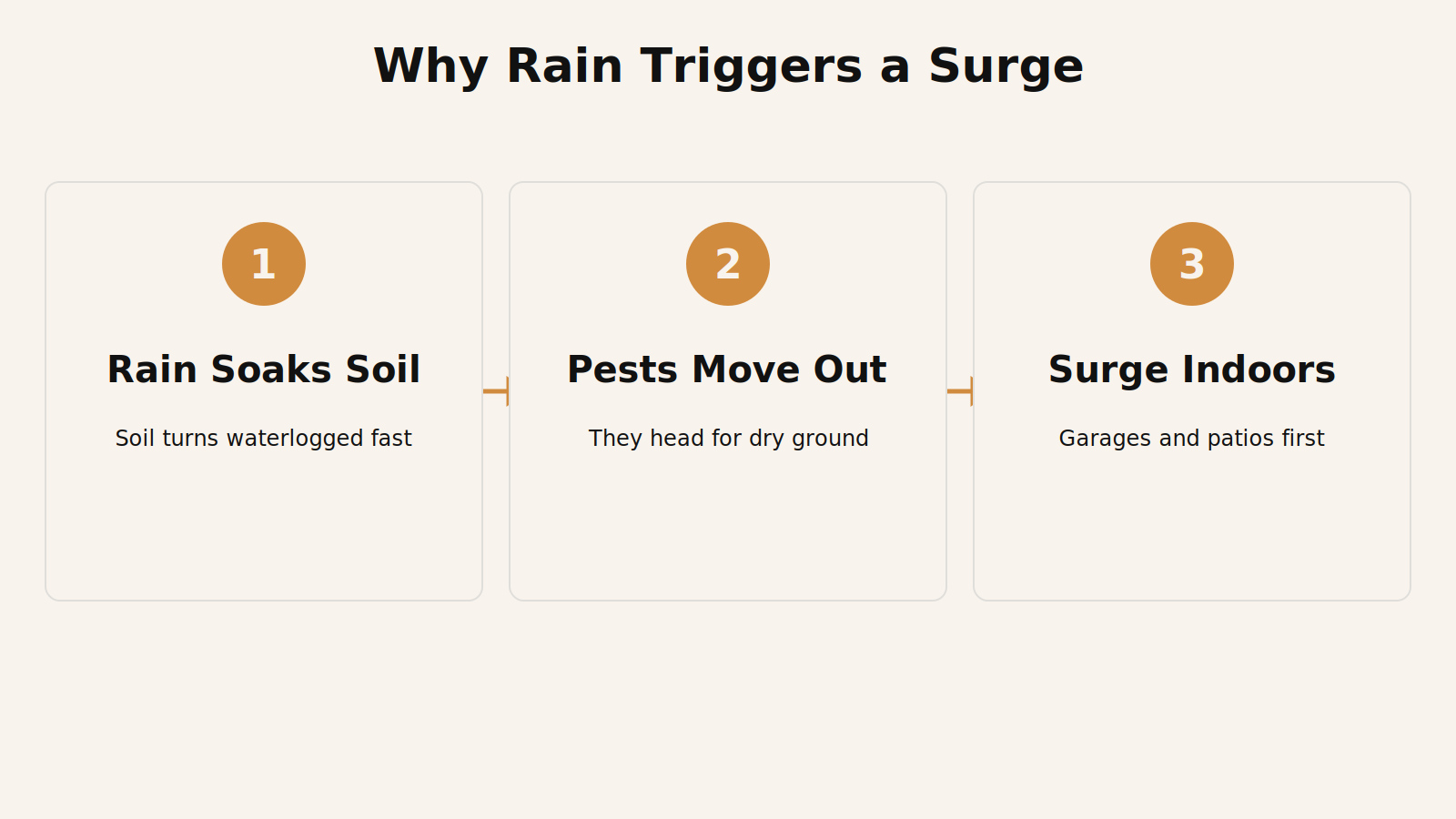
Centipedes and millipedes both live in damp, organic-rich ground: under mulch, beneath paving stones, inside compost piles and along the base of garden beds. Arabian Ranches villas are built for exactly the kind of landscaping these pests prefer, with irrigated lawns, flower beds and mature trees. When rain saturates that soil, or when automatic irrigation continues on its normal schedule right after a storm, the ground beneath the mulch becomes waterlogged. Both pests move toward higher, drier ground to avoid drowning, and the nearest dry, sheltered ground is usually the villa itself.
This is why sightings tend to arrive in a wave rather than one at a time. It is not a sudden infestation appearing from nowhere. It is an existing population in the garden being displaced all at once by changing soil conditions.
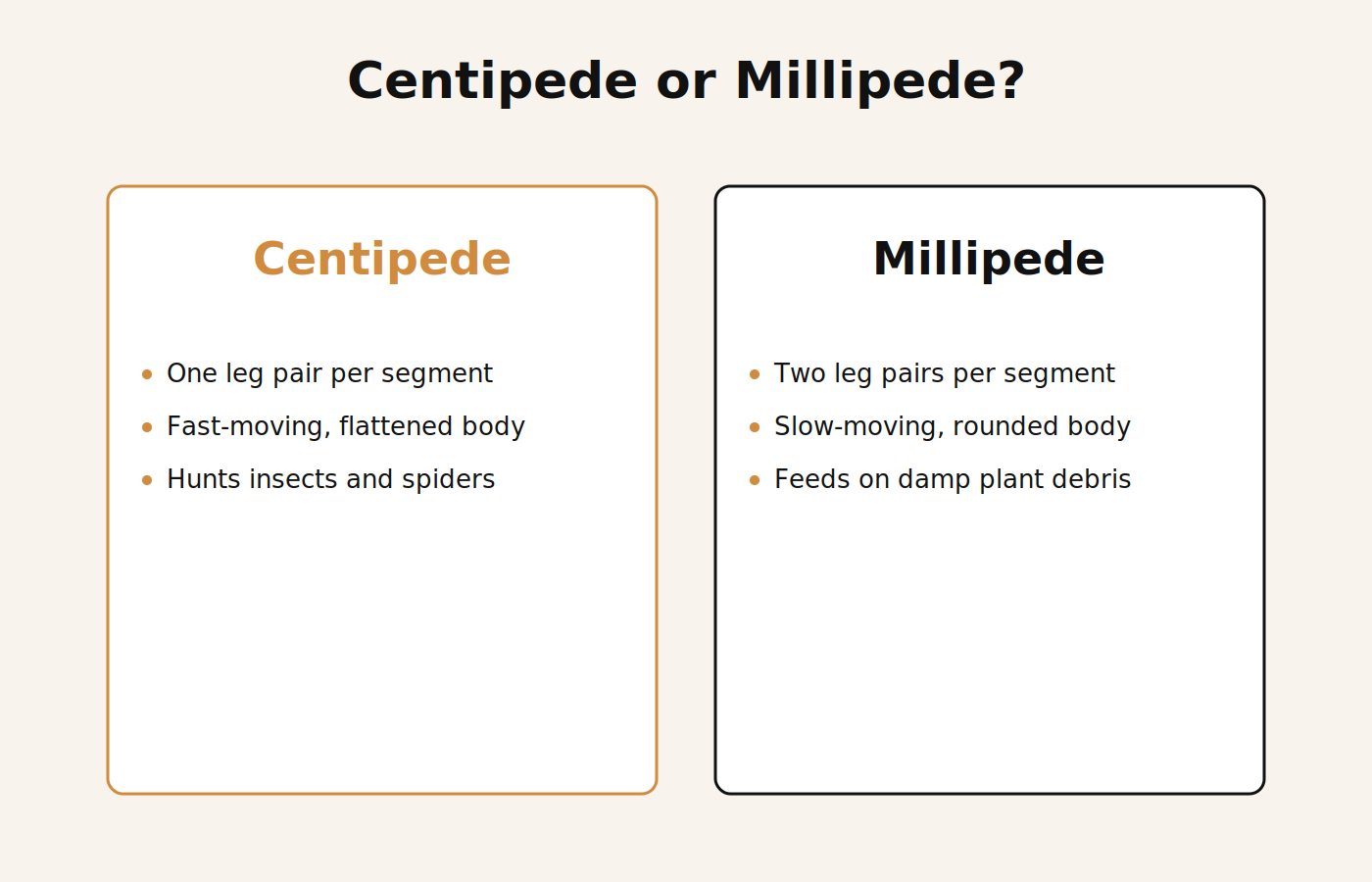
The two are frequently confused, but they behave differently, which affects how a treatment is planned. Centipedes are fast-moving, flattened, and have one pair of legs per body segment. They are predators, hunting small insects and spiders, which means their presence often points to a wider insect population nearby. Millipedes are slower, rounded in cross-section, and have two pairs of legs per segment. They feed on decaying plant matter, so heavy mulch, leaf litter and damp organic debris are a direct food source and habitat for them.
A garden with a millipede surge usually needs attention to organic debris and moisture management alongside treatment. A garden with a centipede surge often has an underlying insect population worth checking as well. Santera's technicians identify which is present, and in mixed cases treat for both, rather than applying one generic approach to both pests.
In villa communities like Arabian Ranches, three areas consistently turn out to be the source:
Because these areas are usually just outside the home rather than inside it, homeowners often only see the end result, the centipedes or millipedes that made it indoors, without realizing the source is a few metres away in the garden.
Store-bought sprays applied to the centipedes or millipedes you can actually see will clear that immediate sighting, but they do nothing for the population still living in the garden beds and under the mulch. Within a few days, or after the next rain or irrigation cycle, the same pattern repeats. Because the source is outdoors and often spread across multiple garden beds, spot-spraying indoors treats a symptom rather than the cause.
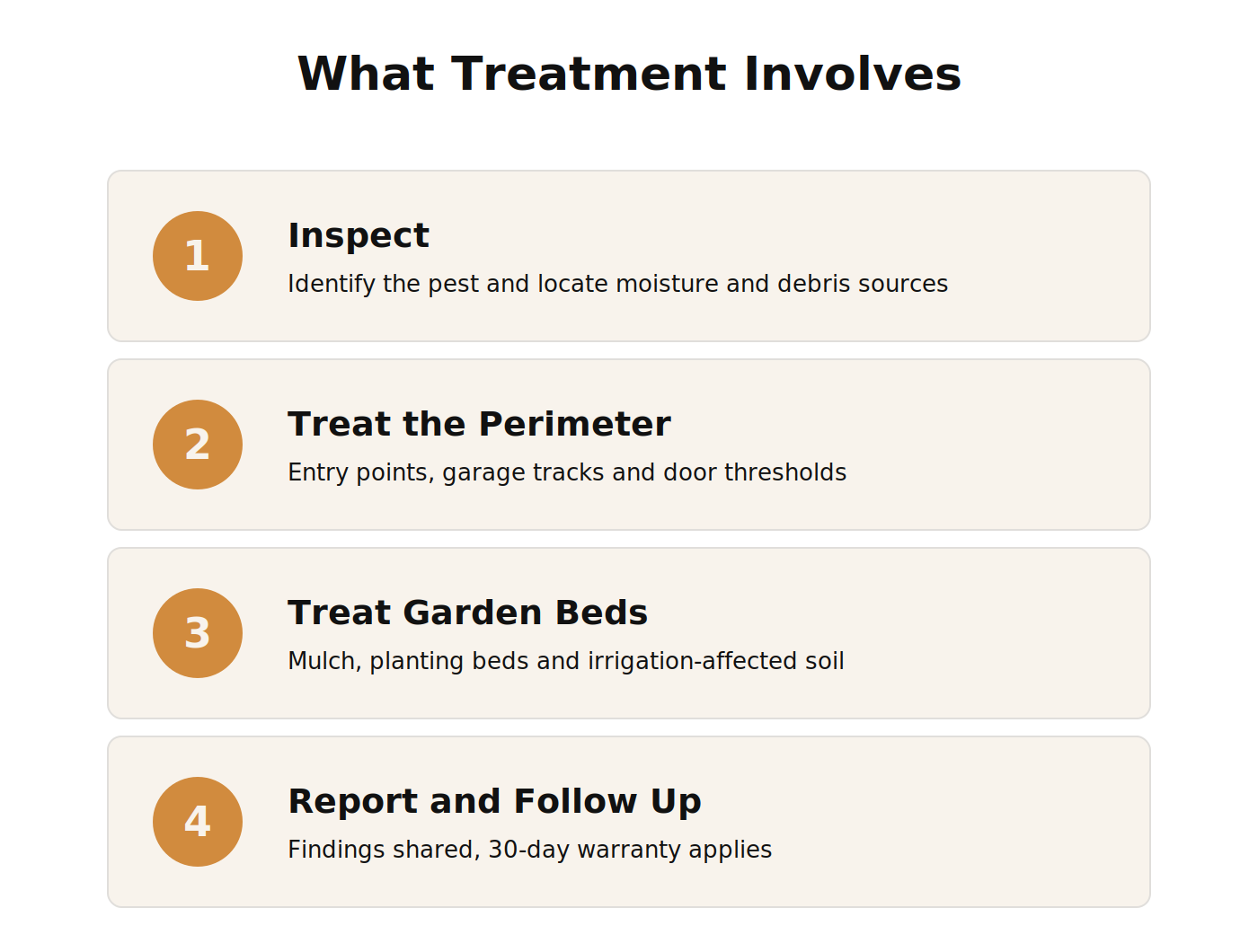
Santera's approach for a post-rain centipede or millipede surge starts with identifying which pest is present and where the moisture and organic debris are concentrated. From there, treatment is applied to the garden beds, mulch areas and villa perimeter, targeting the soil and ground-level harbourage rather than just the interior. Entry points such as garage door tracks, utility penetrations and door thresholds are treated and, where needed, recommended for sealing. Every visit ends with a clear report covering what was found, what was treated, and the specific conditions in your garden that are contributing to the problem.
Santera is Dubai Municipality certified, with more than 25 years of combined team experience and over 10,000 treatments completed across Dubai. Every treatment carries a 30-day warranty covering continued activity of the same pest within the agreed scope.
A few adjustments reduce how severe the next surge is, even if they cannot remove the underlying population on their own:
Combined with a treatment that addresses the garden itself, these steps meaningfully cut down how many centipedes or millipedes make it indoors after the next rain.
Millipedes do not bite and are not considered a health risk, though they can release a defensive odor if crushed. Centipedes can deliver a painful pinch if handled, similar to a bee sting for most people, but serious reactions are rare. Neither is a structural threat to your villa. The main issue is the sheer number that can appear indoors after rain, especially in garages, utility rooms and ground-floor bathrooms.
Both pests live in damp soil, mulch and leaf litter. When Arabian Ranches gets rain, or when irrigation runs longer than usual afterward, the soil in garden beds becomes waterlogged. That pushes centipedes and millipedes out of the ground and toward drier, higher ground, which is often the villa itself: door thresholds, garage floors and paved areas near planting beds.
Sealing gaps under doors, around utility penetrations and along garage door tracks helps reduce how many get inside, and it is worth doing. On its own, though, it does not address the source. If the colony living in your garden beds is not treated at the perimeter and in the soil itself, sealing just delays the next indoor surge rather than preventing it.
Within a day or two of the first sightings is ideal. Treating early, while the surge is still building, is more effective than waiting until centipedes or millipedes are showing up throughout the villa. If rain is forecast again soon, a complimentary inspection beforehand lets us treat the garden beds and perimeter ahead of the next surge.
If your Arabian Ranches garden has turned into a centipede or millipede thoroughfare after the last rain, the fastest way to stop the next wave is to treat the source, not just the sightings. Read more on our Centipedes and Millipedes pest library page, or book a complimentary inspection with Santera's Dubai Municipality certified team via WhatsApp and we will assess your garden beds, irrigation and perimeter the same day.