Centipedes & Millipedes
Centipede and Millipede Control for Dubai Warehouses and Logistics Facilities: Protecting Loading Docks and Storage Areas
Muhammad Saif Ullah
September 26, 2026


A night-shift worker spotting a fast-moving centipede near a loading dock, or a supervisor finding a cluster of millipedes curled up beside a pallet after rain, is a more common call than most warehouse operators expect in Dubai. Neither pest is drawn to stored goods the way rodents or stored product pests are, but the damp, ground-level conditions common in warehouses and logistics facilities are exactly what they look for.
For a facility built around throughput and stock integrity, that distinction matters less than the operational reality: staff finding pests near loading docks or storage areas raises hygiene questions regardless of whether the species involved is actually dangerous, and a damp patch that is attracting them is usually a maintenance issue worth fixing on its own merits.
Centipedes hunt small insects and follow that prey indoors, while millipedes feed on decaying organic matter and move in numbers when conditions push them out of soil and drains. Dubai's warehouses and logistics facilities often combine several of the conditions both pests favour: large ground-floor footprints, loading dock seals that wear down with heavy daily traffic, floor drains and wash-down bays that stay damp longer than the rest of the building, and pallets or packaging stacked directly on concrete for extended periods. None of this is unusual for a working facility, which is exactly why the conditions tend to go unnoticed until activity is already established.
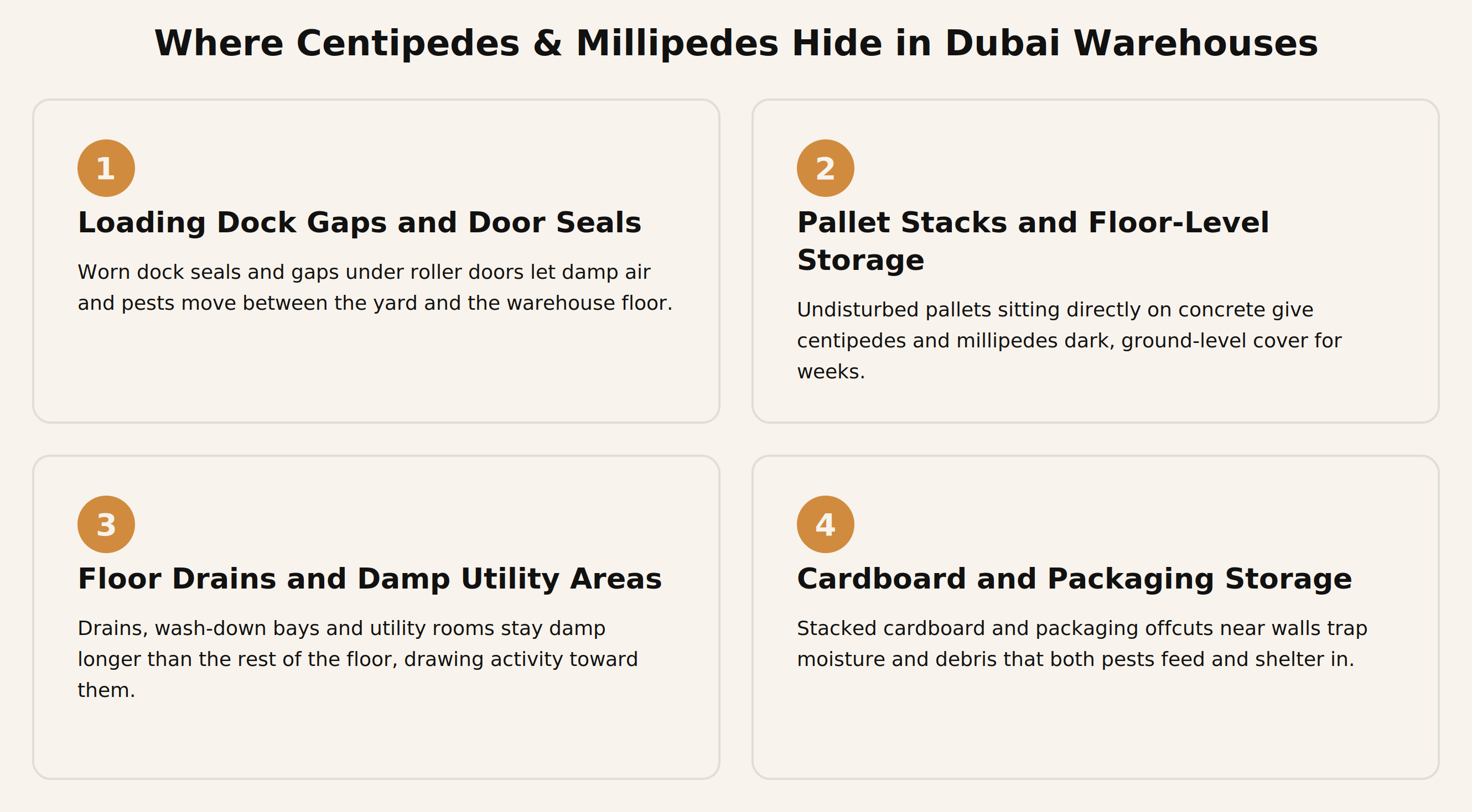
Both pests favour ground-level, undisturbed spots close to moisture. Loading dock gaps and worn door seals let damp air and pests move between the yard and the warehouse floor. Pallets and floor-level storage left in place for weeks give them dark cover directly on the concrete. Floor drains, wash-down bays and utility rooms hold onto moisture longer than open floor space. Stacked cardboard and packaging near walls add both shelter and organic debris. A facility does not need all four conditions at once for activity to establish, just one persistent damp spot near ground level.
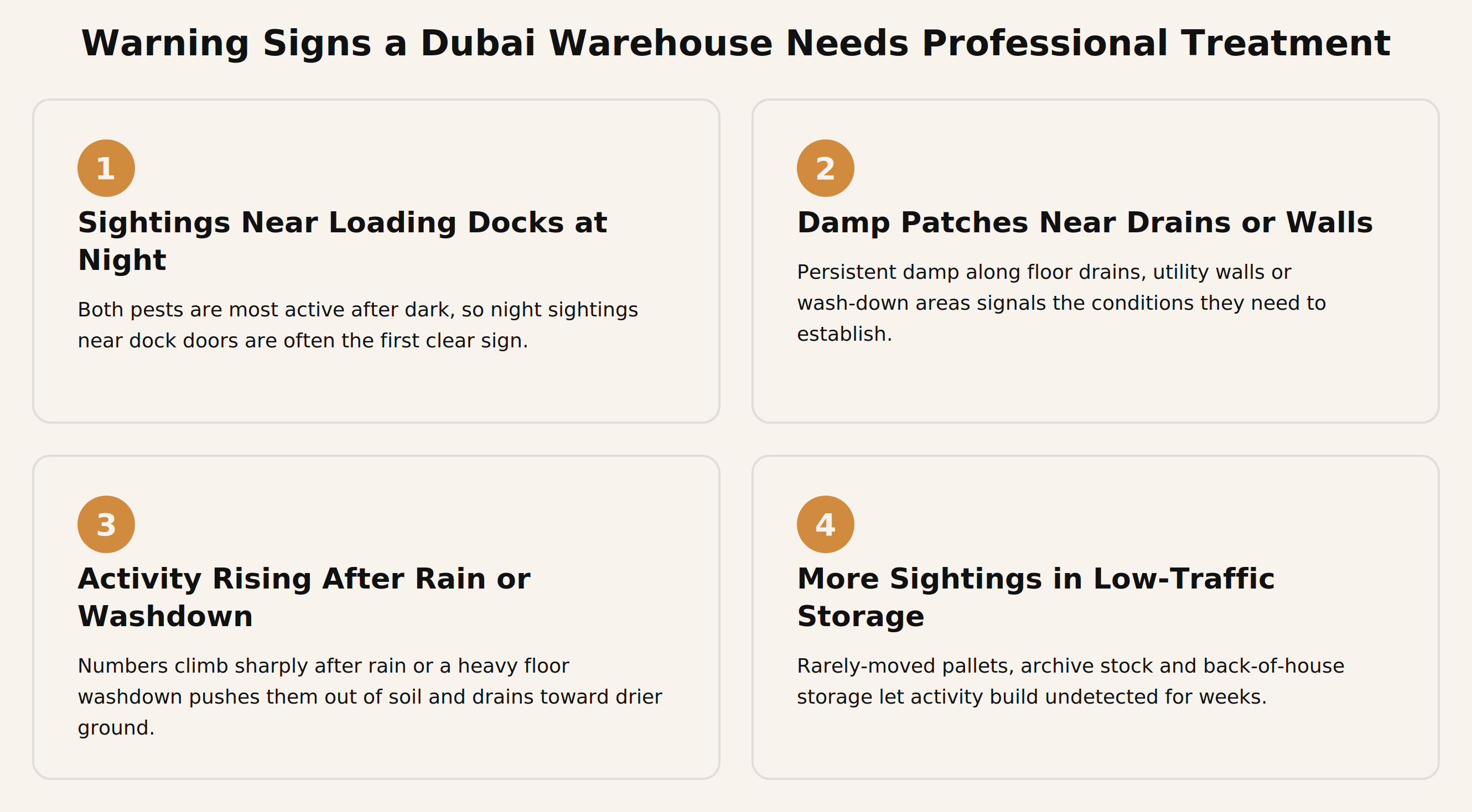
Because both pests are most active after dark, night-shift sightings near dock doors are often the first sign staff report. Beyond direct sightings, watch for damp patches that persist near drains, utility walls or wash-down areas, a rise in activity shortly after rain or a heavy floor washdown, and a growing number of sightings in low-traffic storage where pallets or archive stock rarely get moved. Any one of these is worth a closer look at the surrounding area rather than a one-off cleanup.
General cleaning schedules are built around visible dust and surface tidiness, not the gaps under dock doors or the underside of pallets that have not moved in weeks. A warehouse floor can look properly maintained while still holding the damp, undisturbed conditions both pests need. For facilities operating under health and safety audits, tenancy agreements or client site-visit standards, an unaddressed pest issue near loading docks or storage areas can raise the same kind of compliance questions as any other pest problem, even though centipedes and millipedes are not the pests most operators think to plan for.
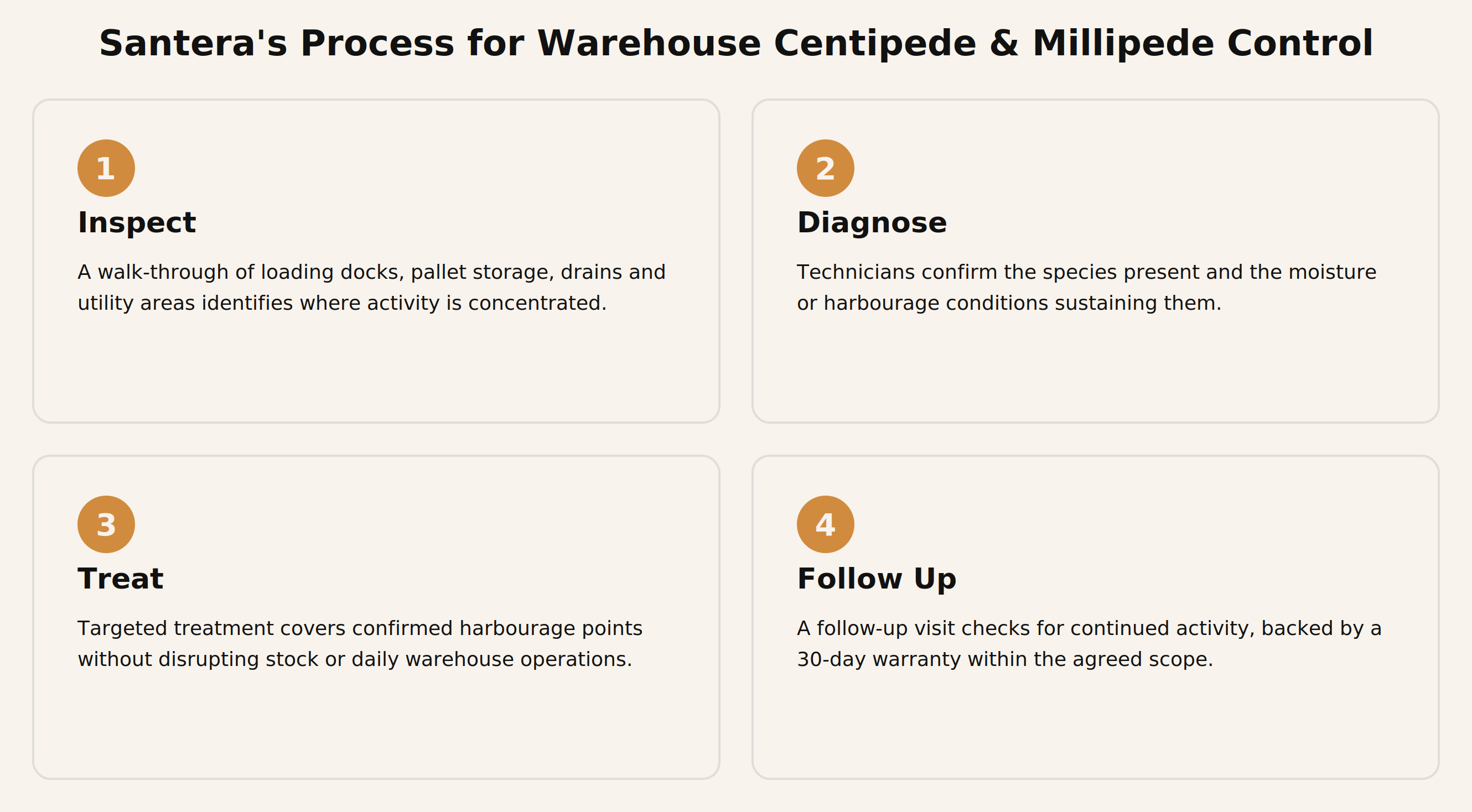
An effective visit starts with a walk-through of loading docks, pallet storage, drains and utility areas to identify where activity is concentrated, followed by confirming which species is present and what moisture or harbourage conditions are sustaining it. Treatment then targets those confirmed points directly rather than the whole facility, so stock movement and daily operations continue with minimal disruption. Santera is Dubai Municipality certified, and every visit is backed by a 30-day warranty covering follow-up visits for continued activity of the same pest within the agreed scope.
A few facility habits reduce how much shelter is available between visits. Rotating pallets and stock rather than leaving the same units on damp concrete for extended periods removes an easy hiding spot. Checking and replacing worn dock door seals limits how much moisture and how many pests move in from the yard. Keeping floor drains and wash-down bays draining properly, rather than pooling, removes the damp conditions both pests need. Clearing cardboard and packaging offcuts from wall lines on a regular schedule removes shelter before it becomes established.
Millipedes do not bite or sting and are generally harmless, though they can release a mild defensive fluid if handled. Larger centipedes can deliver a painful bite and should not be handled directly. Neither poses a major health risk in typical warehouse conditions, but sightings usually point to a damp harbourage area worth investigating.
Rain and heavy floor washdowns push both pests out of waterlogged soil, drains and ground-level gaps and toward drier shelter, which is often just inside a loading dock or storage area. This is why sightings tend to spike shortly after rainfall or a thorough wash-down of yard and dock areas.
Pallets themselves are not the food source, but pallets left undisturbed directly on damp concrete create the same dark, humid conditions centipedes and millipedes look for elsewhere. Rotating stock and keeping pallets off consistently damp flooring reduces how much shelter is available.
A quarterly inspection is a reasonable baseline for most Dubai warehouses and logistics facilities, with an additional check after any period of sustained rain or a major washdown. Facilities with persistent damp areas near drains or loading docks may benefit from a more frequent schedule.
If loading docks, pallet storage or drain areas at your facility are showing any of these signs, our Pest Library page on centipedes and millipedes covers more on how they behave and enter buildings. Santera is Dubai Municipality certified (License 1595993), rated 4.9 stars on Google Reviews, and offers 24/7 availability with same-day service across Dubai. Call or WhatsApp us on +971 4 332 2623, email info@santera.ae, or book your complimentary inspection via WhatsApp below.