Birds
Bird Control for Dubai Schools and Nurseries: Protecting Rooftops, Playgrounds and Cafeterias
Muhammad Saif Ullah
September 19, 2026


A pigeon on a school rooftop looks harmless enough. A term later, the same ledge is carrying a buildup of droppings above a walkway students use every day. Dubai's school and nursery campuses combine exactly what birds look for: wide flat rooftops holding AC units, open-frame playground shading, and cafeteria waste areas with a steady food supply. For a facilities team, bird activity on campus is not just a maintenance item, it is a health and hygiene question that involves children.
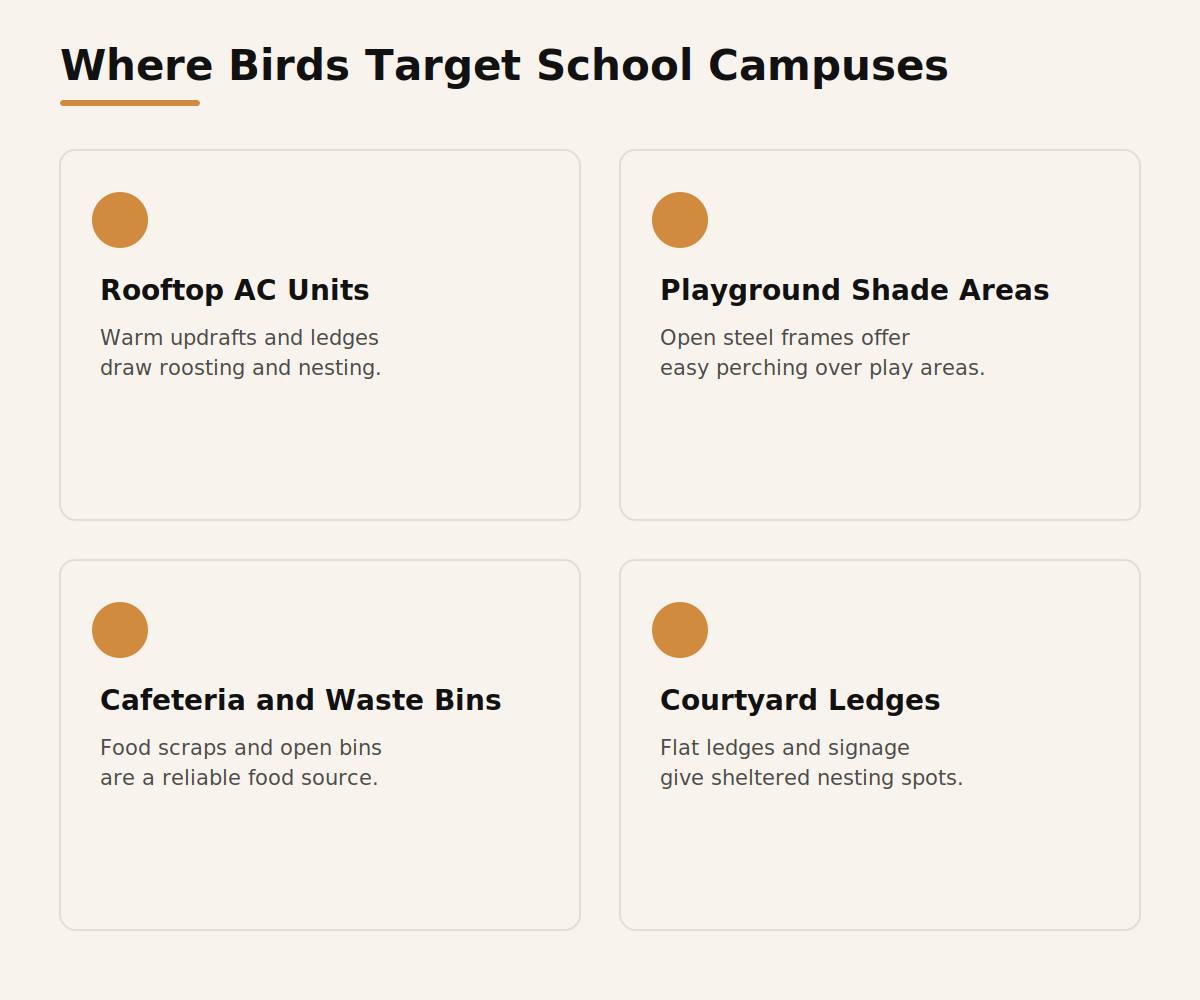
School campuses are built at a scale that works in a bird's favour. Large rooftops with rows of AC condenser units create warm, sheltered ledges that pigeons and mynas use for roosting. Playground shade structures and covered walkways offer open steel frames that are easy to perch on and hard to fully block without a proper plan. Cafeterias and outdoor waste collection points supply a predictable food source, especially where bins are not tightly sealed between collections. Put together, a typical Dubai campus offers shelter, warmth and food in close proximity, which is exactly what sustains a growing bird population rather than the occasional passing visitor.
Birds settle wherever ledges, warmth and food overlap, and on a school campus that means a specific, repeatable set of locations. Rooftop AC units are a near-universal draw, since the warm air and flat surrounding surface make an ideal roosting spot. Playground shade structures and covered walkways attract perching directly above areas where children spend the most unsupervised time. Cafeteria and waste bin areas draw birds looking for food scraps, particularly if collection schedules leave bins accessible for long stretches. Courtyard ledges, signage tops and window sills round out the list, offering sheltered spots close to building entrances.
The concern with campus bird activity is rarely the birds themselves, it is what accumulates underneath them. Dried droppings on walkways, play equipment or outdoor seating create a hygiene issue in areas children use directly, and buildup on rooftops can work into drainage systems over time. Nesting material blocking gutters or AC units adds a maintenance cost on top of the hygiene concern. For a school or nursery, this is also a reputational issue with parents and a factor in health and safety inspections, which makes prompt action worth more than a wait-and-see approach.
Many facilities teams start with a single fix, such as spikes on one rooftop ledge or a scarecrow decoy in the courtyard. These measures usually address one location while leaving the rest of the campus untouched, and birds displaced from one ledge often resettle a short distance away on an untreated surface. A campus-wide assessment is what prevents this shuffling effect, since it maps every active and potential roosting point before any deterrent goes up, rather than reacting to whichever spot is most visible.
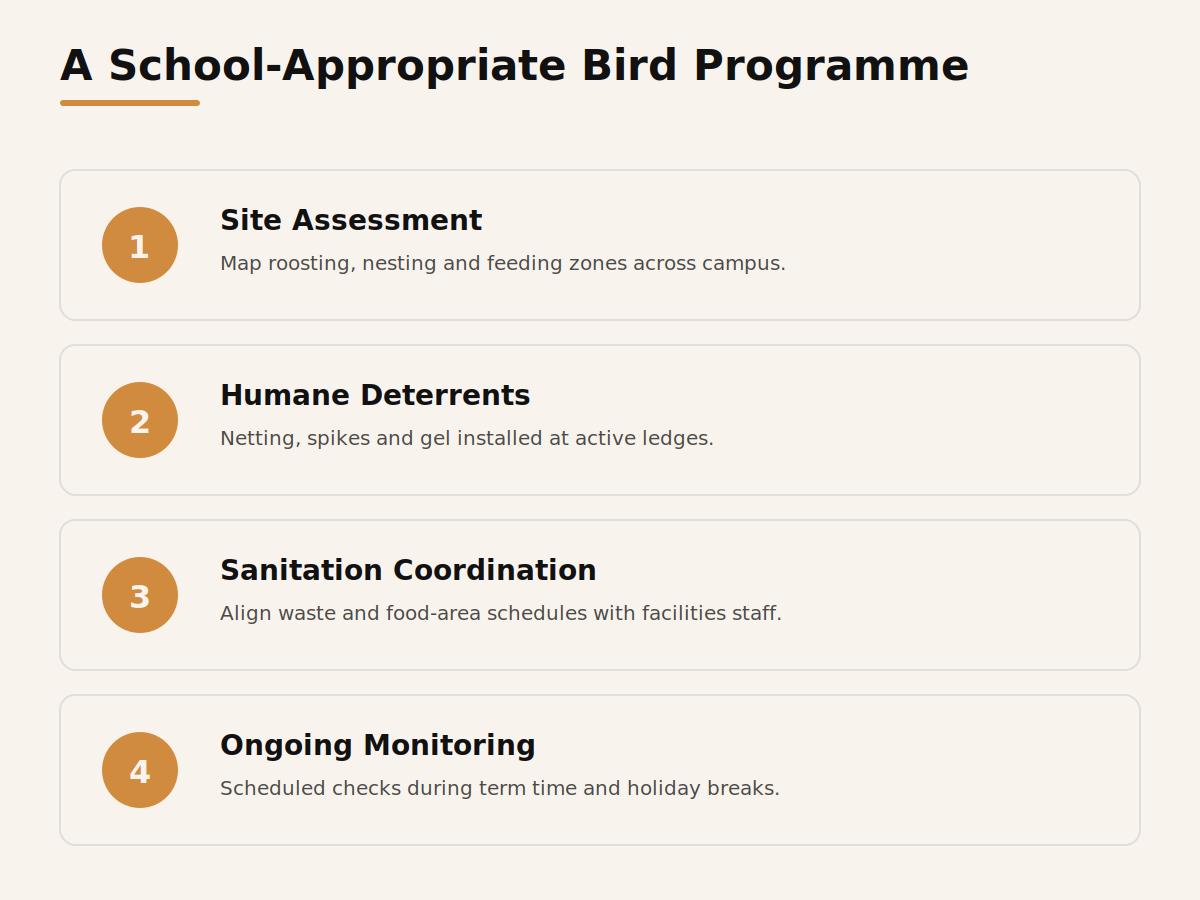
A programme built for an educational facility has to work around term time and student safety, not just around the birds. That starts with a full campus assessment covering rooftops, playground structures, courtyards and waste areas. Humane physical deterrents, such as netting over open frames and discreet spikes or gel on ledges, are then installed at the specific points identified, timed outside school hours wherever possible. Coordination with facilities and catering staff on waste and food-area sanitation closes off the food source that keeps birds returning. Ongoing monitoring, including a check during holiday breaks when campuses are quieter, catches new activity before it becomes an established roosting site.
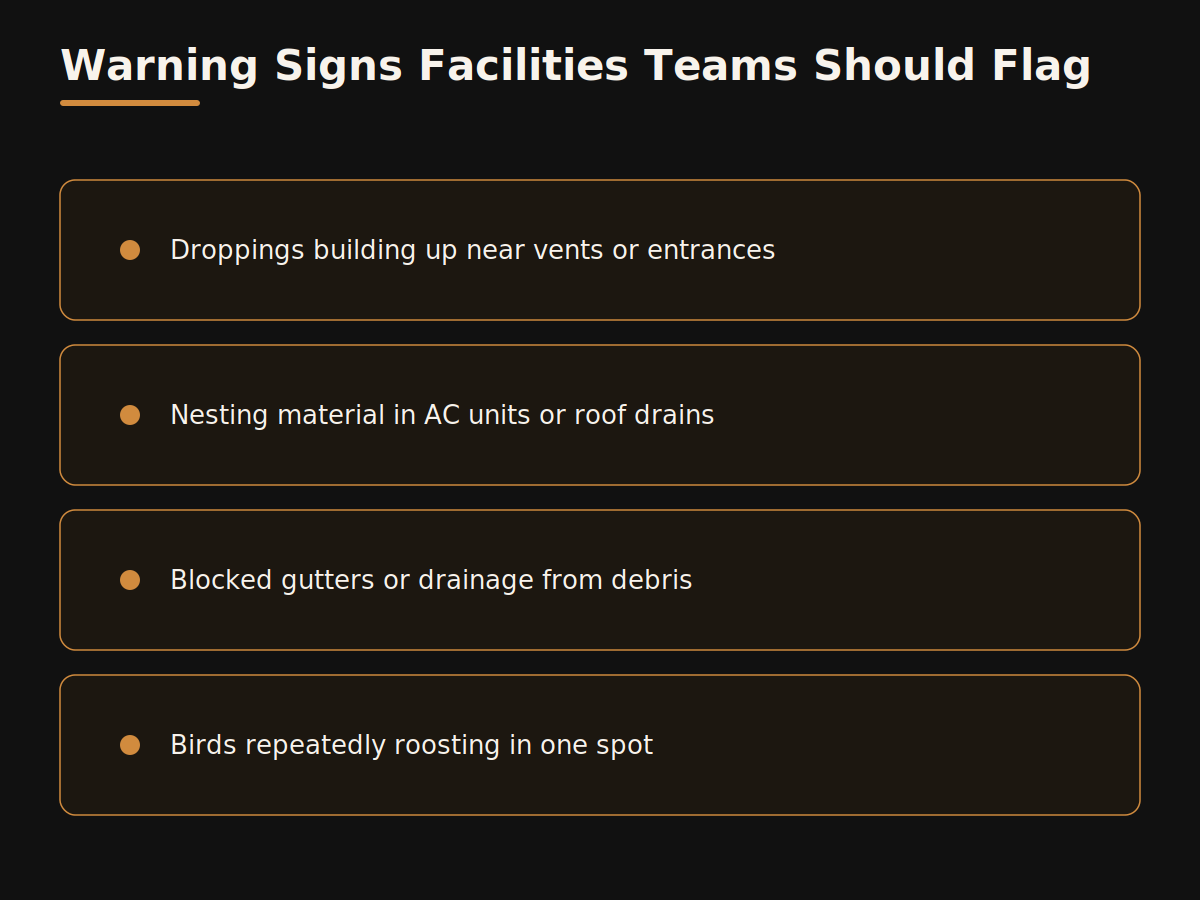
Early signs of bird activity are easy to miss during a routine walk-through unless staff know what to look for. These include droppings building up near vents, entrances or walkways, nesting material appearing in AC units or roof drains, gutters or drainage showing signs of blockage from debris, and the same birds repeatedly roosting in one spot over several days. Any of these should be reported to facilities management for a professional assessment rather than a one-off cleanup, since surface cleaning without addressing the roosting point usually means the same area is dirty again within weeks.
When selecting a bird control provider for a school or nursery, facilities managers should confirm the company is Dubai Municipality certified and ask specifically how they schedule installation around teaching hours, what deterrent methods they use around children, and how they document findings for internal safety records. Santera is Dubai Municipality certified, with 25+ years of team experience across commercial and institutional properties in Dubai, and plans every campus visit around minimal disruption to students and staff.
Read more in our Pest Library guide to birds.
Yes. Installation is typically scheduled outside teaching hours or during weekend and holiday windows, so classrooms, playgrounds and cafeterias are not disrupted. Our technicians coordinate timing directly with your facilities team.
The deterrents used on school campuses are physical and humane, such as netting, spikes and gel, rather than chemical repellents. Placement is planned around play areas and walkways so it does not interfere with normal campus activity.
Most campuses benefit from a scheduled check each term, with additional visits during holiday breaks when roosting can go unnoticed. Your facilities team can agree a frequency that matches the size of the campus and its rooftop and courtyard areas.
Note the exact location, avoid disturbing an active nest directly, and restrict access to the area if droppings are present until it has been professionally assessed and cleaned. Early reporting keeps the response contained and limits exposure for students and staff.
Bird activity on a school or nursery campus moves quickly from a maintenance note to a hygiene and safety concern if it is left unaddressed. Santera is Dubai Municipality certified and works with educational facilities across Dubai to build inspection and deterrent programmes around term time, not against it. Book a complimentary inspection via WhatsApp to review your campus's risk areas.