Bees
Bee Removal in Dubai: What to Do About Swarms and Hives on Your Property
Muhammad Saif Ullah
September 17, 2026


A honey bee swarm resting on a balcony railing looks alarming, but it is usually harmless if left undisturbed for a day or two while it moves on. An established hive humming inside an AC condenser housing, a roof void, or a wall cavity is a different problem entirely, and it is the one Santera gets called about most often across Dubai. Because bees are protected pollinators rather than a pest to spray on sight, homeowners are often unsure what they are even allowed to do, and that hesitation is exactly the right instinct.
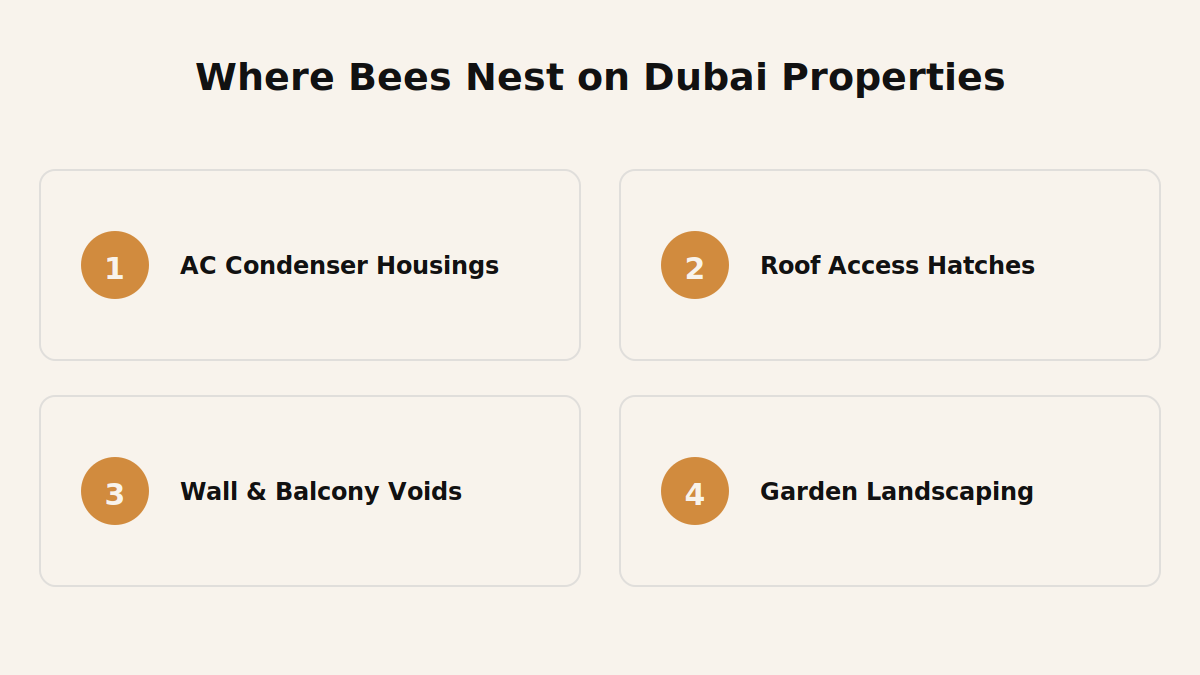
A scout bee looking for a new home for its colony wants a sheltered, weatherproof cavity of roughly the right size, protected from direct sun and rain. Dubai properties offer this in abundance: AC condenser units and their housings, roof access hatches, hollow garden walls, balcony voids and gaps around window and door frames. Villas with mature, irrigated landscaping are especially attractive, since flowering plants and shrubs give a colony a steady source of nectar and pollen close to the nest site. Apartment buildings are not exempt either; a shared courtyard, a row of flowering trees on the street, or even a single balcony planter can be enough to draw a swarm toward a building's upper floors.
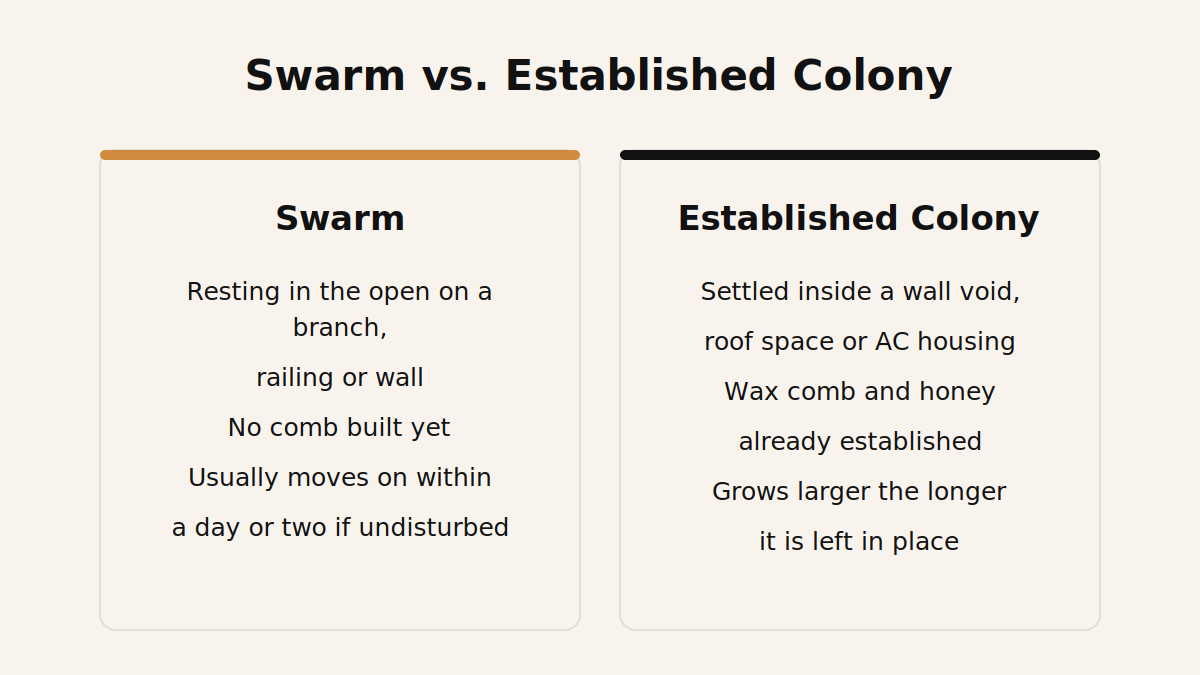
A swarm is a temporary cluster of bees resting in the open, usually on a branch, railing or wall, while scouts search for a permanent cavity. Left alone, most swarms move on within a day or two without ever building comb. An established colony is different: bees have already chosen a cavity, built wax comb inside it, and started storing honey and raising brood. The longer a colony is left, the larger and more defended it becomes, and the more comb and honey there is to remove safely afterward. Knowing which one you have changes whether the right move is simply waiting it out or booking a proper removal.
Spraying a visible cluster of bees, or sealing an entrance hole while the colony is still inside, tends to make the situation worse rather than better. A disturbed colony can respond with mass defensive stinging, which is a real danger for anyone in the household who is allergic, and for pets and neighbors nearby. Sealing bees inside a wall void without removing the comb and honey first also leaves a slowly rotting mass that draws ants, cockroaches and other pests once the colony eventually dies. Because honey bees are beneficial insects, Dubai's approach to bee problems favors safe handling and relocation over casual extermination wherever that's possible, which is not something a can of household spray is built to do.
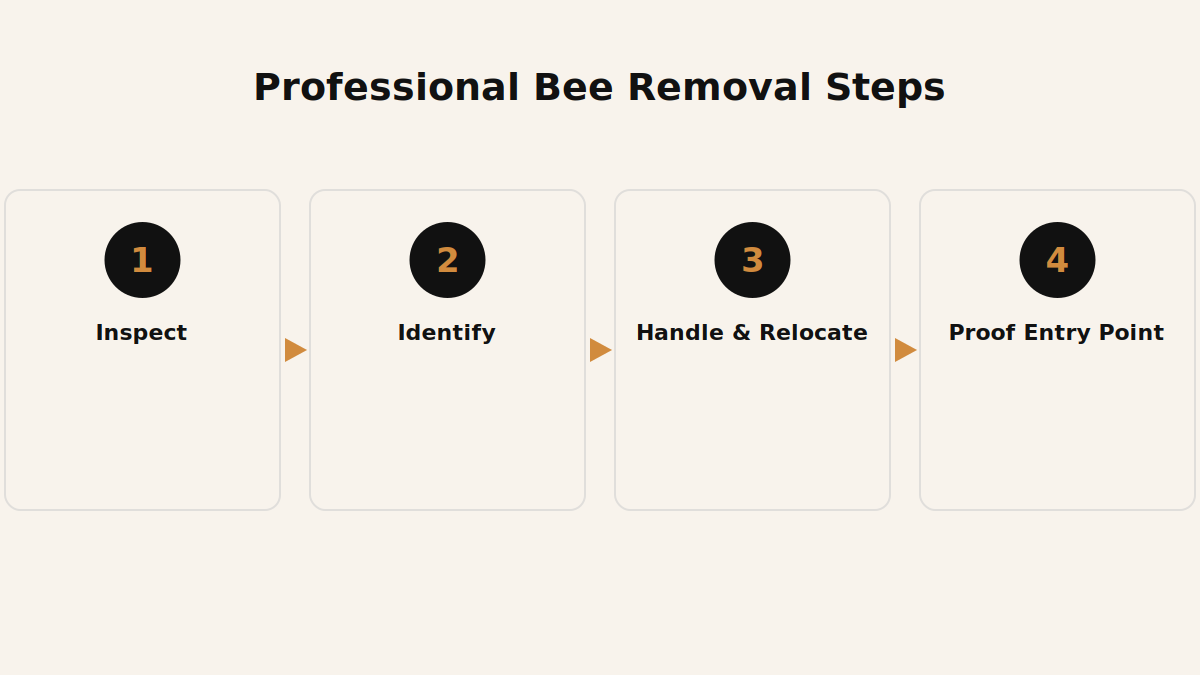
Santera's approach starts with an inspection to locate the cavity, confirm entry points, and work out whether it's a passing swarm or a colony that has built into the structure. From there, our technicians handle the bees safely with full protective equipment, prioritizing relocation of the colony where it's feasible rather than defaulting to extermination. Comb and honey are removed from the cavity, since leaving them behind is what causes secondary problems later, and the entry point is proofed so the same AC housing, roof gap or wall void doesn't attract a new swarm the following season. You receive a report on what was found and treated, along with advice on sealing other potential nesting points around the property.
A few checks reduce how likely a new swarm is to settle in the same spot once a colony has been removed:
None of these steps remove an active colony, but combined with a proper removal they meaningfully lower the odds of the same cavity being reclaimed by bees later.
Removing a hive yourself is not recommended. Disturbing a colony can trigger mass defensive stinging, which is dangerous for anyone in the household who is allergic, and store-bought sprays rarely reach comb built deep inside a wall void or AC housing. Leftover comb and honey also attract other pests once the colony dies off. Santera's technicians handle bees safely with protective equipment and prioritize relocation rather than casual extermination, since honey bees are important pollinators.
Bees don't need a garden to find your property attractive. A scout bee is looking for a sheltered, weatherproof cavity, and Dubai apartments and villas offer plenty: AC condenser housings, roof access hatches, balcony voids and gaps around window frames. Nearby flowering landscaping in the community, even a shared courtyard or street planting, is often enough to draw a swarm toward your building.
Relocation is prioritized wherever it's feasible, because honey bees are beneficial pollinators rather than a pest to be casually exterminated. Our technicians first assess whether it's a temporary swarm passing through or an established colony with comb, then handle the bees safely with protective equipment, removing comb and proofing the cavity so the same spot doesn't attract a new colony later.
Sooner is better. A small swarm that has just settled is far easier and safer to handle than an established colony that has spent weeks building comb and expanding into a wall cavity or roof space. Waiting also increases the risk of accidental disturbance, by a child, a pet, or routine maintenance work near the nest. A complimentary inspection can confirm what you're dealing with and how urgent it is.
If you have spotted a swarm or can hear activity inside an AC housing, roof void or wall cavity on your Dubai property, the safest next step is an inspection, not a spray can. Read more on our Bees pest library page, or book a complimentary inspection with Santera's Dubai Municipality certified team via WhatsApp and we will assess the cavity and plan safe removal or relocation.