Bees
Bee Control for Dubai Restaurants and Cafes: Managing Swarms Near Outdoor Seating and Waste Areas
Muhammad Saif Ullah
September 13, 2026


Outdoor seating is one of Dubai's biggest dining draws, but the same alfresco tables, sweet pastry counters and waste enclosures that guests love are exactly what bees look for. A single guest photo of bees swarming a terrace, or worse, a guest with an allergic reaction, can turn a good afternoon service into a safety incident and a reputation problem. For restaurant and cafe managers, bee activity around outdoor dining needs a calm, professional response rather than a broom or a can of spray.
Bees are drawn to a predictable combination of sugar, moisture and shelter, and a busy restaurant or cafe often provides all three without meaning to. Sweetened drinks, pastry displays and spilled syrup on outdoor tables act as a constant food source, while nearby landscaping, signage voids or building eaves can offer a sheltered spot to build a hive close to that food supply. In Dubai's warm climate, foraging continues for most of the year, so a colony that finds a reliable spot near your terrace has little reason to move on.
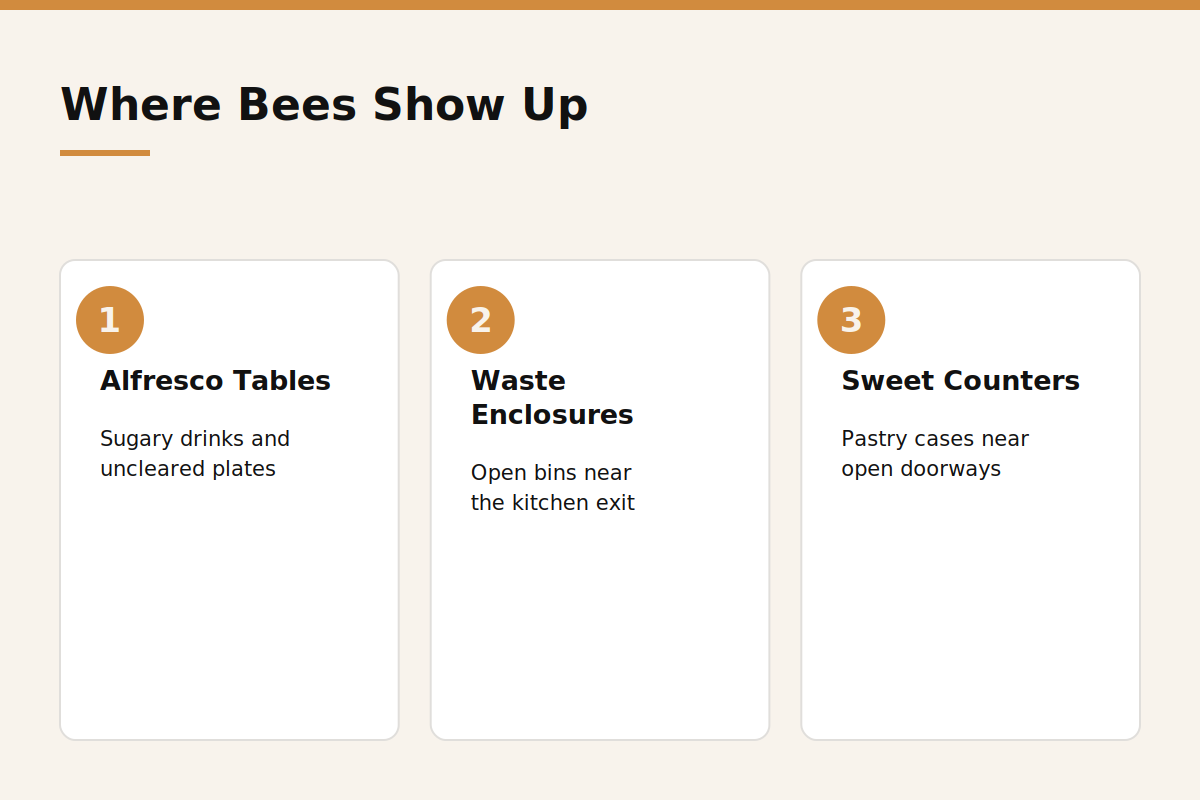
Bee activity around restaurants and cafes tends to cluster in a few predictable spots. Alfresco tables with sugary drinks or uncleared plates are the most visible, since foraging bees are drawn straight to the source. Waste enclosures and bins near the kitchen exit are another common draw, especially where lids are left open or bins are not rinsed between collections. Sweet counters and pastry display cases, even indoors near an open door, can also pull foraging bees in from outside.
The biggest concern with bees in a dining setting is not property damage, it is guest safety. A guest with a bee allergy can have a serious reaction within minutes, and even guests without allergies can be alarmed by bees near their table, especially with young children present. Staff clearing outdoor tables are also at higher risk of stings than guests who are simply passing through. For a restaurant, a single sting incident on a busy terrace can escalate quickly from a minor complaint to a serious liability concern.
Swatting at bees or spraying near an outdoor dining area is one of the least suitable responses available to a restaurant. Disturbing a hive without the right approach can trigger a defensive response from the colony, sending foraging bees into a guarded, more aggressive state right in the middle of service. Spraying near food preparation or dining surfaces also raises hygiene concerns that a food and beverage operation cannot risk during an active health inspection cycle.
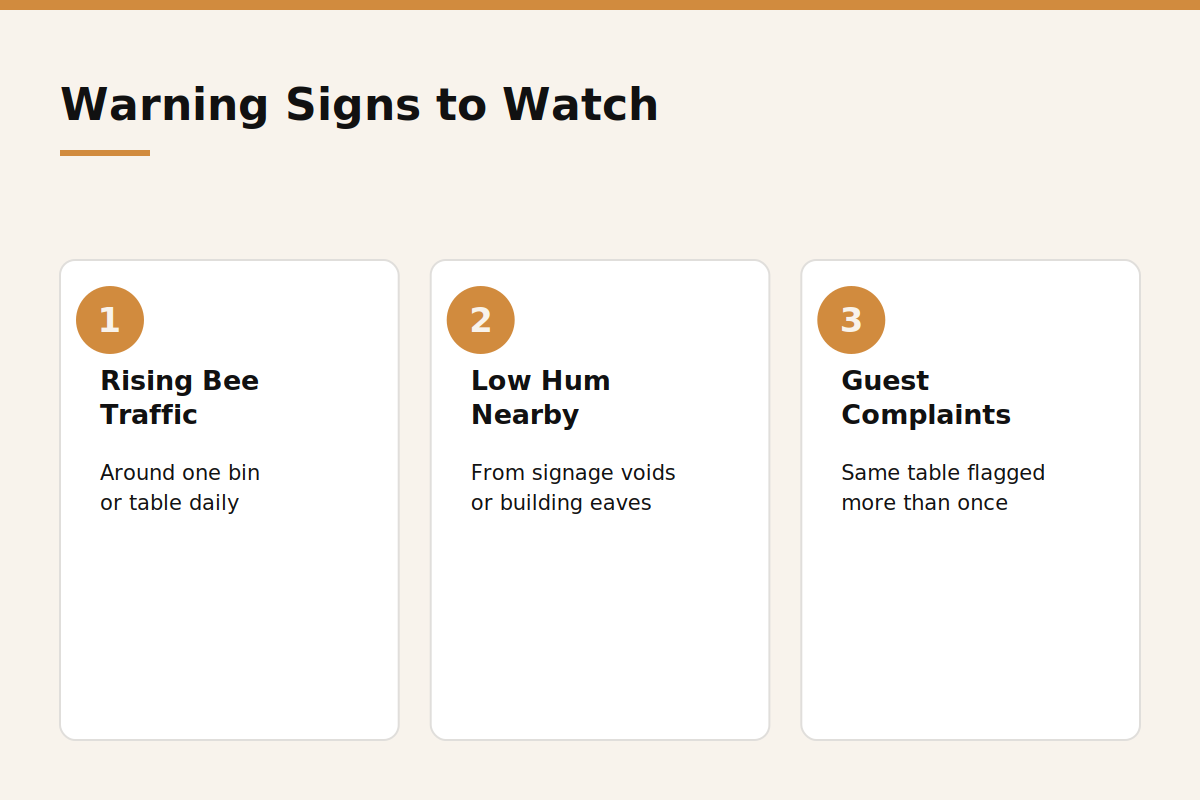
Early signs are easy to miss during a busy shift. A noticeable increase in bee traffic around a specific bin or table, a low hum coming from a signage void or eave, or repeated guest comments about bees at the same table are all worth logging. Facility teams that act on these early signs, rather than waiting for a visible hive, typically resolve the issue before it becomes a guest-facing incident.
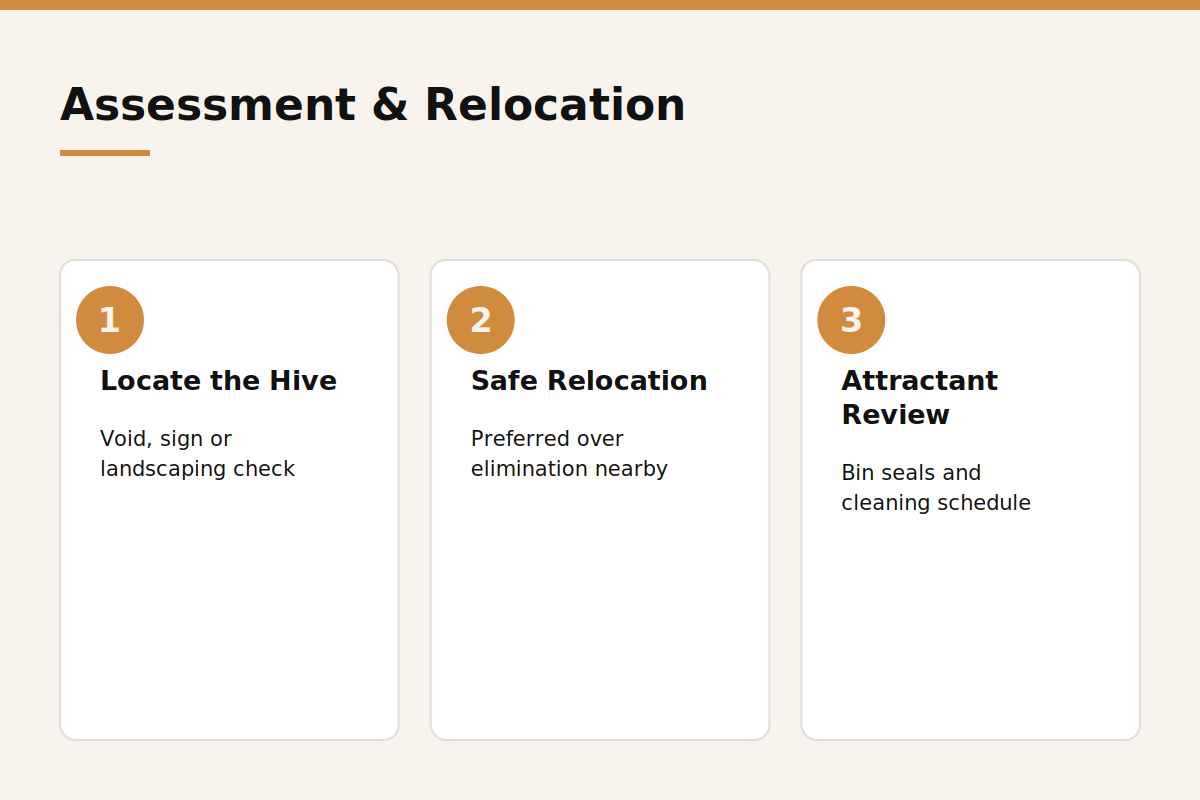
A professional response starts with locating the hive and assessing its size and accessibility, whether it is in a wall void, a sign structure, nearby landscaping or an outdoor structure. Where the location allows it, a Dubai Municipality certified technician can safely relocate the hive rather than eliminate it, which is often the preferred outcome for a restaurant operating near community areas. The process also includes a review of what is drawing bees to the property in the first place, such as waste bin placement, seals and outdoor cleaning schedules, so the same spot does not attract a new colony shortly after.
Because service cannot simply stop for an afternoon, assessment and relocation work is scheduled around service hours wherever possible, with clear guidance for staff on managing the outdoor area safely until the work is complete.
Bees forage where food is reliable. A terrace with sugary drinks, pastries and waste bins in the same spot every day gives a colony a dependable food source, so scouts keep returning and can recruit more foragers over time.
No. Swatting or spraying near guests can provoke a defensive response from the colony and put diners with allergies at real risk. A dining environment calls for a controlled, professional approach rather than an improvised one.
In many cases, yes. Where the location and access allow it, hives can be relocated rather than destroyed, which is often the preferred approach for a restaurant or cafe near residential or community areas.
Uncovered or poorly sealed waste bins near alfresco seating are one of the strongest bee attractants a restaurant has. Reviewing bin placement, lids and collection schedules is often as important as any treatment.
Any visible hive, comb, or a consistent daily pattern of bees near guest seating warrants a professional assessment. Waiting usually allows a colony to grow larger and more established in the same location.
Bees around a restaurant terrace are a guest-safety issue first and a nuisance second. Santera is Dubai Municipality certified and works with food and beverage operators across the city to assess hive activity and manage it safely without disrupting service. For more background, see our Pest Library page on bees. To arrange a complimentary inspection around your service hours, reach out on WhatsApp.