Bed Bug
Bed Bug Control for Dubai Hotels: Protecting Guest Rooms and Reputation
Muhammad Saif Ullah
September 15, 2026


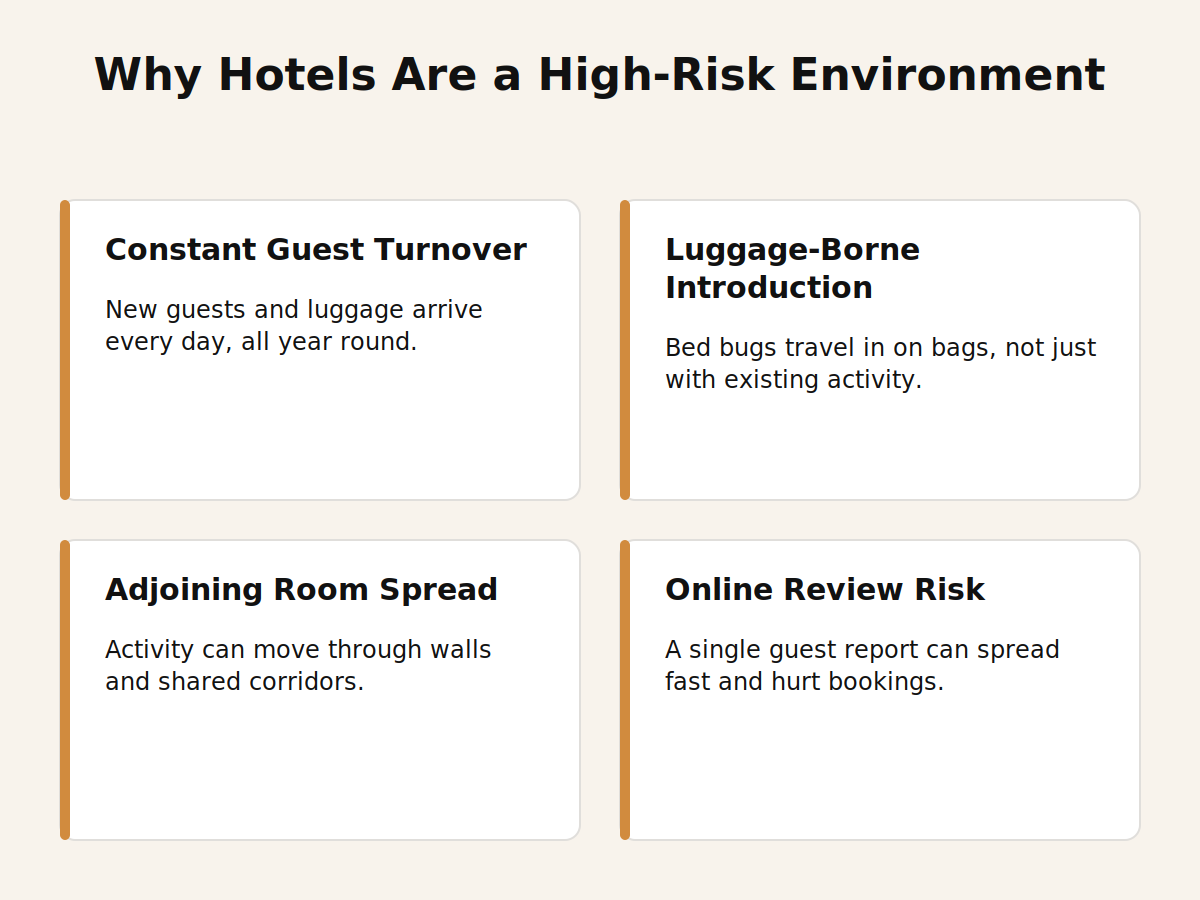
A single guest complaint about bed bugs can do more damage to a Dubai hotel than almost any other pest issue, because it plays out in guest rooms, spreads through luggage and shared walls, and often ends up in a public review before management even hears about it directly. With constant guest turnover and luggage moving in and out every day, hotels carry a level of bed bug risk that residential properties simply do not face.
Every new check-in brings fresh luggage, and bed bugs travel far more often by hitching a ride in a bag than by moving on their own. A hotel with hundreds of check-ins a month has hundreds of opportunities for an introduction, regardless of how clean the property is. Once established, activity can spread through adjoining rooms via shared walls, corridors, and housekeeping carts moving between floors.
The risk is highest in areas with dense hotel inventory and high guest turnover, such as Downtown Dubai, Dubai Marina, Deira, and Bur Dubai, where properties compete on turnaround speed between checkouts and check-ins. A tight housekeeping schedule is good for occupancy, but it also means less time to notice early warning signs unless staff are specifically trained to look for them.
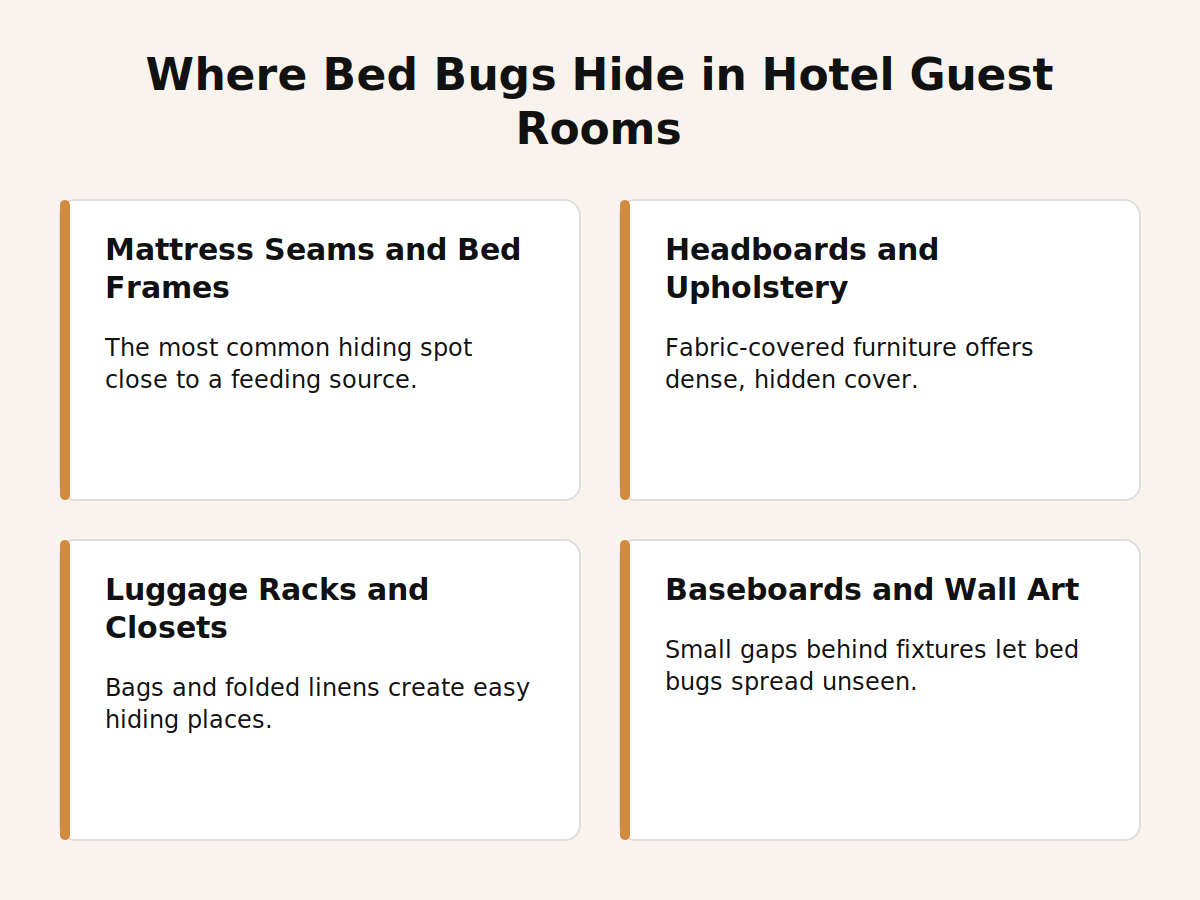
Mattress seams and the joints of bed frames are the most common hiding spots, simply because they sit closest to a sleeping guest, but bed bugs also settle into upholstered headboards, the folds of curtains, luggage racks, and gaps behind wall art and baseboards. Because most of these spots are not part of a standard housekeeping check, activity can build for weeks before anyone notices.
A bed bug mention in an online review reaches every future guest researching the property, and it tends to stay visible long after the room in question has been treated. Because the risk is reputational as much as operational, how fast and how discreetly a hotel responds to a report matters just as much as the treatment itself.
Leaving a suspected room in circulation while deciding how to respond gives activity more time to spread to adjoining rooms and more opportunities to travel out in another guest's luggage. A fast, discreet inspection as soon as a report comes in is one of the most effective ways to contain both the infestation and the reputational exposure.
Extended-stay and serviced apartment-style hotels face a related risk: guests staying for weeks at a time bring in more luggage and settle in more like a residence, which can make early signs easier to miss if housekeeping visits are less frequent than in a standard nightly-stay hotel.
Santera's technicians carry out discreet room inspections designed not to alarm guests or disrupt operations, followed by a targeted treatment protocol focused on confirmed activity and known hiding spots rather than a blanket approach. Adjoining rooms are checked to contain any spread before it becomes a wider property issue, and housekeeping teams can be trained on the early signs to watch for during routine service.
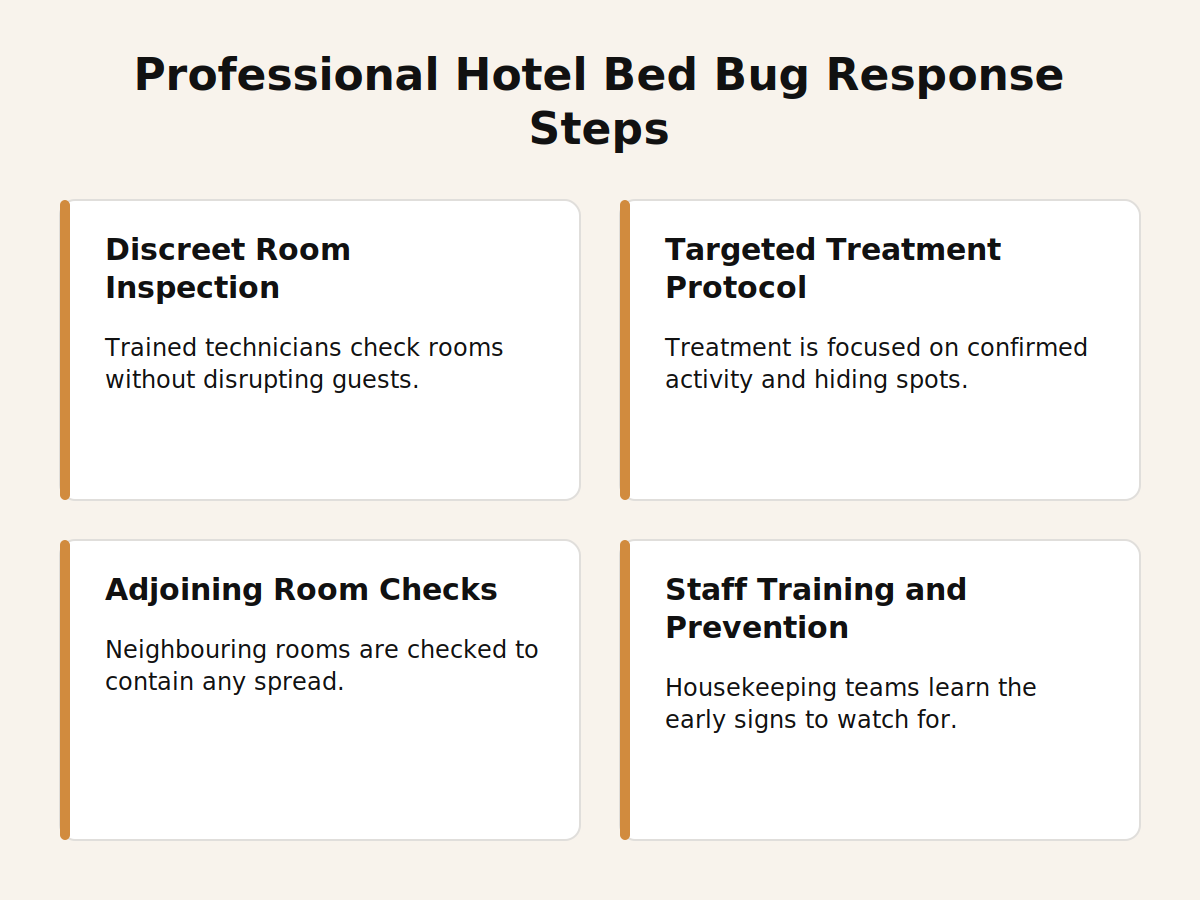
The hotels that manage bed bug risk most successfully treat it as a standing part of operations rather than a one-time reaction: staff trained to spot early signs, a clear escalation process for guest reports, and a working relationship with a pest control provider who understands hospitality timelines. That combination catches problems while they are still contained to a single room.
Yes. Bed bugs can travel through wall voids, shared plumbing chases, and connecting corridors into adjoining rooms, which is why a single confirmed room should trigger inspection of neighbouring rooms, not just treatment of the one report.
As quickly as possible. Every day a suspected room stays in circulation increases the chance of further spread to luggage, adjoining rooms, and other guests, and delays also increase the risk of the report reaching a public review before the issue is resolved.
Yes, and it is one of the most effective prevention tools a hotel has. Staff who know the early signs, such as small dark spotting on mattress seams or shed skins near headboards, can flag a room during routine cleaning long before a guest ever notices.
Turnaround depends on the extent of activity found, but Santera works with hotel operations teams to schedule treatment around occupancy needs and confirm when a room is ready to return to service.

If your hotel has a suspected or confirmed bed bug report, do not wait for it to spread or reach a review before acting. Learn more about bed bug behaviour and treatment from Santera's pest library, or book a complimentary inspection via WhatsApp for a discreet, same-day assessment of your property.