Snakes
Arabian Sand Boa in Dubai: Identification and Safety
Muhammad Saif Ullah
September 28, 2026


Finding a small, sand-coloured snake curled up near a garden bed or under a planter in a Dubai villa compound catches most homeowners off guard. In many cases, the snake in question is an Arabian sand boa, a harmless, burrowing species that is far more common on residential plots bordering the desert than most residents realise. Knowing how to recognise one, and what to do in the minutes after a sighting, turns a startling moment into a straightforward call rather than a panic.
The Arabian sand boa (Eryx jayakari) is a small, non-venomous snake adapted to loose, sandy ground across the Arabian Peninsula, including the UAE. It spends most of its life buried just under the surface, using its blunt, wedge-shaped head to push through sand while it waits for small lizards and rodents to pass by. Because it rarely moves far or fast above ground, most sightings in Dubai gardens happen by accident, when someone disturbs a sand bed, moves a planter, or waters a flowerbed the boa was resting under.
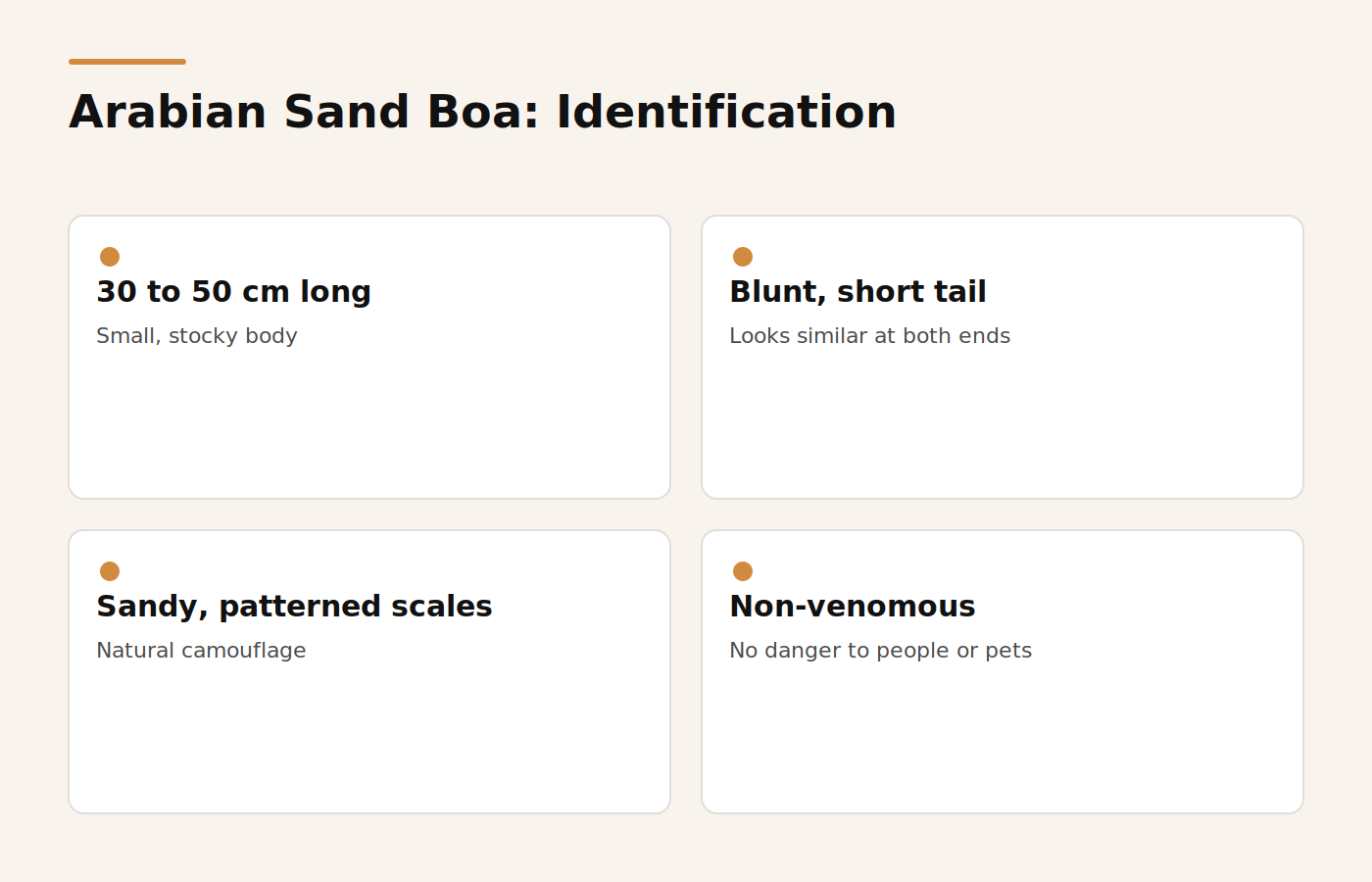
A few features set the Arabian sand boa apart from other snakes found on Dubai properties. It is short and stocky, typically thirty to fifty centimetres long, with a cylindrical body that looks almost the same thickness from head to tail. The tail itself is blunt and rounded, close enough in shape to the head that it can be genuinely difficult to tell which end is which at a glance. Its scales carry a sandy, mottled pattern that blends into loose soil, and its eyes are small and set high on a narrow head, an adaptation for a mostly underground life.
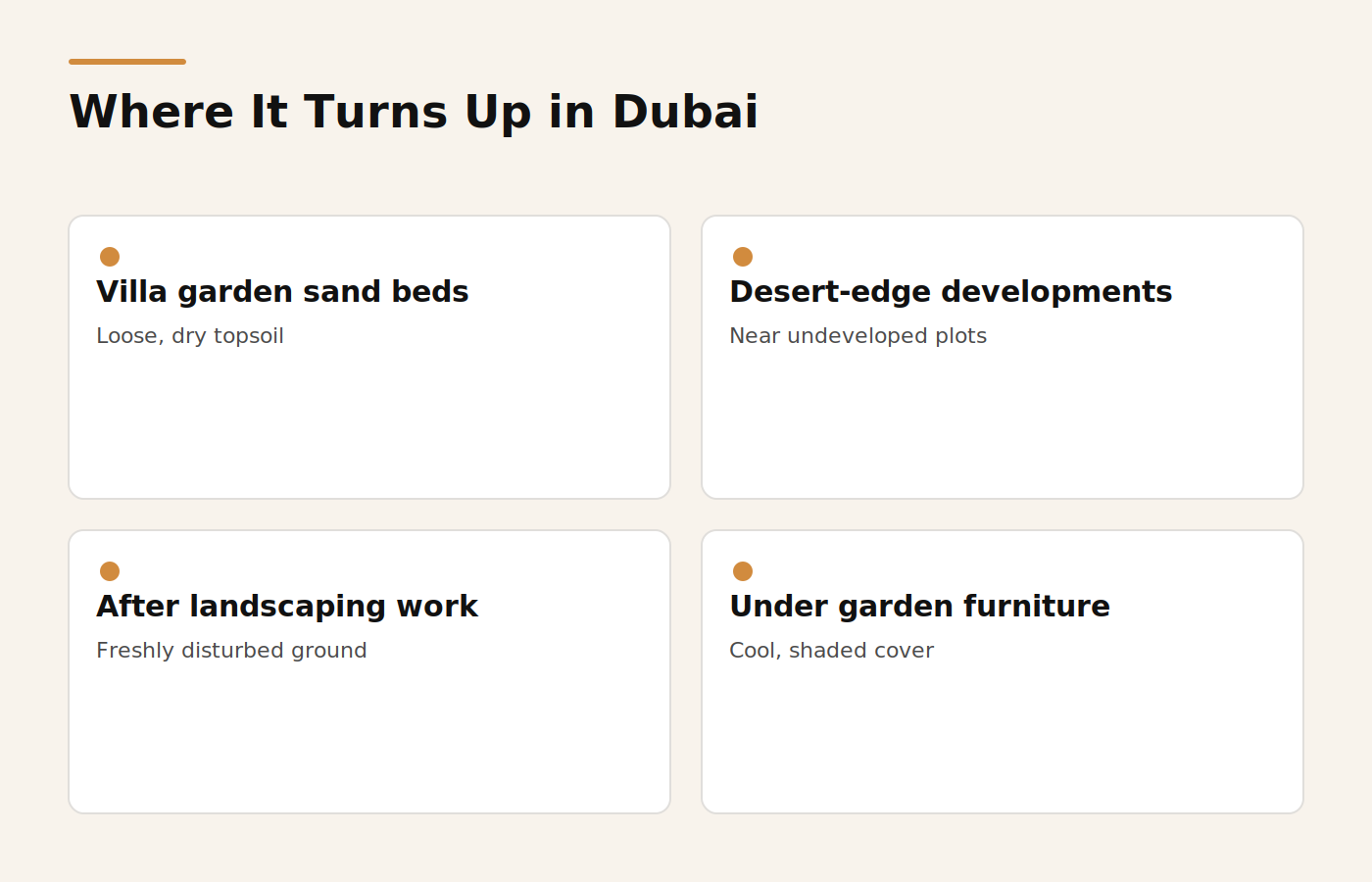
Villa communities built at the edge of undeveloped desert give sand boas easy access to the kind of ground they prefer. Sand beds, planted borders and loose topsoil around irrigation lines offer the same soft, diggable substrate the species uses in the wild, and a well-watered garden supports the small lizards that make up much of its diet. Recent landscaping work, a newly cleared neighbouring plot, or ground disturbed by construction nearby can also push a sand boa toward the nearest undisturbed patch of soil, which is often a resident's own flowerbed or the shaded ground under garden furniture.
The Arabian sand boa itself is not dangerous. It has no venom, rarely bites, and when it does, the bite is a minor, non-medical event rather than a genuine hazard. The real risk for a homeowner is misidentification. Dubai's desert-edge terrain is also home to a small number of venomous species that share a similar sandy colouring and the same ground-level habitat, and telling them apart reliably takes trained experience, not a quick look from a few metres away. That is why the safest response to any unidentified snake, sand boa or otherwise, is the same one: assume you cannot confirm the species yourself and let a professional make that call.
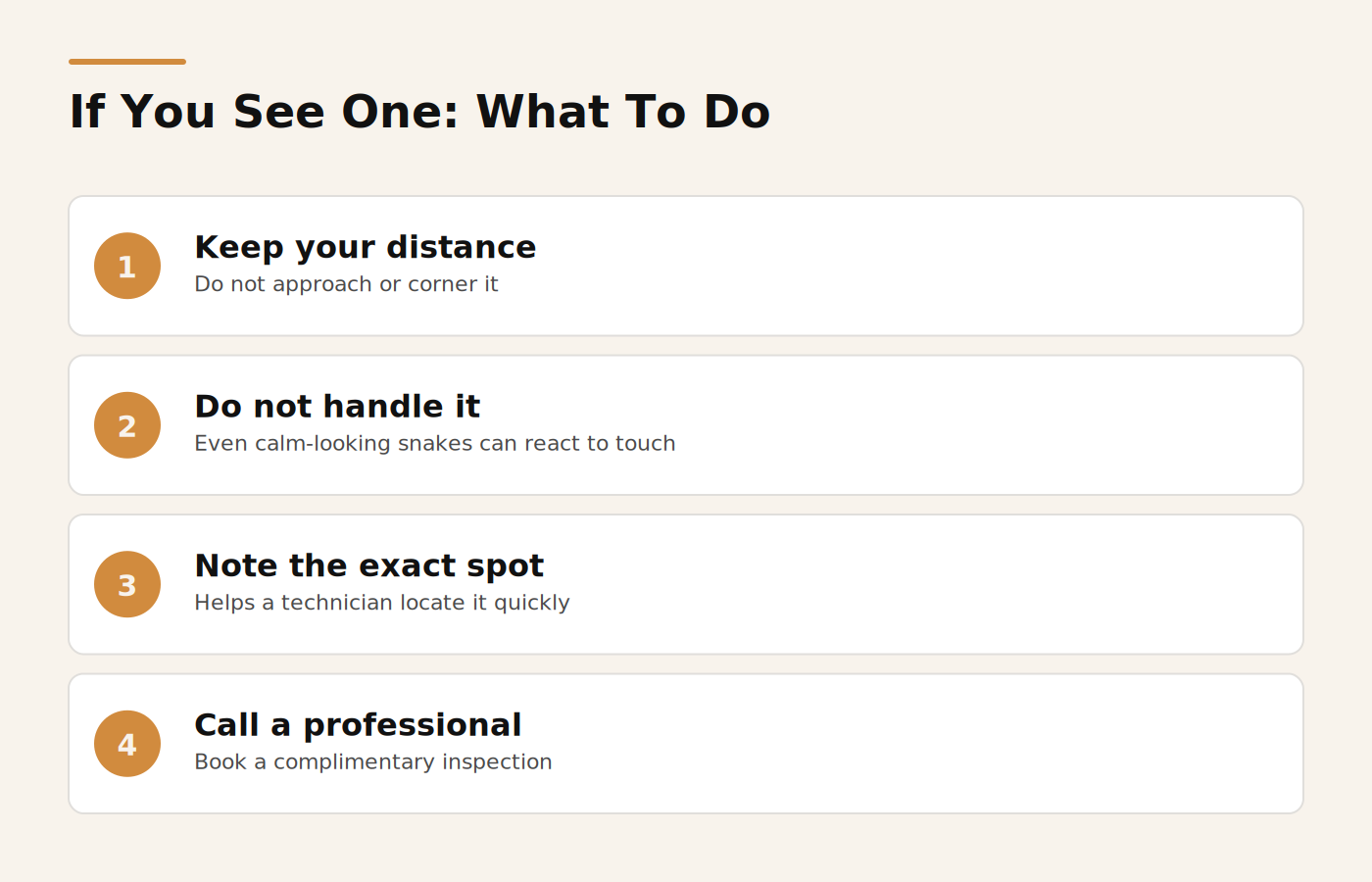
A calm, correct response protects both the household and the snake. Keep your distance rather than approaching for a closer look or a photo at close range. Do not attempt to handle, trap, or move it, since even a generally docile species can react defensively if it feels cornered. Note roughly where it was seen, near which flowerbed, wall, or piece of furniture, since this helps a technician locate it quickly once they arrive. Then call a professional rather than waiting to see if it moves on by itself.
Any snake sighting on a residential property in Dubai is worth a professional visit, regardless of how harmless the snake looks. A technician can confirm the species, check nearby sand beds, voids and garden storage for others, and advise on the small changes, such as keeping loose ground cover away from entrances or reviewing irrigation runoff, that make a garden less inviting to future visitors. Santera is Dubai Municipality certified and offers 24/7 availability with same-day service across Dubai, so a sighting does not have to mean an anxious wait until the next working day.
No. The Arabian sand boa is non-venomous and generally regarded as harmless to people and pets. It is a shy burrower that avoids contact rather than an aggressive species, though any snake can react if it is handled or cornered.
Visual identification under stress is unreliable even for experienced observers, since some venomous species share a similar sandy colouring and ground-level habitat. The safe approach for a homeowner is to treat every unidentified snake the same way: keep your distance and call a professional to confirm the species rather than trying to identify it yourself.
Villa gardens with loose, sandy topsoil give sand boas an easy surface to burrow into, and irrigation and planting nearby support the small lizards and rodents they feed on. Recent landscaping or construction on a plot, or on neighbouring desert-edge land, can also displace one toward a garden that was previously undisturbed.
No. Even a non-venomous, generally docile species should be left to a trained technician. Attempting to catch or move it yourself risks a defensive bite and can also mean the snake is placed somewhere unsuitable rather than assessed and relocated properly.
A sand boa in the garden is rarely the emergency it feels like in the moment, but it is still worth a professional look to confirm the species and check the rest of the property. Read more in our Pest Library entry on snakes. Santera is Dubai Municipality certified (License 1595993), rated 4.9 stars on Google Reviews, with 25+ years of team experience and 24/7 availability across Dubai. Call or WhatsApp us on +971 4 332 2623, email info@santera.ae, or book your complimentary inspection via WhatsApp below.