Ants
Ant Control for Dubai Warehouses and Logistics Facilities: Loading Docks, Pallet Storage and Feed Spillage
Muhammad Saif Ullah
September 13, 2026


If you run a warehouse or logistics facility in Dubai, ants rarely stay a single-spot problem. A trail shows up near a loading dock door, disappears for a few days, then reappears two aisles over inside a pallet of damaged stock. In a villa or office, that is an inconvenience. In a facility handling bulk food, beverage or FMCG goods, it is a contamination risk that can surface during an audit, and a housekeeping issue that a one-off spray will not solve at the scale of a large facility.
Warehouses and distribution centres face a different exposure to ants than most commercial premises. Dock doors open and close dozens of times a day for trucks, so the perimeter is never fully sealed the way an office or retail unit can be. Bulk goods sit on open racking or staged pallets for hours or days, often in sugar or protein-based packaging far more attractive to foraging ants than anything in a typical kitchen. The building envelope, dock levelers, expansion joints, drainage channels and perimeter landscaping strips, gives ants dozens of small, hard-to-seal gaps into a footprint that can run to tens of thousands of square feet. Dubai's heat pushes colonies to forage further for food and moisture, and the cooler, climate-controlled interior is exactly what a colony outside is trying to reach.
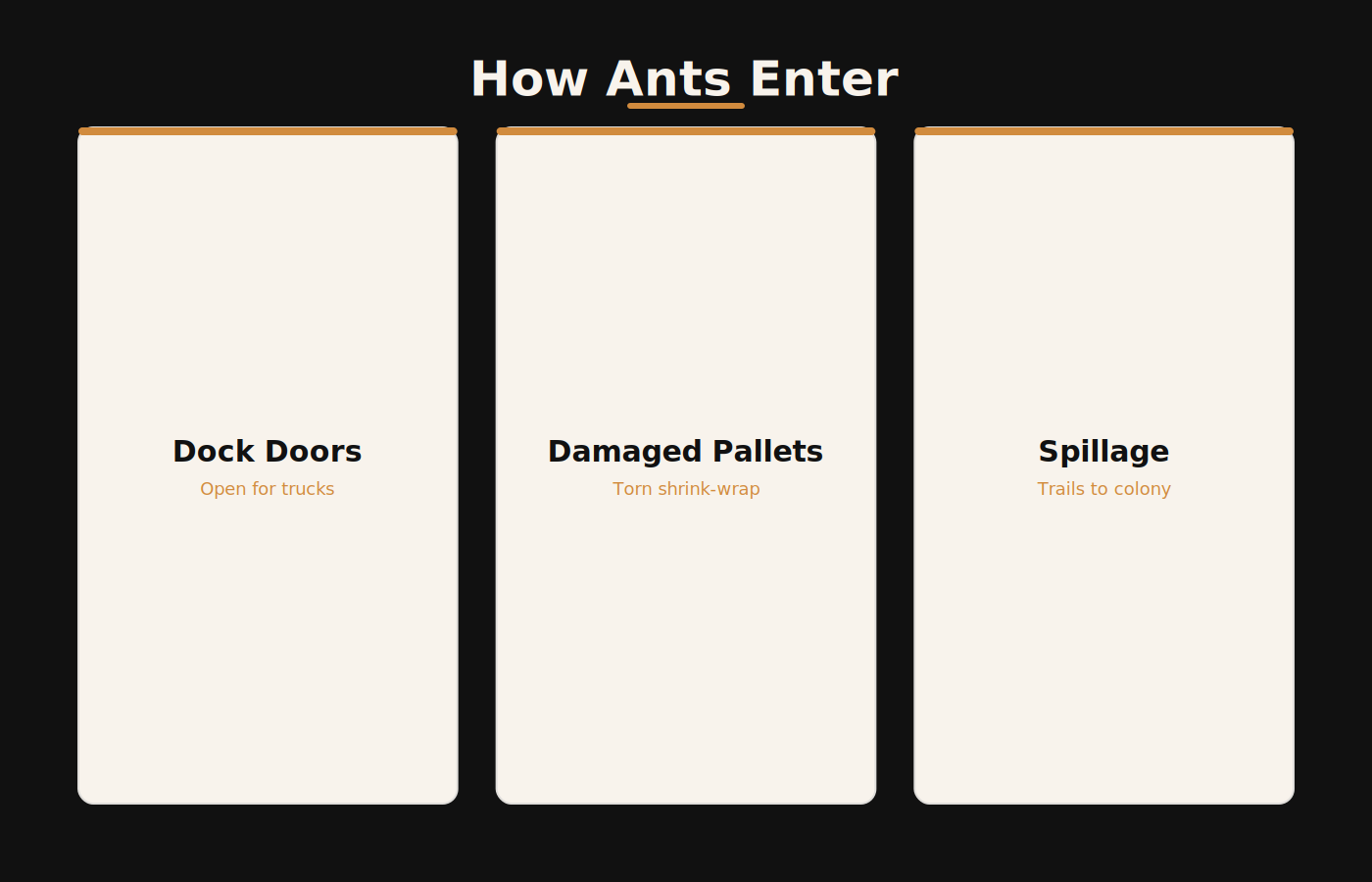
Most warehouse ant problems trace back to the same three routes. Loading dock doors left open during receiving and dispatch give direct, repeated access at floor level, and the gap around a dock leveler often stays open even when the main door is down. Damaged pallets and torn shrink-wrap allow product to leak, a punctured bag of sugar, a cracked carton of syrup or a split sack of feed creates a scent trail that a scouting ant follows back to the colony within hours. Moisture around dock levelers, floor drains and condensation lines adds the humidity ants need, especially where spillage is not fully dried.
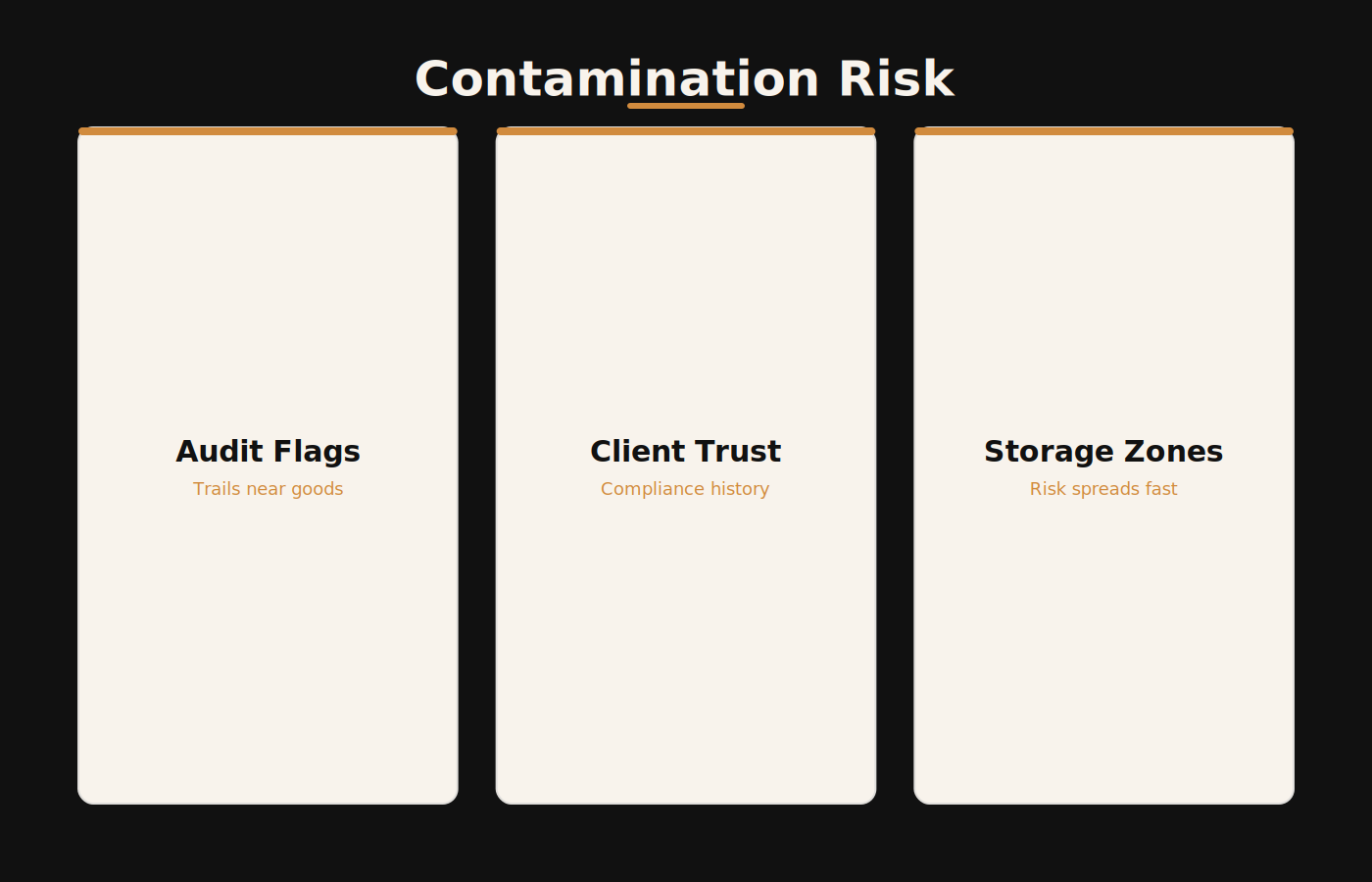
For a facility storing food, beverage or fast-moving consumer goods, an ant trail is not just unsightly, it is a documented risk. Ants moving across stored product, packaging or racking are exactly what a client compliance visit or a food-safety inspection checks for, and live activity near goods is typically logged as a non-conformance. For a third-party logistics operator, repeated findings can affect audit history and client confidence. Left unaddressed, a colony that started at one dock door can spread contamination risk across an entire storage zone as trails extend toward multiple pallet locations.
The most common mistake in warehouse ant control is treating only the visible trail. A perimeter spray kills the workers that are out foraging at that moment, but the colony itself is usually nesting somewhere untouched, under a dock apron, inside a landscaping bed against the building, or in a void behind racking. Because the queen and the colony survive, new workers are produced within days and a fresh trail simply forms along a different route to the same spillage or storage zone. At the scale of a large facility with multiple dock doors, spot-spraying one location does nothing to address the others, which is why the same complaint keeps recurring on the pest log month after month.
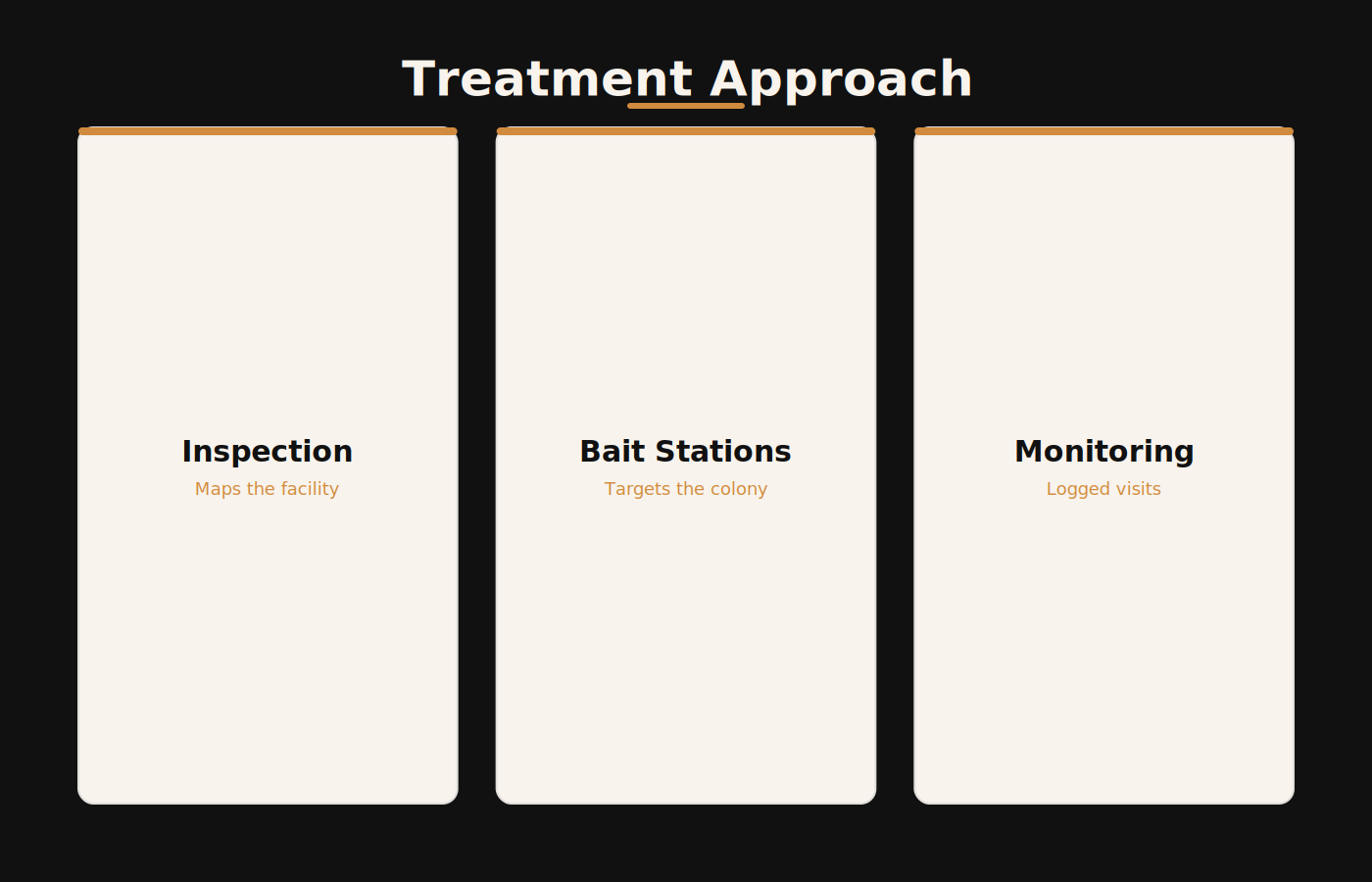
Effective ant control for a warehouse starts with a complimentary inspection that maps activity across the whole footprint, not only the area where staff first reported a trail. Santera's technicians walk the dock doors, receiving bays, pallet storage aisles, and waste or compactor areas to identify entry points and foraging patterns before placing anything. Dubai Municipality-approved bait stations are then positioned along those zones specifically, so worker ants carry bait back into the colony rather than being killed on contact, which is what reduces the population at the source. A monitoring schedule follows, with technicians returning to check station activity, adjust placements as trails shift, and log findings, giving facility managers a documented record that supports their own audit trail.
Between technician visits, warehouse staff play the biggest role in keeping ant activity down. A short receiving check, inspecting incoming pallets for torn shrink-wrap or damage before they go into general storage, catches leaks before they reach the racking. A clear spill cleanup procedure, cleaning sugar, syrup or feed spillage immediately rather than at end of shift, removes the scent trail before scouting ants can follow it back to a colony. Dock door discipline, closing doors as soon as loading finishes, and fitting door sweeps or strip curtains where doors must stay open longer, closes off the most direct entry route. A simple sighting log lets staff flag any trail to your pest control provider between scheduled visits.
Ants at a warehouse or logistics facility are a facility-wide issue, not a one-room problem, and they call for an inspection and treatment plan that matches that scale. Santera is Dubai Municipality certified, with 25+ years of team experience and same-day service available across Dubai. Read more on ant biology and prevention on Santera's Ant Pest Library page.
A dock door only needs to be open for the minutes it takes to load a truck for a trail to form, and dock leveler gaps, drainage channels and expansion joints stay open even when the door is shut. If a colony has already established outside the wall, closing the door only slows the trail, it does not remove the source.
Yes. Ant activity around stored food, beverage or FMCG goods is a standard checkpoint in client compliance visits and food-safety inspections, and live trails near product are typically recorded as a non-conformance. For a warehouse holding client-owned stock, repeated findings can affect audit history and standing with the brands storing goods there.
Perimeter spraying kills the ants foraging at the time of treatment, but the actual colony usually nests somewhere untreated, in a landscaping bed, under a dock apron, or in a wall void away from the spray. Because the colony survives, workers are produced again within days and a new trail simply forms along a different route.
It starts with a complimentary inspection mapping activity across dock doors, receiving bays, pallet storage and waste areas, not just where ants were spotted. Santera then places Dubai Municipality-approved bait stations along those zones so bait is carried back into the colony, and returns on a monitoring schedule to check activity and log findings for your compliance records.
Santera offers same-day service across Dubai, including logistics sites. After the complimentary inspection confirms entry points and the scale of activity, the technician can typically begin the baiting program the same visit, and every treatment includes a 30-day warranty with follow-up support within the agreed scope.