Ants
Ant Control for Dubai Restaurants and Cafes: Protecting Food Prep Areas and Alfresco Dining
Muhammad Saif Ullah
September 15, 2026


A single ant trail crossing the pass, the pastry counter, or an alfresco dining table can appear within minutes of food being set down in a Dubai restaurant or cafe, and it takes only one guest photo for that trail to travel further than any of it should. For food and beverage operators, ant control is not a minor housekeeping task between busy shifts, it is a food safety and reputation issue that touches health inspections, online reviews, and the confidence of every guest who sits down to eat.
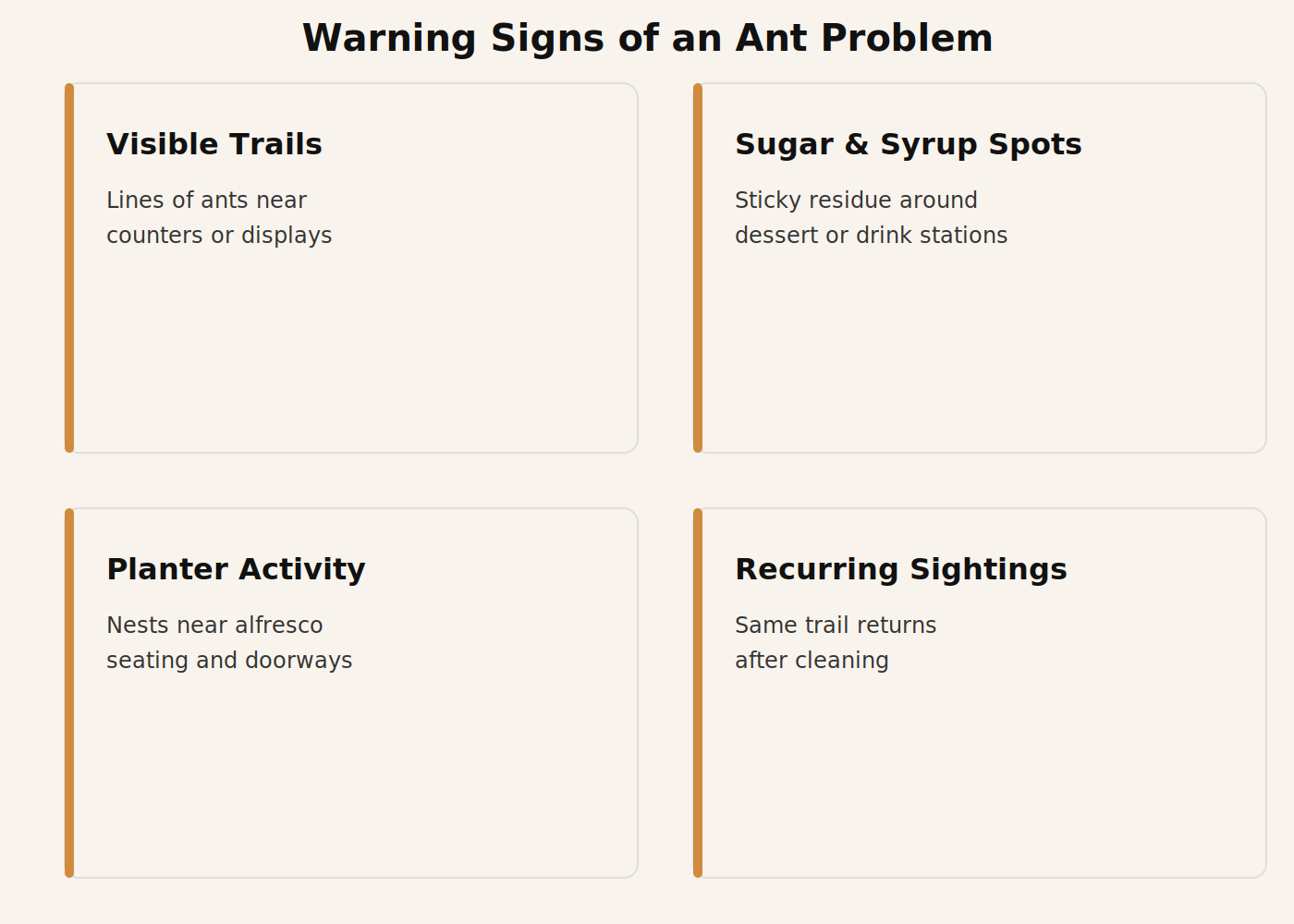
Dubai's warm climate keeps ant activity high year-round, and a working food and beverage venue offers exactly what a colony is searching for. Sugar, syrup, crumbs, and grease residue around espresso stations, dessert counters, and dining tables provide a constant food source, while landscaped planters around alfresco seating and shared building courtyards offer easy access from outside.
Add frequent door traffic at service entrances and busy dining rooms where spills are not always caught immediately, and a venue becomes far more attractive to foraging ants than a typical office or retail unit. Alfresco sections sit right at the boundary between landscaping and the kitchen, which is exactly where many trails begin.
The financial impact of an ant problem rarely comes from the ants themselves, it comes from what happens after a guest notices. A trail crossing a table or counter during service is the kind of moment guests photograph and share, and it is far harder to undo than it was to prevent. Diners tend to associate a single sighting with the whole kitchen, even when everything else about the visit was excellent.
There is also a compliance dimension specific to Dubai. Food safety inspections across the emirate treat pest activity, ants included, as a serious issue, and a documented problem can affect a venue's standing during a health inspection. For restaurant and cafe operators, protecting the guest experience and protecting the license are the same task.
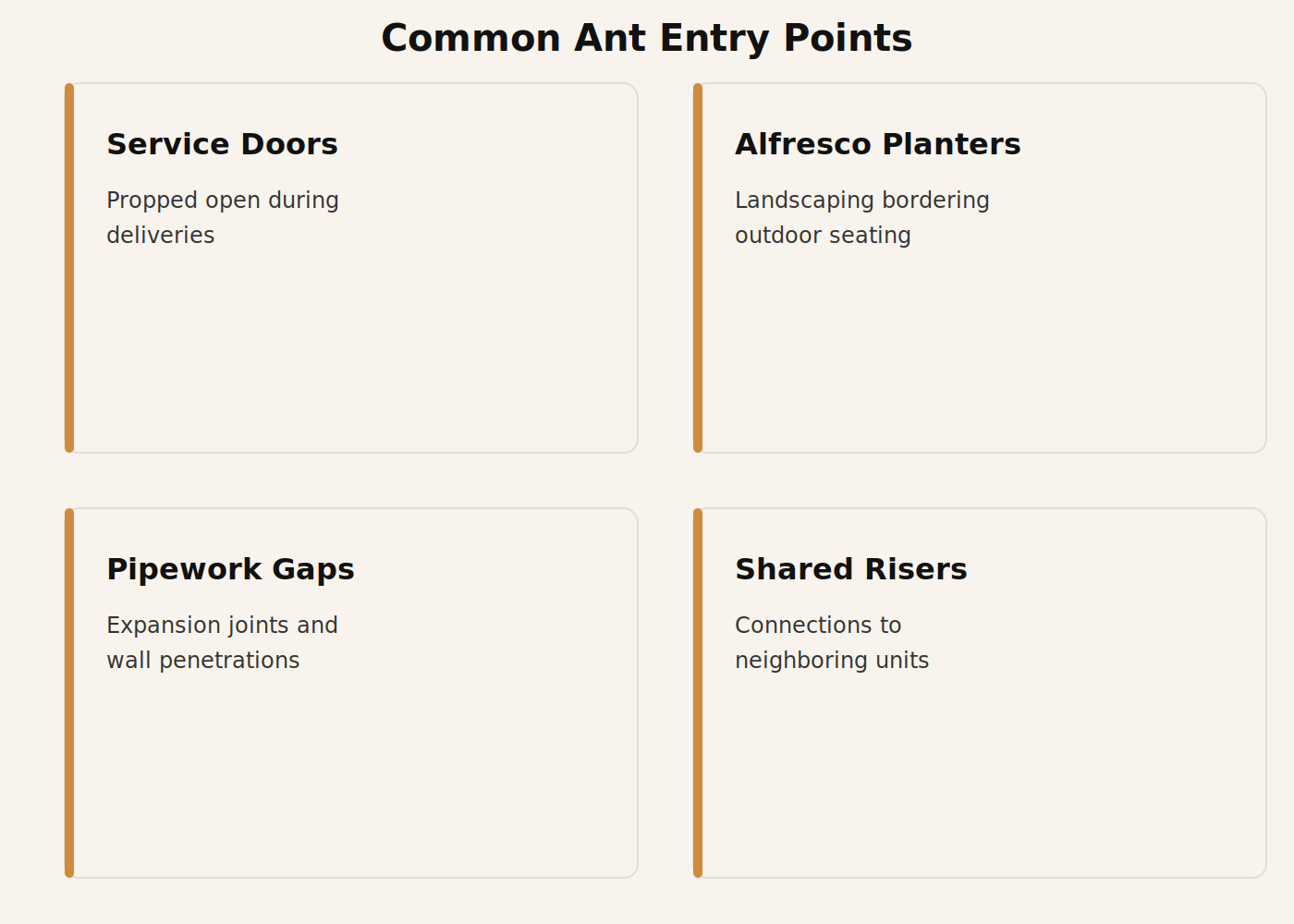
Ants move into Dubai food and beverage venues through ordinary, everyday routes. Service doors propped open during deliveries, gaps around pipework and expansion joints, and planters or landscaping bordering alfresco seating all offer a path inside. Shared risers and service corridors in mixed-use buildings can also connect a venue to neighboring units.
Once inside, activity concentrates around pastry and dessert display cases, syrup and sugar storage, dishwashing stations, and the underside of counters where spills collect unnoticed. Because trails follow a scent path rather than a random search, a colony that finds one reliable food source keeps sending workers back until that source and the entry point are both addressed.
For background on ant behavior and species common in Dubai, see our full pest library guide to ants.
Dubai Municipality's food safety framework expects restaurants and cafes to demonstrate active pest management rather than reacting only after a trail is spotted. Inspectors look for evidence of a structured programme: sealed entry points, clean storage areas, organized display cases, and records showing a licensed provider is engaged on a recurring basis.
Operators who can produce that documentation during an inspection are in a materially stronger position than those relying on ad hoc treatment after a complaint. A Dubai Municipality certified pest control partner should be able to provide the reporting a food safety audit expects, alongside the treatment itself.
Retail sprays only affect the ants they directly contact, and spraying a visible trail can actually make some ant species harder to manage. Certain species respond to disturbance by budding into multiple smaller colonies that scatter through a building rather than staying in one place, turning a single trail into several. Sprays used near food prep surfaces or open displays also create their own food safety risk in an active venue.
Off-the-shelf bait stations can help in isolated cases, but placed without knowing which species is present, they often remove only the trail you can see. A working restaurant or cafe needs a targeted programme that identifies the colony and its food source, applied by technicians who understand food and beverage operations.
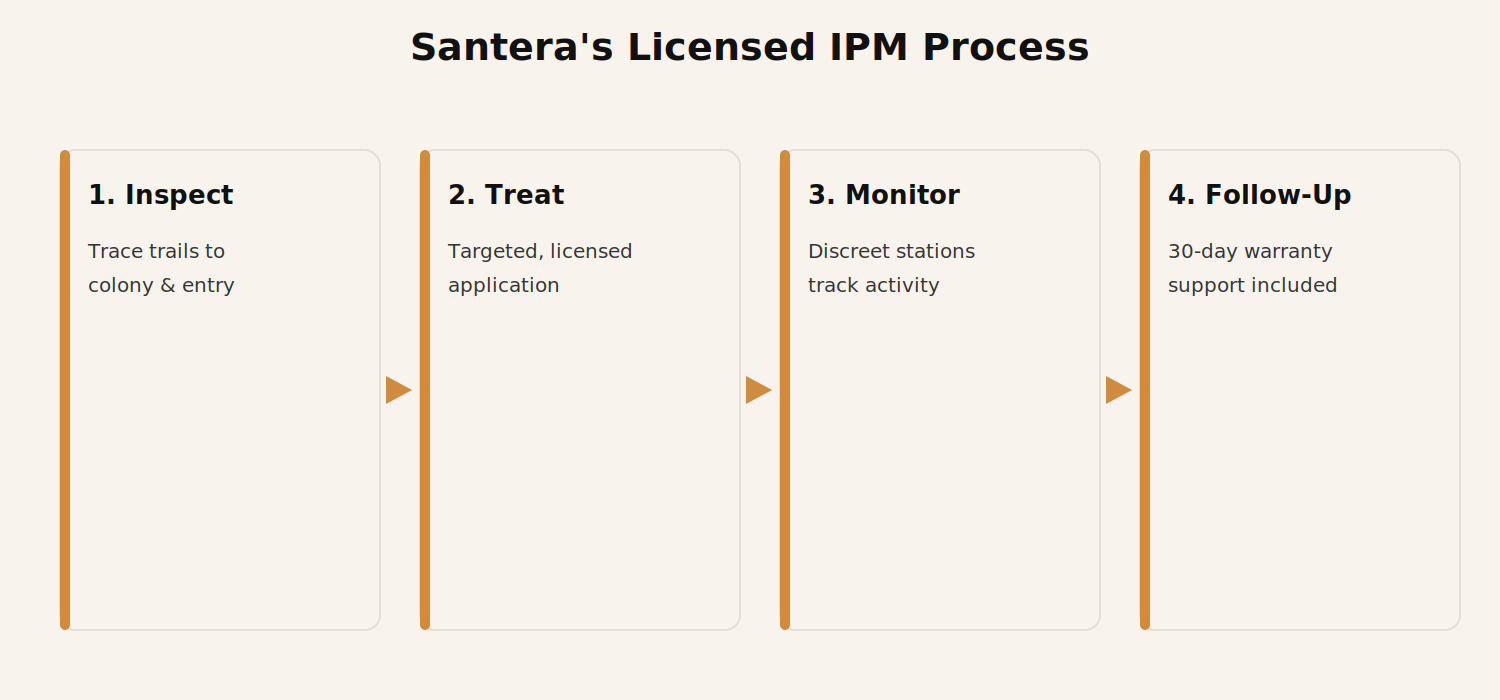
Santera's approach to commercial ant control follows an integrated pest management (IPM) process built around inspection, treatment, and monitoring rather than a single visit. A technician begins with a detailed inspection of display cases, storage areas, service entrances, and alfresco seating to trace trails back to their source and identify the species involved.
Targeted treatment then follows using Dubai Municipality-approved professional products applied specifically to identified colony sites and access points, avoiding the spray-and-scatter approach that can make some ant problems worse. Every visit includes a 30-day warranty with follow-up support for continued activity of the same pest within the agreed scope, and our team brings 25+ years of combined experience and a 4.9 star Google Reviews rating built on more than 10,000 treatments across Dubai.
Treatment alone rarely holds in a live food and beverage venue, because new deliveries, new spills, and new staff arrive every shift. A durable prevention plan pairs professional treatment with simple habits your team can maintain: wiping down syrup and sugar stations at the end of each shift, keeping planters and landscaping trimmed back from doors and windows, sealing gaps around service entrances, and checking display cases for spills before closing.
Venues that combine a recurring programme with these habits consistently see fewer trails and stronger inspection results than those treating pest control as a one-time fix. A short staff briefing on what to look for is often the difference between catching a trail early and discovering it in a customer review.
Follow the trail backwards from the food source rather than spraying what you can see. Look along skirting boards, behind the pastry counter, around syrup and sugar storage, and where service doors meet outdoor seating. Ants leave a scent trail other workers follow, so the visible line usually leads straight back to the entry point and food source feeding the colony.
Yes. Dubai Municipality food safety inspections treat any pest activity, including ant trails near food prep or storage, as a non-conformance that can affect a venue's food safety grading. Documented, licensed pest control is part of demonstrating ongoing compliance during a routine or surprise inspection.
Retail sprays only kill the ants they touch directly and can trigger some species to split into multiple smaller colonies, spreading the problem further through the venue. Sprays near food prep surfaces also carry their own food safety risk. A licensed integrated pest management (IPM) programme targets the colony and entry points rather than the visible trail alone.
Most restaurants and cafes in Dubai benefit from a scheduled programme of recurring visits and monitoring rather than a single treatment, since warm weather, outdoor seating, and constant food handling create year-round pressure. Your technician can recommend a frequency based on your venue's layout and service hours.
Protecting your guests starts with protecting the counters and dining areas they sit at. Santera is a Dubai Municipality certified pest control provider with 25+ years of team experience, a 4.9 star Google Reviews rating, and more than 10,000 treatments completed across Dubai, backed by a 30-day warranty on every commercial programme. Book your complimentary inspection via WhatsApp, same-day service available across Dubai, and let our team build an ant control plan around your venue's real service hours.