Ants
Ant Control for Dubai Hotels: Protecting Guest Rooms, Breakfast Buffets and Poolside Bars
Muhammad Saif Ullah
September 13, 2026


A single line of ants crossing a breakfast buffet or a guest room windowsill can undo weeks of good reviews for a Dubai hotel. Between multiple food and beverage outlets, poolside bars, room service pantries and irrigated landscaping, hotels offer ants more entry points and more reasons to stay than almost any other commercial property in the city. For facility and F&B managers, ant activity is not a minor housekeeping issue. It is a guest-experience and food-safety risk that needs a structured, hotel-appropriate response.
Dubai's warm, humid climate keeps ant colonies foraging throughout the year, with no seasonal dormancy to rely on. A hotel compounds that pressure by combining several ant attractants under one roof: a breakfast buffet running daily, a pool bar serving sugary drinks, room service trays left outside doors, and landscaped gardens or planters that are irrigated on a schedule. Where a single restaurant might manage one or two of these draws, a hotel manages all of them at once, often across a large footprint with many independent entry points along the building's perimeter.
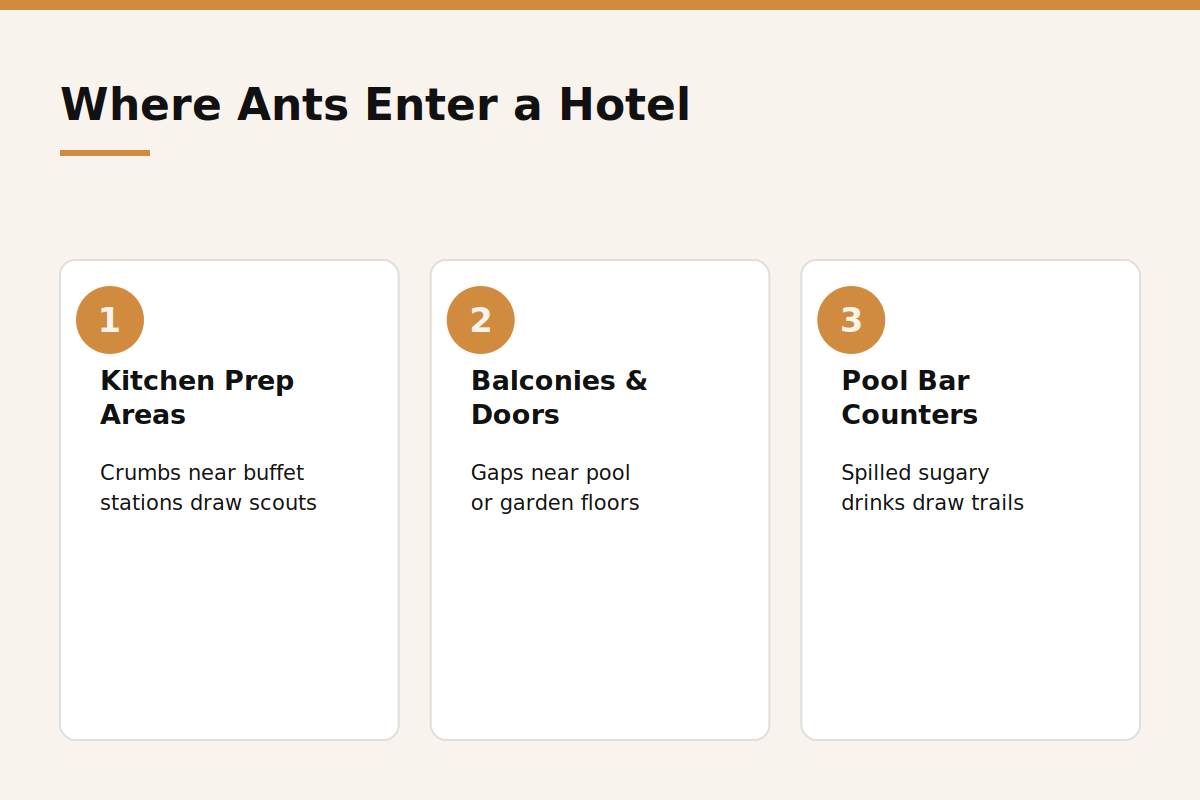
Ant trails in hotels tend to follow predictable paths once a facility team knows where to look. Kitchen and back-of-house prep areas are a frequent starting point, since crumbs and spills near buffet stations draw scout ants that quickly recruit a trail. Guest room balconies and sliding doors are another common route, especially on lower floors near gardens or pool decks, where small gaps in door seals let trails move indoors unnoticed. Pool bar counters and outdoor lounge areas, with their constant supply of spilled sugary drinks, are a third hotspot that facility teams should not overlook.
Several ant species are regularly reported in Dubai hospitality settings, and they do not all behave the same way. Some form long, visible trails across open counters and floors, making them easy to spot but frustrating for guests to see repeatedly. Others nest inside wall voids or landscaping beds and only send out small foraging parties, so a hotel may have an established colony well before staff notice a pattern. Identifying which type is present matters, because the wrong response, such as disturbing a nest without a proper plan, can cause a colony to scatter and spread the problem to new areas of the property.
Retail ant sprays are designed for a single kitchen counter, not a property with continuous food service, guest traffic and strict hygiene audits. Spraying near a buffet line or pool bar is rarely appropriate, and surface sprays often only kill the ants that are visible while leaving the nest and its queen untouched. Within days, a new trail reappears in the same spot or a nearby one, and staff are left repeating an approach that never addresses the source colony. In a hotel, this cycle also risks guest-facing incidents at the exact moments when the property is busiest, such as during breakfast service.
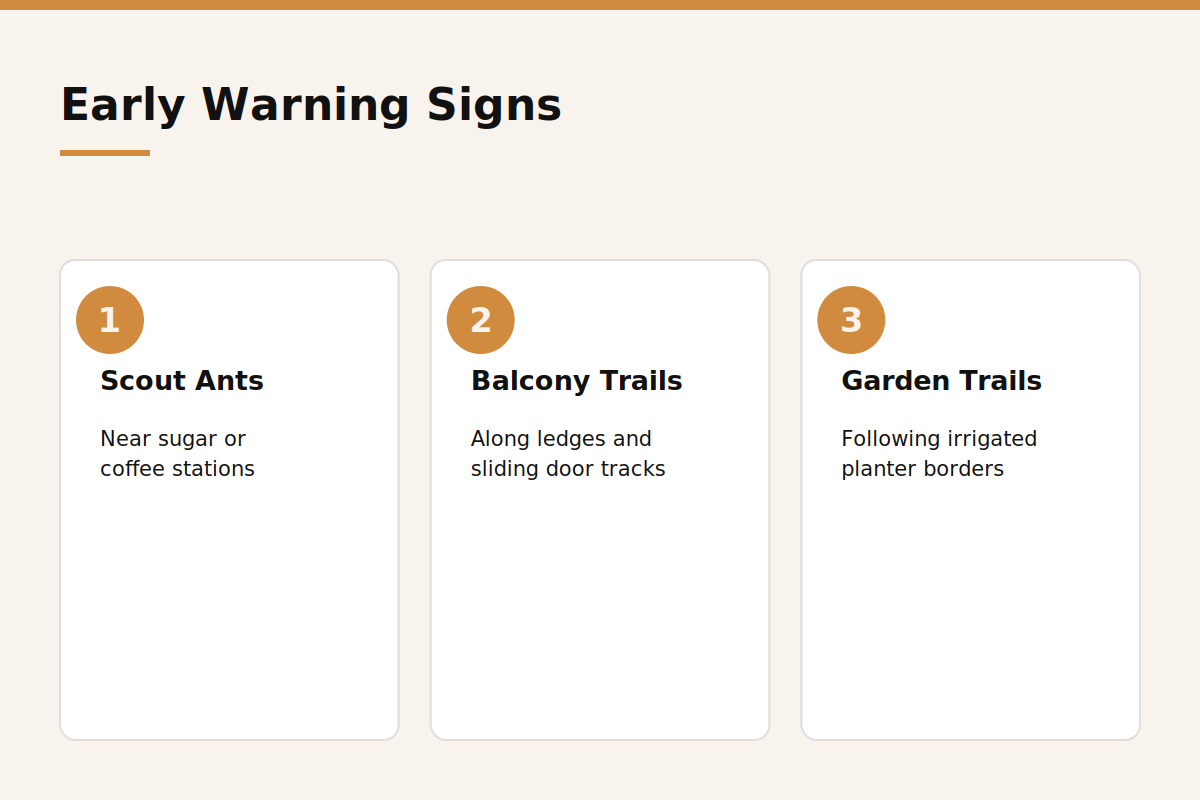
Early signs are usually subtle. A few ants near a sugar dispenser or coffee station, a scattering of scout ants on a room's balcony ledge, or trails following expansion joints near irrigated planters can all indicate a colony is establishing itself nearby. Facility teams that log and act on these early signs, rather than waiting for a guest complaint, generally resolve the issue with far less disruption than teams that respond only after a visible trail reaches a public area.
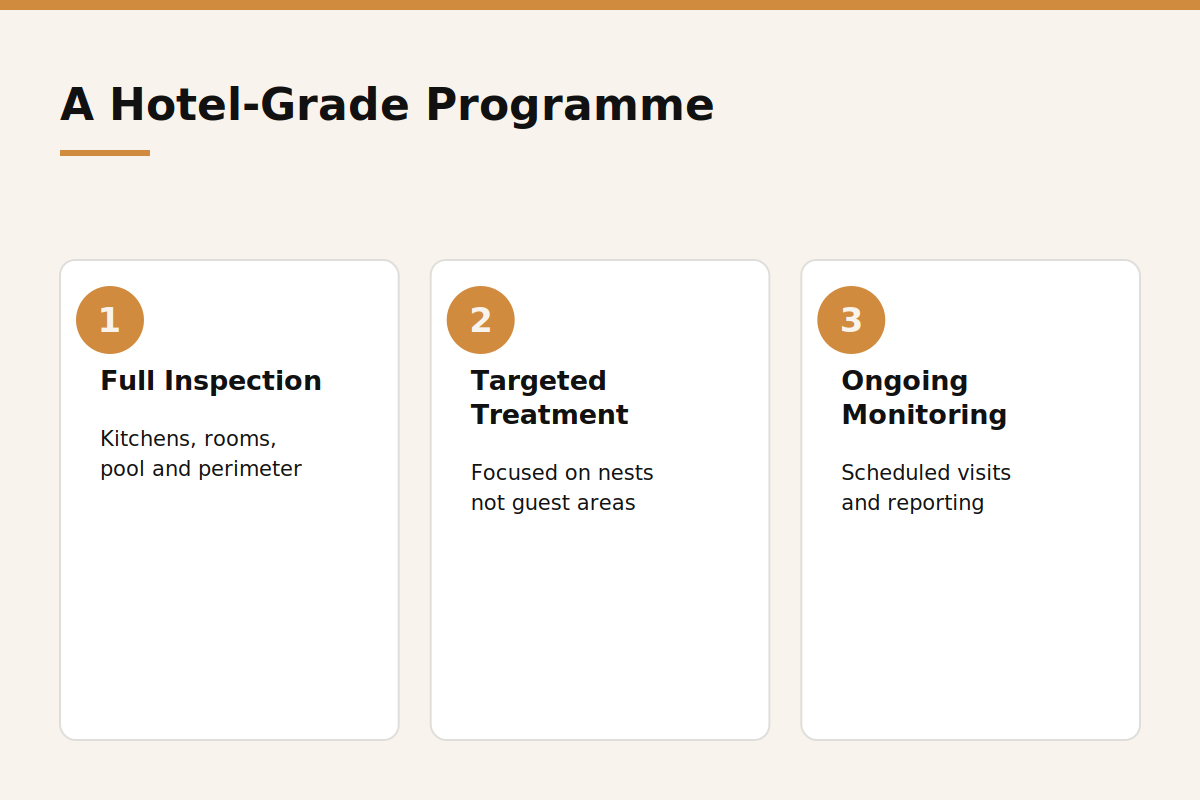
A hotel-appropriate ant control programme starts with a full property inspection, covering back-of-house kitchens, guest floors, pool and landscaping areas, and the building perimeter, to trace trails back to their source rather than treating only the visible symptom. From there, a Dubai Municipality certified technician applies targeted treatment methods suited to a hospitality environment, focusing on nesting and entry points rather than open surfaces used by guests or staff. Ongoing monitoring and scheduled follow-up visits then help confirm the colony has been addressed and catch any new activity before it reaches a guest-facing area again.
Because a hotel operates every day of the year, treatment scheduling is built around service hours, housekeeping rounds and event calendars, so operations are not interrupted. This is one of the clearest differences between a professional programme and a reactive, DIY response: the work is planned around the property, not the other way around.
Dubai's warm climate keeps ant colonies active year round, and a hotel offers constant food sources across breakfast buffets, room service trays, pool bars and staff canteens. Even a spotless property has dozens of entry points, from irrigation lines to sliding balcony doors, so cleaning alone rarely closes every route in.
Yes. A hotel-grade programme is scheduled around service hours and uses discreet, targeted placements rather than open spraying near food preparation or dining areas, so operations continue normally while treatment takes effect.
A single guest photo of ants on a breakfast table or in a room can be posted within minutes and stay visible on review platforms indefinitely. Facility teams generally treat any guest-facing sighting as urgent, not routine.
Irrigated landscaping, planters and pool-deck greenery are common staging grounds for ant colonies in Dubai hotels. Trails often start outdoors and follow moisture or food odours through doors and expansion joints into guest-facing areas.
Most Dubai hospitality properties schedule recurring inspections rather than waiting for a visible trail, since early detection around buffet lines, bars and landscaping is far easier to manage than an established colony.
Ants in a hotel are rarely just a housekeeping note. They are a signal worth acting on before a guest does it for you. Santera is Dubai Municipality certified and works with hospitality teams across the city to trace ant activity back to its source and keep it from returning. For more on how professional treatment differs from DIY approaches, see our Pest Library page on ants. To arrange a complimentary inspection scheduled around your property's service hours, reach out on WhatsApp.