Ants
Ant Control in Al Qusais: Why Older Villas and Apartment Blocks Keep Getting Reinfested
Muhammad Saif Ullah
September 13, 2026


If you live in one of Al Qusais's older villas or low-rise apartment blocks, a thin line of ants marching across the kitchen counter or along a bathroom skirting board is a familiar, frustrating sight. Many residents wipe the trail away, spray whatever is under the sink, and assume the problem is solved, only to see a new trail appear a few days later in a different room. In Dubai's climate, and especially in a neighbourhood like Al Qusais where mature gardens, shared boundary walls, and decades-old plumbing sit close together, ant colonies rarely disappear on their own. Understanding why they keep returning is the first step to actually getting rid of them.
Al Qusais is one of Dubai's older residential districts, with a mix of independent villas, small apartment buildings, and courtyard-style homes built well before many of the newer master communities. That age works against pest control in a few specific ways. Foundations and boundary walls have had years to develop hairline cracks and expansion gaps. Garden irrigation systems, especially older drip lines and soak-away pits, keep soil consistently moist even through the hottest months, which is exactly the microclimate many ant species prefer for nesting. And because plot sizes in Al Qusais tend to be generous, with shared or adjoining garden walls between neighbouring villas, a colony nesting on one property can easily forage into several homes at once.
A visible ant trail is simply the most obvious evidence of a much larger, hidden colony. Worker ants leave a pheromone scent trail between the nest and a food or water source, and other workers follow it. Cleaning the counter or spraying the visible ants disrupts that one trail temporarily, but the nest, which can hold thousands of workers along with a queen, remains untouched underground or inside a wall cavity. Within a day or two, scouts find a new route and the trail reappears, often in a slightly different spot, which is why so many Al Qusais households describe the problem as "coming back in a new place every time."
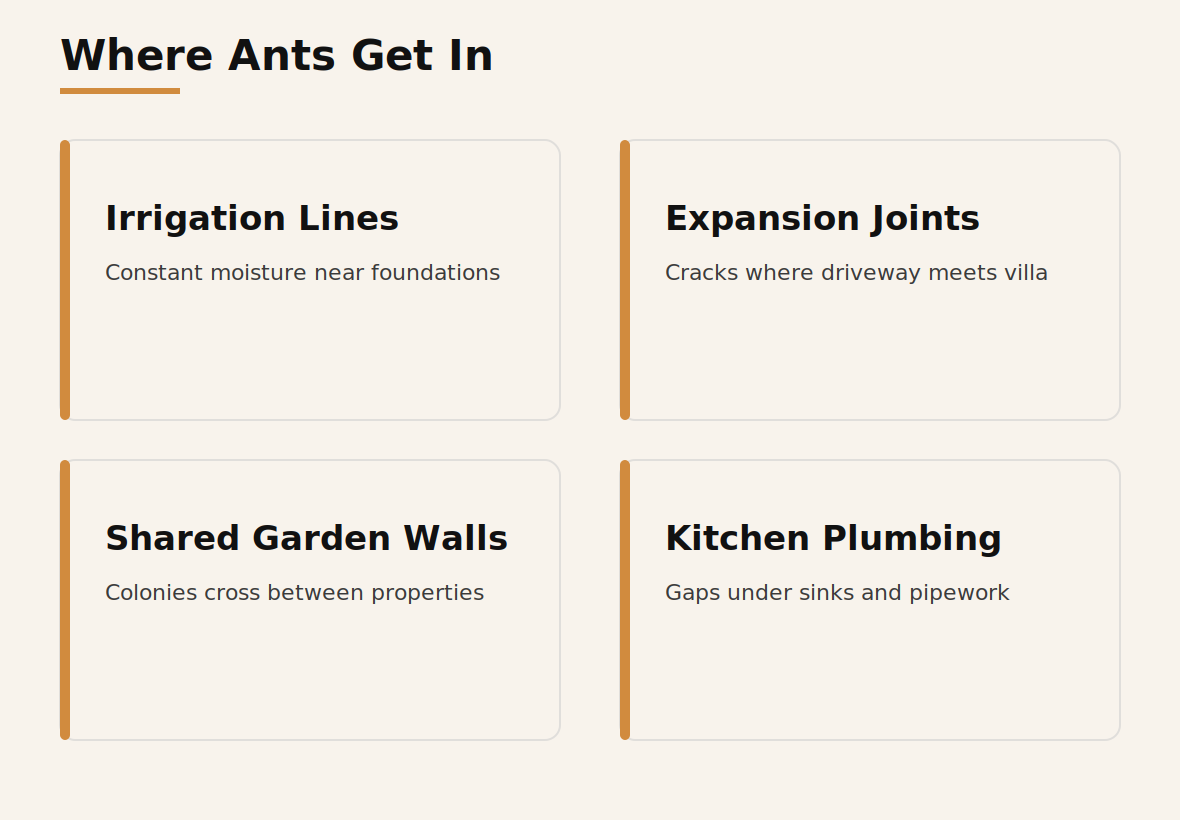
In our inspections across Al Qusais, a handful of entry points come up repeatedly. Expansion joints where the villa's foundation meets the driveway or garden paving are a frequent route, along with gaps around outdoor taps and irrigation valve boxes. In apartment blocks, ants often travel through shared risers and conduit gaps between units, which is why a resolved infestation in one apartment can reappear if a neighbouring unit is left untreated. Kitchen plumbing penetrations under the sink and gaps around window and door frames that have shrunk slightly with age round out the most common access points we find during inspection.
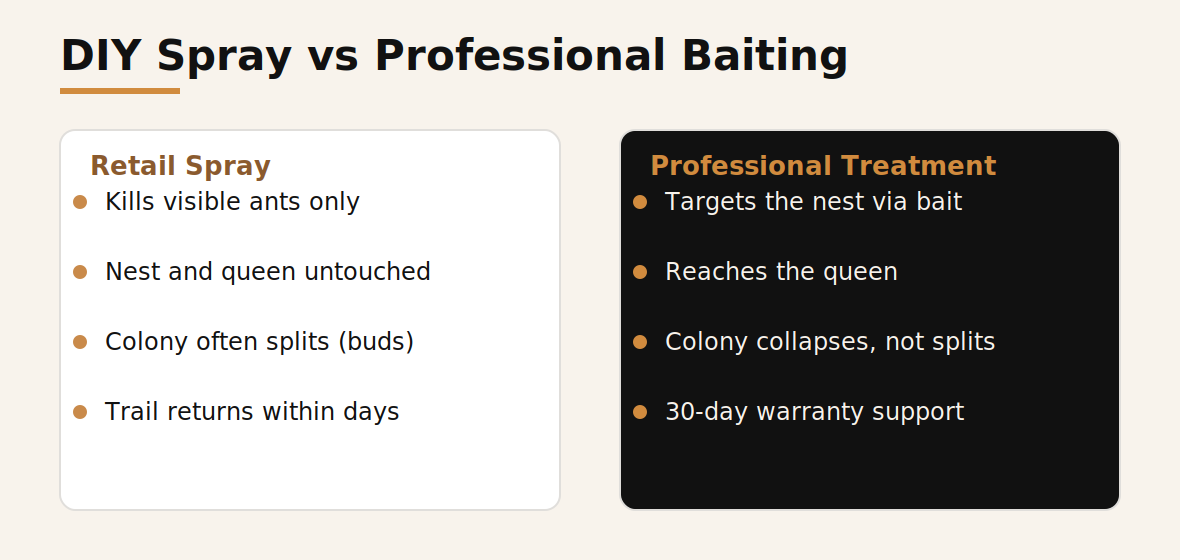
Retail ant sprays are designed to kill on contact, and they do that well for the ants they reach. What they do not do is reach the nest itself. Worse, some contact sprays and repellent formulas cause a stressed colony to "bud," splitting into two or more smaller colonies that relocate and continue foraging from new locations. A household that has sprayed repeatedly over several months, only to see activity spread to additional rooms, is often describing exactly this pattern. Targeted, non-repellent baiting that worker ants carry back to the nest is far more effective at reaching the queen and eliminating the source colony rather than just the ants visible on the day of treatment.
A proper ant inspection in an Al Qusais property looks beyond the kitchen counter. It typically covers the garden perimeter and irrigation lines, foundation and driveway expansion joints, roof and eaves where carpenter-type ants can nest in damp timber, and shared boundary walls where a neighbouring property's colony may be the actual source. Identifying the species matters too, since bait formulation and placement differ for sugar-feeding versus protein-feeding ants, and a generic approach often fails to draw enough worker traffic to be effective.
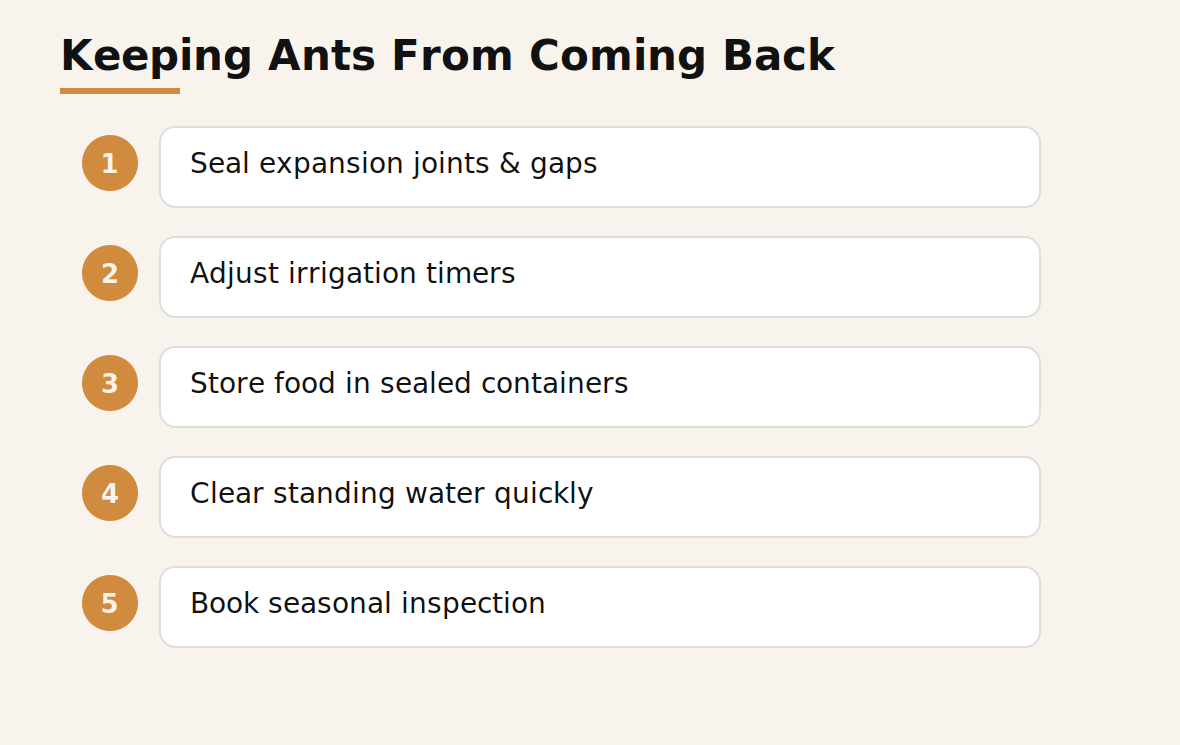
Once an active colony has been treated, keeping ants from re-establishing comes down to a few consistent habits: sealing expansion joints and gaps found during inspection, adjusting irrigation timers so soil near the foundation is not kept constantly saturated, storing food in sealed containers, and addressing any standing water quickly. None of these steps replace professional treatment for an active infestation, but they meaningfully extend the time between visits and reduce the chance of a colony from a neighbouring property finding a way back in.
For background on the species commonly found in UAE homes and gardens, see Santera's Ants pest library page.
Most Al Qusais properties have several possible entry points at once, including irrigation lines, shared garden walls, and expansion joints in older concrete. Wiping away a visible trail only removes the scent marker on the surface; the colony and its nest, usually hidden in a wall cavity or garden bed, are untouched and will send out new scouts within days.
Most household ants in Dubai are a hygiene and nuisance concern rather than a medical one, contaminating food surfaces and packaging. Some species can deliver a bite or sting, so pets and young children should not be left to interact with an active trail while professional treatment is arranged.
Retail sprays kill the ants they touch but rarely reach the nest, and disturbing a colony without targeting the queen often causes it to split into several smaller colonies, making the problem worse. A professional inspection identifies the nest location and species before any treatment is applied.
Visible activity typically drops within the first few days as the colony carries treated bait back to the nest. Santera's standard visit includes a 30-day warranty with follow-up support if activity continues within the agreed treatment scope.
Santera is a Dubai Municipality certified pest control provider serving Al Qusais and the wider city, with over 25 years of team experience and more than 10,000 treatments completed. If ants keep returning to your villa or apartment, our technicians will identify the actual entry points and nest location before recommending treatment.