24/7 Pest Control in the UAE

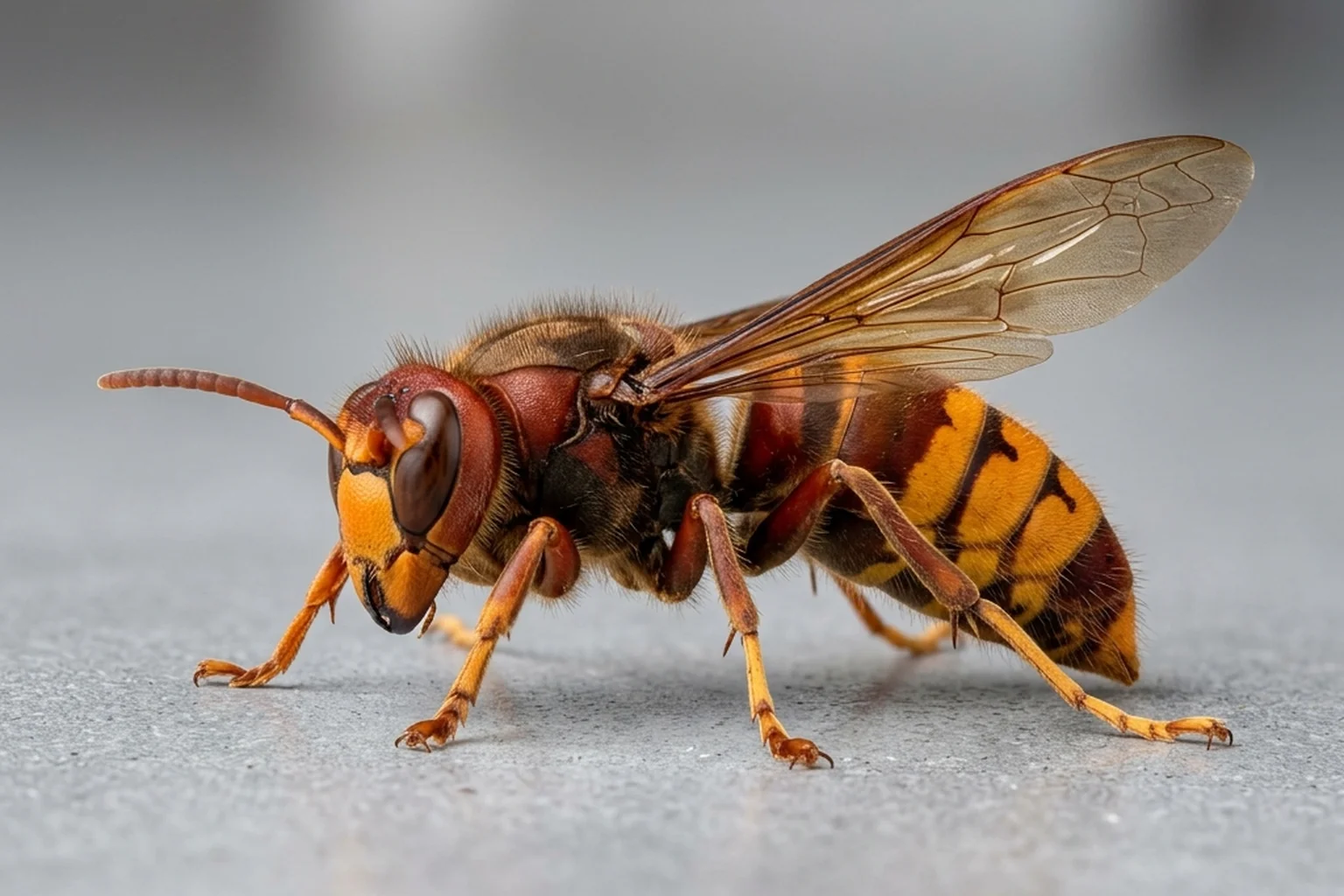
Wasps and hornets are winged stinging insects characterized by a slender waist (petiole), two pairs of wings, and a lack of dense body hair, but in Dubai you are highly likely to encounter species that range from massive, reddish-brown and yellow social predators (Oriental Hornet, 25–35mm) to slender yellow-bodied paper-nest builders (Paper Wasp, 15–20mm). Colors range from bright gold-yellow to dark metallic blue-black (Mud Dauber), and their highly protective swarming behavior around paper or clay nests is a key indicator of their presence. Correct species identification is the absolute first step to effective control—because social, highly aggressive hornets nesting inside wall cavities require high-hazard nighttime extraction, whereas solitary mud-building wasps require simple physical removal and structural sealant.
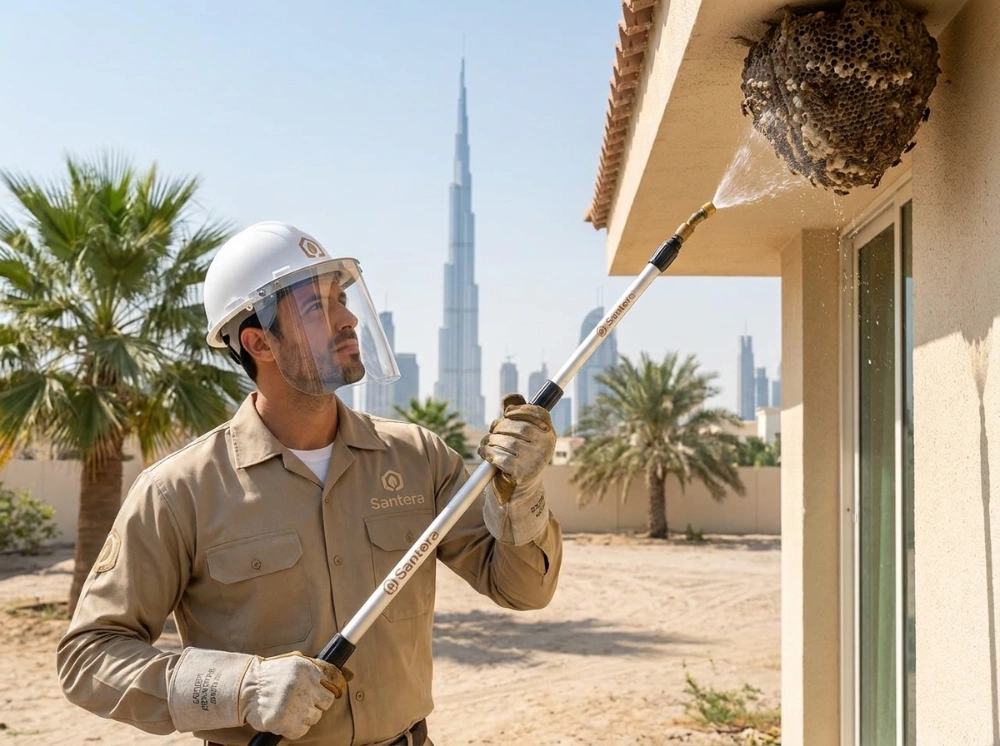
How Santera Help Get Rid Of Wasps & Hornets
Wasp and hornet nests on Dubai villa eaves, pergolas, and AC recesses present a severe health threat—these territorial social insects defend their nests aggressively, launching swarm attacks that deliver highly painful, multiple stings. DIY spraying with supermarket aerosols or trying to knock down nests with brooms is extremely dangerous; disturbed colonies will attack immediately, and their venom can trigger severe, life-threatening anaphylactic shock in sensitive individuals.
Santera's Dubai Municipality-licensed technicians provide safe, professional, and guaranteed wasp and hornet nest removal services. Equipped with heavy-duty protective bee suits and specialized long-reach injection systems, we target active nests using professional-grade fast-acting aerosols and insecticidal dusts. We perform treatments during dawn or dusk when the entire colony is inside, ensuring complete eradication, followed by complete physical nest removal and surface sanitization. For commercial facilities, restaurants, and luxury resorts across Dubai, all treatments comply fully with public safety guidelines and environmental protocols.
Professional analysis and scientific facts about the pests that matter. Explore our deep-dive resources to stay informed and one step ahead of infestations

You should turn off the AC unit immediately to prevent sucking wasps into your indoor ventilation ducts and call Santera. Our technicians will inspect the recess, safely eradicate the nest, and install specialized mesh screens to prevent future nesting.
A nest can grow from a single founding queen in the spring to a colony of hundreds of active workers within a few months. Paper wasp nests expand rapidly during the warmer months, making early detection and treatment essential to prevent a major hazard.
The Oriental Hornet (Vespa orientalis) is the most medically significant and dangerous species in Dubai due to its large size, potent venom, and aggressive swarming defense. Its stings can cause severe allergic reactions and anaphylaxis.
No, DIY spraying is highly discouraged because standard supermarket aerosols do not have the immediate knockdown power required to neutralize a large colony. Disturbed hornets will launch an immediate, aggressive defensive attack, resulting in multiple painful stings.
Hornets are actually a specific sub-category of large wasps, typically characterized by their thicker bodies, reddish-brown/yellow coloring, and highly aggressive nature. Wasps are generally smaller, more slender, and often feature bright yellow-and-black striped patterns.
No, Mud Daubers are solitary, non-aggressive wasps that very rarely sting humans, as they do not possess a nest-defense instinct. While their hard mud nests are visually unappealing on exterior villa walls and should be physically scraped away, they present virtually no public safety risk.


