24/7 Pest Control in the UAE

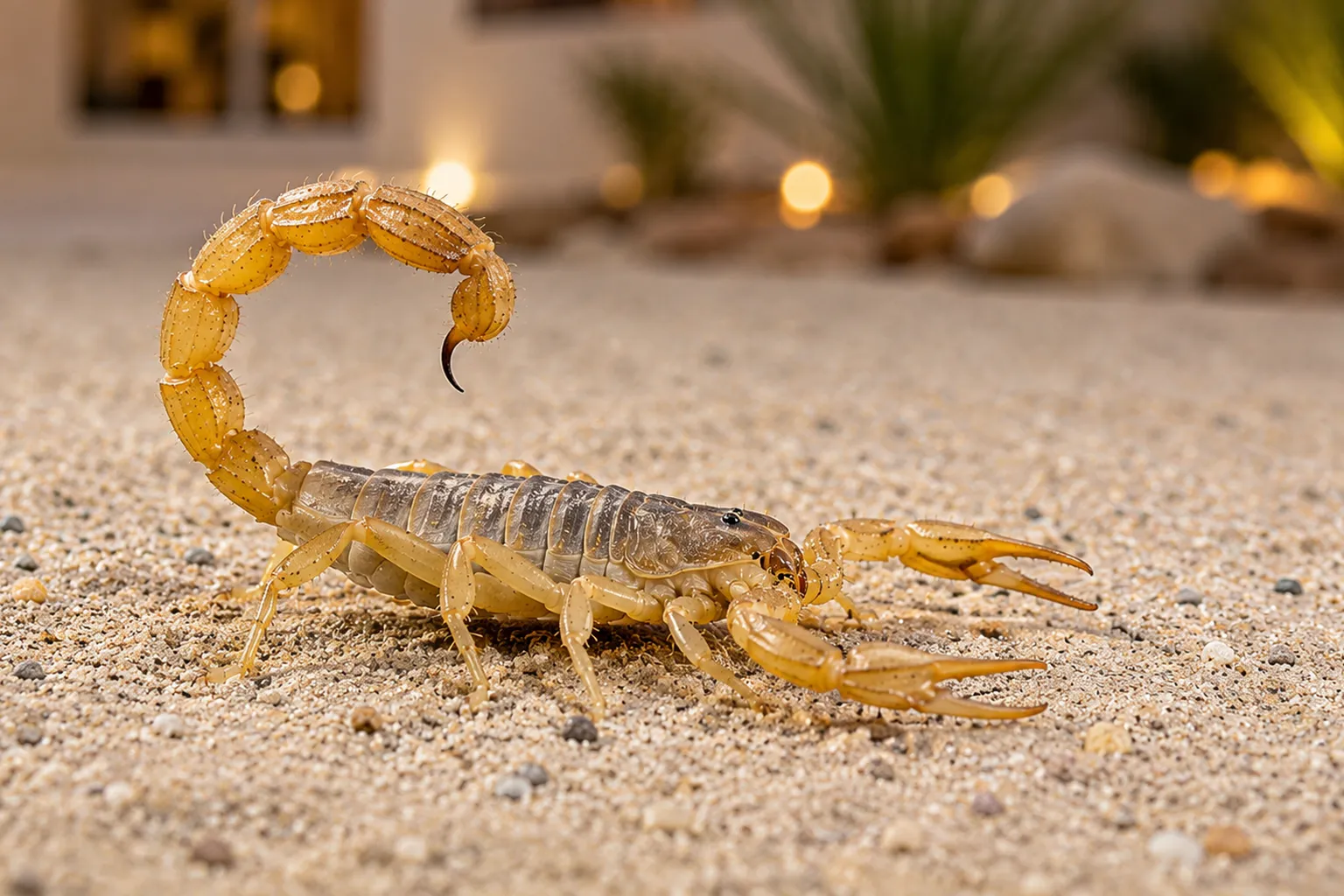
The Yellow Scorpion is a pale, sand-coloured desert species superbly camouflaged against Dubai's soil and sand, which is exactly what makes it a risk around homes — it's genuinely hard to see. It shelters by day under rocks, in burrows, crevices, and debris, and around the landscaping and structures of desert-edge villas and compounds, emerging at night to hunt insects. Its sting is venomous, painful, and medically significant, and reactions can be more serious in children and sensitive individuals, so stings warrant medical attention. As with other scorpions, encounters happen when it's accidentally disturbed — trodden on, or hiding under an object someone moves. Its excellent camouflage increases the chance of an unintended close encounter. DIY handling is unsafe.
Santera's Dubai Municipality-certified technicians control Yellow Scorpions using careful inspection (including UV light detection, under which scorpions glow), targeted harbourage treatment, habitat and entry-point reduction, and insect-prey control. For desert-edge villas, compounds, and facilities, we provide safe, prompt response in line with Dubai Municipality standards.
Get to know the physical signs and behavioral patterns associated with this species. Knowledge of these specific traits helps in maintaining a secure and pest-free environment.
Santera provides Pest control and prevention across Dubai, with primary service coverage in:

Santera handles Yellow Scorpions in Dubai with a Dubai Municipality-certified, safety-first process: trained technicians locate and deal with the harbourage (using UV detection) using proper equipment, then advise on prevention so the risk doesn't return. Given the danger, this should never be attempted yourself.
It isn't safe to deal with Yellow Scorpions yourself. Attempting to handle or remove them risks the harbourage and the risk of handling a venomous scorpion, and DIY methods rarely resolve the underlying problem. The safe, effective route is trained professional response.
Because the source survives. Like other scorpions, the Yellow Scorpion bears live young that the female carries on her back until they disperse. It is slow-maturing and long-lived. That's exactly why surface sprays and one-off DIY fail — they hit what's visible while the source keeps producing more, so lasting control has to target the source, not just the symptoms.
Watch for Yellow Scorpions themselves and the signs they leave. The Yellow Scorpion is small to medium, typically 5–8cm, with a slender build and pale yellow to sandy colouring that provides excellent desert camouflage. This scorpion is nocturnal and well camouflaged, sheltering by day in burrows, under rocks, in crevices, and among debris, then hunting at night. It is defensive and stings if disturbed or trapped. Catching it early, before numbers build, makes treatment far easier.
Yes — the Yellow Scorpion's sting is venomous and medically significant, and its sandy camouflage makes accidental stings more likely, so treat any sighting with caution.
The Yellow Scorpion preys on insects and other small invertebrates — such as crickets, beetles, and small spiders — hunting them at night and subduing prey with its pincers and venom. In Dubai, areas with insect activity around lighting and gardens attract it, so reducing insect prey lowers the likelihood of scorpions settling near a property. Cut off these food, water, and shelter sources and you remove what draws them in — but an established population still needs targeted treatment to clear fully.