24/7 Pest Control in the UAE

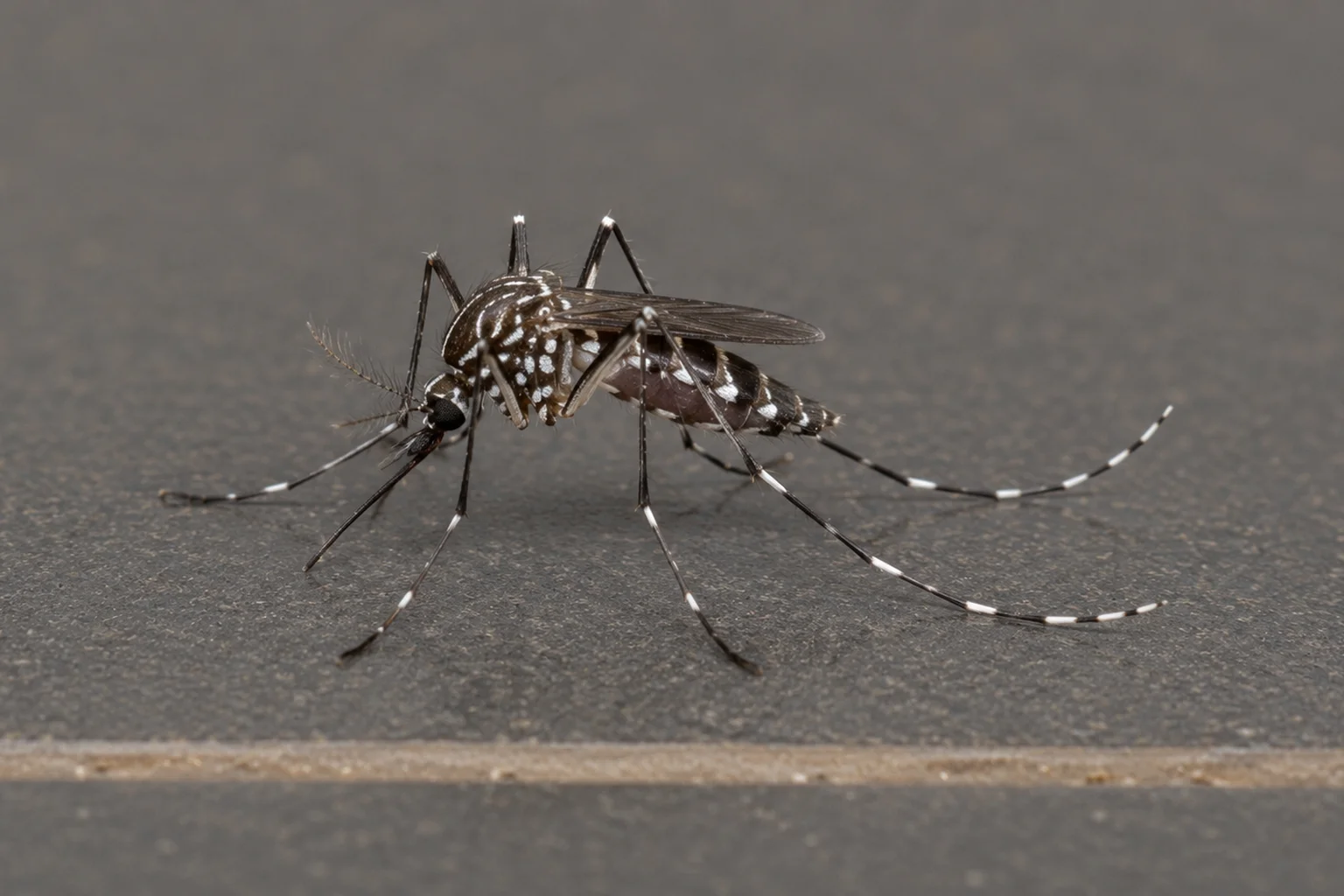
The Yellow Fever Mosquito is one of the most medically important mosquitoes in the world and is well adapted to urban Dubai. Unlike many mosquitoes, it bites aggressively during the day, and it's a primary vector for dengue, chikungunya, and Zika. What makes it so hard to control is its breeding habit: it lays eggs in tiny pockets of clean standing water — plant pot saucers, blocked drains, AC condensate trays, buckets, and pooled irrigation around villas and balconies. Fogging the air kills adults briefly but does nothing about the larvae developing in these hidden water sources, so the population rebounds within days.
Santera's Dubai Municipality-certified technicians control Aedes aegypti with a source-reduction programme: locating and treating every breeding site, applying larvicides where water can't be removed, and targeting resting adults, combined with guidance to eliminate standing water. For residential communities, hotels, and facilities, we deliver integrated mosquito management aligned with Dubai Municipality public-health standards.
Get to know the physical signs and behavioral patterns associated with this species. Knowledge of these specific traits helps in maintaining a secure and pest-free environment.
Santera provides Pest control and prevention across Dubai, with primary service coverage in:

Santera gets rid of Yellow Fever Mosquitoes in Dubai with a Dubai Municipality-certified process: our technicians inspect to find the breeding sites and entry points, apply targeted treatment that eliminates the problem at its source, and put prevention measures in place so it doesn't come back.
You can try, but DIY rarely solves a Yellow Fever Mosquito problem in Dubai for good. Shop-bought sprays and home remedies tend to deal with what you can see while missing the larvae developing in standing water you can't always see, so the problem returns. Lasting control means targeting the source — which is where professional treatment makes the difference.
Because the source survives. Females lay eggs on the inner walls of water-holding containers, just above the waterline; the eggs can survive drying for months and hatch once flooded. Larvae develop in the water within about a week in Dubai's warm temperatures, so even briefly filled containers can produce new mosquitoes. That's exactly why surface sprays and one-off DIY fail — they hit what's visible while the source keeps producing more, so lasting control has to target the source, not just the symptoms.
Watch for Yellow Fever Mosquitoes themselves and the signs they leave. The Yellow Fever Mosquito is small and dark, roughly 4–7mm, with striking white markings — most notably a lyre-shaped (violin) pattern of pale scales on the thorax and white bands on the legs. This species is a daytime biter closely associated with human dwellings. It rests indoors and in shaded outdoor spots and breeds in small containers of standing water near homes. Catching it early, before numbers build, makes treatment far easier.
Yes — the Yellow Fever Mosquito bites and is a known vector of dengue, chikungunya, and Zika, making it one of the most medically important mosquitoes in the world.
Only female Yellow Fever Mosquitoes bite, taking blood to develop their eggs; both sexes feed on plant nectar for energy. Females prefer human hosts and bite primarily during daylight, especially early morning and late afternoon. In Dubai they target people on balconies, in gardens, and around shaded outdoor areas. Cut off these food, water, and shelter sources and you remove what draws them in — but an established population still needs targeted treatment to clear fully.