24/7 Pest Control in the UAE

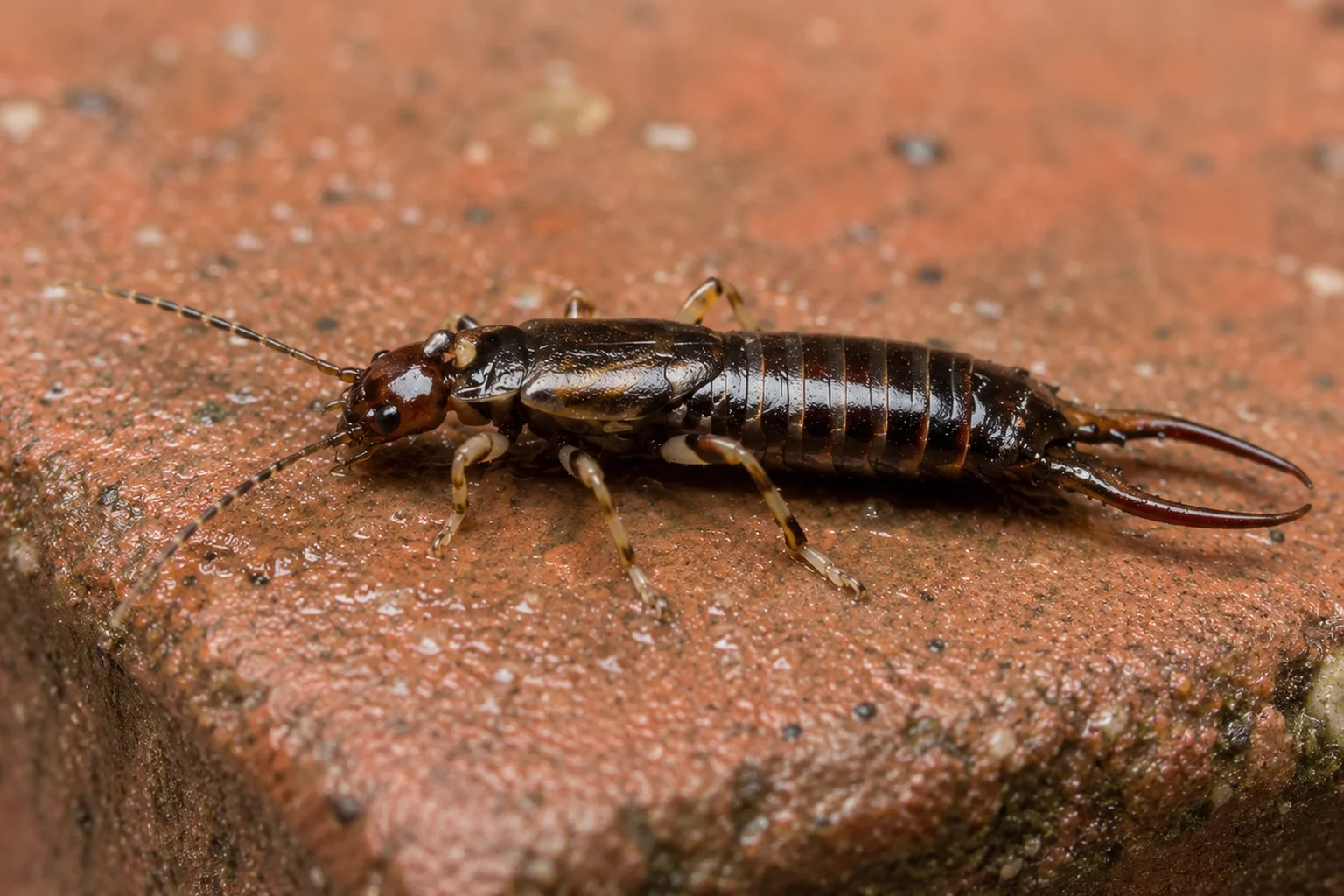
The Ring-legged Earwig is a dark brown to blackish earwig, distinguished by the pale bands or 'rings' on its legs, and is largely wingless. It's common in damp environments around Dubai — gardens, mulch, ground-floor areas, storerooms, and around stored goods — and behaves much like the common earwig. Despite the menacing rear pincers, it is harmless to people: it doesn't sting, doesn't crawl into ears (a myth), and at worst gives a harmless pinch if handled. Its significance is as a nuisance and minor pest: it scavenges on organic matter and small insects, can damage seedlings and some stored items, and intrudes into ground-floor and damp indoor spaces through gaps, often gathering in numbers in moist, dark harbourage. Like other earwigs, its appearance and tendency to cluster indoors after irrigation are what trouble residents, rather than any actual threat.
Santera's Dubai Municipality-certified technicians manage Ring-legged Earwig intrusions by treating harbourage and entry points, reducing the damp and organic conditions that attract them, and proofing access, with accurate reassurance about their harmlessness, in line with Dubai Municipality standards. For ground-floor and landscaped properties, we deliver practical, targeted control.
Get to know the physical signs and behavioral patterns associated with this species. Knowledge of these specific traits helps in maintaining a secure and pest-free environment.
Santera provides Pest control and prevention across Dubai, with primary service coverage in:

Santera gets rid of Ring-legged Earwigs in Dubai with a Dubai Municipality-certified process: our technicians inspect to find the harbourage and entry points and entry points, apply targeted treatment that eliminates the problem at its source, and put prevention measures in place so it doesn't come back.
You can try, but DIY rarely solves a Ring-legged Earwig problem in Dubai for good. Shop-bought sprays and home remedies tend to deal with what you can see while missing the damp harbourage and entry points around the building, so the problem returns. Lasting control means targeting the source — which is where professional treatment makes the difference.
Because the source survives. Like other earwigs, the female lays eggs in a sheltered, damp spot and guards them, tending the nymphs after hatching. It breeds in moist soil and harbourage, and Dubai's irrigated, organic-rich conditions support its development, allowing populations to build in gardens and storage and recur indoors. That's exactly why surface sprays and one-off DIY fail — they hit what's visible while the source keeps producing more, so lasting control has to target the source, not just the symptoms.
Watch for Ring-legged Earwigs themselves and the signs they leave. The Ring-legged Earwig is about 12–16mm long, elongated and flattened, dark brown to black, and named for the distinctive pale rings or bands on its legs. This earwig is nocturnal and strongly moisture-associated, hiding by day in damp, dark places — under mulch, stones, debris, in cracks, and around storage — and active at night. Being largely wingless, it spreads by crawling and gathers in sheltered moist harbourage. Catching it early, before numbers build, makes treatment far easier.
No — despite the pincers and the ear myth, Ring-legged Earwigs don't sting and pose no real threat to people; at most they deliver a harmless pinch if handled.
The Ring-legged Earwig is omnivorous, feeding on decaying organic matter, plant material, seedlings, and small insects and their eggs, and can scavenge on stored organic goods. In Dubai, damp gardens, stored items, and organic debris provide food, and it can be a minor pest of seedlings and stored products as well as a household scavenger. Cut off these food, water, and shelter sources and you remove what draws them in — but an established population still needs targeted treatment to clear fully.