24/7 Pest Control in the UAE

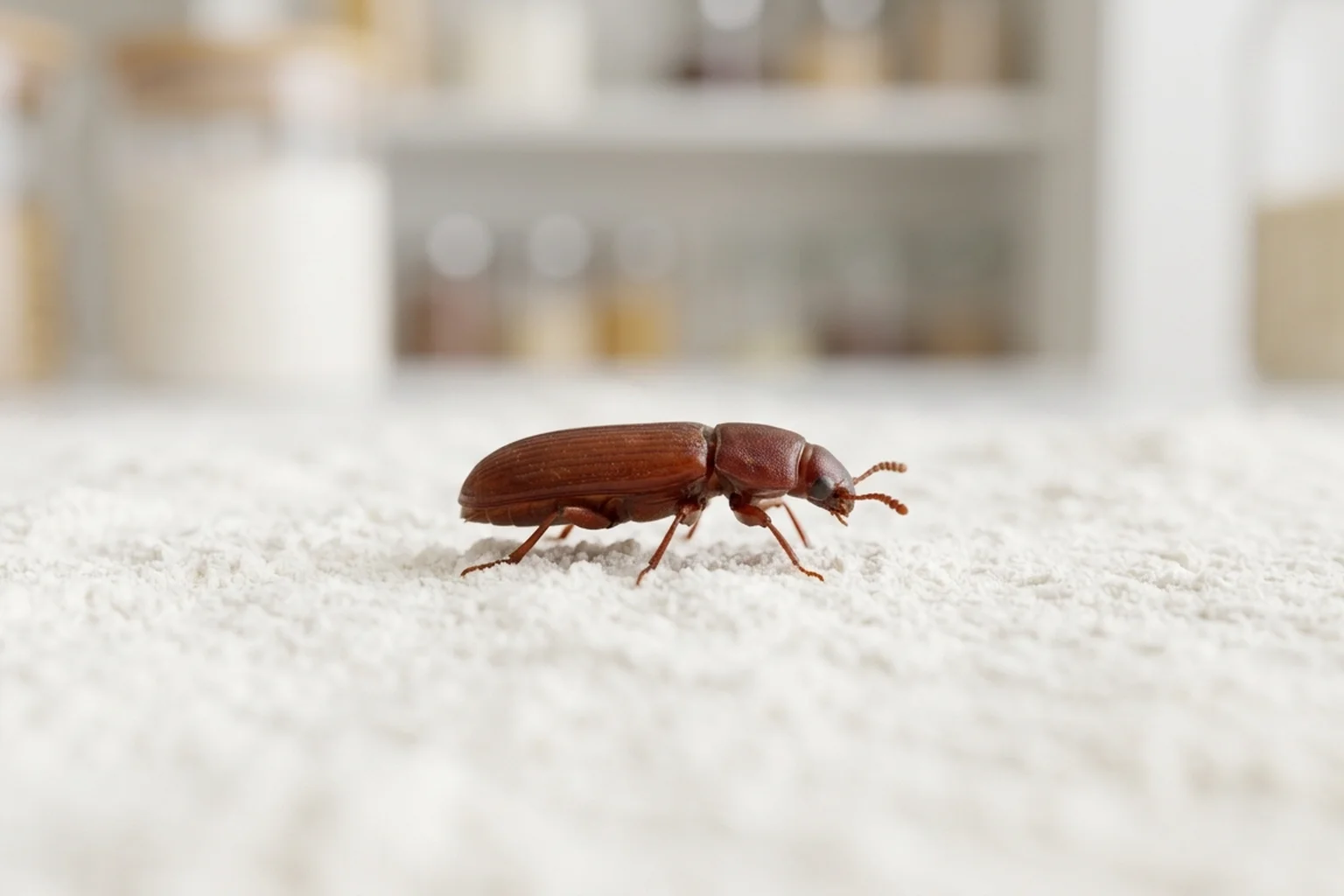
The Red Flour Beetle is one of the most common pests of flour and milled cereal products in Dubai's bakeries, mills, supermarkets, warehouses, and pantries. Unlike weevils, it cannot attack whole sound grain, but it thrives on flour, broken grain, cereals, spices, dried goods, and grain dust — making any milled or processed product vulnerable. Large populations not only contaminate stock with beetles, larvae, cast skins, and frass, but also impart a distinctive musty, unpleasant odour and taint to flour, rendering it unusable. The beetles are active, can fly, and disperse readily through storage areas, spreading between products and into cracks and machinery. For bakeries and flour handlers, an infestation means rejected product, tainted batches, and inspection failures.
Santera's Dubai Municipality-certified technicians control Red Flour Beetles by locating infested stock and harbourage (including machinery and crevices), treating storage and processing areas, deploying monitoring, and advising on rigorous storage and cleaning hygiene. For bakeries, mills, retail, and warehouses, we deliver a documented programme aligned with HACCP and Dubai Municipality standards.
Get to know the physical signs and behavioral patterns associated with this species. Knowledge of these specific traits helps in maintaining a secure and pest-free environment.
Santera provides Pest control and prevention across Dubai, with primary service coverage in:

Santera gets rid of Red Flour Beetles in Dubai with a Dubai Municipality-certified process: our technicians inspect to find the infested stock and harbourage and entry points, apply targeted treatment that eliminates the problem at its source, and put prevention measures in place so it doesn't come back. For restaurants, hotels, and food businesses, all work follows HACCP protocols and Dubai Municipality standards.
You can try, but DIY rarely solves a Red Flour Beetle problem in Dubai for good. Shop-bought sprays and home remedies tend to deal with what you can see while missing the infested stock and hidden larvae in cracks and machinery, so the problem returns. Lasting control means targeting the source — which is where professional treatment makes the difference.
Because the source survives. Females lay eggs (several hundred over their life) directly in flour and milled products, where the sticky eggs adhere to particles; larvae develop in the product and pupate, completing the cycle in several weeks. Rapid breeding in Dubai's warm storage allows populations to build quickly and persist in residue and machinery. That's exactly why surface sprays and one-off DIY fail — they hit what's visible while the source keeps producing more, so lasting control has to target the source, not just the symptoms.
Watch for Red Flour Beetles themselves and the signs they leave. The Red Flour Beetle is small, about 3–4mm, flattened and elongate-oval, and uniformly reddish-brown. Red Flour Beetles are active and mobile, able to fly and disperse through storage and processing areas, and they hide in flour, product residue, machinery, and cracks and crevices. They breed prolifically in warm conditions and readily spread between products. Catching it early, before numbers build, makes treatment far easier.
Red Flour Beetles don't bite or harm people, but they contaminate and taint flour and milled products with a musty odour, rendering stock unusable.
The Red Flour Beetle feeds on flour, milled cereals, broken grain, grain dust, spices, dried foods, and similar processed products; it cannot penetrate whole, undamaged grains. Both larvae and adults feed and contaminate stock. In Dubai's bakeries, mills, and food storage, any flour-based or milled product is a potential food source. Cut off these food, water, and shelter sources and you remove what draws them in — but an established population still needs targeted treatment to clear fully.