24/7 Pest Control in the UAE

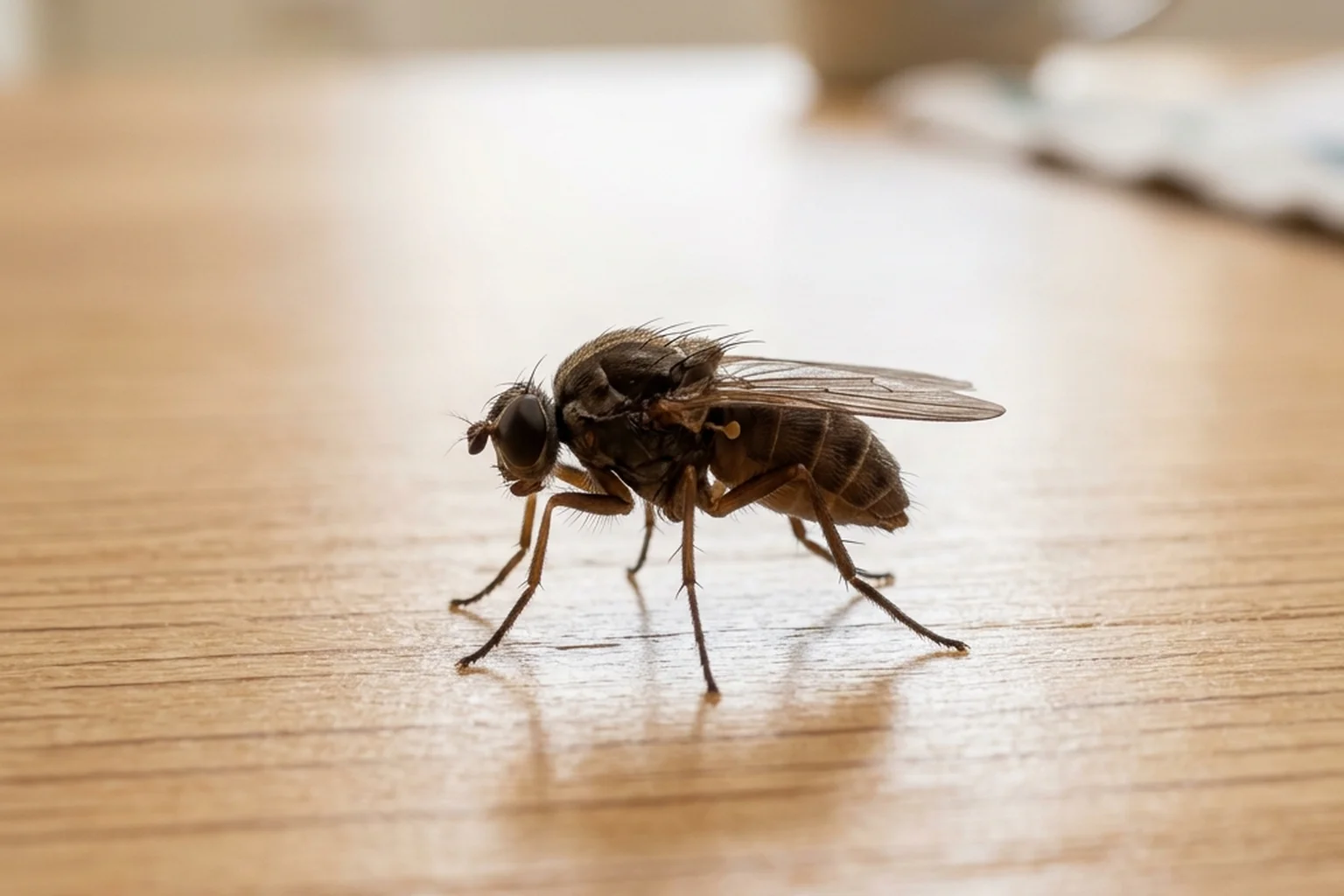
The Phorid Fly, often called the scuttle fly or humpbacked fly, is a small fly with a tell-tale habit: instead of flying away when disturbed, it scuttles rapidly across surfaces in short, erratic bursts. It breeds in a wide range of moist decaying organic matter — rotting food, organic sludge in drains, decomposing material, and even contaminated soil beneath floors. In Dubai kitchens and food premises, a persistent phorid problem can be a warning sign of a serious hidden issue, such as a cracked or leaking drain line releasing sewage into the sub-floor, or decaying organic matter trapped under equipment. They are a significant contamination risk because of where they breed.
Santera's Dubai Municipality-certified technicians investigate Phorid Fly infestations carefully to locate the often-hidden breeding source — including drain and pipe faults — then treat and advise on remediation, combined with sanitation and targeted control. For F&B and healthcare premises especially, we deliver this within a documented programme aligned with HACCP and Dubai Municipality standards.
Get to know the physical signs and behavioral patterns associated with this species. Knowledge of these specific traits helps in maintaining a secure and pest-free environment.
Santera provides Pest control and prevention across Dubai, with primary service coverage in:

Santera gets rid of Phorid Flies in Dubai with a Dubai Municipality-certified process: our technicians inspect to find the breeding source and entry points, apply targeted treatment that eliminates the problem at its source, and put prevention measures in place so it doesn't come back. For restaurants, hotels, and food businesses, all work follows HACCP protocols and Dubai Municipality standards.
You can try, but DIY rarely solves a Phorid Fly problem in Dubai for good. Shop-bought sprays and home remedies tend to deal with what you can see while missing the breeding source in drains, waste, or decaying matter, so the problem returns. Lasting control means targeting the source — which is where professional treatment makes the difference.
Because the source survives. Phorid Flies breed quickly, with the life cycle completing in around two to three weeks or less in warm conditions. Females lay eggs on or near decaying organic material, and the species' tolerance for diverse breeding media allows rapid population growth wherever concealed decay exists. That's exactly why surface sprays and one-off DIY fail — they hit what's visible while the source keeps producing more, so lasting control has to target the source, not just the symptoms.
Watch for Phorid Flies themselves and the signs they leave. Phorid Flies are very small, about 2–4mm, tan to dark brown, with a distinctive humpbacked (arched thorax) profile when viewed from the side. Phorid Flies are recognised by their scuttling, surface-running behaviour rather than ready flight. They are active by day, stay near breeding sources, and are remarkably good at exploiting concealed decaying matter, including beneath floors and inside damaged drains. Catching it early, before numbers build, makes treatment far easier.
Phorid Flies don't bite, but because they breed in decaying matter, sewage, and contaminated soil, they're a serious contamination risk and often signal a hidden hygiene problem such as a broken drain.
Phorid Fly larvae develop in a very wide range of moist decaying organic matter — rotting food, drain and sewage sludge, decomposing material, and contaminated soil. Adults feed on liquids and organic residue. In Dubai their ability to breed in sub-floor contamination and drain faults makes them an indicator of hidden hygiene problems. Cut off these food, water, and shelter sources and you remove what draws them in — but an established population still needs targeted treatment to clear fully.