24/7 Pest Control in the UAE

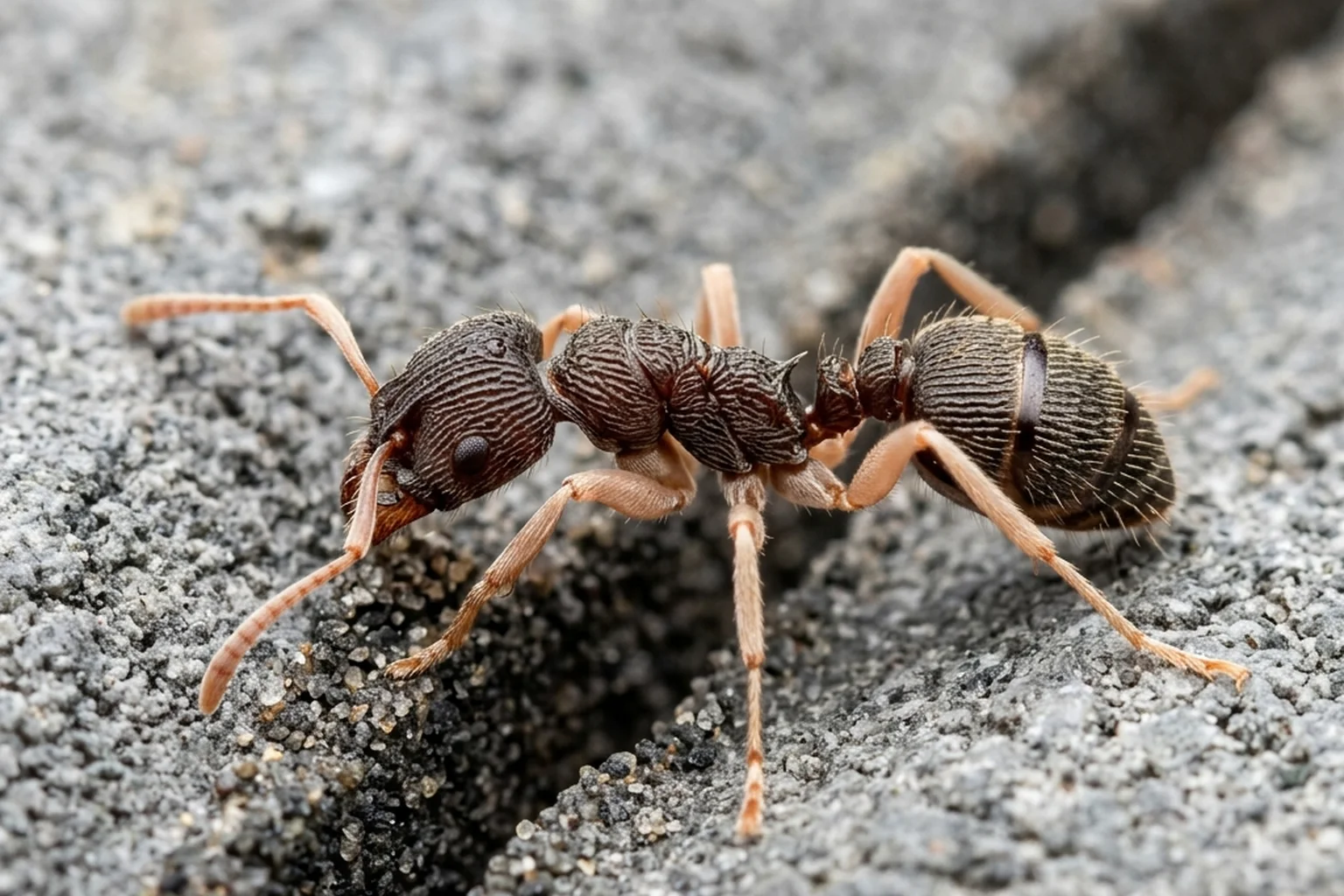
Pavement Ants are a common nuisance around Dubai villas, apartment podiums, and commercial entrances. They nest beneath paving slabs, driveways, patios, and floor tiles, often revealing themselves by the small piles of excavated soil they push up between cracks and joints. From there they forage indoors in persistent trails, targeting kitchens and food areas. Surface sprays kill the ants on the path but leave the nest under the paving intact, so the trails simply return within days.
Santera's Dubai Municipality-certified technicians locate the nests beneath hard surfaces and along expansion joints, then apply baits and targeted residual treatments that reach and eliminate the colony at source. We treat entry points and foraging routes to stop indoor invasion and prevent re-establishment. For residential communities and commercial premises, we provide ongoing protection that keeps entrances, kitchens, and dining areas clear, in line with Dubai Municipality standards.
Get to know the physical signs and behavioral patterns associated with this species. Knowledge of these specific traits helps in maintaining a secure and pest-free environment.
Santera provides Pest control and prevention across Dubai, with primary service coverage in:

Santera gets rid of Pavement Antses in Dubai with a Dubai Municipality-certified process: our technicians inspect to find the colony and entry points, apply targeted treatment that eliminates the problem at its source, and put prevention measures in place so it doesn't come back. For restaurants, hotels, and food businesses, all work follows HACCP protocols and Dubai Municipality standards.
You can try, but DIY rarely solves a Pavement Ants problem in Dubai for good. Shop-bought sprays and home remedies tend to deal with what you can see while missing the colony hidden underground or in wall voids, so the problem returns. Lasting control means targeting the source — which is where professional treatment makes the difference.
Because the source survives. Colonies are headed by one or more queens and can become large and well-established over time. New colonies form through nuptial flights, when winged reproductives mate and fertilised queens establish nests in suitable ground, often beneath paving. That's exactly why surface sprays and one-off DIY fail — they hit what's visible while the source keeps producing more, so lasting control has to target the source, not just the symptoms.
Watch for Pavement Antses themselves and the signs they leave. Pavement Ants are small, measuring 2.5–4mm, with a dark brown to blackish body and paler legs. Pavement Ants nest under paving, slabs, driveways, and floor tiling, characteristically depositing small mounds of excavated soil along cracks and joints. They forage in well-defined trails and readily enter buildings in search of food. Catching it early, before numbers build, makes treatment far easier.
Pavement Ants can bite but rarely do and aren't dangerous; their main impact is nuisance — foraging in large numbers through kitchens, paving, and gardens and contaminating food.
Pavement Ants are omnivorous and opportunistic, feeding on a wide range of foods including grease, proteins, sweets, seeds, and dead insects. Indoors they are drawn to kitchen residue, pet food, and sugary spills. Their broad diet and steady foraging make them a persistent presence around homes, restaurants, and commercial food areas in Dubai. Cut off these food, water, and shelter sources and you remove what draws them in — but an established population still needs targeted treatment to clear fully.