24/7 Pest Control in the UAE

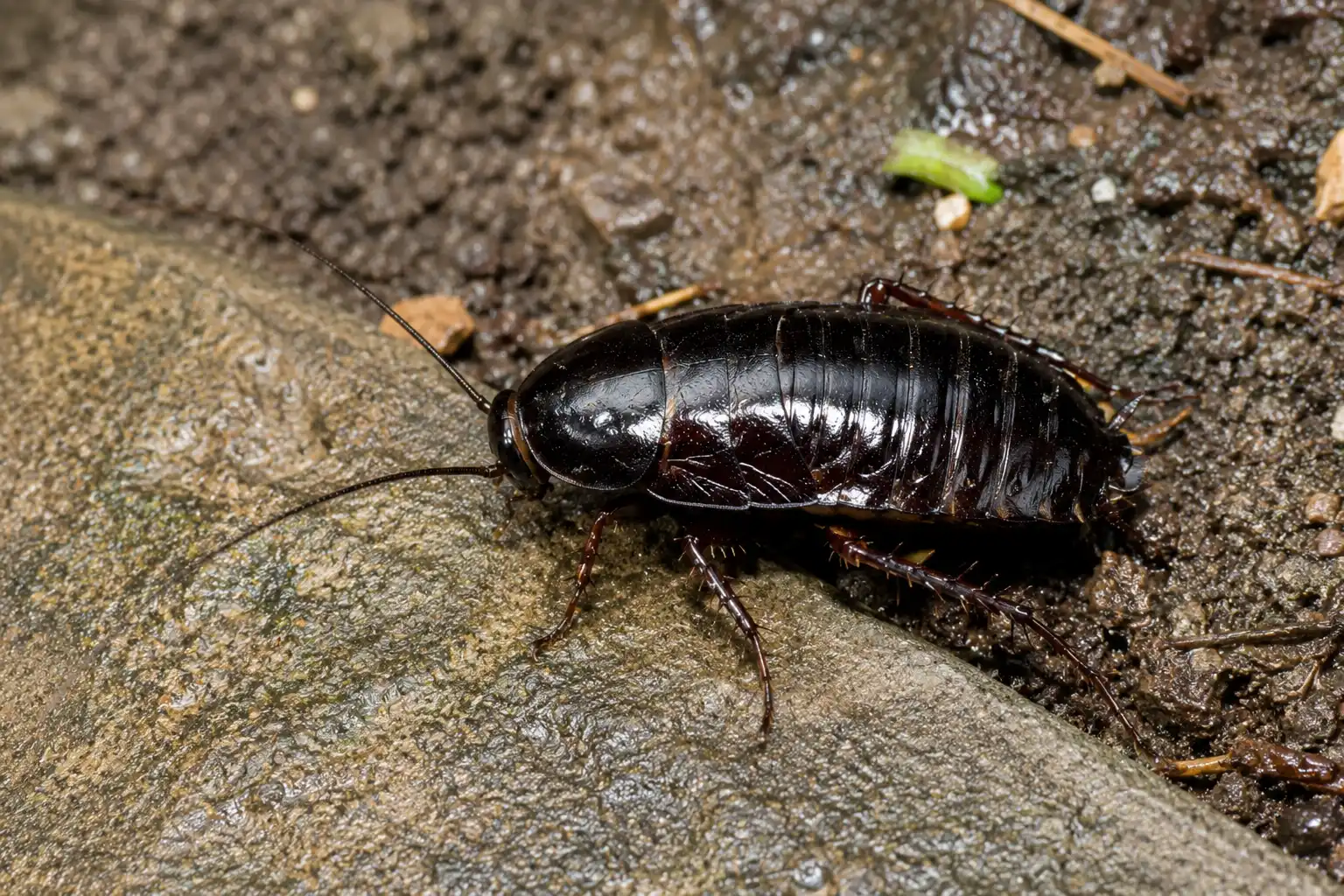
The Oriental Cockroach is the dampness specialist. Dark brown to almost black and slower-moving than other roaches, it favours cool, wet, decaying environments — basements, drains, sumps, water meter rooms, service ducts, and damp ground-floor voids common in Dubai buildings. It's strongly tied to moisture, so a persistent Oriental Cockroach problem is almost always a sign of leaks, poor drainage, or standing water somewhere nearby. They give off a noticeable musty smell and contaminate surfaces and stored items as they forage. Surface sprays miss the damp harbourage that sustains them.
Santera's Dubai Municipality-certified technicians tackle Oriental Cockroaches by locating and treating the damp harbourage and entry points, applying residual treatments and baits, and flagging the moisture conditions — leaks, drainage faults, condensation — that must be corrected for lasting control. For property and facility managers, we treat basements and service areas thoroughly and coordinate with Dubai Municipality standards to keep buildings compliant and odour-free.
Get to know the physical signs and behavioral patterns associated with this species. Knowledge of these specific traits helps in maintaining a secure and pest-free environment.
Santera provides Pest control and prevention across Dubai, with primary service coverage in:

Santera gets rid of Oriental Cockroaches in Dubai with a Dubai Municipality-certified process: our technicians inspect to find the hidden harbourage and entry points, apply targeted treatment that eliminates the problem at its source, and put prevention measures in place so it doesn't come back. For restaurants, hotels, and food businesses, all work follows HACCP protocols and Dubai Municipality standards.
You can try, but DIY rarely solves a Oriental Cockroach problem in Dubai for good. Shop-bought sprays and home remedies tend to deal with what you can see while missing the harbourage and eggs hidden behind equipment and in voids, so the problem returns. Lasting control means targeting the source — which is where professional treatment makes the difference.
Because the source survives. Oriental Cockroach females produce egg cases (oothecae) holding around 16 eggs, deposited in sheltered, damp locations. They develop more slowly than other roaches but persist wherever moisture is constant. That's exactly why surface sprays and one-off DIY fail — they hit what's visible while the source keeps producing more, so lasting control has to target the source, not just the symptoms.
Watch for Oriental Cockroaches themselves and the signs they leave. Oriental Cockroaches are medium-large, measuring 20–27mm, with a glossy dark brown to black body. Oriental Cockroaches prefer cool, damp, dark locations — basements, drains, sumps, service ducts, and ground-level voids — and are strongly dependent on moisture. They are nocturnal and sluggish, often found at or below ground level. Catching it early, before numbers build, makes treatment far easier.
Oriental Cockroaches don't bite, but they spread bacteria from the filth and decay they live in, and their presence signals unhygienic damp conditions that pose a health risk.
Oriental Cockroaches feed on decaying organic matter, food waste, starchy materials, and rubbish. In Dubai they scavenge around bins, drains, basements, and damp storage areas, showing a particular association with filth and decaying material. This diet and habit make them efficient carriers of bacteria onto surfaces and stored goods. Cut off these food, water, and shelter sources and you remove what draws them in — but an established population still needs targeted treatment to clear fully.